


Looking for online safeguarding training with a certificate? You can complete safeguarding courses online, develop practical knowledge and receive a certificate after meeting the course requirements.
Whether you’re preparing for a new role, updating your workplace skills or completing professional development, choosing the right course matters. You’ll want training that covers relevant safeguarding responsibilities, fits your schedule and provides suitable evidence of completion.
Before enrolling, check the certificate type, training level, assessment requirements, employer expectations and total cost. Here’s what UK learners should know when comparing their options.
Can You Get a Safeguarding Certificate Online?
Yes. Many UK training providers offer online safeguarding courses with certificates issued after successful completion.
Depending on the provider, you can study independently, complete assessments online, and receive a digital certificate. Some courses also offer printed certificates or additional CPD documentation.
Online learning is particularly convenient for professionals balancing training with work, volunteering or family commitments.
Understanding why safeguarding matters in everyday practice can also help you connect your training with real workplace responsibilities.
What Does an Online Safeguarding Certificate Show?
A safeguarding training certificate usually provides evidence that you’ve completed a particular learning programme.
Depending on the provider, it may include:
- Your full name.
- The course title and training level.
- The name of the training provider.
- The completion or issue date.
- CPD information, where applicable.
- A certificate reference or verification number.
Before purchasing a course, check which certificate you’ll receive and how it will be issued.
If you’re choosing employment training, it’s also worth confirming whether the certificate meets your organisation’s expectations.



Are Online Safeguarding Certificates Recognised in the UK?
Online safeguarding certificates can support professional development and provide evidence of completed learning. However, the type of certificate and its intended purpose determine how it may be recognised.
For example, employers may accept a course completion certificate for general safeguarding awareness, while specialist responsibilities may require additional training.
Understanding the different certificate types helps you make an informed choice.
CPD Certificates, QLS Endorsement and Regulated Qualifications
| Certificate Type | What It Demonstrates |
|---|---|
| Course completion certificate | Confirms successful completion of the provider's training requirements |
| CPD certificate | Records learning undertaken as part of continuing professional development. |
| QLS-endorsed certificate | Confirms achievement associated with a quality-endorsed, non-regulated learning programme. |
| Regulated qualification | Represents a qualification regulated by the relevant UK qualifications regulator. |
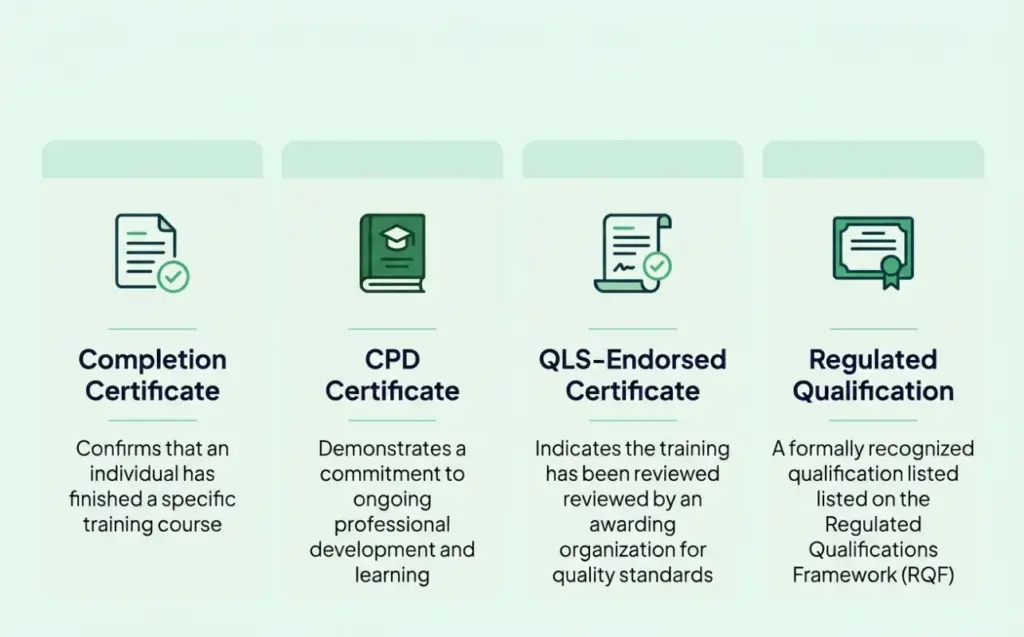
CPD training can be useful for maintaining and developing professional knowledge. A QLS-endorsed course can also provide structured learning with an endorsed certificate option.
These forms of recognition are different from an Ofqual-regulated qualification.
If you specifically need a regulated qualification, you can use the government’s Register of Regulated Qualifications to check qualifications in England and Northern Ireland.
How to Check a Safeguarding Certificate’s Credibility
When comparing online safeguarding courses, look for clear information about:
- The organisation delivering the training.
- The body issuing the certificate.
- The course's learning outcomes.
- Assessment and completion requirements.
- Any CPD accreditation or quality endorsement.
- Certificate verification arrangements.
A useful course page should explain what you’re purchasing and what you’ll receive after completion.
For a Level 2 course, consider both the training content and whether that level matches your learning needs.
Before enrolling, understanding what Level 2 safeguarding training covers can help you decide whether the course matches your responsibilities.
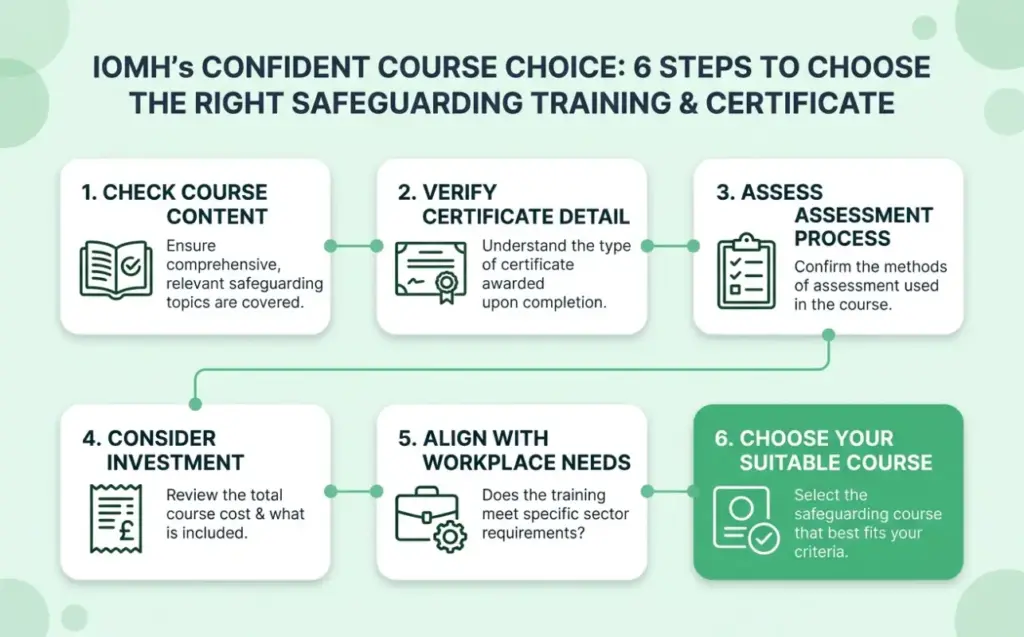
What to Check Before Choosing an Online Safeguarding Course
The most suitable safeguarding course should offer relevant learning, convenient access and a certificate that serves your intended purpose.
Use these five checks to compare training providers before enrolling.
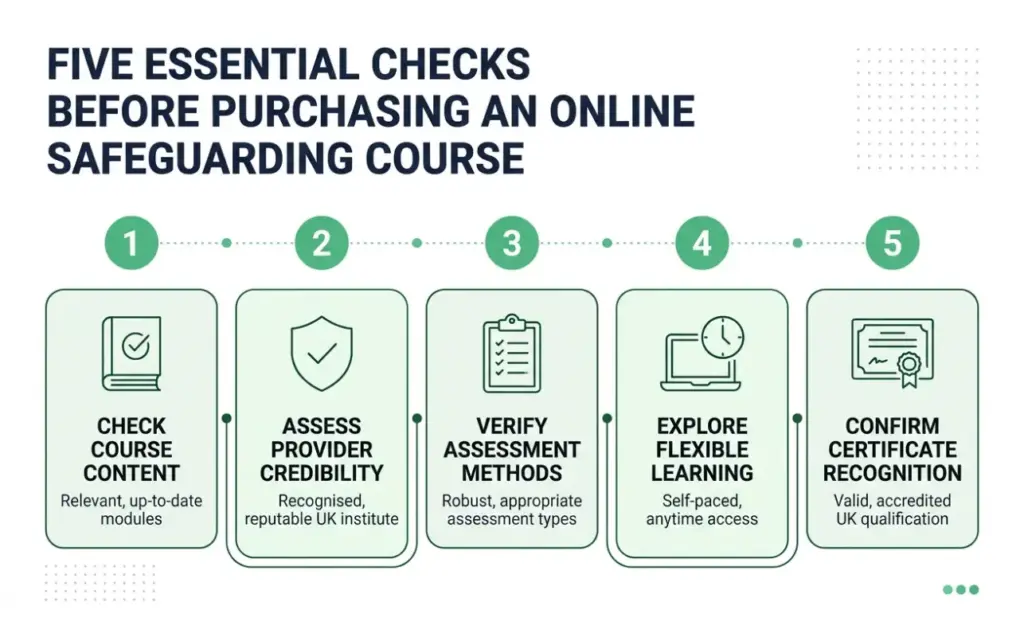
1. Does the Course Cover the Safeguarding Skills You Need?
Start by reviewing the course curriculum.
Depending on your professional responsibilities, relevant safeguarding topics may include:
- Recognising abuse, neglect and exploitation.
- Understanding safeguarding adults and children.
- Identifying and reporting safeguarding concerns.
- Responding appropriately to disclosures.
- Understanding safeguarding policies and procedures.
- Maintaining appropriate records and documentation.
If you’re preparing for a care role, understanding how UK health and social care legislation affects everyday practice can help you evaluate the legal topics covered in a safeguarding course.
Consider your current experience and the responsibilities you expect to undertake.
Some learners need introductory awareness training, while others benefit from more detailed learning. Understanding how safeguarding training levels differ can help you identify training that suits your responsibilities.
If you’re comparing introductory and more detailed courses, choosing between Level 1 and Level 2 safeguarding training is a useful starting point.
2. Is the Training Provider Credible?
Choose a provider that clearly explains its courses, learning methods and certification arrangements.
Look for accessible course descriptions, realistic learning outcomes and straightforward information about assessment.
Where a provider advertises CPD accreditation or QLS endorsement, check what that recognition covers.
You may also find learner feedback useful when comparing the online learning experience and available support.
3. How Will Your Learning Be Assessed?
Assessments allow learners to demonstrate their understanding of the material.
Before purchasing, check:
- Whether the course includes quizzes, assignments or examinations.
- The minimum score required to pass.
- Whether reassessment is available.
- How and when the certificate is awarded.
For example, IOMH’s online safeguarding course requires learners to complete assignment questions and achieve at least 60% in the relevant assessments.
Knowing these requirements in advance helps you plan your study and understand how you’ll earn your certificate.
4. Can You Study at Your Own Pace?
Flexible online training can be useful if you’re completing professional development alongside employment.
Check whether the provider offers:
- Self-paced learning.
- Access from a computer, tablet or smartphone.
- A clearly stated course access period.
- Online learning materials and assessments.
- Tutor or learner support.
Consider how much time you can realistically dedicate to studying.
A course that fits your schedule makes it easier to work through the material carefully and complete the assessments.
5. How Will You Receive and Verify Your Certificate?
Check whether your certificate is available as a PDF, printed document or both.
If you expect to use it for employment or professional development, consider whether the provider offers a certificate reference or verification facility.
IOMH, for example, provides an online certificate validation feature where certificate codes can be checked.
Keep a copy of your certificate and completion details so they’re accessible whenever you need to update your training records or demonstrate completed learning.
Will Your Employer Accept an Online Safeguarding Certificate?
Many employers use safeguarding training as part of staff development, induction and refresher learning.
The appropriate course depends on your responsibilities and the standards followed by your organisation.
Safeguarding Training for Different UK Workplaces
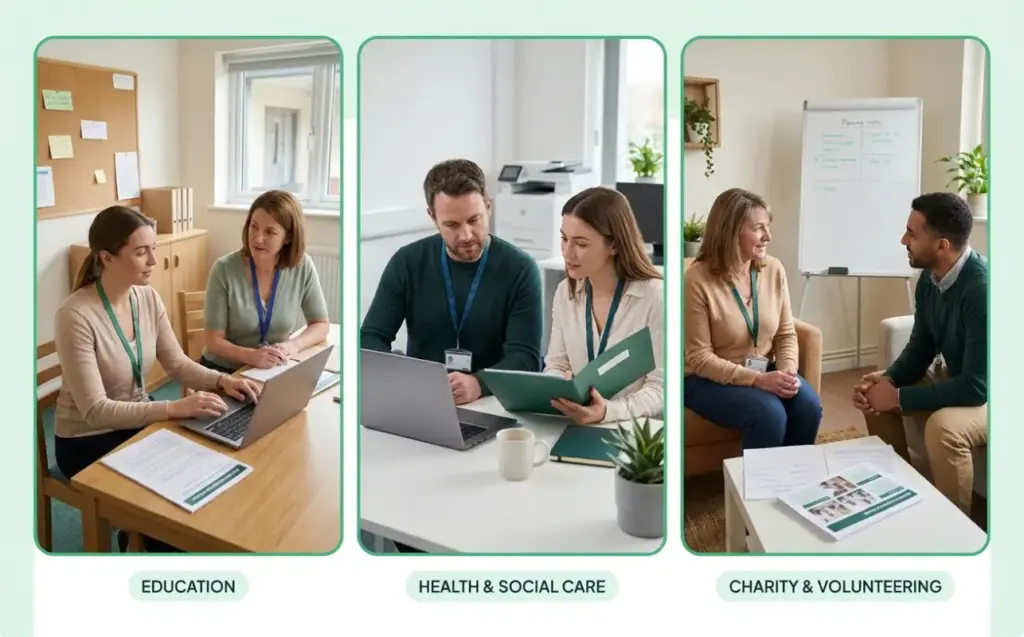
Schools and colleges
In England, schools and colleges follow the Department for Education’s Keeping children safe in education 2026 statutory guidance.
Staff must understand and follow their school’s or college’s safeguarding policies and procedures. When choosing a course, check whether its content is suitable for your position.
Health and social care
Safeguarding training helps professionals understand how to recognise concerns and follow reporting procedures.
For regulated health and social care services in England, CQC Regulation 18: Staffing requires providers to ensure staff receive appropriate training, support and professional development for their responsibilities.
Care workers can also explore the standards that guide safe and respectful care to understand how safeguarding fits into their everyday responsibilities.
Charities and voluntary organisations
Volunteers and charity workers may need safeguarding awareness or more specialised training depending on the people they support and the activities they undertake.
Check your organisation’s safeguarding policy and training expectations before selecting a course.
Choosing Training for Your Job Role
If you’re preparing for work involving safeguarding responsibilities, review the job description or ask your employer which training is expected.
Understanding which roles may need Level 2 safeguarding training can help you select a course that suits your workplace responsibilities.
For managers, planning safeguarding training for employees means selecting courses that reflect different job roles, learning needs and organisational responsibilities.
An online certificate provides a useful record of completed training, while workplace induction, supervision and practical experience help employees apply their knowledge.
How Much Does Online Safeguarding Training Cost?
Online safeguarding training prices vary according to the provider, course content, learning support and certificate options.
When comparing courses, consider the overall package rather than the initial price alone.
Understanding the full cost of safeguarding training can help you compare course fees, assessments and certificate options before enrolling.
Check What’s Included in the Course Price
Before enrolling, confirm whether the price covers:
- Access to all learning materials.
- Assessments and any reassessment options.
- A downloadable completion certificate.
- CPD certification, if offered.
- Printed or optional endorsed certificates.
For example, IOMH currently lists a CPD PDF certificate for £8.99, a printed CPD certificate for £15.99 and an optional QLS-endorsed certificate for £79.
The course page also advertises an instant PDF certificate. Review the available options to establish which certificate is included with enrolment and which is purchased separately.
Does a Safeguarding Certificate Need Renewing?
Refresher training expectations vary by employer, sector and professional responsibilities.
Some organisations specify regular safeguarding updates, particularly when policies, procedures or professional requirements change.
Check your employer’s training policy and keep a record of when you completed your course. This will help you plan future learning when required.
Where Can You Take Online Safeguarding Training With a Certificate?
If you’re looking for flexible Level 2 safeguarding learning, the IOMH Online Safeguarding Course offers an option for UK learners interested in developing their knowledge and gaining evidence of completed training.
The course covers safeguarding principles, identifying concerns, relevant legislation, safeguarding procedures, documentation and responsibilities relating to adults and children.
What Does the IOMH Safeguarding Course Include?
According to the course information, learners receive:
- Online learning: Study using an internet-connected device.
- 12 months' access: Work through the learning materials within the access period.
- Tutor support: Access guidance during the learning process.
- Structured assessments: Complete assignment questions and achieve the required pass mark.
- Certificate options: Choose from the available CPD and QLS-endorsed certification options.
The course is QLS-endorsed at Level 2 and is a non-regulated training programme.
It may be suitable for individuals working in health and social care, education, community support or volunteering, as well as those looking to update their safeguarding knowledge.
There are no previous educational qualifications or experience requirements, although learners must be at least 16 years old.
You can view the IOMH Online Safeguarding Course to explore the curriculum, assessment details, current enrolment price and certificate options before making your decision.
Conclusion
Choosing online safeguarding training with a certificate starts with finding a course that fits your responsibilities, learning preferences and professional development goals.
Compare the curriculum, certificate recognition, assessment requirements, flexibility and overall price before enrolling.
If you’re considering Level 2 learning, explore the IOMH Online Safeguarding Course to review the training content, available certificates and enrolment details. It’s a practical next step towards developing your safeguarding knowledge through flexible online study.
FAQs
Yes. Many online safeguarding courses allow learners to study, complete assessments and receive digital certificates without attending classroom sessions.
Online safeguarding certificates can provide evidence of relevant training. Acceptance depends on the employer, the course content and the responsibilities associated with the role.
Many introductory safeguarding courses accept learners without previous experience. IOMH’s online safeguarding course does not require previous qualifications or experience, but learners must be at least 16.
Duration depends on the course content and assessment requirements. Self-paced learning allows you to organise your study around existing commitments, subject to the provider’s access period.
Yes. Relevant completed CPD training can be included on your CV, along with the course title, provider and completion date. Describe the certificate according to its actual status.

- All Courses
 Personal Development (1283)
 Career Bundle (479)
 Management & Administration (460)
 Employability (439)
 Health & Social Care (416)
 Health and Safety (383)
 Business (320)
 Teaching & Education (268)
 IT & Software (263)
 Health and Fitness (238)
 QLS Endorsed Courses (219)
 Mental Health & Counselling (169)
 Science & Technology (153)
 Accounting & Finance (144)
 Sales & Marketing (128)
 Construction & Engineering (126)
 Art & Design (125)
 Compliance & Law (112)
 Language (86)
 Photography & Lifestyle (58)
 Animal Care (57)
 Food Safety & Hygine (53)
 Diet & Nutrition (49)
 Sports & Fitness (47)
 Makeup & Beauty (43)
 First Aid (39)
 Agriculture (2)
0 responses on "Online Safeguarding Training With a Certificate: What to Check"