



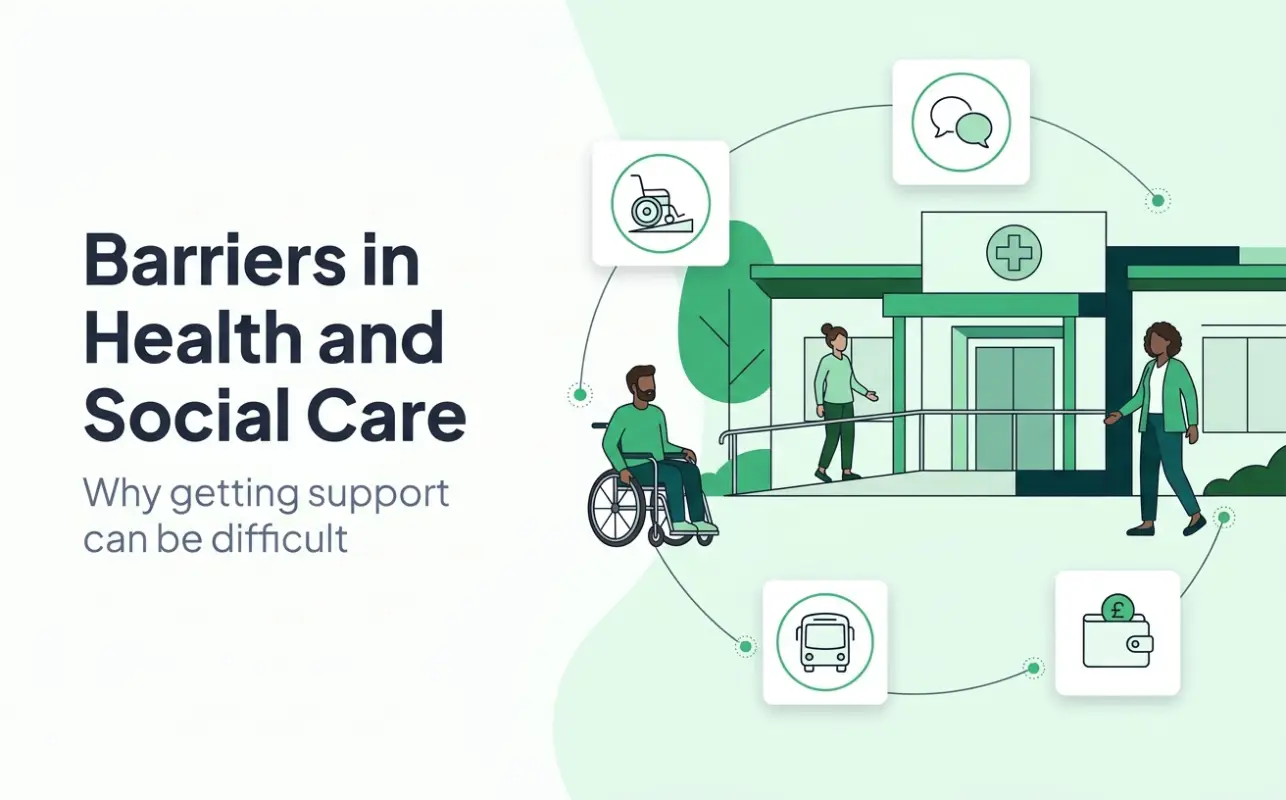
Getting healthcare or social care support should be straightforward, but everyday obstacles can make it difficult. Someone might struggle to reach a hospital, understand medical instructions or feel comfortable discussing their mental health. Even when services are available, they are not always accessible to everyone.
These difficulties are known as barriers in health and social care. They can delay treatment, limit independence and prevent people from receiving the support they need.
Understanding these barriers helps care workers, healthcare professionals and families recognise difficulties and find practical solutions. Here are the main types, their effects and ways to overcome them in UK care settings.
What Are Barriers in Health and Social Care?
services, communicate their needs or receive appropriate support.
Barriers can arise from physical environments, financial circumstances, communication difficulties, social attitudes or the way services operate.
For example, a person with hearing loss may struggle to understand appointment instructions. Someone living in a rural area might find it difficult to reach their nearest hospital.
Barriers are not always related to an individual’s circumstances. Sometimes, services need to adapt their facilities, information or procedures to accommodate different needs.
The terms barrier and obstacle are often used interchangeably in health and social care.



8 Common Types of Barriers in Health and Social Care
People may experience several barriers simultaneously. Understanding the following eight categories can help professionals identify difficulties and respond appropriately.
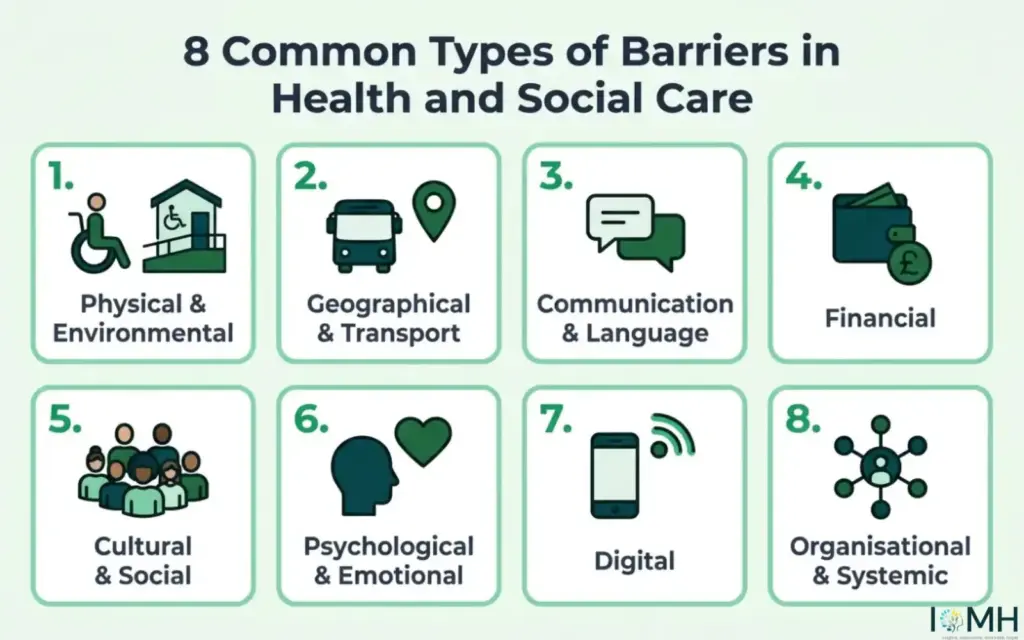
1. Physical and Environmental Barriers
Physical barriers occur when buildings, equipment or facilities are difficult for someone to use.
Common examples include:
- Inaccessible entrances or narrow doorways.
- Examination equipment unsuitable for wheelchair users.
- Poor lighting for people with visual impairments.
- Toilets without appropriate accessibility features.
For example, someone with limited mobility may struggle to attend an appointment if the examination room cannot accommodate their needs.
How to reduce them: Healthcare providers can improve accessibility through suitable entrances, adjustable equipment, accessible toilets and appropriate environmental adjustments.
2. Geographical and Transport Barriers
Living far from healthcare services can make attending appointments challenging, particularly in rural communities.
Limited public transport, long journeys and inaccessible vehicles may prevent someone from receiving regular support.
An older person living alone, for example, might struggle to reach a clinic without assistance.
How to reduce them: Services can explore accessible transport arrangements, community outreach, flexible appointments and remote consultations when clinically appropriate.
3. Communication and Language Barriers
Communication barriers occur when people cannot easily understand information or express their needs.
They may involve hearing difficulties, language differences, speech impairments or complicated medical terminology.
For example, someone who does not speak English confidently may struggle to understand treatment instructions without an appropriate interpreter.
Clear communication helps care workers recognise individual needs, prevent misunderstandings and provide appropriate support. Developing effective communication skills in health and social care can help professionals communicate more confidently with people who have different needs.
How to reduce them: Use plain language, professional interpreters, accessible formats, communication aids and sufficient time for discussion.
Care professionals can also develop effective communication skills in health and social care to support understanding and build trust.
4. Financial Barriers
Financial pressures can make accessing healthcare and social care more difficult.
Although NHS healthcare is generally free at the point of use, people may still face transport expenses, childcare costs or lost earnings when attending appointments.
Adult social care funding operates differently, and some individuals may contribute towards their care following appropriate assessments.
For example, someone may postpone a hospital appointment because they cannot afford the journey.
How to reduce them: Professionals can explain available support and direct individuals towards appropriate services. The NHS Low Income Scheme may help eligible people with certain healthcare expenses, including qualifying travel costs.
5. Cultural, Social and Attitudinal Barriers
Cultural backgrounds, beliefs and previous experiences can influence how comfortable people feel using care services.
Barriers may arise through stereotyping, discrimination, cultural misunderstandings or disrespectful attitudes.
Someone may hesitate to discuss a sensitive health concern if they believe their beliefs or preferences will not be respected.
How to reduce them: Care professionals should listen without judgement, respect personal preferences and provide inclusive support.
Understanding discrimination in health and social care also helps professionals recognise unfair treatment and address circumstances that prevent equal access.
6. Psychological and Emotional Barriers
Emotional difficulties can influence someone’s willingness or confidence to seek support.
Examples include:
- Anxiety about medical appointments.
- Fear of receiving a diagnosis.
- Embarrassment when discussing personal needs.
- Mental health stigma.
- Previous negative healthcare experiences.
Someone experiencing depression, for instance, may delay asking for help because they worry about being judged.
How to reduce them: Professionals can build trust through respectful conversations, appropriate reassurance and clear explanations of confidentiality.
For care workers interested in strengthening their understanding, IOMH’s Mental Health Awareness Diploma explores mental health conditions, social attitudes and related support needs.
7. Digital Barriers
Healthcare services increasingly use online systems for appointments, information and communication.
However, some people have limited internet access, unsuitable devices or difficulty using digital technology.
For example, an older adult might struggle with online appointment booking but feel comfortable arranging care over the telephone.
Digital systems can also create accessibility difficulties for people with certain disabilities.
How to reduce them: Providers can offer accessible alternatives, including telephone booking, in-person assistance and suitable digital support.
8. Organisational and Systemic Barriers
Some barriers arise from how care services are organised.
Long waiting times, complicated referrals, limited appointment availability and poor communication between organisations can make accessing support more difficult.
For example, someone receiving care from several services might repeatedly explain the same information because teams are not communicating effectively.
How to reduce them: Clear referral pathways, improved coordination, flexible procedures and accurate information-sharing can help services respond more effectively.
Understanding how care systems operate is also valuable for staff. IOMH’s Level 3 Diploma in Health and Social Care introduces areas such as professional responsibilities, safeguarding, equality and care practices.
How Do Barriers Affect People Receiving Care?
Barriers can influence health, confidence, independence and overall quality of life. Their effects may become more significant when several difficulties occur together.
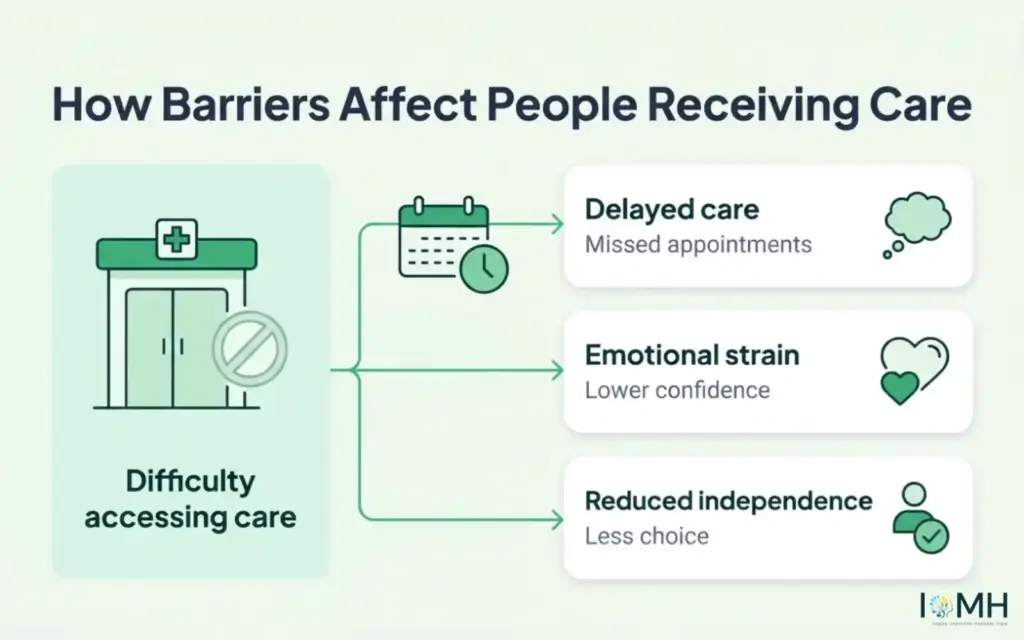
Delayed Treatment and Unmet Care Needs
People may miss appointments, postpone assessments or struggle to follow treatment instructions.
For someone managing a long-term condition, repeated appointment difficulties can interrupt monitoring and ongoing care.
Unmet social care needs may also affect everyday activities, including preparing meals, personal care and maintaining independence.
Emotional Distress and Loss of Trust
Repeated difficulties accessing services may leave individuals feeling frustrated, embarrassed or overlooked.
Someone who previously struggled to explain their needs might become less confident about contacting healthcare professionals.
Supportive communication and consistent care can help rebuild confidence.
Inequality, Independence and Quality of Life
Barriers affect people differently depending on their circumstances.
A person with dementia may find complex appointment instructions confusing, while someone with a learning disability may benefit from accessible explanations or additional communication time.
Understanding these differences is important for inclusive care. IOMH’s Awareness of Mental Health, Dementia and Learning Disabilities Training offers relevant learning for people supporting individuals with different needs.
Removing avoidable barriers helps people participate more confidently in decisions about their care.
How Can Barriers in Health and Social Care Be Overcome?
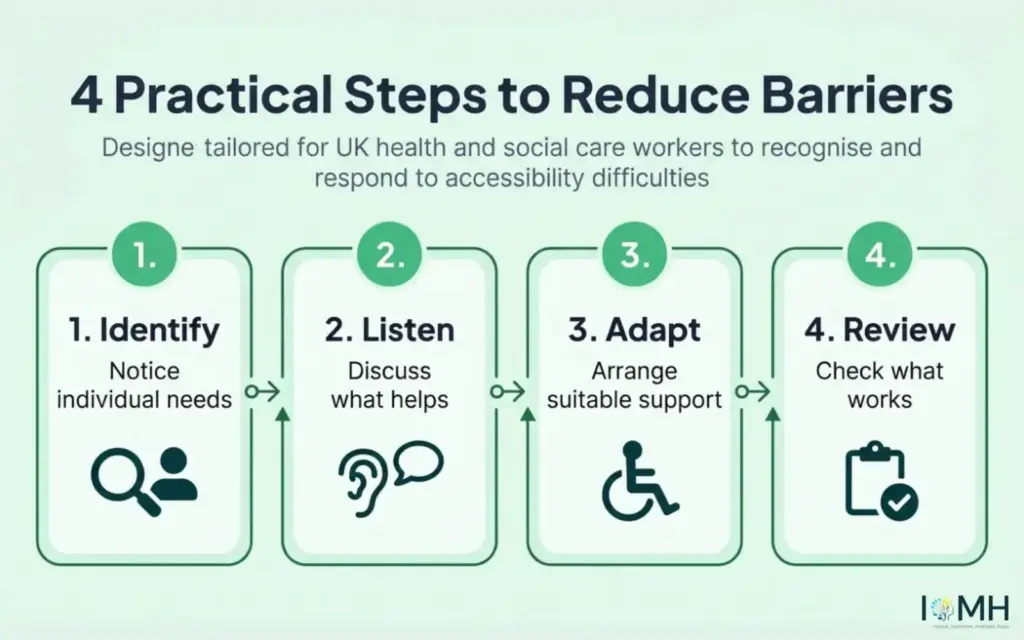
Reducing barriers begins with recognising individual needs and identifying suitable ways to make services more accessible.

Identify Individual Needs Before Making Assumptions
Care workers should ask open questions, listen carefully and involve individuals in discussing their difficulties.
For example, if someone repeatedly misses appointments, staff can explore whether transport, anxiety or inaccessible information is contributing to the problem.
Understanding the reason helps professionals identify appropriate support.
Make Communication and Services More Accessible
Practical improvements include:
- Providing information in accessible formats.
- Arranging qualified interpreters when required.
- Offering suitable appointment alternatives.
- Allowing additional communication time.
- Making reasonable adjustments to facilities and procedures.
The most appropriate solution depends on the person’s circumstances and preferences.
Provide Person-Centred and Inclusive Support
Person-centred care involves considering someone’s individual needs, choices and preferences when planning and delivering support.
This includes respecting privacy, supporting participation in decisions and recognising cultural or communication needs.
In England, person-centred care requirements under CQC Regulation 9 require relevant registered providers to deliver care based on individual needs and preferences.
Professionals can also strengthen inclusive practice by promoting equality and diversity in health and social care.
Strengthen Staff Awareness and Service Coordination
Care workers need to recognise barriers, communicate concerns appropriately and understand when additional support is required.
Organisations can help through relevant training, accessible procedures and better coordination between teams.
For example, mental health support workers may assist individuals in communicating their concerns and identifying appropriate support services.
Those interested in developing relevant knowledge can explore IOMH’s Mental Health Support Worker course, which covers mental health conditions, support approaches and service-user participation.
UK Rights and Responsibilities When Reducing Barriers
In the UK, accessibility and equality are supported by legal responsibilities and professional expectations.
In England, Scotland and Wales, the Equality Act 2010 protects people from unlawful discrimination. Service providers also have duties concerning reasonable adjustments for disabled people.
In England, the Care Act 2014 provides a framework for assessing adults who appear to have care and support needs. An adult care needs assessment considers what assistance someone may require, with financial assessments addressed separately.
Relevant legal frameworks and service arrangements differ across the UK, particularly in Northern Ireland.
Alongside these responsibilities, respectful communication, flexibility and person-centred practice help create more accessible care experiences.
Conclusion
Barriers in health and social care can affect how people access services, understand information and receive support.
Whether the difficulty involves transport, communication, financial pressures or organisational procedures, recognising the cause helps professionals identify practical solutions.
By improving accessibility, listening to individual needs and providing person-centred support, care workers and organisations can help more people receive appropriate care with dignity and confidence.
FAQs
Common barriers include transport difficulties, inaccessible buildings, communication problems, financial pressures and anxiety about seeking treatment. Complicated booking systems or limited appointment availability can also affect access.
Both terms generally describe something that makes accessing or receiving care more difficult. In everyday health and social care discussions, they are often used interchangeably.
Yes. Someone living in a rural area might face transport difficulties, financial pressures and anxiety about appointments. Recognising these combined challenges helps professionals plan suitable support.
Early identification allows care workers and organisations to consider adjustments before difficulties interrupt care. It can improve communication, support attendance and help individuals participate in decisions about their wellbeing.

- All Courses
 Personal Development (1283)
 Career Bundle (479)
 Management & Administration (460)
 Employability (439)
 Health & Social Care (416)
 Health and Safety (383)
 Business (320)
 Teaching & Education (268)
 IT & Software (263)
 Health and Fitness (238)
 QLS Endorsed Courses (219)
 Mental Health & Counselling (169)
 Science & Technology (153)
 Accounting & Finance (144)
 Sales & Marketing (128)
 Construction & Engineering (126)
 Art & Design (125)
 Compliance & Law (112)
 Language (86)
 Photography & Lifestyle (58)
 Animal Care (57)
 Food Safety & Hygine (53)
 Diet & Nutrition (49)
 Sports & Fitness (47)
 Makeup & Beauty (43)
 First Aid (39)
 Agriculture (2)
0 responses on "Barriers in Health and Social Care: Why People Can't Get Help"