



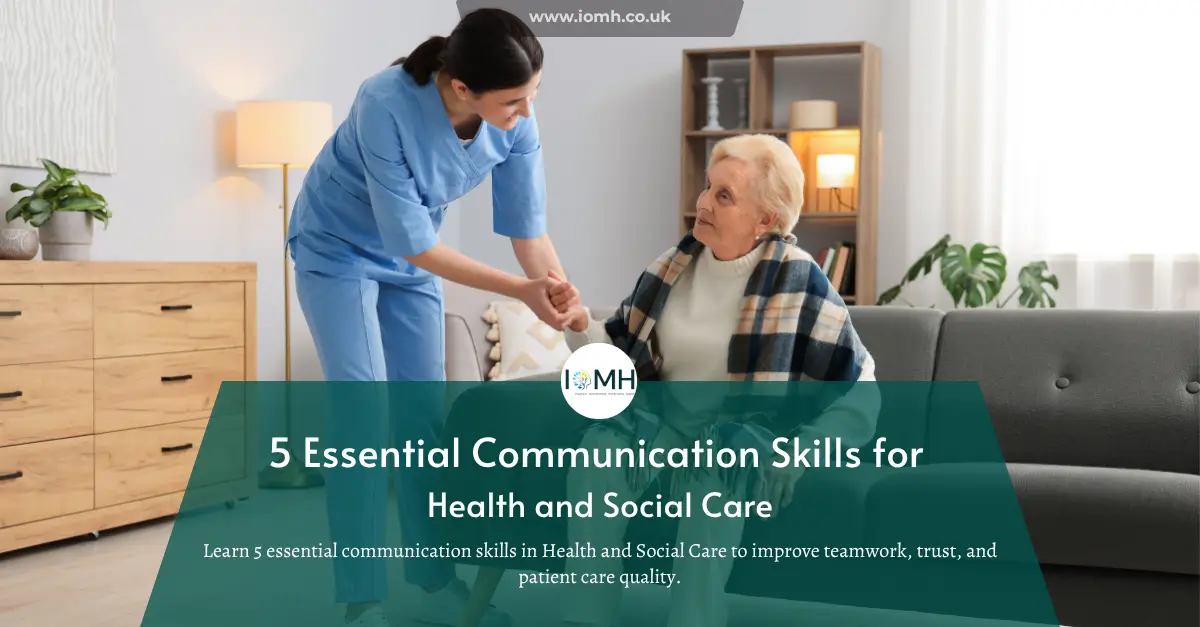
Communication in health and social care is more than just talking—it’s the foundation of safe, respectful, and high-quality care. Every day, professionals use communication to share important information, support patients, reduce mistakes, and build trust.
When communication is poor, misunderstandings grow, stress increases, and errors can happen. But when it is strong, patients feel supported, staff work well together, and care services run smoothly. That is why communication skills in health and social care are essential in every setting, whether it’s a busy NHS hospital, an adult care home, or a community support service.
In this blog, we’ll explore five essential communication skills every care professional should master:
- Active listening
- Clear verbal communication
- Meaningful non-verbal communication
- Overcoming communication barriers
- Teamwork and professional communication
These skills are not just techniques—they are everyday practices that ensure patients feel respected, supported, and truly cared for, while also helping staff deliver safe, reliable, and high-quality care.
Active Listening in Health and Social Care
Active listening means more than simply hearing words—it is about truly paying attention. It involves focusing on what the other person is saying, noticing their tone of voice, and picking up on their emotions. For patients, active listening makes them feel that their concerns are taken seriously.
In Health and Social Care UK, active listening is like opening a door that allows patients and colleagues to feel genuinely understood. For example, when a patient explains their symptoms, a Nursing Assistant who listens closely is more likely to understand the problem correctly and respond with the right support.
Active listening also creates a safe space where patients feel comfortable sharing personal details. When they feel heard and respected, trust grows—and this trust encourages them to speak more openly about their needs.
Within teams, active listening prevents misunderstandings during handovers, reduces mistakes in patient care, and helps colleagues work smoothly together. In short, it’s a simple skill with life-changing results: better care, stronger relationships, and a safer environment.



Verbal Communication Skills in Health and Social Care
Verbal communication skills in Health and Social Care are the foundation of how professionals share information, explain treatments, and provide reassurance. It’s not just about what is said, but how it is said.
Patients in hospitals, Adult Social Care, or Health and Social Care Level 3 settings may already feel anxious or unwell. Using clear, simple, and calm language makes a big difference. Avoiding medical jargon ensures that patients understand instructions. Speaking too quickly or sharply can cause confusion and stress, while a warm and steady tone can make patients feel safe and cared for.
Verbal communication is also vital among professionals. Clear and accurate conversations between nurses, doctors, and Nursing Assistants mean that important details are not missed. For example, when a nurse gives a handover to the night shift, every detail must be explained clearly. This keeps patient care consistent and reduces risks.
In essence, The Role of Communication in Health and Social Care is to keep care clear, safe, and human—helping both patients and professionals work together more effectively.
Non-Verbal Communication in Health and Social Care
Non-verbal communication is often called the “silent language” of care. It includes body language, posture, eye contact, facial expressions, and even gestures. These signals may not use words, but they communicate powerful messages about empathy, respect, and attention.
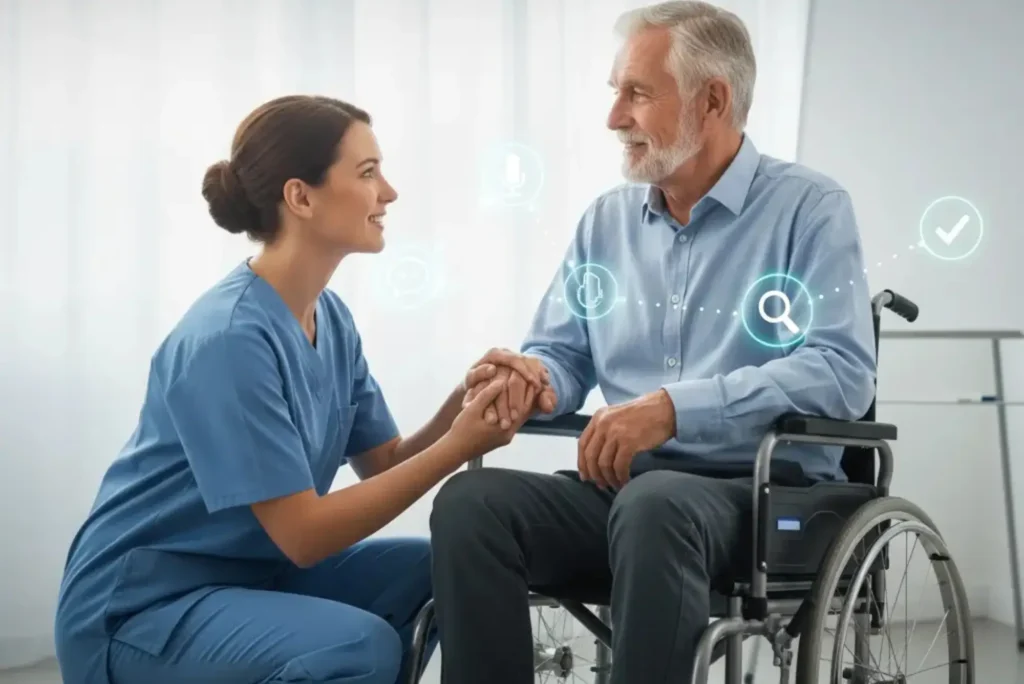
For example, a gentle smile, steady eye contact, or a reassuring hand on the shoulder can comfort a nervous patient without a single word. A professional who faces a patient while speaking shows they are fully engaged, while crossed arms or a distracted look can send the wrong message.
Non-verbal communication is especially important when working with people who have communication difficulties. Patients with speech impairments, hearing loss, or language barriers often rely on body language and facial expressions to understand others. Professionals who are aware of this can bridge gaps and make patients feel included.
In Health and Social Care, non-verbal signals often speak louder than words. When used with care, they show compassion, build trust, and make patients feel respected and safe.
Overcoming Communication Barriers in Health and Social Care
Good communication does not always come easily. There are many communication barriers in Health and Social Care that can make it harder for people to share or understand information. These include:
- Language differences between patients and staff
- Disabilities such as hearing, speech, or vision difficulties
- Cultural differences that affect communication styles
- Emotional barriers such as stress, fear, or anxiety
For example, a patient who does not speak English fluently may struggle to understand treatment instructions, or a person with hearing loss may miss important details during conversations.
The first step to overcoming these barriers is recognising them. Care professionals can then take practical steps, such as:
- Using plain and simple language
- Providing written information or visual aids
- Adopting assistive technology for patients with hearing or vision impairments
- Practising patience and showing empathy
By breaking down these barriers, professionals ensure that every patient feels included, respected, and able to participate in their own care. This is why good communication skills in Health and Social Care are vital for equality, inclusion, and quality outcomes.
Teamwork and Professional Communication in Health and Social Care
Health and Social Care is never delivered by one person alone—it relies on teamwork and professional communication. From doctors and nurses in NHS hospitals to carers in Adult Care, every professional plays a unique role. But the link that keeps everything connected is clear communication.
Effective teamwork communication involves:
- Accurate record-keeping
- Clear and detailed handovers
- Sharing updates quickly and effectively
- Respectful and supportive dialogue
When these practices are followed, care becomes safer and more consistent. For example, if one nurse forgets to share vital information about a patient’s medication, the risk of error increases. But when communication is clear, every team member has the details they need to provide safe and effective care.
Strong professional communication also improves working relationships. When staff feel listened to and respected, teamwork becomes smoother, stress decreases, and morale improves. Ultimately, Effective Communication Skills in Health and Social Care strengthen both patient care and staff wellbeing.
Why Communication Skills Are the Foundation of Care
The five communication skills in Health and Social Care discussed above are not optional—they are essential for anyone working in care. Each one contributes to better care on its own, but together they form the foundation of safe, respectful, and effective practice.
- Active listening helps patients and colleagues feel valued and understood.
- Verbal communication makes information clear and easy to follow.
- Sharing updates quickly and effectively
- Respectful and supportive dialogue
When combined, these skills transform patient experiences. Patients feel supported, teams work effectively, and care becomes more reliable. Without them, professionals risk providing care that is confusing, unsafe, or unequal. This clearly answers why good communication skills are important in Health and Social Care—because they directly shape quality, safety, and compassion in every interaction.
How to Improve Communication Skills in Health and Social Care
Communication is not something you master once—it is a skill that develops throughout your career. Even the most experienced professionals benefit from regular practice and reflection.
Here are some simple ways to improve communication skills:
- Practise active listening by giving full attention during conversations.
- Use plain language and avoid jargon to make instructions clear.
- Focus on tone and pace to keep speech calm and reassuring.
- Pay attention to non-verbal signals such as body language and eye contact.
- Learn how to overcome barriers with visual tools, written notes, or interpreters.
- Take part in training courses on communication in health and social care to refresh skills.
By working on these areas, professionals stay confident, adaptable, and effective. Better communication benefits both patients and staff—improving safety, teamwork, and the quality of care overall.
Conclusion
At its heart, communication in health and social care is about connection, respect, and understanding. It is not just a professional tool—it is the very core of quality care.
Without strong communication, care can become unsafe, confusing, or unequal. With it, patients feel heard and respected, teams work together effectively, and services reach the highest standards.
By focusing on active listening, verbal clarity, non-verbal signals, overcoming barriers, and teamwork, professionals can deliver care that is safe, inclusive, and compassionate. In every hospital, care home, and community setting, strong communication is the skill that makes care truly caring.


- All Courses
 Personal Development (1283)
 Career Bundle (479)
 Management & Administration (460)
 Employability (439)
 Health & Social Care (411)
 Health and Safety (382)
 Business (320)
 Teaching & Education (268)
 IT & Software (263)
 Health and Fitness (238)
 QLS Endorsed Courses (219)
 Mental Health & Counselling (168)
 Science & Technology (153)
 Accounting & Finance (144)
 Sales & Marketing (128)
 Construction & Engineering (126)
 Art & Design (125)
 Compliance & Law (112)
 Language (86)
 Photography & Lifestyle (58)
 Animal Care (57)
 Food Safety & Hygine (53)
 Diet & Nutrition (49)
 Sports & Fitness (47)
 Makeup & Beauty (43)
 First Aid (39)
 Agriculture (2)
0 responses on "5 Essential Communication Skills for Health and Social Care"