





Although empowerment is a key principle in both healthcare and social care, professionals apply it in slightly different ways depending on the setting. In both areas, the aim remains the same: to support individuals to have a voice, make informed decisions, and feel respected in their care.

Introduction
Discrimination in health and social care seriously affects the quality of care people receive and the way services operate. In the UK, health and social care services uphold key values such as dignity, respect, equality, and person-centred care. However, when discrimination occurs, it undermines these values and causes individuals to feel excluded, ignored, or treated unfairly.
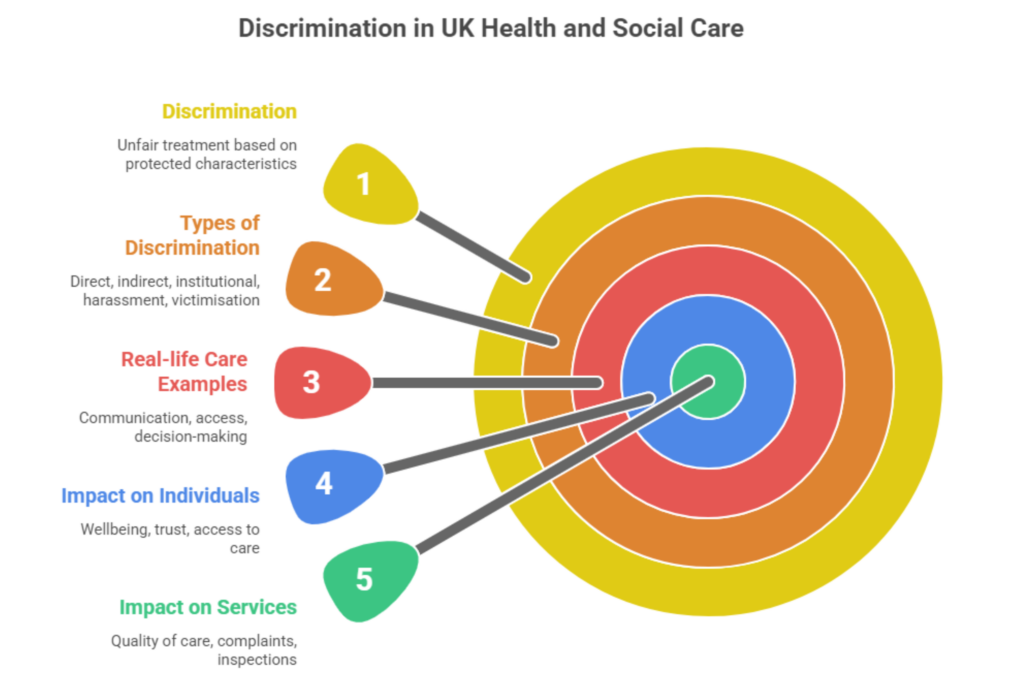
This blog therefore explains what discrimination in health and social care means, why it occurs, the different types of discrimination, and how it appears in real-life care settings. In addition, it examines the impact discrimination has on individuals and services and outlines practical ways to prevent it. Written in clear and simple language, this content supports learners studying a Health and Social Care Level 3 Diploma or Level 3 Diploma in Health and Social Care and strengthens their understanding of equality and good care practice.

What Do We Mean by Discrimination?
When we talk about discrimination, we are referring to unfair or unequal treatment of a person or group based on certain characteristics. These characteristics may include age, disability, gender, race, religion, sexual orientation, or other personal traits.
Discrimination is not always obvious. Sometimes it is direct and intentional. Other times, it happens because of rules, habits, or systems that unintentionally disadvantage certain people.
In health and social care, discrimination is especially harmful because people using services are often vulnerable, unwell, or dependent on others for support. Everyone has the right to receive care that respects their dignity, choices, beliefs, and individual needs.
Definition of Discrimination in Health and Social Care
Discrimination in health and social care occurs when care providers treat individuals unfairly or unequally while they access or receive care and support services. It happens when people do not receive the same level of respect, opportunities, or quality of care as others because of personal characteristics such as age, disability, race, gender, religion, or sexual orientation.
In health and social care settings, discrimination can involve care professionals treating someone less favourably, overlooking or dismissing their needs, or limiting their ability to make choices about their own care. In more serious cases, services may deny individuals access to care altogether.
This behaviour directly contradicts the core values of health and social care, including dignity, equality, and person-centred care. It also breaches professional standards and UK law.
Why Discrimination Happens in Health and Social Care
Discrimination in health and social care does not always happen intentionally. In many cases, it develops because of attitudes, systems, or pressures within care environments. Understanding why discrimination happens is important, as it helps care professionals recognise problems early and take steps to prevent unfair treatment.
Health and social care settings are often fast-paced and demanding. Without the right support, training, and leadership, discrimination can become part of everyday practice and go unchallenged.
Some of the most common reasons discrimination happens in health and social care include:
- Lack of training or awareness When staff are not properly trained in equality, diversity, and inclusion, they may not recognise discriminatory behaviour or understand the impact it has on individuals
- Personal bias or stereotypes Care professionals may hold unconscious beliefs or assumptions about certain groups, which can influence how they communicate, make decisions, or deliver care.
- Poor policies or unfair systems Organisational policies or procedures may unintentionally disadvantage certain individuals or groups, especially if equality is not considered during planning.
- Limited understanding of different cultures or disabilities Without cultural awareness or disability knowledge, care providers may fail to meet individual needs or make incorrect assumptions about a person’s abilities or preferences.
- Time pressure and staff shortages When services are under pressure, staff may take shortcuts, leading to unequal treatment or reduced attention to individual needs.
- Weak leadership or negative workplace culture If managers do not promote equality or challenge poor behaviour, discrimination is more likely to be ignored or accepted within the workplace.
Although discrimination is sometimes unintentional, this does not reduce its impact. Even when it is not done on purpose, discrimination can still cause serious harm, affect wellbeing, and lead to poor outcomes for individuals receiving care.
Types of Discrimination in Health and Social Care
Understanding the different types of discrimination is essential for learners and care professionals working in health and social care. It helps them identify unfair treatment, understand its impact, and take appropriate steps to challenge it. Discrimination can appear in many ways within care settings and is not always obvious or intentional.
Below are the main types of discrimination commonly found in health and social care:
Direct Discrimination
Direct discrimination occurs when someone treats a person less favourably than others because of a specific personal characteristic, such as disability, race, religion, age, or gender. This type of discrimination is often clear and deliberate.
Example: A care provider refuses to offer care or support to an individual because of their disability or religious beliefs.
Indirect Discrimination
Indirect discrimination happens when a policy, rule, or practice applies to everyone but unfairly disadvantages certain groups of people. Although it may appear neutral, its impact can be discriminatory.
Example: Providing important care information only in written English, which may disadvantage individuals whose first language is not English or those with reading difficulties.
Institutional Discrimination
Institutional discrimination refers to unfair treatment that is built into an organisation’s policies, systems, or procedures. It can be harder to identify because it is often accepted as standard practice.
Example: Care services failing to provide accessible facilities or appropriate equipment for wheelchair users.

Harassment
Harassment is a form of discrimination that involves unwanted behaviour linked to a person’s characteristics. It can cause emotional distress and create an intimidating, hostile, or offensive environment.
Example: Making offensive comments or jokes about a person’s race, disability, or personal background.
Victimisation
Victimisation occurs when someone treats an individual unfairly because they have made a complaint about discrimination or supported someone else who has experienced it.
Example: A care worker faces exclusion or unfair treatment at work after reporting discriminatory behaviour.
Recognising and understanding these different types of discrimination helps ensure that health and social care environments remain safe, respectful, and inclusive for everyone.
Examples of Discrimination in Health and Social Care
Discrimination in health and social care can happen in many everyday situations. It may be intentional or unintentional, but it can still have a serious impact on the quality of care and a person’s dignity. Recognising real-life examples helps learners and care professionals understand how discrimination can appear in practice.

Common examples of discrimination in health and social care include:
- Ignoring or failing to meet a service user’s religious or cultural needs, such as dietary requirements or prayer practices
- Speaking to a disabled person in a patronising way or treating them as if they are a child
- Refusing to involve same-sex partners in care planning or decision-making
- Not providing interpreters or communication support for individuals who do not speak English well
- Making assumptions about a person’s abilities, needs, or independence based solely on their age
These examples show how discrimination can reduce choice, dignity, and equality in care. Addressing such behaviour is essential to ensure fair, respectful, and person-centred health and social care services.
Manifestations of Discrimination in Care Settings
Discrimination can occur in a wide range of health and social care environments. It is not limited to one type of service and can affect individuals wherever care and support are provided. Understanding where and how discrimination appears helps care professionals recognise it and take steps to prevent it.
Discrimination may occur in settings such as:
- Hospitals
- Care homes
- Domiciliary (home-based) care services
- GP surgeries
- Community health and social care services
In these settings, discrimination can show itself in several ways, including:
- Poor or ineffective communication with service users
- Limited choice or lack of involvement in care decisions
- Unequal or unfair treatment compared to others
- A lack of dignity, respect, or sensitivity
- Unsafe, inappropriate, or unsuitable care plans that do not meet individual needs
Identifying these signs of discrimination is vital to making sure that all care environments remain safe, respectful, and focused on meeting each individual’s needs.
Impact of Discrimination on Individuals
Discrimination can have deep and long-lasting effects on individuals who rely on health and social care services. When people are treated unfairly or made to feel different, it can seriously affect their confidence, wellbeing, and overall quality of life.
The impact of discrimination may include:
- Increased levels of stress, anxiety, and reduced self-esteem
- Worsening of existing physical or mental health conditions
- Loss of trust and confidence in health and social care services
- Fear or hesitation when seeking help or support
- Feelings of isolation, exclusion, or a lack of control over their own care
For vulnerable individuals, discrimination can increase the risk of harm, reduce independence, and prevent them from receiving the safe, compassionate, and person-centred care they need.
Impact of Discrimination on Health and Social Care Services
Discrimination does not only affect individuals who receive care; it also has a significant impact on health and social care organisations and the way services operate. When discrimination is allowed to continue, it can undermine professional values, reduce service effectiveness, and create unsafe care environments.
Discriminatory practices can harm health and social care services in several ways, including:

- Lower quality of care: Unequal treatment and poor communication can lead to inconsistent and unsafe care outcomes.
- Increased complaints and safeguarding issues: Service users are more likely to raise concerns when they feel unfairly treated or excluded.
- Reduced staff morale: Working in a discriminatory environment can make staff feel unsupported, stressed, and unmotivated.
- Higher staff turnover and burnout: Ongoing pressure and unfair treatment can cause experienced staff to leave, leading to staffing shortages.
- Loss of trust and reputation: Discrimination damages public confidence and can harm the reputation of the organisation within the community.
Health and social care services that fail to challenge discrimination are more likely to fall below required standards and perform poorly during inspections and quality assessments, putting both service users and the organisation at risk.
Discrimination and Diversity in Health and Social Care
Diversity in health and social care means recognising, respecting, and valuing the differences between individuals. These differences may include culture, beliefs, language, abilities, age, gender, and personal backgrounds. Embracing diversity helps ensure that care is fair, respectful, and responsive to individual needs.
When diversity is not acknowledged or respected, discrimination is more likely to occur. Inclusive care focuses on meeting the unique needs of each person and promoting equality across all services. This includes:
- Treating every individual with dignity and respect
- Respecting personal choices, beliefs, and preferences
- Adapting care and support to meet different needs
- Promoting equality and fairness in all care practices
By valuing diversity and promoting inclusion, health and social care services can reduce discrimination and create safer, more supportive environments for everyone.
Addressing and Combating Discrimination
Discrimination in health and social care can be reduced and prevented through positive actions, awareness, and good practice. Creating fair and inclusive care environments requires commitment from individuals, teams, and organisations.
Effective ways to address and combat discrimination include:
- Providing regular training for staff on equality, diversity, and inclusion
- Challenging stereotypes, prejudice, and unconscious bias
- Using person-centred approaches that respect individual needs and choices
- Listening to service users and their families and involving them in care decisions
- Having clear policies and procedures for reporting and dealing with discrimination
- Encouraging open, respectful, and honest communication
Everyone working in health and social care has a responsibility to recognise, challenge, and report discrimination to help ensure care is delivered in a safe, respectful, and inclusive way.

Legislation and Guidelines Against Discrimination in the UK
In the UK, discrimination is against the law, and health and social care services have a legal and professional duty to promote equality and protect individuals from unfair treatment.
The Equality Act 2010 is the main piece of legislation that protects people from discrimination. It covers protected characteristics such as age, disability, race, religion, gender, and sexual orientation. Under this law, health and social care providers must ensure that services are accessible, fair, and inclusive for everyone, and that no one is treated less favourably because of who they are.
The Care Quality Commission (CQC) is responsible for inspecting and regulating health and social care services in England. The CQC assesses whether services are safe, effective, caring, responsive, and well-led. Promoting equality, diversity, and inclusion is a key part of these quality standards, and services that fail to address discrimination may receive poor inspection ratings.
The NHS also has clear policies and guidance in place to prevent discrimination and promote equal access to healthcare. NHS organisations are expected to treat all patients with dignity and respect, make reasonable adjustments where needed, and ensure fair access to services for all communities.
Together, these laws and guidelines help ensure that discrimination is challenged and that health and social care services provide safe, fair, and inclusive care for everyone.
Promoting Equality and Inclusive Care
Promoting equality in health and social care means ensuring that everyone has fair access to care and support, while recognising that different people may need different levels of support. Equality is about fairness, not treating everyone in exactly the same way.

Promoting equality and inclusive care involves:
- Treating people fairly by recognising individual needs rather than using a “one-size-fits-all” approach
- Making reasonable adjustments to support people with disabilities or additional needs
- Respecting each person’s rights, dignity, beliefs, and values
- Supporting independence, choice, and involvement in care decisions
Inclusive care leads to safer, more effective, and more compassionate services, where individuals feel respected, valued, and supported.
Final Thoughts
Understanding and challenging discrimination in health and social care is essential for learners, professionals, and organisations alike. Discrimination undermines trust, negatively affects individuals, and reduces the overall standard of care.
By learning to recognise discrimination, valuing diversity, following legal requirements, and promoting equality in everyday practice, health and social care services can deliver care that is fair, respectful, and truly person-centred.
This understanding is particularly important for those studying or working towards a Health and Social Care Level 3 Diploma, where promoting dignity, equality, and inclusion is central to providing high-quality care.

- All Courses
 Personal Development (1283)
 Career Bundle (479)
 Management & Administration (460)
 Employability (439)
 Health & Social Care (411)
 Health and Safety (382)
 Business (320)
 Teaching & Education (268)
 IT & Software (263)
 Health and Fitness (238)
 QLS Endorsed Courses (219)
 Mental Health & Counselling (168)
 Science & Technology (153)
 Accounting & Finance (144)
 Sales & Marketing (128)
 Construction & Engineering (126)
 Art & Design (125)
 Compliance & Law (112)
 Language (86)
 Photography & Lifestyle (58)
 Animal Care (57)
 Food Safety & Hygine (53)
 Diet & Nutrition (49)
 Sports & Fitness (47)
 Makeup & Beauty (43)
 First Aid (39)
 Agriculture (2)
0 responses on "What Is Discrimination in Health and Social Care? Definition, Types, Examples & UK Law"