




Safeguarding is important because it protects children and adults from abuse, neglect, exploitation and other harm. It also promotes dignity, supports wellbeing and helps people recognise concerns before situations become more serious.
Whether you work in healthcare, social care, education or a community organisation, safeguarding is an important part of keeping people safe and ensuring they receive appropriate support.
But effective safeguarding goes beyond responding to incidents. It involves prevention, early recognition, professional responsibility and cooperation between individuals and organisations.
Here are eight reasons why safeguarding matters, with practical examples showing how it works in everyday situations.
What Does Safeguarding Mean?
Safeguarding means protecting people’s health, wellbeing and human rights while helping them live free from abuse, neglect and harm.
The Care Quality Commission’s safeguarding guidance explains that safeguarding is fundamental to high-quality health and social care.
Safeguarding applies to both children and adults, although the relevant laws, responsibilities and procedures differ.
For children, safeguarding focuses on protecting their welfare, development and safety. Adult safeguarding also emphasises independence, individual choices and the right to live safely.
In practice, safeguarding includes recognising risks, preventing harm, responding to concerns and ensuring people receive appropriate support.



8 Reasons Why Safeguarding Is Important
1. Protects People from Abuse and Neglect
One of the main reasons safeguarding is important is that it helps protect individuals from abuse, neglect and exploitation.
Abuse can take different forms, including physical, emotional, sexual and financial abuse. Neglect may involve failing to provide necessary care, support or attention.
Safeguarding helps professionals recognise possible warning signs and respond appropriately when concerns arise.
Example: A care assistant notices that a resident has unexplained injuries, frequently appears distressed and becomes unusually quiet around a particular visitor.
The care assistant records these observations and reports the concern through the organisation’s safeguarding procedure.
This allows the appropriate professionals to assess the situation and consider whether further support or protective action is required.
Safeguarding is especially valuable in environments where individuals rely on others for their daily care and wellbeing.
2. Helps Identify Risks Before Harm Escalates
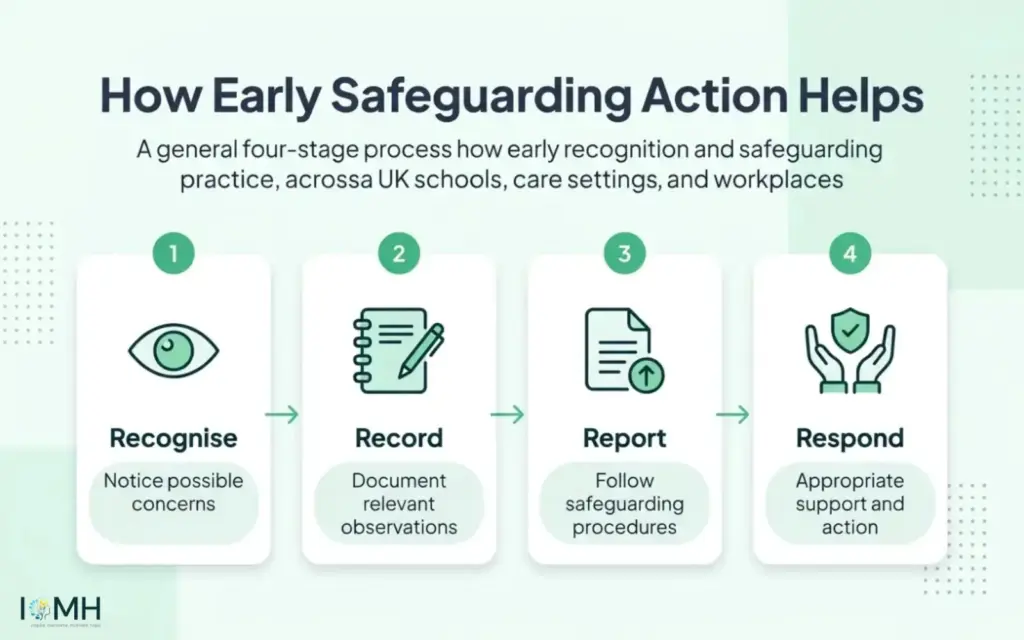
Safeguarding is not limited to responding after something has happened. It also involves recognising concerns early and taking appropriate preventive action.
Changes in behaviour, attendance, communication or personal circumstances may suggest that someone needs additional support.
Identifying these changes allows professionals to consider concerns before they develop into more serious situations.
Example: A teaching assistant notices that a pupil who previously participated confidently in lessons has become withdrawn and frequently misses school.
Rather than making assumptions, the teaching assistant shares these observations with the school’s designated safeguarding lead.
The safeguarding lead can then consider the information alongside other relevant circumstances and determine the appropriate response.
In England, Keeping Children Safe in Education 2026 sets out statutory safeguarding guidance for schools and colleges, including expectations for recognising and reporting concerns.
Early recognition is one of the most valuable aspects of effective safeguarding practice.
3. Protects Individual Rights, Dignity and Independence
Safeguarding protects people from harm while respecting their rights, preferences and personal choices.
For adults, this means involving them in decisions about their safety and support wherever appropriate.
It is important to consider what the individual wants to achieve rather than automatically making decisions on their behalf.

England’s Care and Support Statutory Guidance identifies six principles underpinning adult safeguarding: empowerment, prevention, proportionality, protection, partnership and accountability.
These principles of adult safeguarding help professionals balance protection with dignity, independence and personal choice.
Example: An older adult receiving home care tells a support worker that a relative has been pressuring them to hand over money.
The support worker listens carefully, records the concern and follows the appropriate safeguarding procedure while considering the adult’s wishes and circumstances.
This approach helps protect the individual while respecting their independence.
Safeguarding works best when people’s views remain central to decisions affecting their lives.
4. Creates Safer Schools, Care Settings and Workplaces
Safeguarding helps organisations create environments where people feel protected, respected and supported.
Clear safeguarding policies, professional boundaries and reporting procedures help staff understand their responsibilities.
In care settings, following standards for safe and respectful care also helps staff protect people’s rights and wellbeing.
A positive safeguarding culture also encourages employees and volunteers to recognise concerns and communicate them appropriately.
Example: A community organisation runs weekly activities for children.
Before volunteers begin working with participants, the organisation explains its safeguarding procedures, appropriate professional boundaries and who to contact if concerns arise.
These arrangements help volunteers understand how to contribute to a safer environment.
The importance of safeguarding in the workplace goes beyond written policies. Staff need to know how to apply those procedures in everyday situations.
For employers, planning appropriate safeguarding training for staff can help strengthen awareness and promote more consistent practice across teams.
5. Supports Children and Adults Who May Be at Greater Risk
Some people may experience greater safeguarding risks because of their circumstances, relationships or support needs.
Children depend on adults for protection and guidance, while some adults may rely on others for personal care, communication or daily activities.
Safeguarding encourages professionals to recognise individual needs and provide appropriate support without making assumptions about someone’s circumstances.
Example: A support worker notices that an adult with communication difficulties becomes distressed whenever a particular visitor arrives.
The worker uses accessible communication to help the person express their feelings, records relevant observations and follows the safeguarding procedure.
This creates an opportunity for the individual to communicate concerns and receive suitable support.
Effective safeguarding recognises that everyone deserves protection, dignity and respect, regardless of their age or circumstances.
6. Builds Trust and Encourages People to Speak Up
People may feel more confident raising concerns when they know someone will listen and respond respectfully.
Safeguarding helps create environments where children and adults understand whom they can approach for support.
Calm communication, appropriate professional boundaries and clear reporting procedures are important in building trust.
Example: A secondary school pupil tells a trusted teacher that someone has been sending them inappropriate messages online.
The teacher listens without judgement, takes the concern seriously and follows the school’s safeguarding procedure.
The pupil receives reassurance that the information will be handled appropriately.
This demonstrates why trust matters in safeguarding. When individuals feel supported, they may be more willing to communicate concerns and seek help.
Strong relationships between professionals, service users and families can also support a more open safeguarding culture.
7. Helps Staff Understand Their Safeguarding Responsibilities
Safeguarding is relevant to many professional roles, although responsibilities vary depending on the workplace and position.
Employees should understand how to recognise possible concerns, maintain professional boundaries and report information through the appropriate channels.
For example, frontline workers may be responsible for recognising and reporting concerns, while designated safeguarding leads may coordinate further action.
Example: A newly appointed care worker notices something concerning during a shift.
Because they have received safeguarding guidance, they understand what information to record, whom to contact and why the concern should be referred through the organisation’s established procedures.
Appropriate training helps professionals develop the knowledge needed to respond confidently and responsibly.
Understanding how safeguarding training levels differ can help professionals choose learning that reflects their responsibilities. Someone beginning a care role may need introductory awareness, while an employee with additional safeguarding duties may require further development.
Comparing Level 1 and Level 2 safeguarding training can help learners identify which approach better matches their responsibilities.
8. Encourages Organisations and Professionals to Work Together
Safeguarding often involves cooperation between professionals and organisations.
Schools, healthcare providers, social care services, local authorities and the police may all contribute to protecting individuals, depending on the circumstances.
Effective communication helps ensure concerns reach the appropriate people and relevant information is considered when decisions are made.
Example: A school becomes concerned about a child’s wellbeing following repeated absences and noticeable changes in behaviour.
The designated safeguarding lead follows the appropriate procedures, which may involve contacting children’s social care so that relevant professionals can consider whether the child and family need further support.
In England, Working Together to Safeguard Children 2026 provides statutory guidance on multi-agency working to help, support and protect children.
Cooperation helps professionals develop a clearer understanding of safeguarding concerns and coordinate appropriate responses.
Why Safeguarding Awareness and Training Matter
Understanding the importance of safeguarding is the foundation of effective practice.
Safeguarding awareness helps people recognise concerns, understand professional boundaries and follow appropriate procedures.
Training can also help employees understand their responsibilities and respond appropriately in different situations.
The training required depends on the person’s role, workplace and applicable guidance.
For those considering further development, knowing what Level 2 safeguarding training involves can help them identify suitable learning.
For example, someone starting work in social care may benefit from introductory safeguarding learning, while a manager or safeguarding lead may need more specialised knowledge.
It can also help to check which roles may benefit from Level 2 safeguarding training before choosing a course.

For learners considering further development, it is useful to understand what Level 2 safeguarding training covers and which professional roles may benefit from it.
Develop Your Knowledge with IOMH's Online Safeguarding Course
IOMH offers an Online Safeguarding Course – Level 2 for learners interested in developing their safeguarding knowledge.
The programme covers safeguarding principles, recognising concerns, relevant legislation, documentation and procedures for service providers.
Learners can study online at their own pace, with 12 months’ access to course materials and tutor support. The course includes assignment-based assessment and optional certificates following successful completion.
If you’re considering online learning, knowing what to check before choosing a safeguarding course with a certificate can help you compare your options.
The training is suitable for learners in healthcare, social care, education, community support and related settings.
It is a QLS-endorsed, non-regulated course designed to support knowledge development and continuing professional development.
Learners can review the course content and certificate options to decide whether the training meets their needs and relevant workplace expectations.
If you’re comparing learning options, reviewing typical safeguarding training costs can help you plan your professional development.
Conclusion: Why Safeguarding Matters Every Day
Safeguarding is important because it protects people from harm, promotes dignity, supports early intervention and creates safer environments.
From recognising possible abuse to responding appropriately and working with other professionals, safeguarding plays an important role in everyday care, education and community practice.
Developing safeguarding awareness helps individuals understand their responsibilities and contribute to environments where children and adults feel safe, respected and supported.

FAQs
The main purpose of safeguarding is to protect children and adults from abuse, neglect, exploitation and harm. It also promotes wellbeing, dignity, individual rights and appropriate support when concerns arise.
Safeguarding benefits from shared awareness because anyone working with children or adults may notice a concern. Employees and volunteers should understand their responsibilities and follow the safeguarding procedures relevant to their roles.
Safeguarding helps protect patients and service users from abuse, neglect and avoidable harm. It also supports dignity, independence, professional accountability and safer care environments.
Safeguarding protects children’s welfare, safety and development. It helps adults recognise concerns, create safer environments and ensure children receive appropriate support when needed.
Unaddressed safeguarding concerns may allow harmful situations to continue or become more serious. Recognising concerns early and following appropriate reporting procedures can help people receive timely support.
A teacher notices that a pupil has become unusually withdrawn and shares the concern with the designated safeguarding lead. The school can then consider whether the child requires additional support or protective action.

- All Courses
 Personal Development (1283)
 Career Bundle (479)
 Management & Administration (460)
 Employability (439)
 Health & Social Care (416)
 Health and Safety (383)
 Business (320)
 Teaching & Education (268)
 IT & Software (263)
 Health and Fitness (238)
 QLS Endorsed Courses (219)
 Mental Health & Counselling (169)
 Science & Technology (153)
 Accounting & Finance (144)
 Sales & Marketing (128)
 Construction & Engineering (126)
 Art & Design (125)
 Compliance & Law (112)
 Language (86)
 Photography & Lifestyle (58)
 Animal Care (57)
 Food Safety & Hygine (53)
 Diet & Nutrition (49)
 Sports & Fitness (47)
 Makeup & Beauty (43)
 First Aid (39)
 Agriculture (2)
0 responses on "8 Reasons Why Safeguarding Is Important in Everyday Life (UK Examples)"