




The Level 3 Diploma in Health and Social Care is a highly recognised qualification for anyone looking to begin a rewarding career in the UK care sector. It is suitable for beginners, career changers, and individuals who want to enter caring professions such as a Healthcare Assistant, Care Assistant, Support Worker, or Domiciliary Carer.
Across the UK, the demand for trained care professionals continues to rise each year. Due to an ageing population and the increasing need for support in hospitals, residential homes, and community services, the care sector provides long-term job security and meaningful employment opportunities.



What Is a Healthcare Assistant?
A Healthcare Assistant (HCA) plays a crucial role in caring for patients, often becoming the first friendly face they see in the morning and the reassuring presence they rely on at night. HCAs work closely with patients, helping them with everyday tasks and providing essential support for their physical and emotional wellbeing.
While doctors and nurses handle complex medical procedures, HCAs focus on hands-on care, including:

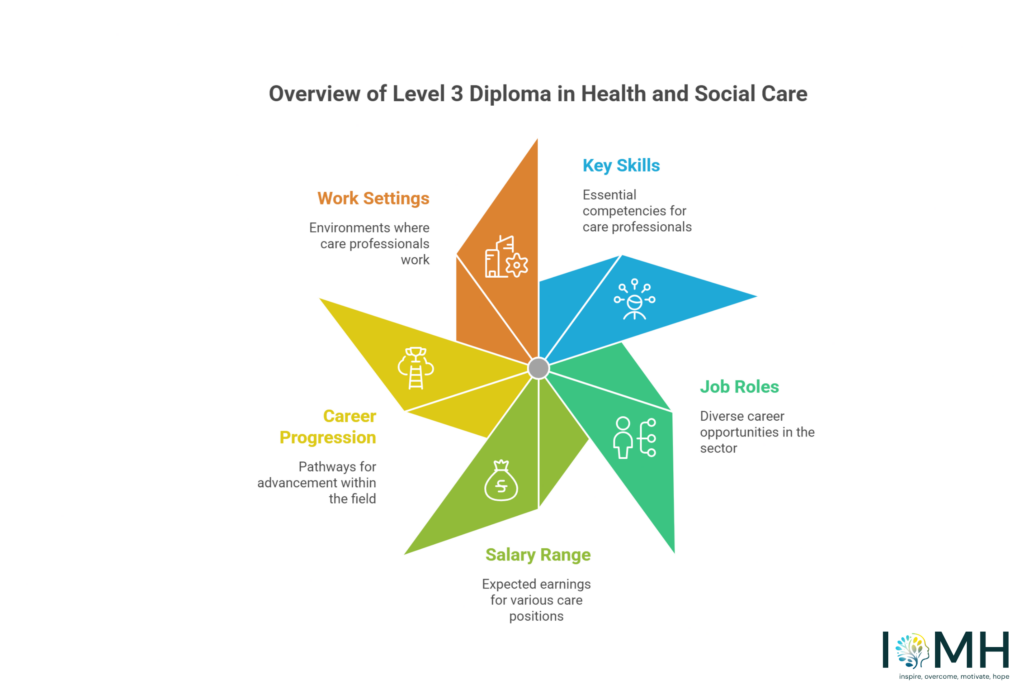
This guide is designed to give you a clear and simple overview of:
- Supporting daily activities like washing, dressing, and eating
- What skills and knowledge you will gain
- The types of jobs you can apply for
- Expected salary ranges
- Career progression opportunities
- Where you can work in the care sector
- Why this qualification is valuable for your future
If you are planning to start your journey in Health and Social Care Level 3, this guide will help you understand everything you need to take your next step with confidence.
What Will You Learn in the Level 3 Diploma in Health and Social Care?
The Level 3 Diploma in Health and Social Care is designed to give you the essential knowledge and practical skills needed to work confidently in real care settings. The course is focused on everyday situations you will face in jobs like Care Assistant, Support Worker, or Healthcare Assistant, so you are fully prepared for the workplace.
Below are the key topics you will learn, explained in a simple and easy way:
1. Safeguarding and Protection
Safeguarding is one of the most important parts of Adult Social Care. It means protecting vulnerable individuals from abuse, harm, neglect, or exploitation.
In any Health and Social Care role, safeguarding is a daily responsibility and ensures that every person is treated with dignity, respect, and safety.
What you will learn:
- How to recognise signs of abuse, neglect, or unsafe situations
- How to report safeguarding concerns correctly
- How to follow safeguarding laws and workplace policies
- How to protect the rights and wellbeing of individuals
- How to create a safe and supportive care environment
This topic is essential for anyone studying Health and Social Care Level 3, as it ensures vulnerable people are always protected.
2. Person-Centred Care
Person-centred care is a key principle in modern Health and Social Care. It means treating each person as an individual with their own needs, preferences, and choices.
Instead of using a “one-size-fits-all” approach, care is tailored to suit each person’s lifestyle, values, and wellbeing.
What you will learn:
- How to provide care based on individual needs and preferences
- How to support independence and personal decision-making
- How to respect cultural, emotional, and personal values
- How to build trust and positive relationships with service users
- How to involve individuals in planning their own care
This approach ensures care is respectful, personalised, and focused on improving quality of life.
3. Health and Safety in Care Settings
Health and safety are essential in all care environments, including hospitals, care homes, and community services. This topic teaches you how to reduce risks and maintain a safe workplace.
It protects both care workers and the people they support.
What you will learn:
- How to follow health and safety policies and procedures
- How to identify and prevent risks, accidents, and injuries
- How to use care equipment safely and correctly
- How to respond effectively in emergency situations
- How to maintain a clean and safe environment
This knowledge helps ensure safety standards are always met in Adult Care and healthcare settings.
4. Dementia and Mental Health Awareness
This unit helps you understand how to support people living with dementia, mental health conditions, or emotional challenges. These are very common in Adult Social Care, so having the right knowledge is essential.
The focus is on providing care with patience, empathy, and understanding, especially in sensitive situations.
What you will learn:
- How dementia affects memory, behaviour, and communication
- How to support individuals with mental health conditions
- How to respond calmly and respectfully in difficult situations
- How to reduce anxiety, confusion, and emotional distress
- How to promote wellbeing and create a positive care environment
This knowledge is especially important for roles like Healthcare Assistant, Support Worker, and Adult Care Worker.
5. Communication Skills
Effective communication is one of the most important skills in Health and Social Care Level 3. It helps build trust, improves care quality, and ensures individuals feel valued, respected, and understood.
Good communication also supports teamwork and ensures safe and effective care delivery.
What you will learn:
- How to communicate clearly, politely, and professionally in care settings
- How to listen actively and understand individual needs
- How to support people with speech, language, or hearing difficulties
- How to work effectively with families, carers, and healthcare teams
- How to maintain confidentiality, privacy, and professional boundaries
Strong communication skills help build positive relationships in all care environments, including hospitals, care homes, and community services.

6. Infection Control and Hygiene
Infection control is a key part of working in any Health and Social Care setting. This topic teaches you how infections spread and how to prevent them, helping to create a clean and safe environment for everyone.
Maintaining high hygiene standards protects both care workers and vulnerable individuals.
What you will learn:
- How infections spread and how to prevent them
- How to maintain high standards of personal hygiene
- How to clean and disinfect equipment safely and effectively
- When and how to use personal protective equipment (PPE)
- How to follow infection control policies and procedures
This knowledge is essential for working safely in hospitals, care homes, and home care services.
7. Duty of Care and Responsibilities
Duty of care means that every care worker has a legal and ethical responsibility to protect the health, safety, and wellbeing of the people they support.
It ensures that all care is delivered in a safe, respectful, and professional manner at all times.
What you will learn:
- Your legal and professional responsibilities as a care worker
- How to act in the best interests of service users at all times
- How to report concerns, incidents, or accidents correctly
- How to follow workplace policies, procedures, and care standards
- How to maintain professional behaviour and safe working practices
This knowledge is essential for roles such as Care Assistant, Support Worker, Domiciliary Carer, and Healthcare Assistant, ensuring high-quality and responsible care.

Job Roles You Can Get with a Level 3 Diploma in Health and Social Care
After completing a Level 3 Diploma in Health and Social Care, you can apply for a wide range of rewarding jobs across the UK care sector. These roles are mainly found in Adult Care, Adult Social Care, hospitals, care homes, and community services.
Each job focuses on helping people live safely, independently, and with dignity. Below are the most common roles explained in a clear and simple way.
1. Care Assistant
A Care Assistant works mainly in care homes or nursing homes, supporting older adults and vulnerable individuals with their daily needs. This role is essential in Adult Care because it ensures people receive the support they need while maintaining dignity, independence, and comfort.
Key responsibilities:
- Assisting with personal care such as washing, bathing, and dressing
- Supporting residents with meals, hydration, and balanced nutrition
- Providing companionship and emotional support to reduce loneliness
- Helping with mobility, movement, and daily activities
- Reporting any changes in health or wellbeing to senior staff
Salary: £20,000 – £24,000 per year
This is one of the most common entry-level roles in the care sector and an excellent starting point for a long-term career in Health and Social Care.
2. Support Worker
A Support Worker helps individuals with additional needs such as learning disabilities, autism, or mental health conditions to live more independently. The main focus of this role is to improve quality of life, build confidence, and develop essential life skills.
Key responsibilities:
- Supporting individuals with daily routines and personal goals
- Encouraging independence and confidence-building activities
- Promoting participation in social, educational, and community life
- Assisting with travel to appointments, work, or social events
- Working closely with families, carers, and healthcare professionals
Salary: £21,000 – £26,000 per year
This role is commonly found in Community Support Worker services and supported living environments.
5. Community Support Worker
A Community Support Worker helps individuals live independently within their local community. The main goal of this role is to promote independence, wellbeing, and social inclusion while ensuring individuals receive the support they need.
This role is commonly found in local councils, charities, and community-based care services.
Key responsibilities:
- Supporting individuals to live safely and independently at home
- Assisting with budgeting, shopping, and daily life management
- Encouraging participation in social, educational, and community activities
- Providing emotional support and promoting mental wellbeing
- Working closely with social services, healthcare professionals, and community organisations
Salary: £21,000 – £27,000 per year
This role is a vital part of Adult Social Care and community support services across the UK.
Salary Overview in Health and Social Care
The care sector offers stable salaries with clear progression opportunities.
| Job Role | Salary Range |
|---|---|
| Care Assistant | £20,000 – £24,000 |
| Support Worker | £21,000 – £26,000 |
| Domiciliary Carer | £20,000 – £25,000 |
| Healthcare Assistant | £22,000 – £28,000 |
With experience and further training, salaries increase significantly.
Career Progression After Level 3 Diploma in Health and Social Care
The Level 3 Diploma in Health and Social Care is an important starting point, but it is also the foundation for a long-term career in the UK care sector. Once you complete it, you are not limited to entry-level roles — you can continue building your skills, gaining experience, and moving into higher positions with better responsibility and pay.
Below is a simple step-by-step guide showing how your career can progress over time.
Step 1: Level 3 Diploma in Health and Social Care
After completing your qualification, you can begin working in entry-level roles within Health and Social Care settings.
Typical job roles:
- Care Assistant
- Support Worker
- Domiciliary Carer
- Healthcare Assistant
At this stage, your focus is on learning practical skills, understanding care standards, and building confidence in real workplace settings.
Step 2: Gain Work Experience
Once you start working, gaining experience becomes essential for career growth.
You will develop skills such as:
- Understanding how care homes, hospitals, and community services operate
- Communicating effectively with service users and healthcare professionals
- Managing different care needs and real-life situations
- Working as part of a professional care team
This experience helps you grow from a beginner into a confident care professional.
Step 3: Level 4 Qualification
After gaining experience, you can progress to a Level 4 Health and Social Care qualification. This level introduces more responsibility and prepares you for leadership roles.
Possible roles include:
- Senior Care Assistant
- Team Leader
- Senior Support Worker
At this stage, you may also start supervising junior staff and supporting care planning activities.

Step 4: Level 5 Health and Social Care Diploma
The Level 5 Health and Social Care Diploma is an advanced qualification designed for those who want to move into management and leadership positions.
Career opportunities include:
- Care Manager
- Registered Manager (regulated by CQC)
- Service Coordinator or Operations Manager
Salary potential: £32,000 – £45,000+
This level focuses on leadership, safeguarding, compliance, and managing care services effectively.
Step 5: Long-Term Career Growth
With further experience and training, your career can continue to develop even beyond management roles.
Future opportunities include:
- Progression into Adult Nursing pathways
- Specialist roles in dementia, mental health, or disability care
- Social care support and coordination roles
- Senior leadership positions in care organisations
These roles offer higher salaries, greater responsibility, and long-term job stability.
The Level 3 Diploma in Health and Social Care is the first step in a structured and rewarding career pathway. With experience and further qualifications, you can move from entry-level roles all the way to senior management positions in the UK care sector.
It is a career that grows with you at every stage.

Where Can You Work with a Level 3 Diploma in Health and Social Care?
The Level 3 Diploma in Health and Social Care gives you access to a wide range of job opportunities across the UK. It allows you to work in different settings where you support people with their health, wellbeing, and daily living needs.
This qualification is highly valued in Health and Social Care, Adult Care, and community support services, and it helps you begin a meaningful and stable career in the care sector.
Below are the main workplaces where you can use your skills.
1. NHS Hospitals
With a Level 3 Diploma in Health and Social Care, you can start working in NHS hospitals as a Healthcare Assistant, supporting nurses, doctors, and patients in day-to-day care.
This role is an excellent entry point into the NHS and can also lead to further training in Adult Nursing or other healthcare careers.
Your responsibilities may include:
- Assisting medical staff with patient care and procedures
- Supporting patients with eating, drinking, and personal hygiene
- Monitoring basic health signs such as temperature, pulse, and blood pressure
- Helping patients with comfort, mobility, and recovery
- Providing emotional reassurance to patients and their families
2. Care Homes
Care homes are one of the most common workplaces for people with a Health and Social Care Level 3 qualification. In this setting, you will support elderly residents or individuals with long-term health conditions.
This is a key part of Adult Care services in the UK.
Your responsibilities may include:
- Assisting with personal care such as washing, bathing, and dressing
- Supporting meals, nutrition, and hydration needs
- Providing companionship to reduce loneliness and isolation
- Helping with mobility and daily living activities
- Reporting any changes in a resident’s health or wellbeing
3. Home Care Services (Domiciliary Care)
In domiciliary care, you support individuals in their own homes rather than in a care facility. This role is ideal for people who enjoy flexible working and providing one-to-one personalised care.
It is an important part of community-based Health and Social Care services.
Your responsibilities may include:
- Providing personal care in the client’s home
- Preparing meals and supporting nutrition and hydration
- Offering medication reminders (if trained and permitted)
- Providing companionship and emotional support
- Assisting with light household tasks and daily routines
4. Community Services
Community-based roles focus on helping people live independently while staying connected to their local community. These jobs are often found in local councils, healthcare organisations, and support services.
This is a vital part of Adult Social Care in the UK.
Your responsibilities may include:
- Supporting individuals to live safely and independently at home
- Helping with budgeting, shopping, and daily life skills
- Encouraging participation in social and community activities
- Supporting mental wellbeing and emotional health
- Working alongside healthcare professionals and social workers
5. Charities and Support Organisations
You can also work with charities and non-profit organisations that support vulnerable people and communities. These roles are often focused on making a positive social impact.
They are highly rewarding and allow you to support people in different areas of need.
These services may include:
- Mental health support services
- Disability support organisations
- Social inclusion and community programmes
- Housing and homelessness support services
- Community outreach and volunteer services

Why Choose a Career in Health and Social Care?
Choosing a career in Health and Social Care is not just about finding a job — it is about making a real difference in people’s lives every single day. This sector focuses on supporting individuals who need help due to age, illness, disability, or other life challenges.
It is one of the most important and fast-growing industries in the UK, especially in Adult Care, elderly support, and community-based services.
Key Benefits of Working in Health and Social Care
A career in this sector comes with many personal and professional advantages:
- High demand across the UK: There is a constant need for trained care workers in hospitals, care homes, and community services.
- Flexible working options: You can choose full-time, part-time, or shift-based roles depending on your lifestyle.
- Clear career progression pathways: You can start in entry-level roles and move up to senior or management positions over time.
- Strong job security: The care sector continues to grow, meaning stable long-term employment opportunities.
- Emotional and personal satisfaction: You directly improve people’s lives, which makes the work meaningful and rewarding.
Growing Demand in the Care Sector
The need for skilled care workers continues to rise in the UK, especially in:
- Elderly care and support services
- Home-based and domiciliary care
- Community support services
- Hospital and NHS care roles
This means qualified professionals are always in demand, making it a stable and future-proof career choice.
Final Thoughts
The Level 3 Diploma in Health and Social Care is a great starting point for anyone wanting to begin a career in the care sector. It helps you gain the skills needed to work in real care settings and support people in their daily lives.
With this qualification, you can apply for roles such as Care Assistant, Support Worker, Healthcare Assistant, Domiciliary Carer, and Community Support Worker. It also gives you a strong foundation to grow your career further.
Over time, you can progress to higher qualifications like the Level 5 Health and Social Care Diploma, which can lead to senior and management roles.
Overall, this course is a simple and effective way to start a stable and rewarding career in Health and Social Care.


- All Courses
 Personal Development (1283)
 Career Bundle (479)
 Management & Administration (460)
 Employability (439)
 Health & Social Care (411)
 Health and Safety (382)
 Business (320)
 Teaching & Education (268)
 IT & Software (263)
 Health and Fitness (238)
 QLS Endorsed Courses (219)
 Mental Health & Counselling (168)
 Science & Technology (153)
 Accounting & Finance (144)
 Sales & Marketing (128)
 Construction & Engineering (126)
 Art & Design (125)
 Compliance & Law (112)
 Language (86)
 Photography & Lifestyle (58)
 Animal Care (57)
 Food Safety & Hygine (53)
 Diet & Nutrition (49)
 Sports & Fitness (47)
 Makeup & Beauty (43)
 First Aid (39)
 Agriculture (2)
0 responses on "What Jobs Can You Get with a Level 3 Diploma in Health and Social Care?"