




Occupational therapy is one of the fastest-growing professions in the UK’s Health and Social Care sector. It focuses on helping people recover from illness, injury, or disability so they can live independently and with confidence. From supporting patients after accidents to assisting those with lifelong conditions, occupational therapists (OTs) play a vital role in improving quality of life.
A Diploma in Occupational Therapy is often the first step for many people entering this profession. This course provides the knowledge, skills, and practical training needed to start a successful career in healthcare. With demand for OTs rising in both the NHS and private practice, there has never been a better time to explore this path.
In this guide, we’ll explain what is occupational therapy, highlight the benefits of a Diploma in Occupational Therapy Course, and cover everything from essential occupational therapy skills to job opportunities, salaries, and the steps to begin your career in this exciting field.



What is Occupational Therapy?
Many people ask, “What is occupational therapy?” Simply put, occupational therapy helps people with health conditions, injuries, or disabilities to do the everyday tasks that matter to them. These can include cooking, dressing, going to work, studying, or even hobbies.
Occupational therapists (OTs) work with people of all ages, from children with developmental delays to elderly patients recovering from strokes. They also support individuals living with lifelong conditions such as cerebral palsy or muscular dystrophy
NHS Definition: According to the NHS, “Occupational therapy provides practical support to help people recover and overcome barriers that prevent them from doing the activities that matter to them. This support increases independence and satisfaction in all aspects of life.”
This definition perfectly shows how a Diploma in Occupational Therapy Course prepares students for a role that is not just about treatment, but about improving quality of life.
In the UK, occupational therapy NHS services are essential to patient recovery and wellbeing. Every occupational therapy job in the NHS must follow standards set by the CQC (Care Quality Commission) to ensure safe and high-quality care.
The Role of Occupational Therapists (OTs)
The role of an occupational therapist (OT) is broad and depends on the unique needs of each patient. Some OTs work with children to build motor skills and confidence at school, while others focus on adults recovering from injury or illness, helping them return to work or manage daily tasks at home. In mental health, occupational therapy may include supporting people with stress, anxiety, or depression by teaching coping strategies and building routines that promote wellbeing.
OTs rarely work alone. They are part of a wider healthcare team that often includes doctors, nurses, physiotherapists, and occupational therapy assistants. This teamwork ensures that patients receive holistic care. In the NHS, all occupational therapy services must meet quality and safety standards set by the CQC (Care Quality Commission).
Ultimately, the role of an OT goes beyond physical rehabilitation. It is about restoring independence, building confidence, and helping people live with dignity, no matter their challenges.
Why Choose a Diploma in Occupational Therapy Course?

A Diploma in Occupational Therapy Course is an ideal entry route for those looking to start a career in healthcare. It combines classroom learning with practical placements, giving you both theory and real-life experience.
Benefits include:
- Accessibility – The diploma is often easier to access than a full degree, making it suitable for school leavers, career changers, or those with experience as a Nursing Assistant.
- Practical Training – Placements in hospitals, care homes, or schools give hands-on experience from the start.
- Progression Routes – You can begin with a diploma, work in assistant roles, and later progress to an occupational therapy master’s if you want to qualify as a registered OT.
- Flexibility – Options include full-time, part-time, and even an occupational therapy apprenticeship where you can earn while you study.
For anyone passionate about helping people, this course is the perfect foundation.
Entry Requirements for a Diploma in Occupational Therapy
The entry requirements for a Diploma in Occupational Therapy can vary depending on the training provider, but most courses look for:
- GCSEs or A-levels in health or science subjects – these provide a solid academic background.
- Experience in Health and Social Care – previous study or work in this area makes your application stronger.
- Practical experience – roles such as a Nursing Assistant or healthcare support worker are highly valued, as they show you already understand patient care.
If you do not have traditional qualifications, don’t worry. Many institutions also accept candidates through occupational therapy apprenticeships or access courses, which allow you to gain real NHS experience while training.
What You’ll Study in an Occupational Therapy Course
A Diploma in Occupational Therapy Course is designed to give you both the theory and the hands-on experience needed to work in healthcare. The academic side usually includes subjects such as:
- Anatomy and physiology – understanding how the body works.
- Psychology and human development – learning how people think, grow, and adapt.
- Rehabilitation techniques – helping patients recover movement and independence.
- Communication and patient care – building trust and supporting patients effectively.
- Assistive technology and equipment – using tools that make daily life easier.
Alongside classroom learning, most courses include practical placements in NHS hospitals or private healthcare. These placements give you real-world experience and ensure you graduate with the occupational therapy skills employers look for.
Key Occupational Therapy Skills for Success
To succeed in this profession, you’ll need a mix of technical knowledge and personal qualities. Some of the most important occupational therapy skills include:

- Empathy and compassion – connecting with patients and understanding their struggles.
- Patience – recognising that progress often takes time.
- Communication – explaining therapy plans clearly to patients and families.
- Problem-solving – finding practical and creative solutions to unique challenges.
- Resilience – coping with emotionally demanding situations
- Teamwork – working closely with nurses, doctors, and occupational therapy assistants.
These skills will help you in both professional OT roles and in occupational therapy assistant jobs, making you a valuable member of any healthcare team.
Occupational Therapy Courses in the UK: Your Options
In the UK, there are several pathways to study occupational therapy, and the right choice will depend on your background, experience, and long-term career goals. Some of the most common options include:
- Diploma in Occupational Therapy Course – a practical and hands-on qualification designed for entry-level learners who want to start working quickly in healthcare.
- Occupational Therapy Training UK (Apprenticeships) – an earn-as-you-learn route that combines study with paid work placements, often within the NHS.
- Online Ooccupational Therapy Courses – flexible programmes that are ideal for professional development or for those who want to study around other commitments.
- Occupational Therapy Master’s – an advanced degree for graduates or professionals looking to specialise in areas such as paediatrics, elderly care, or leadership roles.
Each option offers different benefits, so it’s important to select the pathway that matches your personal circumstances, career ambitions, and preferred learning style.
Occupational Therapy Apprenticeship Pathway
An occupational therapy apprenticeship is one of the most practical and accessible ways to start a career in this field. It combines classroom learning with real work experience, allowing you to train while being employed in a healthcare setting. This pathway is perfect if you prefer learning by doing rather than through traditional study alone.
Apprenticeships are particularly valuable for those already working in the Health and Social Care sector, such as Nursing Assistants or support workers. They provide financial stability because you earn a salary while studying, and at the same time, you gain first-hand experience of working with patients in NHS services or private healthcare.
This route not only helps you build confidence and professional skills but also creates a clear pathway into more advanced roles, eventually leading you towards becoming a fully qualified occupational therapist.
Career Pathways After a Diploma in Occupational Therapy
Completing a Diploma in Occupational Therapy opens up a wide range of career opportunities across the NHS, private healthcare, and community settings. Some of the most common pathways include:
- Occupational Therapy Assistant Jobs – entry-level roles where you support registered OTs with treatment plans, patient exercises, and progress tracking.
- NHS Hospital Roles –working with patients in rehabilitation wards, outpatient clinics, or specialised therapy units.
- Community Services – helping individuals adapt to life at home, in schools, or within residential care facilities.
- Specialist Roles – focusing on areas such as paediatrics, elderly care, physical rehabilitation, or mental health support.
As your career develops, you can progress to more advanced positions, such as senior occupational therapist, team leader, or service manager. Some professionals also move into research, policy work, or teaching to train the next generation of occupational therapy graduates.
This progression makes occupational therapy a career with excellent long-term growth and stability, ensuring there are always new opportunities to learn and develop.
Occupational Therapy Jobs in the UK
There is a strong and increasing demand for occupational therapy jobs across the UK. With an ageing population, rising mental health needs, and a greater focus on rehabilitation, the role of occupational therapists has become more important than ever.
You’ll often see job listings advertised under terms such as:
- Occupational Therapy Jobs near me – covering local hospitals, community teams, and care services.
- Occupational Therapy Jobs London –offering positions in large NHS hospitals, private clinics, and specialist rehabilitation centres in the capital.
- Occupational Therapy NHS roles – the most structured pathway, with clear training, supervision, and opportunities for progression.
Working in the NHS usually provides a stable career with excellent benefits and development programmes, while private healthcare may offer more flexible hours and the chance to work across diverse settings. Both routes provide excellent long-term opportunities for occupational therapy employment, allowing you to choose the path that best suits your lifestyle and career ambitions.
Occupational Therapy Salary and Earnings in the UK
One of the most common questions asked by new students is about the occupational therapy salary UK. Pay can vary depending on your role, level of experience, and where in the country you work.
- Entry-level earnings: An occupational therapy assistant usually earns between £20,000 and £24,000 per year.
- Qualified OTs: A newly qualified occupational therapy graduate often starts at around £28,000 per year (NHS Band 5).
- Experienced roles: Senior occupational therapists typically earn between £35,000 and £45,000 (NHS Bands 6–7).
- Specialist and leadership roles: Advanced OTs, whether in the NHS or private healthcare, can earn £50,000 and above.
This progression makes occupational therapy employment not only secure but also financially rewarding compared to many other Health and Social Care careers. With opportunities for specialisation and leadership, occupational therapy earnings increase steadily throughout your career.
Regulation and Professional Standards in Occupational Therapy
In the UK, occupational therapy is a regulated profession. All services must meet the standards set by the CQC (Care Quality Commission) to ensure patients receive safe and high-quality care in both NHS and private settings.
For occupational therapists, this involves:
- Maintaining accurate and up-to-date records.
- Following ethical codes of practice.
- Ensuring patient safety, dignity, and respect at all times.
By meeting these standards, OTs protect patients and maintain the trust placed in them. Regulation also strengthens the reputation of the profession, ensuring that occupational therapy NHS and private roles are delivered to the highest possible standard.
How to Start Your Occupational Therapy Journey
If you are ready to become an occupational therapist UK, there are several steps you can take to build your career gradually and with confidence:
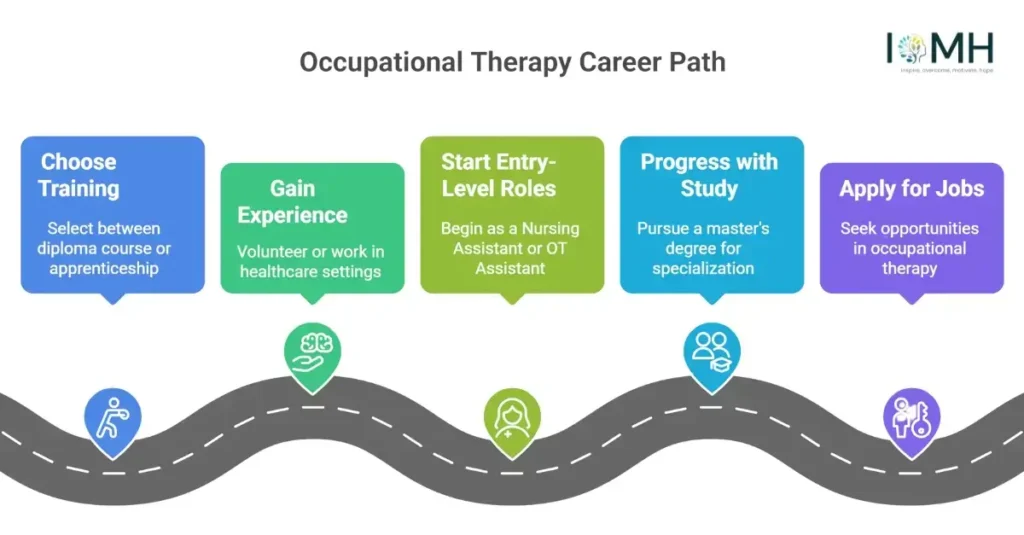
- Choose your training – Apply for a Diploma in Occupational Therapy Course or consider an occupational therapy apprenticeship if you prefer to earn while you learn.
- Gain hands-on experience – Volunteer or work in NHS hospitals, schools, or care homes to build confidence with patients.
- Start in entry-level roles – Work as a Nursing Assistant or apply for occupational therapy assistant jobs to gain direct healthcare experience.
- Progress with further study – Many professionals later complete an occupational therapy master’s to specialise or move into senior roles.
- Apply for jobs – Look for opportunities under occupational therapy jobs near me or apply directly to NHS occupational therapy jobs.
This journey allows you to steadily build knowledge, experience, and confidence while preparing for a long-term career in occupational therapy.
Conclusion
Occupational therapy is a profession that blends compassion, skill, and problem-solving to make a real difference in people’s lives. A Diploma in Occupational Therapy is one of the best ways to begin this journey and start a career that is secure, rewarding, and full of opportunities.
From developing essential occupational therapy skills to building a career in the NHS or private sector, this diploma prepares you for a meaningful role in Health and Social Care. With strong demand, competitive occupational therapy earnings, and multiple career pathways, it is a profession that offers both stability and purpose.
If you are passionate about helping others and want to become an occupational therapist UK, now is the perfect time to take action. Enrol in a Diploma in Occupational Therapy Course and take your first step toward a fulfilling and secure future.


- All Courses
 Personal Development (1283)
 Career Bundle (479)
 Management & Administration (460)
 Employability (439)
 Health & Social Care (411)
 Health and Safety (382)
 Business (320)
 Teaching & Education (268)
 IT & Software (263)
 Health and Fitness (238)
 QLS Endorsed Courses (219)
 Mental Health & Counselling (168)
 Science & Technology (153)
 Accounting & Finance (144)
 Sales & Marketing (128)
 Construction & Engineering (126)
 Art & Design (125)
 Compliance & Law (112)
 Language (86)
 Photography & Lifestyle (58)
 Animal Care (57)
 Food Safety & Hygine (53)
 Diet & Nutrition (49)
 Sports & Fitness (47)
 Makeup & Beauty (43)
 First Aid (39)
 Agriculture (2)
0 responses on "Diploma in Occupational Therapy Course: Your Complete Guide to a Rewarding Career"