If you’re a compassionate and dedicated person looking for a career that truly makes a difference, becoming a care worker in the UK could be the perfect path for you. This guide will walk you through everything you need to know, from the daily duties to career progression opportunities, so you can make an informed decision and start your journey with confidence.
What is a Care Worker?
A care worker, also known as a care assistant, is a professional who provides support and assistance to individuals who need help with their daily lives. This can include the elderly, people with disabilities, or those recovering from an illness or injury. Care workers are vital in helping people maintain their independence and dignity, whether they work in a residential care home, a hospital, or provide care in a client’s own home.
Are Care Workers in Demand in the UK?
Yes, the demand for care workers in the UK is very high and continues to grow. The ageing population and the increasing number of people with complex health needs mean that the social care sector is constantly expanding. According to recent data, healthcare support workers and social care professionals are among the most in-demand roles in the UK job market. The sector is projected to need an additional half a million jobs by 2035, making it a stable and secure career choice for the foreseeable future.
What Are the Main Duties and Responsibilities of a Care Worker?
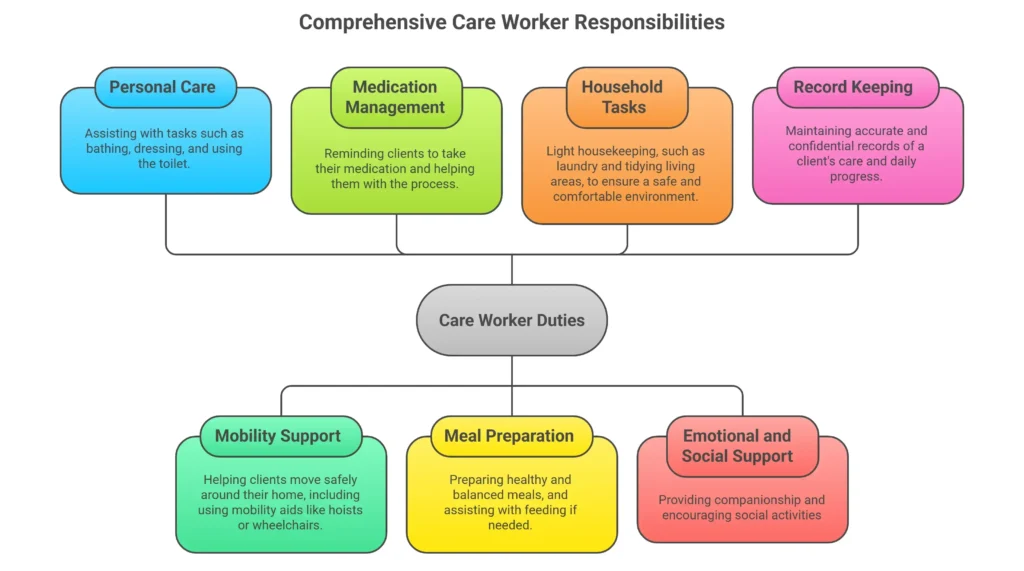
The day-to-day role of a care worker is incredibly varied, but the core focus is always on the individual. Typical duties and responsibilities may include:
What Skills and Qualities Does a Care Worker Need?
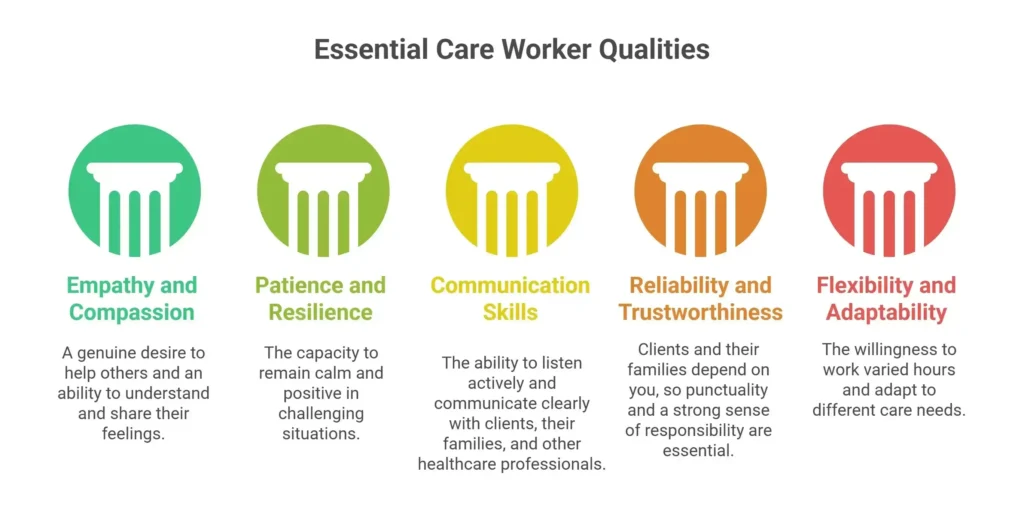
While technical skills can be taught, the most important qualities for a care worker are often personal and emotional. To excel in this role, you should possess:
What Qualifications are Needed to Be a Care Worker in the UK?
You don’t typically need a university degree to become a care worker. Most employers value the right personal qualities and provide comprehensive training. However, there are some common requirements:
- The Care Certificate: This is a crucial, nationally recognised standard that sets out the knowledge, skills, and behaviours a care worker must have in their first 12 weeks of employment. Your employer will usually guide you through completing this. It covers topics from duty of care to communication and infection control.
- GCSEs: Some employers may ask for GCSEs in English and Maths, but this is not always a strict requirement.
- Disclosure and Barring Service (DBS) Check: A criminal record check is mandatory for anyone working with vulnerable people.
How Much Does a Care Worker Earn in the UK?
Care worker salaries can vary depending on the employer (NHS or private), location, and level of experience. As of 2025, the average salary for a full-time care assistant in the UK is approximately £24,000 per year. The average hourly rate is around £11.50 to £13. It’s important to note that the minimum hourly rate for newly sponsored international care workers has increased to £12.82 per hour, which is equivalent to £25,000 per annum based on a 37.5-hour week.
Do You Need Experience to be a Care Worker?
In short, no. Many care worker positions, particularly at an entry-level, do not require prior experience. Employers are often more interested in your passion for care and your personal attributes. They will provide a full induction and the necessary training to get you started, including support to complete the Care Certificate.
How to Become a Care Worker in the UK: A Step-by-Step Guide
- Consider if the career is right for you. Reflect on your personality, values, and whether you are genuinely passionate about helping others. Care work can be emotionally and physically demanding, but also incredibly rewarding.
- Assess your skills. Think about your soft skills, such as empathy, communication, and patience. Write down examples from your life where you've demonstrated these qualities.
- Find your niche. Care work is a broad field. Do you prefer working with the elderly, people with learning disabilities, or children? Knowing your preference can help you find a role that is a perfect fit.
- Enrol in a course. While not always mandatory, a course in Diploma in Health and Social Care Level 3 can give you a strong foundation and make your application more attractive to employers.
- Acquire work experience. If you don't have paid experience, consider volunteering at a local charity, care home, or community centre. This will show potential employers your commitment and give you valuable insight.
- Network and acquire connections. Talk to people already working in the care sector. They can offer advice, share their experiences, and may even know about job openings.
- Seek job vacancies. Search for jobs on major platforms like NHS Jobs, Indeed, and specific care provider websites. Many care providers also have local offices you can visit in person.
How Can You Start Your Career in Care?
Beyond the general care worker role, there are several specialised positions you can explore:
- Activity Support Worker: Organises and assists with social and recreational activities for clients.
- Care Worker: Provides direct daily care and support.
- Social Care Personal Assistant: An individual who works directly for a single client, with a highly personalised set of duties.
- Rehabilitation Support Worker: Assists clients recovering from an injury or illness by helping them with exercises and therapy plans.
- Shared Lives Carer: Welcomes an adult with a learning disability or other care needs into their home and family.
How to Apply for a Care Job in the UK
Your application is your first chance to make a strong impression. Focus on demonstrating your personal qualities and passion for the role.
- CV Writing Guidance: Highlight your relevant skills and qualities, even if they come from non-care roles or volunteering. Use a skills-based CV format if you lack direct experience.
- Cover Letter Guidance: Use your cover letter to tell a story about why you want to be a care worker. Mention specific examples of when you've demonstrated care and compassion.
- Interview Guidance: Be prepared to answer questions about how you would handle challenging situations. Focus on showing your empathy, patience, and communication skills through your answers.
How to Become a Carer in the UK as a Foreigner
If you are a foreigner, you can become a care worker in the UK through the Health and Care Worker Visa. The process requires a job offer from an approved UK employer who will act as your sponsor.
Key requirements for this visa include:
- Having a job offer in an eligible health and social care role with an approved employer.
- Receiving a salary that meets or exceeds the minimum threshold and the 'going rate' for the role (currently a minimum of £12.82 per hour for new applicants).
- Demonstrating proficiency in English, typically to at least a B1 level on the CEFR scale.
- Having a valid Certificate of Sponsorship from your employer.
What Career Progression Opportunities are Available for Care Workers?
A career in care can be a stepping stone to many other roles. With experience and further training, you could progress to:
- Senior Care Worker: A leadership role with more responsibility, supervising a team of care workers.
- Care Home Manager: Overseeing the entire operation of a care home, from staff management to client welfare.
- Specialist Care Worker: Focussing on a specific area, such as dementia care, palliative care, or mental health.
- Social Worker: A professional who works with individuals and families to improve their lives and find solutions to their problems.
- Nursing: With additional qualifications and training, many care workers go on to become nurses, either in the NHS or private sector.
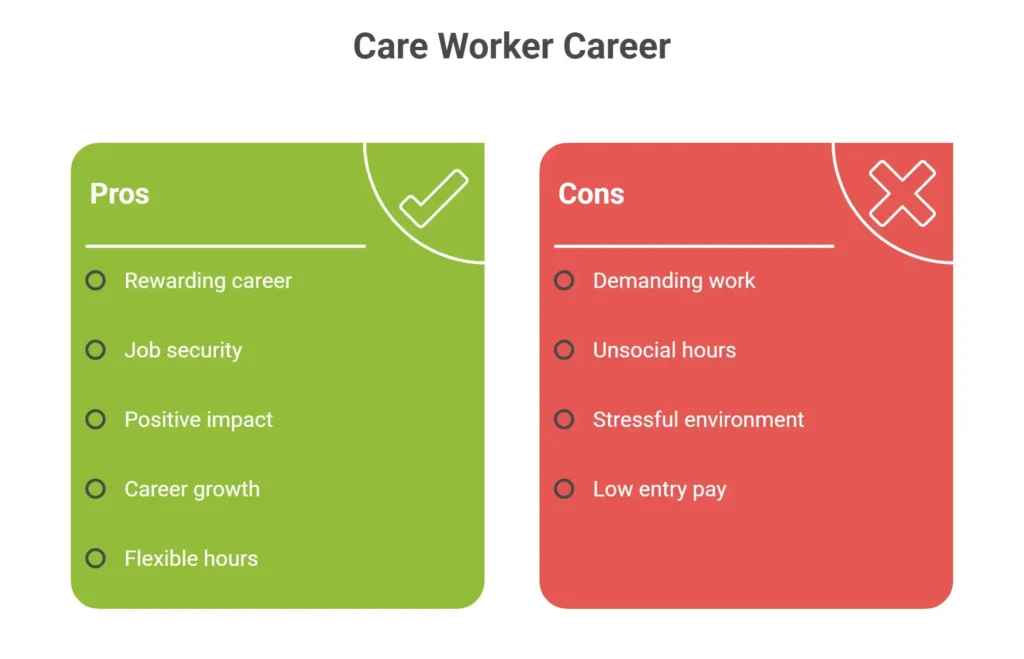
What Are the Advantages and Disadvantages of Being a Care Worker?
Conclusion
Beginning your career as a care worker is a significant step into a profession that is not just a job, but a truly rewarding calling. You will have the privilege of making a profound, positive impact on the lives of others, often during their most vulnerable moments. The patience, compassion, and resilience you bring to this role will not only support those in your care but will also help you grow as a person. The learning journey never stops, and with each new day, you will gain more skills and confidence. Embrace the challenges and the triumphs, and remember that your work is deeply valued and makes a real difference.

- All Courses
Personal Development (1067)
Employability (389)
Management & Administration (350)Health & Social Care (294)
Health and Safety (286)IT & Software (227)
Business (221)
Health and Fitness (193)
Teaching & Education (174)
Mental Health & Counselling (127)
QLS Endorsed Courses (118)
Accounting & Finance (115)
Science & Technology (115)
Sales & Marketing (97)
Art & Design (89)
Construction & Engineering (82)Language (78)
Compliance & Law (73)Career Bundle (60)
Photography & Lifestyle (43)
Animal Care (39)
Sports & Fitness (37)Makeup & Beauty (32)
Diet & Nutrition (30)
Food Safety & Hygine (22)First Aid (21)

0 responses on "A Complete Guide to Becoming a Care Worker in the UK!"