


Meditation and Mindfulness
1. Headspace – Guided Meditations and Sleep Aids.
Headspace provides structured programmes designed to reduce stress, improve sleep, and enhance overall mental resilience. Users can access guided meditations, breathing exercises, mental health coaching, and sleep resources tailored to various needs and lifestyles. Available on both Apple (iPhone, iPad, iPod Touch) and Android (smartphones and tablets) devices, Headspace requires users to create an account before downloading the app.
Headspace offers several subscription plans, including Monthly and Annual options, as well as Student, Family, and Gift plans. All subscriptions auto-renew unless cancelled, and users can manage or cancel their plan at any time through their account settings.
2. Calm – Relaxing Music, Sleep Stories, and Breathing Exercises.
Calm is a top-rated mental health app designed to support emotional well-being through research-based tools and guided content. Its primary focus areas include stress management, improved sleep, and daily mindfulness. The app offers over 500 Sleep Stories, soundscapes, and guided sleep meditations to help users fall asleep more easily.
Calm is available across multiple platforms, including iOS, Android, Web, Apple TV, Apple Watch, Google WearOS, Samsung Health, Samsung TV, and Sonos. Subscriptions and free trials can be cancelled at any time via account settings.
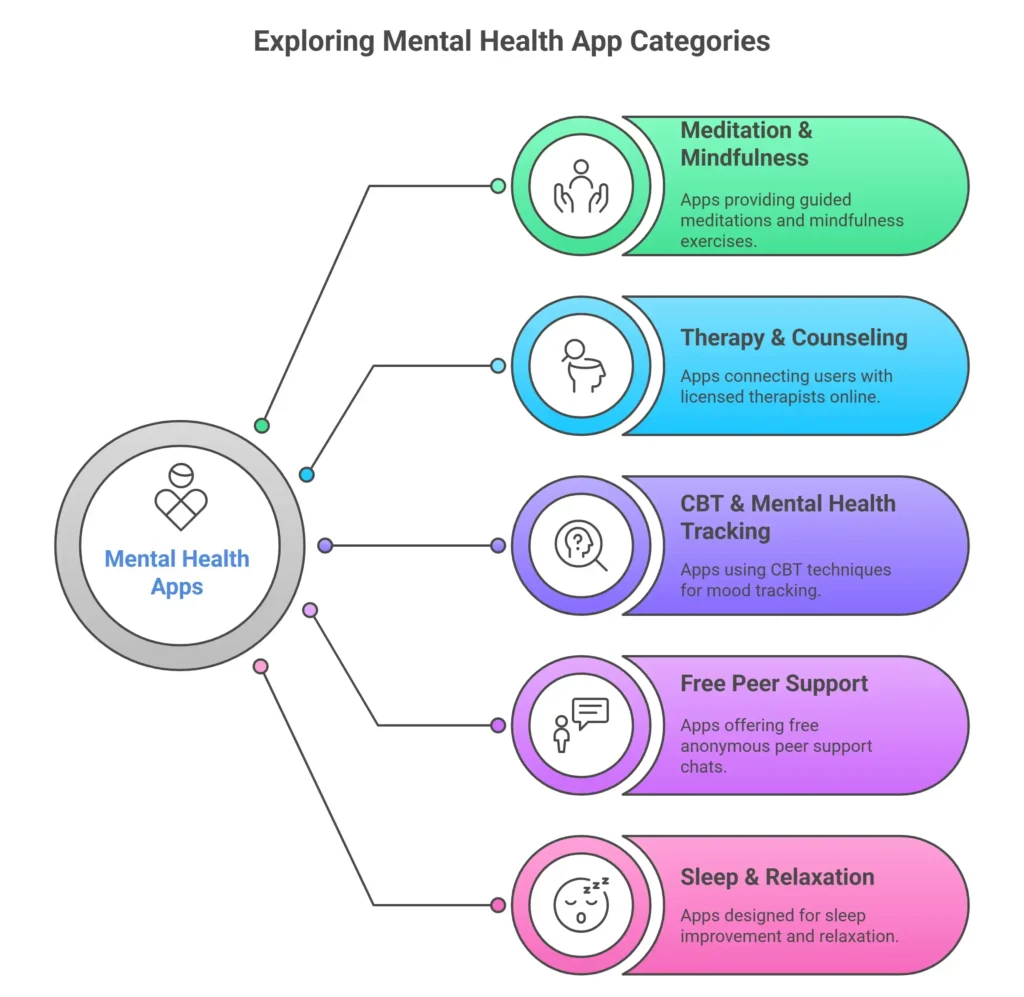
Therapy and Counselling (Online)
3. Betterhelp – Licensed Therapists Via Chat/Call/Video.
BetterHelp is the world’s largest online therapy platform, offering flexible, affordable mental health support entirely online. Users are matched with a licensed therapist based on their needs and can communicate via text, live chat, phone, or video—anytime, anywhere. Therapists on BetterHelp are qualified professionals, including psychologists, counsellors, and social workers, with verified credentials and at least three years of experience.
Therapy costs range from $70 to $100 per week, billed monthly, depending on your location and preferences. You can cancel at any time. BetterHelp does not accept insurance but offers financial aid options.
4. Talkspace – Text/Video Therapy with Professionals.
Talkspace is an online therapy platform offering text, audio, and video communication with licensed mental health professionals. It provides individual, teen, couples, and psychiatric services. Talkspace is available for download on iOS and Android devices, and users can also access services via the website.
Users begin by answering a few questions to get matched with a therapist, then communicate through live sessions or messaging. The service is designed for flexibility, allowing users to switch therapists easily and access care from anywhere.
Pricing varies based on insurance coverage or out-of-pocket payment. Many users with US health insurance or employer plans pay little to no copay, while self-pay plans start at $69/week.
Mental Health Awareness
Cognitive Behavioural Therapy (CBT) and Mental Health Tracking
5. Sanvello – Cognitive Behavioural Therapy (CBT)-Based Mood Tracking and Coping Tools.
Sanvello is a mental health app that helps users manage stress, anxiety, and low mood using Cognitive Behavioural Therapy (CBT), mindfulness, and mood tracking. It offers daily check-ins, guided meditations, self-help courses, and a supportive community—all designed to improve emotional wellbeing.
The app is free to download on iOS and Android. Basic features are available at no cost, while premium access (around £7.99/month or £47.99/year) unlocks full CBT programmes, expanded content, and progress tracking. Therapy and coaching services may be available in select regions.
6. Moodfit – Mood Journal and Mental Fitness Exercises.
Moodfit is a mental health and mood tracking app designed to help users improve emotional well-being through evidence-based tools. It offers features like a mood journal, gratitude exercises, breathwork, mindfulness, and cognitive behavioural therapy (CBT) techniques.
Moodfit is free to download on iOS and Android, with a 7-day free trial of its Premium version. After the trial, users can continue with the free version or upgrade for additional insights and features.
Free Peer Support & Crisis Help
7. 7 Cups – Free Anonymous Chat with Trained Listeners.
7 Cups is an online emotional support and therapy platform that connects users with trained volunteer listeners and licensed therapists. Its core service offers free, anonymous one-on-one chat with compassionate listeners, available 24/7. These listeners are trained to provide non-judgmental support for a wide range of emotional concerns—from everyday stress to deeper personal challenges.
The platform is accessible via 7cups.com or through its mobile app (iOS and Android). Users can join community forums, chat rooms, or message boards, and opt for paid therapy services with licensed professionals. Therapy plans include unlimited messaging and optional weekly live sessions, available for a monthly fee.
For Sleep & Relaxation
8. Insight Timer– Free Meditations & Sleep Sounds.
Insight Timer is the world’s largest free meditation app, offering over 280,000 guided meditations, sleep sounds, music tracks, and talks from leading psychologists, mindfulness teachers, and spiritual leaders.
Using the app is simple: download it from the App Store or Google Play, create a free account, and start exploring meditations by topic, duration, or teacher. You can also join live yoga sessions, track your progress, and connect with a global community.
The app is free to use, including access to its vast meditation library and timer. For deeper features like offline listening, premium audio, and exclusive courses, users can upgrade to MemberPlus for $9.99/month or $59.99/year.
9. Pzizz – Science-backed Sleep & Power Nap App.
Pzizz is a sleep and relaxation app designed to help users fall asleep quickly, stay asleep, and wake up refreshed. Using a patented system based on clinical research, it plays “dreamscapes”—a soothing mix of music, voiceover, and sound effects—to calm the mind and promote restful sleep or effective power naps2.
The app is simple to use: just press play and listen. Headphones are recommended for best results, but built-in speakers work too. Pzizz includes modules for sleep, naps, and focus, each tailored to different needs using psychoacoustic principles.
Pzizz is free to download and offers basic features at no cost. Full access to all content requires a Pzizz Pro subscription, available via in-app purchase. Financial assistance is available for those in need.
Frequently Asked Questions
Daylio is one of the most widely used mental health apps globally. It offers mood tracking, goal setting, and journaling features with a user-friendly interface, making it popular for daily emotional check-ins.
MindShift CBT is a completely free app designed to help users manage anxiety using evidence-based cognitive behavioural therapy techniques. Other free options include Wysa, Happify, and My Possible Self, which is NHS-approved.
ChatGPT can support mental wellness by offering journaling prompts, emotional reflection, and general coping strategies. However, it is not a licensed therapist and should not replace professional care. OpenAI has introduced safety features to limit its role in sensitive mental health conversations.
Not all mental health apps are clinically validated or regulated. While some offer evidence-based support, others may lack transparency, data protection, or professional oversight. Users should choose apps backed by research, developed by mental health professionals, and compliant with privacy laws.
AI can improve mental health access, early detection, and self-care tools. However, excessive reliance or unregulated use may lead to misinformation, emotional dependency, or even psychological harm in vulnerable users. Responsible design, ethical safeguards, and human oversight are essential.

- All Courses
 Personal Development (1283)
 Career Bundle (479)
 Management & Administration (460)
 Employability (439)
 Health & Social Care (411)
 Health and Safety (382)
 Business (320)
 Teaching & Education (268)
 IT & Software (263)
 Health and Fitness (238)
 QLS Endorsed Courses (219)
 Mental Health & Counselling (168)
 Science & Technology (153)
 Accounting & Finance (144)
 Sales & Marketing (128)
 Construction & Engineering (126)
 Art & Design (125)
 Compliance & Law (112)
 Language (86)
 Photography & Lifestyle (58)
 Animal Care (57)
 Food Safety & Hygine (53)
 Diet & Nutrition (49)
 Sports & Fitness (47)
 Makeup & Beauty (43)
 First Aid (39)
 Agriculture (2)
0 responses on "9 Best Mental Health Apps for 2025 Therapy, Mindfulness & Self-Care in Your Pocket"