




Across the UK, mental health support has become an increasingly important part of healthcare and community services. More people are now seeking professional help for conditions such as anxiety, depression, stress, and other emotional challenges, leading to a steady rise in demand for skilled practitioners.
Within this growing sector, cognitive behavioural therapy training has become a key area of focus. Cognitive behavioural therapy (CBT) is an evidence-based talking therapy that is widely used and recommended by the National Health Service for treating a range of mental health conditions.
As services continue to expand across the NHS, schools, and community organisations, the need for qualified CBT professionals is increasing in both public and private healthcare settings. This blog explores the reasons behind the high demand for CBT training, the career opportunities available, and the steps involved in starting a career in this expanding and important profession.



What Is Cognitive Behavioural Therapy Training?
Cognitive behavioural therapy training provides learners with the knowledge and practical skills needed to support people experiencing emotional and psychological difficulties. It is designed to prepare students for careers in mental health, counselling, the NHS, and wider Health and Social Care settings by combining academic learning with practical experience.
The training focuses on the principles of cognitive behavioural therapy (CBT), a widely used talking therapy that explores how thoughts, feelings, and behaviours influence one another. CBT is commonly used within the NHS and private healthcare services to help individuals manage a range of mental health conditions and improve their overall wellbeing.
During cognitive behavioural therapy training, students typically learn about:
- Mental health theory and common mental health conditions
- CBT approaches, techniques, and therapeutic interventions
- Communication and active listening skills
- Professional ethics, confidentiality, and safeguarding practices
- Supervised clinical practice and client support techniques
Many CBT training programmes also include practical placements, allowing students to gain hands-on experience by working with clients under professional supervision. These opportunities help learners develop confidence, strengthen their therapeutic skills, and prepare for careers within the NHS, private healthcare organisations, and Health and Social Care services.
What Is Cognitive Behavioural Therapy (CBT)?
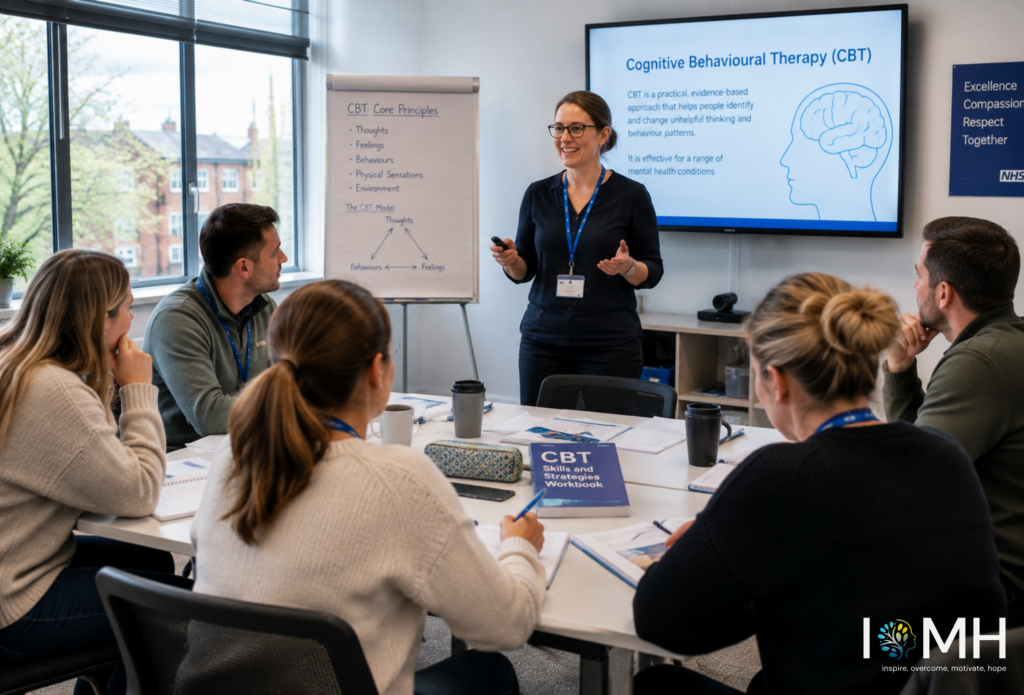
Cognitive behavioural therapy (CBT) is a type of talking therapy that helps people understand and manage mental health conditions and emotional difficulties. It focuses on how thoughts, feelings, and behaviours are connected and how negative thinking patterns can affect daily life.
CBT helps people recognise unhelpful thoughts and replace them with healthier and more positive ways of thinking. It also teaches practical coping strategies that can improve emotional well-being and everyday functioning.
CBT is commonly used to support people experiencing:
- Anxiety
- Depression
- Depression
- Panic attacks
- Obsessive Compulsive Disorder (OCD)
- Post-Traumatic Stress Disorder (PTSD)
- Low self-esteem
CBT is widely used across the UK because it is practical, structured, and solution-focused. Many healthcare professionals recommend CBT because it is supported by scientific research and has helped many people improve their mental health and quality of life.
Why Is Cognitive Behavioural Therapy Training in High Demand in the UK?
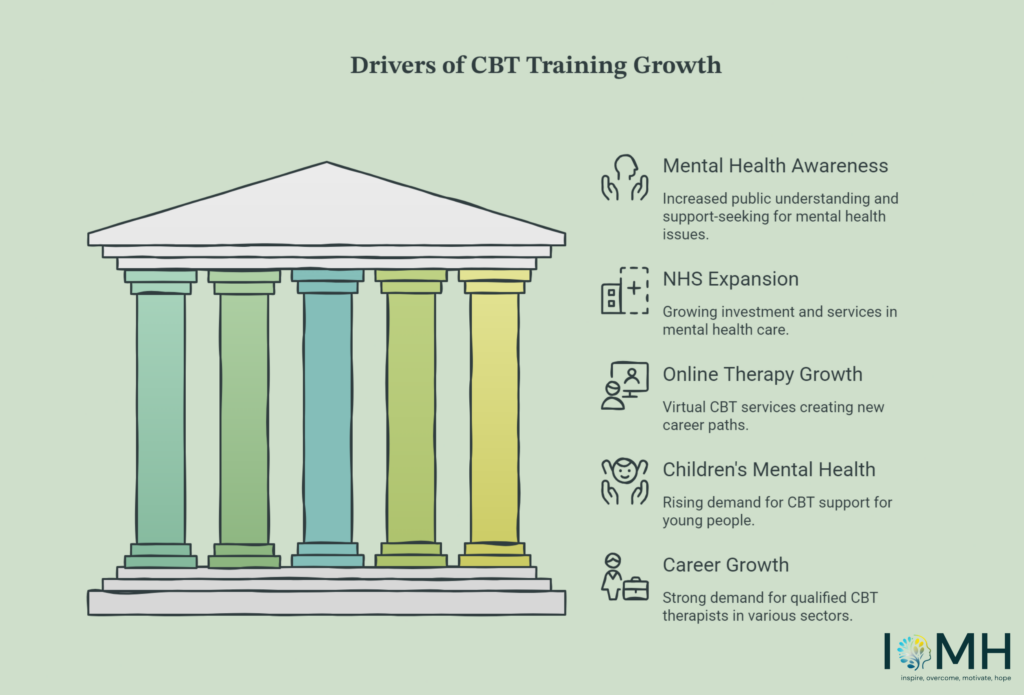
Mental health awareness has increased greatly across the UK in recent years. More people now recognise the importance of emotional wellbeing and are seeking professional help for mental health conditions and everyday emotional challenges.
Because of this growing demand for support, cognitive behavioural therapy training has become more popular than ever. Healthcare providers, schools, charities, and community organisations are all looking for qualified CBT professionals to support people of different ages and backgrounds.
Several factors are increasing the demand for CBT therapists, including:
- Rising mental health challenges among adults and young people
- Increased use of talking therapies across healthcare services
- Expansion of mental health support within the National Health Service
- Greater awareness of anxiety, depression, and stress-related conditions
- More online and community mental health services becoming available
As mental health services continue to expand, employers across the UK need more trained cognitive behavioural therapists to support patients, families, and local communities.
Benefits of Completing Cognitive Behavioural Therapy Training
There are many benefits to completing cognitive behavioural therapy CBT training in the UK. As mental health services continue to grow, qualified CBT professionals are becoming increasingly valuable across healthcare and Health and Social Care sectors.
Helping People Improve Their Mental Health
CBT therapists support people who are struggling with emotional and psychological challenges. They help clients develop healthier coping skills and improve their overall wellbeing.
Strong Career Opportunities
The demand for trained CBT professionals continues to grow across the UK. Many employers are now looking for qualified therapists to work in mental health services, schools, charities, and community organisations.
Flexible Career Pathways
CBT therapists can work in a variety of settings, including hospitals, private clinics, schools, charities, and even online therapy services.
Opportunities to Specialise
Some professionals choose to specialise in areas such as trauma support, addiction recovery, or children’s cognitive behavioural therapy.
Personal Satisfaction
Many therapists find this career highly rewarding because they make a real and positive difference in people’s lives every day.
Career Opportunities After CBT Training
Qualified CBT professionals can work in many different settings across the UK. As mental health support becomes a bigger priority, the demand for trained therapists continues to grow in both public and private sectors.
Career opportunities after completing cognitive behavioural therapy training include working in:
- National Health Service mental health services
- Private therapy clinics
- Schools and colleges
- Charities and support organisations
- Rehabilitation centres
- Community mental health services
- Online therapy platforms
Some cognitive behavioural therapists also choose to open their own private practice after gaining enough professional experience. This can offer more flexibility and independence in their career.
The number of cognitive behaviour therapy jobs is increasing across the UK because more people are seeking support for conditions such as anxiety, depression, stress, and trauma. This growing demand creates strong long-term career opportunities for qualified CBT professionals.
Cognitive Behavioural Therapy Training Near Me
Many people search online for “cognitive behavioural therapy training near me” when looking for local study options in the UK. As the demand for mental health professionals continues to grow, more colleges, universities, and specialist training providers are now offering CBT courses across the country.
You can find cognitive behavioural therapy training through:
- Colleges
- Universities
- Specialist mental health training centres
- Online learning platforms
Some courses are available full-time, while others offer part-time or flexible online learning options for working adults and career changers.
When choosing a CBT course, it is important to select an accredited and recognised training programme. A good course should provide both classroom learning and supervised practical experience. This helps students develop the knowledge, confidence, and real-world skills needed to work safely and effectively as cognitive behavioural therapists.

Cognitive Behavioural Therapy CBT Online Training Options
Online learning has become very popular in recent years, and many UK training providers now offer cognitive behavioral therapy CBT online courses. These programmes make CBT training more flexible and accessible for people with different lifestyles and responsibilities.
Online CBT courses are especially useful for:
- Working professionals
- Parents and carers
- Career changers
- Students living far from training centres
Studying online can offer several benefits, including:
- Flexible study schedules
- The ability to learn from home
- Reduced travel and accommodation costs
- Easy access to digital learning materials and resources
Many online courses allow students to study at their own pace, making it easier to balance learning with work or family commitments.
However, some cognitive behavioural therapy training programmes may still require practical placements or supervised sessions. These hands-on experiences are important because they help students develop real-world therapy skills and gain confidence when working with clients.
Cognitive Behavioural Therapy London Training Opportunities
London is one of the best places in the UK to study cognitive behavioural therapy and start a career in mental health. The city has many universities, specialist training centres, and large healthcare organisations that offer accredited CBT training programmes.
Studying CBT in London can give students access to valuable learning and practical experience, including:
- Clinical placements in real healthcare settings
- Experience within National Health Service mental health services
- Professional networking opportunities with experienced clinicians
- Specialist CBT workshops, courses, and seminars
Because London has a large and busy healthcare sector, it also offers strong career opportunities for qualified cognitive behavioural therapists. Many professionals find it easier to build experience and progress their careers in the city due to the high demand for mental health services.

Children’s Cognitive Behavioural Therapy and Autism Support
Children’s cognitive behavioural therapy focuses on helping young people understand and manage their thoughts, feelings, and behaviours in a healthy and positive way. It is adapted so that it is suitable for a child’s age, understanding, and emotional needs.
CBT for children can support those experiencing a range of emotional and behavioural difficulties, including:
- Anxiety
- School stress and exam pressure
- Behavioural challenges
- Social confidence difficulties
- Autism-related challenges
CBT Children with Autism support is becoming increasingly important in the UK. More awareness of neurodiversity means that schools, families, and healthcare services are now looking for better ways to support autistic children.
With the right approach, CBT can help autistic children:
- Develop coping skills for daily challenges
- Understand and manage emotions more effectively
- Reduce anxiety in different situations
- Improve confidence in social settings
Therapists working in this area often adapt CBT techniques by using simple language, visual tools, and structured routines to make sessions easier to understand and more comfortable for the child.
This area of mental health support continues to grow as demand increases across education, healthcare, and community services.
Skills You Gain From Cognitive Behavioural Therapy Training
Cognitive behavioural therapy (CBT) training helps students build important personal and professional skills that are useful in mental health and wider Health and Social Care roles.
During CBT training, you will develop skills such as:

- Communication and active listening to understand clients clearly
- Empathy and emotional understanding to support people in a caring way
- Problem-solving skills to help clients find practical solutions
- Professional ethics, including confidentiality and safeguarding
- Organisation and time management for handling sessions and records
These skills are not only useful for becoming a cognitive behavioural therapist, but are also highly valued in many healthcare and support roles across the UK. They help professionals work safely, effectively, and confidently with people who need mental health support.
Salary and Job Outlook for CBT Therapists in the UK
Salaries for cognitive behavioural therapists in the UK can vary depending on experience, employer, qualifications, and location. Many therapists also see pay differences between the public and private sectors.
Typical salary ranges include:
- Entry-level therapists: around £30,000 per year
- Experienced therapists: £40,000 to £55,000+ per year
- Private practice therapists: earnings can be higher depending on the number of clients and session fees
In the London, salaries may sometimes be higher than in other parts of the UK. This is often due to the higher cost of living and increased demand for mental health services.
Within the National Health Service, CBT therapists are usually paid according to structured pay bands. As experience increases, therapists can move into higher roles with better salaries and more responsibility.
Job Outlook
The future job outlook for cognitive behavioural therapists remains very positive. Demand continues to grow across the UK as more people seek help for anxiety, depression, stress, and other mental health conditions.
Mental health services are expanding in hospitals, schools, charities, and community settings, which means more cognitive behaviour therapy jobs are becoming available. This makes CBT a stable and growing career choice for the future.
Conclusion
Cognitive behavioural therapy training is becoming more important across the UK as the need for mental health support continues to grow. More people are now seeking help for emotional and psychological challenges, and services in healthcare, schools, charities, and community settings all need trained professionals to meet this demand.
With flexible study options, clear career pathways, and strong demand across Health and Social Care, CBT training offers a stable and rewarding career choice. It allows you to support people in improving their mental wellbeing and developing healthier coping skills.
Whether you choose classroom-based study or cognitive behavioral therapy CBT online training, there are now more accessible routes than ever to enter this growing profession and build a meaningful career in mental health support.

- All Courses
 Personal Development (1283)
 Career Bundle (479)
 Management & Administration (460)
 Employability (439)
 Health & Social Care (411)
 Health and Safety (382)
 Business (320)
 Teaching & Education (268)
 IT & Software (263)
 Health and Fitness (238)
 QLS Endorsed Courses (219)
 Mental Health & Counselling (168)
 Science & Technology (153)
 Accounting & Finance (144)
 Sales & Marketing (128)
 Construction & Engineering (126)
 Art & Design (125)
 Compliance & Law (112)
 Language (86)
 Photography & Lifestyle (58)
 Animal Care (57)
 Food Safety & Hygine (53)
 Diet & Nutrition (49)
 Sports & Fitness (47)
 Makeup & Beauty (43)
 First Aid (39)
 Agriculture (2)
0 responses on "Why Cognitive Behavioural Therapy Training Is in High Demand in the UK"