





Social care research plays an essential role in improving lives. It enables us to examine how professionals deliver care in homes, schools, and communities, and to evaluate how policies shape outcomes for the most vulnerable groups in society. By generating reliable evidence, researchers can identify gaps, highlight inequalities, and recommend practical improvements. Without this research, social services would develop slowly, inconsistently, and without a clear understanding of people’s real needs.

Health and Social Care Research is at the heart of improving lives across the United Kingdom. Whether it’s testing new medicines through clinical trials, exploring innovative approaches in social care research, or shaping national policies through public health research, this field ensures that care is evidence-based, ethical, and effective.
Aspiring researchers must first understand what research is, why it matters, and how to conduct it properly in order to make a meaningful impact. By following the UK policy framework for health and social care research, they can advance knowledge while actively protecting the dignity, rights, and safety of every research participant.
Moreover, this course is designed to guide learners step by step. In addition, the lessons are organised in a logical flow, ensuring that each concept builds smoothly on the previous one. Consequently, learners gain confidence as they progress. Furthermore, the content connects theory with practical examples, making the learning experience more engaging. Similarly, complex topics are simplified so that beginners can understand them easily. As a result, learners can apply the knowledge in real situations. On the other hand, those with prior experience can refine their existing skills. Therefore, the course supports continuous improvement for all learners. Ultimately, it provides a structured pathway that helps students achieve their learning goals effectively.online communication skills
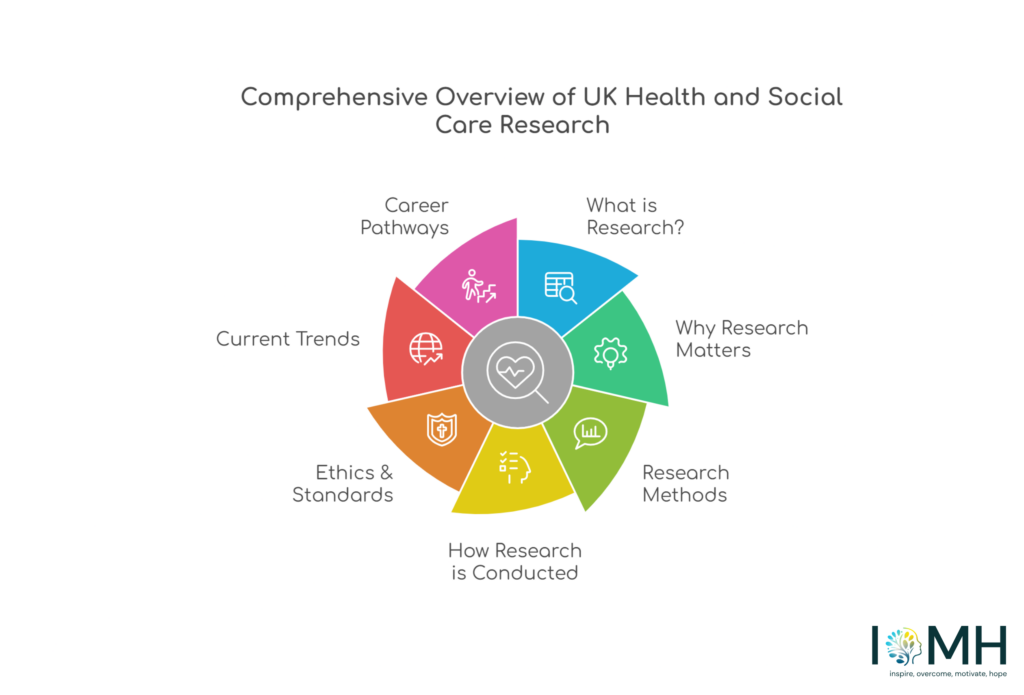
This blog will walk you through the essentials:
Moreover, this course is designed to guide learners step by step. In addition, the lessons are organised in a logical flow, ensuring that each concept builds smoothly on the previous one. Consequently, learners gain confidence as they progress. Furthermore, the content connects theory with practical examples, making the learning experience more engaging. Similarly, complex topics are simplified so that beginners can understand them easily. As a result, learners can apply the knowledge in real situations. On the other hand, those with prior experience can refine their existing skills. Therefore, the course supports continuous improvement for all learners. Ultimately, it provides a structured pathway that helps students achieve their learning goals effectively.online communication skills
- What research in health and social care means and its scope.
- Why research is important for patients, communities, and policymakers.
- How research is conducted, managed, and shared in the UK.
By the end, you’ll have a clear roadmap of the field, the opportunities available, and the standards that shape research in the UK.

What is Research in Health and Social Care?
When people ask “what is research in health and social care?” the answer goes beyond textbooks—it’s about systematically exploring questions that improve the way we deliver care, shape policy, and support communities.
- Health research: This often focuses on clinical trials, medical innovations, and public health studies. For example, testing new treatments in the NHS or investigating how lifestyle factors affect long-term health outcomes.
- Social care research: This looks at how care is provided in homes, communities, and institutions. It explores issues like ageing, disability support, and the effectiveness of social services.
- Health and care research together: The two are deeply connected. A study on dementia, for instance, might involve both medical interventions (health research) and community support strategies (social care research).
In the UK, the Health Research Authority (HRA) plays a central role in ensuring that all research meets ethical and professional standards. This means protecting the rights of the research participant while supporting researchers to conduct studies that genuinely benefit society.
Understanding this foundation is crucial because it sets the stage for why research matters and how it is conducted. Without clarity on what research is, aspiring professionals can’t fully appreciate its impact or navigate the UK policy framework for health and social care research.

Why Research is Important in Health and Social Care
Research in health and social care is not just an academic exercise—it is the foundation of progress in the way we treat, support, and care for people. In the UK, the importance of research lies in its ability to transform lives by ensuring that decisions are based on evidence rather than assumptions. When new treatments are tested through clinical trials, patients benefit from safer and more effective care. When public health studies investigate issues such as vaccination uptake or mental health trends, policymakers gain the insights they need to design strategies that protect communities.
Ethics play a central role in this process. The UK policy framework for health and social care research ensures that every study respects the dignity and safety of participants. Protecting the research participant is not only a legal requirement but also a moral responsibility that builds trust between researchers and the public.
Ultimately, research drives innovation. It sparks new ideas, from digital health technologies to community-based care models, and ensures that the UK’s health and social care systems remain resilient in the face of changing demands. For aspiring researchers, understanding why research matters provides the motivation to pursue this path—it is about contributing to a system that touches millions of lives and ensuring that care continues to evolve for the better.
How Research is Conducted in Health and Social Care
Understanding how research is carried out is essential for anyone aspiring to enter the field. In the UK, health and social care research follows structured processes to ensure quality, ethics, and impact.
Research methodologies in health and social care:
- Qualitative methods: Interviews, focus groups, and case studies to explore lived experiences.
- Quantitative methods: Surveys, statistical analysis, and large-scale data collection for measurable outcomes.
- Mixed methods: Combining qualitative and quantitative approaches for a fuller picture.
Clinical trials and public health research: Clinical trials test new treatments, medicines, or interventions in controlled settings. Public health research investigates broader issues like vaccination uptake, mental health trends, or lifestyle impacts.
Social care research methods: Observational studies in care homes or community settings. Longitudinal studies tracking individuals over time to understand the impact of care policies.
Research management and ethics: Every project must go through ethical approval, often overseen by the Health Research Authority (HRA). Researchers must follow the UK policy framework for health and social care research, ensuring participant safety and data integrity.
Collaboration and dissemination play a central role in health and social care research. Researchers rarely work alone; instead, universities, NHS trusts, and social care providers actively collaborate to design studies and share expertise. After completing research, they publish findings in academic journals, present at conferences, and produce policy briefings. By sharing evidence widely, researchers help shape professional practice and inform decision-making across the sector.
Navigating the UK Policy Framework for Health and Social Care Research
Anyone beginning a career in health and social care research must understand the UK policy framework. This framework underpins the entire research process, ensuring researchers conduct studies ethically, safely, and with integrity. It sets clear standards that guide researchers, protect participants, and maintain public trust.
At its core, the framework safeguards the rights and dignity of every research participant. It requires researchers to obtain ethical approval before starting any study, with the Health Research Authority overseeing this process. This ensures researchers fully inform participants, respect their consent, and prioritise their wellbeing throughout the study. Researchers must therefore design projects that achieve scientific objectives while meeting strict moral responsibilities.
The framework clearly defines how researchers must manage their work. It requires them to handle data responsibly, report findings honestly, and stay transparent about their methods. Researchers must maintain integrity at all times, even when results are unexpected or inconclusive. By following these standards, they build a strong and reliable evidence base that policymakers, practitioners, and communities can confidently rely on.
Although the framework may initially seem complex, aspiring researchers must learn to navigate it to build credibility. By applying for approvals correctly, meeting ethical requirements, and aligning with national standards, researchers ensure their work gains respect and creates real impact. Mastering the policy framework ultimately enables researchers to become trusted contributors to health and social care research in the UK.
Current Trends and Opportunities in Health and Social Care Research
Health and social care research in the UK is constantly adapting to meet the challenges of a changing society. One of the most pressing areas of focus is the ageing population. As more people live longer, researchers are exploring dementia care, end-of-life support, and innovative models of social care that can provide dignity and independence for older adults. Alongside this, digital health and technology are transforming the way care is delivered. From telemedicine consultations to artificial intelligence in diagnostics, research is uncovering new ways to make healthcare more accessible and efficient.
Mental health has also become a major priority. Studies are investigating prevention strategies, treatment options, and community-based support systems to address rising concerns across all age groups. Public health research continues to play a crucial role, examining issues such as obesity, vaccination uptake, and health inequalities between different regions of the UK. Clinical trials remain central to health research, testing new medicines and therapies in partnership with the NHS, while social care research is innovating with personalised care plans and community-based approaches to improve quality of life.
For aspiring researchers, these trends represent exciting opportunities. Funding bodies such as the National Institute for Health and Care Research (NIHR) and the School for Social Care Research (SSCR) provide grants, training, and support to help new researchers enter the field. Collaboration is another key pathway, with universities, NHS trusts, and social care providers working together on projects that welcome fresh perspectives. Career opportunities are diverse, ranging from research assistants to principal investigators, with the chance to specialise in areas such as clinical trials, public health, or social care innovation.
By engaging with these current trends, aspiring researchers can position themselves at the forefront of change, contributing to solutions that directly impact the health and wellbeing of communities across the UK.
Practical Steps for Aspiring Researchers in the UK
Starting a career in health and social care research may feel overwhelming, but breaking it down into clear steps makes the journey manageable. Here’s how you can begin:
Build your academic foundation: Pursue relevant degrees in health sciences, social sciences, or public health. Consider postgraduate training in research methodologies in health and social care to strengthen your skills.
Get familiar with the UK policy framework: Learn the basics of the UK policy framework for health and social care research. Understand the role of the Health Research Authority (HRA) and how to apply for ethical approval.
Seek training and mentorship: Join research networks, seminars, and workshops offered by organisations like NIHR (National Institute for Health and Care Research). Find mentors among experienced researchers who can guide you through your first projects.
Start small, then grow: Begin with smaller projects such as surveys, literature reviews, or assisting in ongoing studies. Progress to larger projects like clinical trials or social care research once you gain confidence.
Engage with research communities: Attend conferences and present your findings. Collaborate with NHS trusts, universities, and social care providers to expand your network.
Stay committed to ethics and integrity: Always prioritise the safety and dignity of the research participant. Follow research standards UK to ensure your work is credible and impactful.
By following these steps, aspiring researchers can move from curiosity to contribution—building a career that not only advances knowledge but also improves lives across the UK.
Care coordinators must communicate clearly and calmly with patients, families, healthcare professionals, and support services. This includes listening carefully, explaining care plans in simple terms, and sharing information accurately between teams.
Care plans do not always run smoothly. Care coordinators must be able to identify issues, find practical solutions, and adapt care arrangements when circumstances change.

Conclusion: Bringing It All Together
Health and Social Care Research in the UK is more than an academic pursuit—it’s a vital force shaping the future of healthcare and social support.

- What: It is the systematic study of health and social care practices, ranging from clinical trials to social care research, guided by the Health Research Authority and the UK policy framework for health and social care research.
- Why: It matters because it improves patient outcomes, informs policy, protects participants, and drives innovation across the NHS and social care systems.
- How: It is conducted through diverse research methodologies in health and social care, managed ethically, and shared widely to influence practice and decision-making.
For aspiring researchers, the journey begins with curiosity but grows into contribution. By learning the basics, following ethical standards, and engaging with current research in health and social care, you can play a role in shaping a healthier, fairer, and more resilient UK.
The future of health and social care depends on evidence, and evidence depends on research. Your work could be the next step toward better care for millions.

- All Courses
 Personal Development (1283)
 Career Bundle (479)
 Management & Administration (460)
 Employability (439)
 Health & Social Care (411)
 Health and Safety (382)
 Business (320)
 Teaching & Education (268)
 IT & Software (263)
 Health and Fitness (238)
 QLS Endorsed Courses (219)
 Mental Health & Counselling (168)
 Science & Technology (153)
 Accounting & Finance (144)
 Sales & Marketing (128)
 Construction & Engineering (126)
 Art & Design (125)
 Compliance & Law (112)
 Language (86)
 Photography & Lifestyle (58)
 Animal Care (57)
 Food Safety & Hygine (53)
 Diet & Nutrition (49)
 Sports & Fitness (47)
 Makeup & Beauty (43)
 First Aid (39)
 Agriculture (2)
0 responses on "What is Health and Social Care Research? Importance, Methods, and Opportunities"