




Introduction
In today’s UK landscape, few responsibilities are as important for schools, charities, healthcare providers, and community organisations as having a strong safeguarding policy. Recent inquiries and high-profile cases have shown just how vital clear safeguarding procedures are, not only to meet legal obligations but also to maintain public trust. Whether you’re working with children, young people, or vulnerable adults, safeguarding is about more than compliance—it’s about creating environments where everyone feels safe, respected, and protected from harm.
So, what is a safeguarding policy? Put simply, it’s a written commitment that sets out how an organisation will prevent abuse, respond to concerns, and promote the welfare of those in its care. It’s the framework that turns good intentions into practical action, ensuring that staff and volunteers know their responsibilities and that risks are addressed before harm occurs.
This article will walk you through everything you need to know about safeguarding policies and procedures in the UK. We’ll explore the legal context, the essential components of a strong policy, how safeguarding policies in schools differ from those in other organisations, and the best practices for writing, implementing, and reviewing them. By the end, you’ll not only understand why safeguarding is such a pressing issue but also feel confident in taking steps to strengthen your own organisation’s policies of safeguarding.



What Is a Safeguarding Policy?
A safeguarding policy is a formal document that explains how an organisation will protect the welfare of children, young people, and vulnerable adults. In the UK, it’s not just good practice — it’s a requirement. Every school, charity, healthcare provider, and community group that works with at-risk individuals must have safeguarding policies and procedures in place.
At its core, a safeguarding policy sets out the organisation’s commitment to preventing harm, identifying risks early, and responding appropriately when concerns arise. It covers everything from recognising the signs of abuse and neglect to detailing the steps staff should take when reporting incidents. Unlike informal guidelines, a safeguarding policy is written, signed by senior leadership, and shared with everyone connected to the organisation — staff, volunteers, parents, and, where appropriate, children themselves.
Safeguarding policies are rooted in UK law and statutory guidance. Key legislation includes the Children Act 1989 and 2004, the Care Act 2014, and the government’s guidance document Working Together to Safeguard Children. These set out the legal duty of organisations to keep children and adults safe from harm. Regulatory bodies such as Ofsted (for schools and childcare) and the Care Quality Commission (for healthcare providers) also require organisations to demonstrate that they have robust safeguarding policies in place.
In practice, safeguarding policies go beyond legal compliance. They signal an organisation’s culture and values, ensuring that safeguarding is seen as everyone’s responsibility. Whether in schools, youth clubs, or care homes, the existence of a clear policy reassures families, staff, and the wider community that safety is taken seriously.
Why Safeguarding Policies Matter
Having a safeguarding policy in place isn’t just a box-ticking exercise; it’s the foundation of safe and responsible practice across the UK. Without clear safeguarding policies and procedures, organisations risk leaving vulnerable people exposed to harm — and themselves exposed to legal, financial, and reputational consequences.
Legal and Regulatory Obligations
In the UK, organisations that work with children, young people, or vulnerable adults are legally required to implement safeguarding policies. Schools Failuremust satisfy Ofsted’s safeguarding standards, while healthcare providers are held accountable by the Care Quality Commission (CQC). Local authorities and safeguarding adults boards also monitor compliance. to meet these standards can result in sanctions, fines, or even closure.
Building Trust and Accountability
A robust safeguarding policy also builds confidence among parents, carers, staff, and the wider community. It reassures families that their loved ones are safe, and it demonstrates that the organisation takes its duty of care seriously. Staff and volunteers benefit too, as they know exactly what to do if they see something concerning, creating accountability at every level.
- Job stability in both public and private sectors
- Progression pathways into advanced roles and specialisations
- A meaningful contribution to frontline healthcare delivery
Risk Management and Prevention
Strong policies of safeguarding also protect organisations from risks. By outlining clear procedures for identifying and reporting concerns, policies reduce the chance of issues being ignored or mishandled. This proactive approach not only prevents harm but also helps organisations avoid costly and damaging scandals.
Ethical Responsibility
Ultimately, safeguarding is about more than law or reputation — it’s about doing the right thing. Every organisation has a moral duty to protect the most vulnerable members of society. Safeguarding policies provide a framework for turning that duty into practical, everyday action.

Core Components of Effective Safeguarding Policies and Procedures
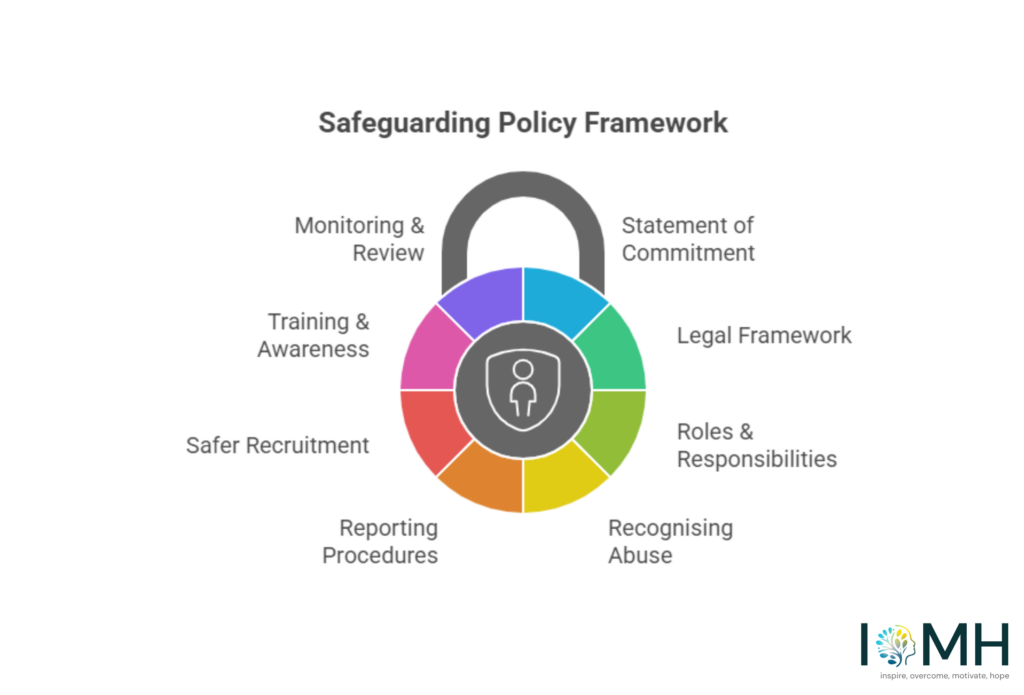
An effective safeguarding policy is more than a statement of intent — it’s a practical guide that gives everyone in the organisation clear direction. Whether you’re drafting from scratch or reviewing existing safeguarding policies, the following components are essential:
- Statement of Commitment – sets out the organisation’s dedication to protecting children, young people, and vulnerable adults.
- Legal Framework and Definitions – references UK legislation and defines key safeguarding terms.
- Roles and Responsibilities – names the Designated Safeguarding Lead (DSL) and outlines staff and trustee duties.
- Recognising Signs of Abuse – provides guidance on spotting physical, emotional, sexual abuse, or neglect.
- Recruitment and Vetting – details safer recruitment practices, including DBS checks.
- Reporting and Responding Procedures – outlines who to report concerns to and how quickly action must be taken.
- Allegations, Whistleblowing and Staff Conduct – explains how concerns about staff are handled and how whistleblowers are protected.
- Training and Awareness – ensures safeguarding is embedded through induction and refresher training.
- Information Sharing and Record Keeping – aligns with data protection laws while enabling information-sharing when safety is at risk.
- Monitoring and Review – details how the policy will be evaluated and updated over time.
Safeguarding Policies in Schools (UK Specific)
Schools in the UK have a unique responsibility when it comes to safeguarding. Not only must they comply with the same legal requirements as other organisations, but they are also directly accountable to Ofsted and local safeguarding partners.
Ofsted and Statutory Requirements
Ofsted inspections place a strong emphasis on safeguarding. A school without robust safeguarding policies and procedures will automatically be deemed inadequate. Schools must follow statutory guidance such as Keeping Children Safe in Education (KCSIE).
Roles in the School Setting
Every school must appoint a Designated Safeguarding Lead (DSL) and deputies. Teachers, support staff, and governors must all understand their safeguarding responsibilities.
Addressing Modern Risks
School safeguarding policies should cover:
- Online safety (internet use, social media, cyberbullying).
- Peer-on-peer abuse (bullying, harassment, sexual violence).
- Trips and activities beyond school grounds.
- Support for vulnerable groups such as SEND students or children in care.
Building a Safe Culture
Safeguarding in schools is as much about culture as documentation. Students should feel safe to speak up, and parents should be confident in the school’s procedures. Training, visibility, and communication are key to this.
Writing and Implementing a Safeguarding Policy: Best Practices
- Involve Stakeholders – consult staff, governors, parents, and where appropriate, young people.
- Use Clear Language – avoid jargon; make policies accessible.
- Make It Practical – include step-by-step procedures, not theory.
- Embed Training – induction, refresher training, and easy access to documents.
- Create a Safeguarding Culture – leadership must model good practice.
- Monitor and Review – test how the policy works in real scenarios and update regularly.
Challenges and How to Overcome Them
- Resistance or Complacency – overcome with regular training and awareness.
- Limited Resources – use free resources from NSPCC, local authorities, and government.
- Keeping Up With Change – review policies when risks evolve, particularly around online safety.
- Balancing Privacy and Protection – staff must understand when sharing information overrides confidentiality.
- Embedding Culture – leadership and open communication make safeguarding real, not just paperwork.
Reviewing & Updating Safeguarding Policies
- Review Frequency – at least annually, or sooner if guidance changes or incidents occur.
- Learning from Incidents – use safeguarding cases to strengthen policies.
- Gathering Feedback – involve staff, volunteers, parents, and children in shaping improvements.
- Documentation and Accountability – use version control and senior sign-off for every update.
Conclusion
A strong safeguarding policy is one of the most important tools an organisation can have. It brings together legal obligations, ethical responsibilities, and practical steps into a framework that protects vulnerable people and guides staff with confidence.
Safeguarding policies in schools, healthcare, and charities go beyond compliance — they build trust, reduce risks, and embed accountability. But the real test is in implementation. With leadership, training, and regular reviews, safeguarding becomes part of organisational culture rather than a tick-box exercise.


- All Courses
 Personal Development (1283)
 Career Bundle (479)
 Management & Administration (460)
 Employability (439)
 Health & Social Care (411)
 Health and Safety (382)
 Business (320)
 Teaching & Education (268)
 IT & Software (263)
 Health and Fitness (238)
 QLS Endorsed Courses (219)
 Mental Health & Counselling (168)
 Science & Technology (153)
 Accounting & Finance (144)
 Sales & Marketing (128)
 Construction & Engineering (126)
 Art & Design (125)
 Compliance & Law (112)
 Language (86)
 Photography & Lifestyle (58)
 Animal Care (57)
 Food Safety & Hygine (53)
 Diet & Nutrition (49)
 Sports & Fitness (47)
 Makeup & Beauty (43)
 First Aid (39)
 Agriculture (2)
0 responses on "What Is a Safeguarding Policy? A Complete Guide for UK Organisations"