




Healthcare administration jobs are among the most rewarding and secure careers in the UK healthcare sector. While doctors, nurses, and other healthcare professionals provide direct patient care, healthcare administrators ensure that hospitals, GP surgeries, care homes, and NHS organisations run smoothly every day.
As the NHS continues to expand and modernise, the demand for skilled healthcare management administrators is growing rapidly. Healthcare organisations need professionals who can manage budgets, oversee staff, improve patient services, implement digital systems, and ensure compliance with healthcare regulations.
Whether you are already working in Health and Social Care, starting as a Healthcare Assistant or Nursing Assistant, or looking to move into a management position, there are many healthcare administration opportunities available across the UK.
One of the biggest advantages of pursuing healthcare administration is the earning potential. Senior administrator jobs in healthcare can offer salaries well above £100,000 per year, while even entry and mid-level positions provide excellent career progression opportunities.
In this guide, we explore the top 17 highest paying healthcare administration jobs in the UK, including average salaries, responsibilities, qualifications, and career pathways.



What Are Healthcare Administration Jobs?
Healthcare administration jobs involve managing the business, operational, and strategic side of healthcare organisations. These professionals help ensure that healthcare services are delivered efficiently, safely, and within budget.
Healthcare administration covers a wide range of roles, including:
- Hospital management
- NHS administration
- Practice management
- Healthcare finance
- Digital health management
- Clinical governance
- Public health leadership
- Health information management
Unlike doctors and nurses who provide direct medical treatment, administrator healthcare professionals focus on supporting healthcare delivery through effective management and leadership.
Why Choose a Career in Healthcare Administration?
Healthcare administration is a strong and stable career choice in the UK. It offers a mix of good pay, job security, and long-term growth opportunities. As the NHS and private healthcare sector continue to grow, the demand for skilled healthcare management administrators is increasing every year.
High Salary Potential
One of the biggest reasons people choose healthcare administration jobs is the salary. Many roles offer competitive pay, and senior positions can earn well over £100,000 per year. Executive roles such as directors and CEOs often receive even higher salaries along with performance bonuses.
Excellent Job Security
Healthcare is an essential service, so jobs in this sector are always in demand. This makes healthcare administration a secure career path, even during economic changes. Skilled administrators are needed in hospitals, GP practices, care homes, and NHS organisations across the UK.
Career Progression Opportunities
There are clear career pathways in healthcare administration. Many professionals start in entry-level positions and progress into senior management and executive leadership roles over time. This makes it a long-term and rewarding career option.
Making a Positive Impact
Healthcare administrators play an important role in improving patient care, supporting staff, and ensuring healthcare services run smoothly and efficiently.
How to Start a Career in Healthcare Administration
There are several routes into healthcare administration jobs, depending on your experience and qualifications.
Gain Experience in Health and Social Care
Many people begin their journey in Health and Social Care roles, where they learn how healthcare services operate in real settings.
Work as a Healthcare Assistant
A Healthcare Assistant role provides hands-on experience with patients and helps build communication, teamwork, and organisational skills.
Become a Nursing Assistant
A Nursing Assistant role offers valuable experience working closely with nurses and healthcare teams in clinical environments.
Obtain Relevant Qualifications
Qualifications can improve your chances of getting healthcare administration opportunities. Common options include:
- Level 3 Diploma in Health and Social Care
- Level 4 Diploma in Health and Social Care Management
- Level 5 Leadership and Management Qualifications
- Healthcare Management Degrees
- Business Management Degrees
- Public Health Qualifications
The Level 3 Diploma in Health and Social Care is often the best starting point for those aiming to move into administrator jobs in healthcare or progress into management roles in the future.

Quick Salary Comparison Table
| Rank | Job Title | Average UK Salary |
|---|---|---|
| 1 | Medical Director | £180,000–£250,000+ |
| 2 | Hospital Chief Executive Officer | £150,000–£250,000+ |
| 3 | Chief Information Officer | £120,000–£180,000 |
| 4 | Chief Operating Officer | £120,000–£170,000 |
| 5 | Chief Financial Officer | £110,000–£160,000 |
| 6 | Chief Nursing Officer | £100,000–£140,000 |
| 7 | Director of Clinical Governance | £90,000–£120,000 |
| 8 | Director of Public Health | £95,000–£120,000 |
| 9 | Director of Digital Health Innovation | £90,000–£120,000 |
| 10 | Healthcare Strategy Director | £85,000–£110,000 |
| 11 | Director of Operations | £80,000–£110,000 |
| 12 | Clinical Informatics Manager | £60,000–£90,000 |
| 13 | Health Information Manager | £55,000–£85,000 |
| 14 | Medical Practice Manager | £45,000–£80,000 |
| 15 | Nursing Home Administrator | £45,000–£75,000 |
| 16 | Healthcare Compliance Manager | £50,000–£75,000 |
| 17 | Healthcare Project Manager | £50,000–£70,000 |
Top 17 Highest Paying Healthcare Administration Jobs in the UK
1. Chief Information Officer (CIO)
A Chief Information Officer (CIO) is a key senior leader in healthcare administration jobs in the UK, responsible for managing digital systems and driving technology-led transformation across NHS organisations and private healthcare providers. As healthcare becomes more data-driven, the CIO plays a vital role in improving efficiency, patient safety, and service delivery through digital innovation.
The CIO ensures that healthcare organisations use modern, secure, and efficient IT systems. They work closely with clinical and operational teams to integrate technology into everyday healthcare services, making processes faster, safer, and more reliable.
Average Salary in the UK (2026)
- Typical Salary Range: £120,000 – £180,000 per year
- Senior NHS Trust Roles: £140,000+
- Private Sector Roles: Can exceed £180,000 with bonuses
Key Responsibilities
- Manage and maintain healthcare IT systems and infrastructure
- Improve cybersecurity and data protection across organisations
- Oversee electronic patient records (EPR) systems
- Lead digital transformation and innovation projects
- Support data-driven decision-making in clinical services
- Ensure compliance with NHS digital and governance standards
This role is ideal for professionals with experience in health informatics, IT management, or digital healthcare systems. It offers strong healthcare administration opportunities with excellent salary potential and long-term career growth in the UK healthcare sector.
2. Chief Operating Officer (COO)
A Chief Operating Officer (COO) is one of the most important senior roles in healthcare administration jobs in the UK. The COO is responsible for ensuring that hospitals, NHS Trusts, and private healthcare organisations run smoothly on a day-to-day basis. This role focuses on operational leadership, service delivery, and improving overall efficiency across all departments.
The COO works closely with the Chief Executive Officer and senior management teams to turn strategy into action. They make sure healthcare services are delivered safely, on time, and within budget while maintaining high standards of patient care.
Average Salary in the UK (2026)
- Typical Salary Range: £120,000 – £170,000 per year
- Large NHS Trusts: £130,000+
- Private Healthcare Sector: Can exceed £170,000 with performance rewards
Key Responsibilities
- Manage overall hospital and healthcare operations
- Improve patient flow and reduce waiting times
- Coordinate clinical and non-clinical services
- Monitor organisational performance and service quality
- Lead workforce planning and resource management
- Support service improvement and efficiency programmes
This role is ideal for experienced healthcare professionals with strong leadership and organisational skills. It offers excellent healthcare administration opportunities and a clear pathway to executive-level positions such as CEO in the UK healthcare sector.

3. Medical Director
A Medical Director is one of the highest-ranking professionals in healthcare administration and plays a key role in leading clinical services across NHS Trusts, private hospitals, and healthcare organisations. This position combines medical expertise with executive leadership, making it one of the most influential and highest-paying healthcare administration jobs in the UK.
Medical Directors are responsible for setting the clinical vision of an organisation, ensuring high standards of patient care, and supporting healthcare teams to deliver safe and effective services. They work closely with senior executives, consultants, and department leaders to improve healthcare outcomes, manage resources, and drive service improvements. They also play an important role in ensuring compliance with regulations set by organisations such as the Care Quality Commission (CQC) and the General Medical Council (GMC).
Medical Director Salary in the UK (2026)
- Typical UK Salary: £180,000 – £220,000 per year
- London Average: £200,000 – £248,000 per year
- Private Sector Salary: Up to £257,000+ annually
- Performance Bonuses: Up to £40,000+
- Associate Medical Director: From £110,000+
Key Responsibilities
- Develop and implement clinical strategies
- Lead consultant teams and senior clinicians
- Improve patient safety and healthcare quality
- Ensure regulatory and governance compliance
- Manage clinical budgets and resources
- Support healthcare transformation programmes
For experienced clinicians with strong leadership skills, becoming a Medical Director offers excellent career progression, significant influence, and one of the highest salaries available in healthcare administration.

4. Hospital Chief Executive Officer (CEO)
A Hospital Chief Executive Officer (CEO) is one of the most senior and high-paying healthcare administration jobs in the UK. The CEO is responsible for the overall leadership, management, and performance of a hospital or healthcare organisation, including NHS Trusts and private healthcare providers. This role focuses on ensuring that the organisation delivers safe, high-quality, and efficient patient care while meeting financial and operational targets.
The Hospital CEO works closely with medical directors, senior managers, and board members to set long-term strategy and ensure the organisation meets national healthcare standards. They also represent the hospital in discussions with regulators, government bodies, and community stakeholders.
Average Salary in the UK (2026)
- Typical Salary Range: £150,000 – £250,000+ per year
- Large NHS Trusts: Often £180,000+
- Private Healthcare Sector: Can exceed £250,000 with bonuses
Key Responsibilities
- Lead overall organisational strategy and vision
- Manage hospital finances, budgets, and operations
- Build strong relationships with stakeholders and partners
- Ensure regulatory and governance compliance
- Ensure compliance with NHS and regulatory standards
- Oversee performance and long-term sustainability
This role is ideal for experienced healthcare leaders with strong management skills and a background in operations, finance, or clinical leadership. It offers excellent career progression, high responsibility, and significant influence in shaping healthcare services in the UK.
5. Chief Financial Officer (CFO)
A Chief Financial Officer (CFO) is a senior leader in healthcare administration jobs in the UK, responsible for managing the financial health of NHS Trusts, hospitals, and private healthcare organisations. This role ensures that healthcare services are financially sustainable while continuing to deliver high-quality patient care.
The CFO plays a key role in planning budgets, controlling costs, and making strategic financial decisions. They work closely with executive teams to ensure that resources are used efficiently and in line with national healthcare priorities. In today’s healthcare system, CFOs are also heavily involved in long-term planning, investment decisions, and financial risk management.
Average Salary in the UK (2026)
- Typical Salary Range: £110,000 – £160,000 per year
- Senior NHS Trust Roles: £120,000+
- Private Healthcare Sector: Can exceed £160,000 with bonuses and incentives
Key Responsibilities
- Manage financial planning and organisational budgets
- Lead cost control and financial reporting processes
- Oversee risk management and compliance
- Make strategic investment and funding decisions
- Support long-term financial sustainability of healthcare services
- Work with executives to align finance with healthcare goals
This role is ideal for professionals with strong finance, accounting, or business backgrounds. It offers excellent healthcare administration opportunities with high responsibility and strong career progression in the UK healthcare sector.
6. Chief Nursing Officer (CNO)
A Chief Nursing Officer (CNO) is one of the most senior roles in healthcare administration jobs in the UK, responsible for leading and shaping nursing services across NHS Trusts, hospitals, and private healthcare organisations. The CNO plays a vital role in ensuring high standards of patient care, safety, and clinical excellence across all nursing teams.
This position involves close collaboration with senior leaders, including medical directors, chief executives, and clinical governance teams. The CNO ensures that nursing practice follows national guidelines and regulatory requirements while supporting continuous improvement in care delivery.
Average Salary in the UK (2026)
- Typical Salary Range: £100,000 – £140,000 per year
- Large NHS Trusts: £110,000+
- Private Healthcare Sector: Up to £140,000+ with benefits and incentives

Key Responsibilities
- Lead and develop nursing strategy across the organisation
- Improve patient safety and quality of care standards
- Support recruitment, training, and workforce development
- Ensure compliance with NMC and CQC regulations
- Promote leadership development within nursing teams
- Drive improvements in patient experience and care outcomes
This role is ideal for experienced registered nurses with strong leadership skills. It offers excellent healthcare administration opportunities and allows professionals to influence nursing practice at the highest level within the UK healthcare system.
6. Chief Nursing Officer (CNO)
A Chief Nursing Officer (CNO) is one of the most senior roles in healthcare administration jobs in the UK, responsible for leading and shaping nursing services across NHS Trusts, hospitals, and private healthcare organisations. The CNO plays a vital role in ensuring high standards of patient care, safety, and clinical excellence across all nursing teams.
This position involves close collaboration with senior leaders, including medical directors, chief executives, and clinical governance teams. The CNO ensures that nursing practice follows national guidelines and regulatory requirements while supporting continuous improvement in care delivery.
Average Salary in the UK (2026)
- Typical Salary Range: £100,000 – £140,000 per year
- Large NHS Trusts: £110,000+
- Private Healthcare Sector: Up to £140,000+ with benefits and incentives
Key Responsibilities
- Lead and develop nursing strategy across the organisation
- Improve patient safety and quality of care standards
- Support recruitment, training, and workforce development
- Ensure compliance with NMC and CQC regulations
- Promote leadership development within nursing teams
- Drive improvements in patient experience and care outcomes
This role is ideal for experienced registered nurses with strong leadership skills. It offers excellent healthcare administration opportunities and allows professionals to influence nursing practice at the highest level within the UK healthcare system.

7. Director of Clinical Governance
A Director of Clinical Governance is a senior role in healthcare administration jobs in the UK, focused on ensuring that healthcare services are safe, effective, and continuously improving. This position is found in NHS Trusts, private hospitals, and large healthcare organisations where maintaining high standards of patient care is essential.
The Director of Clinical Governance works closely with clinical teams, executives, and regulatory bodies to make sure that all services meet national healthcare standards. They are responsible for building a strong safety culture where risks are identified early and improvements are implemented quickly.
Average Salary in the UK (2026)
- Typical Salary Range: £90,000 – £120,000 per year
- Senior NHS Trust Roles: Around £100,000+
- Private Healthcare Sector: Can exceed £120,000 with experience
Key Responsibilities
- Oversee patient safety management systems
- Lead clinical audits and quality reviews
- Conduct risk assessments and incident investigations
- Implement quality improvement initiatives
- Ensure compliance with CQC and NHS standards
- Support continuous improvement in healthcare delivery
This role is ideal for professionals with experience in nursing, medicine, or healthcare management. It offers strong healthcare administration opportunities and plays a vital role in improving patient safety and service quality across the UK healthcare system.
8. Director of Public Health
A Director of Public Health is a senior leadership role within healthcare administration jobs in the UK, focused on improving the health and wellbeing of entire populations. This role is usually based in local authorities, NHS organisations, or national bodies such as the UK Health Security Agency.
The Director of Public Health is responsible for designing and delivering strategies that prevent disease, reduce health inequalities, and improve overall community health outcomes. They work closely with healthcare providers, government departments, and community organisations to ensure public health services are effective and accessible.
Average Salary in the UK (2026)
- Typical Salary Range: £95,000 – £120,000 per year
- London and High-Demand Areas: Can exceed £120,000 with allowances
- Senior Local Authority Roles: Around £110,000+
Key Responsibilities
- Lead health promotion and awareness programmes
- Develop disease prevention strategies
- Coordinate community health initiatives
- Design and implement public health policies
- Monitor population health data and trends
- Respond to public health emergencies and outbreaks
This role is ideal for professionals with experience in public health, epidemiology, or healthcare leadership. It offers strong healthcare administration opportunities and allows individuals to make a direct impact on the health of communities across the UK.
9. Director of Digital Health Innovation
A Director of Digital Health Innovation is a senior role in healthcare administration jobs in the UK, focused on leading the use of modern technology to improve healthcare services. This position is becoming increasingly important as the NHS and private healthcare organisations move towards digital-first care systems.
The Director of Digital Health Innovation is responsible for introducing new technologies that improve patient care, reduce waiting times, and make healthcare services more efficient. They work closely with clinical teams, IT departments, and senior executives to ensure that digital tools are safe, effective, and aligned with healthcare goals.
Average Salary in the UK (2026)
- Typical Salary Range: £90,000 – £120,000 per year
- Senior NHS Roles: Around £100,000+
- Private Sector and Tech Partnerships: Can exceed £120,000+
Key Responsibilities
- Lead digital transformation across healthcare services
- Oversee telehealth and virtual care systems
- Manage AI and data-driven healthcare projects
- Develop healthcare technology strategy
- Improve digital patient records and systems integration
- Ensure cybersecurity and data protection compliance
This role is ideal for professionals with experience in healthcare IT, digital systems, or innovation management. It offers strong healthcare administration opportunities and plays a key role in shaping the future of healthcare delivery in the UK.

10. Healthcare Strategy Director
A Healthcare Strategy Director is a senior leadership role within healthcare administration jobs in the UK, responsible for shaping the long-term direction of NHS Trusts, private hospitals, and integrated care systems. This role focuses on planning how healthcare services should evolve to meet future patient needs, government targets, and population health demands.
The Strategy Director works closely with executive teams, clinicians, and commissioners to design better healthcare services. Their work often includes reviewing current systems, identifying gaps, and creating improvement plans that make care more efficient, accessible, and patient-focused.
Average Salary in the UK (2026)
- Typical Salary Range: £85,000 – £110,000 per year
- Senior NHS Roles: Around £95,000+
- Private Sector and Tech Partnerships: Can exceed £110,000 with experience and bonuses
Key Responsibilities
- Lead strategic planning across healthcare services
- Drive service redesign and improvement programmes
- Monitor organisational performance and outcomes
- Support healthcare transformation projects
- Work with stakeholders to align services with NHS goals
- Use data and insights to improve decision-making
This role is ideal for professionals with strong analytical and leadership skills. It offers excellent healthcare administration opportunities and plays a key role in improving the future of healthcare delivery across the UK.
11. Director of Operations
A Director of Operations is a senior leadership role in healthcare administration jobs in the UK, responsible for ensuring that healthcare services run smoothly, safely, and efficiently. This role is essential in NHS Trusts, private hospitals, and healthcare organisations where day-to-day performance directly impacts patient care and service quality.
The Operations Director works closely with clinical and non-clinical teams to make sure resources are well managed and services are delivered to a high standard. They also support senior executives in turning strategic plans into practical actions that improve patient flow, reduce delays, and increase efficiency.
Average Salary in the UK (2026)
- Typical Salary Range: £80,000 – £110,000 per year
- Senior NHS Roles: Around £90,000+
- Private Sector and Tech Partnerships: Can exceed £110,000 depending on organisation size
Key Responsibilities
- Oversee daily service delivery across healthcare departments
- Manage workforce planning and staffing levels
- Allocate resources effectively across services
- Monitor performance and service quality indicators
- Improve patient flow and reduce waiting times
- Support operational efficiency and service improvements
This role is ideal for professionals with strong organisational and leadership skills. It offers excellent healthcare administration opportunities and provides a clear pathway into higher executive roles such as Chief Operating Officer or Hospital CEO.
12. Clinical Informatics Manager
A Clinical Informatics Manager is a key role in healthcare administration jobs in the UK, focused on improving how healthcare organisations use data and digital systems. This position bridges the gap between clinical teams and information technology, ensuring that patient information is accurate, secure, and used effectively to improve care.
This role is essential in NHS Trusts, Integrated Care Systems (ICS), and private healthcare organisations that rely on electronic systems for patient records and decision-making. Clinical Informatics Managers help ensure that digital tools support clinicians rather than slow them down.
Average Salary in the UK (2026)
- Typical Salary Range: £60,000 – £90,000 per year
- Senior NHS Roles: Around £75,000+
- Private Sector and Tech Partnerships: Can exceed £90,000
Key Responsibilities
- Manage electronic patient record (EPR) systems
- Analyse clinical and operational healthcare data
- Support healthcare IT systems and digital tools
- Ensure information governance and data protection compliance
- Improve data quality for clinical decision-making
- Work with clinicians to improve digital workflows
This role is ideal for professionals with experience in healthcare, IT, or data management. It offers strong healthcare administration opportunities and plays an important role in the digital transformation of the UK healthcare system.

13. Health Information Manager
A Health Information Manager is an important role in healthcare administration jobs in the UK, responsible for managing healthcare data, records, and information systems. This role ensures that patient information is accurate, secure, and accessible to authorised healthcare professionals when needed.
Health Information Managers work in NHS Trusts, private hospitals, and healthcare organisations. They play a key role in supporting clinical decision-making by ensuring that high-quality data is available for reporting, planning, and service improvement.
Average Salary in the UK (2026)
- Typical Salary Range: £55,000 – £85,000 per year
- Senior NHS Roles: Around £70,000+
- Private Sector and Tech Partnerships: Can exceed £85,000 depending on experience
Key Responsibilities
- Manage healthcare data systems and patient records
- Ensure data security and confidentiality standards
- Monitor compliance with NHS and legal regulations
- Produce reports and support healthcare analytics
- Improve information management processes
- Support audits and performance reviews
This role is ideal for professionals with experience in healthcare, data management, or administration. It offers strong healthcare administration opportunities and is increasingly important as the UK healthcare system becomes more data-driven and digitally connected.
14. Medical Practice Manager
A Medical Practice Manager is a key role in healthcare administration jobs in the UK, responsible for running GP surgeries, medical centres, and private healthcare clinics. This role ensures that everyday operations are well organised, efficient, and compliant with healthcare regulations.
Practice Managers act as the link between clinical staff, patients, and external healthcare organisations. They support doctors and nurses by managing non-clinical tasks so that patient care can remain the main focus. This role is especially important in Primary Care Networks (PCNs) where multiple GP practices work together.
Average Salary in the UK (2026)
- Typical Salary Range: £45,000 – £80,000 per year
- Senior NHS Roles: Up to £85,000+
- London and High-Demand Areas: Higher salaries depending on responsibility
Key Responsibilities
- Manage staff recruitment, training, and performance
- Oversee budgets, payroll, and financial planning
- Handle patient services and appointment systems
- Ensure compliance with NHS, CQC, and data protection rules
- Improve operational efficiency and patient experience
- Support day-to-day running of GP surgeries and clinics
This role is ideal for professionals with experience in Health and Social Care or office management. It offers strong healthcare administration opportunities, job stability, and a clear pathway to senior healthcare management roles in the UK.
15. Nursing Home Administrator
A Nursing Home Administrator is a vital role in healthcare administration jobs in the UK, responsible for managing the daily operations of care homes and residential healthcare facilities. These professionals ensure that elderly residents and vulnerable individuals receive safe, high-quality, and compassionate care.
Working in private care homes, local authority facilities, or large care organisations, Nursing Home Administrators balance both care quality and business operations. They oversee staff, manage budgets, and ensure compliance with Care Quality Commission (CQC) standards.

Average Salary in the UK (2026)
- Typical Salary Range: £45,000 – £75,000 per year
- Senior NHS Roles: Up to £80,000+
- London and High-Demand Areas: Higher salaries depending on responsibility
Key Responsibilities
- Manage overall care quality and service delivery
- Supervise nursing and care staff teams
- Oversee budgets, funding, and operational costs
- Ensure resident wellbeing and safety standards
- Maintain compliance with CQC and safeguarding regulations
- Handle inspections, audits, and reporting requirements
This role is ideal for professionals with a background in Health and Social Care, Nursing Assistant roles, or care management. It offers strong healthcare administration opportunities, stable employment, and a meaningful career focused on improving the quality of life for residents in care settings.
16. Healthcare Compliance Manager
A Healthcare Compliance Manager is an important role in healthcare administration jobs in the UK, responsible for ensuring that hospitals, GP practices, care homes, and private healthcare organisations follow all legal, ethical, and regulatory standards. This role is essential for maintaining patient safety, data protection, and high-quality healthcare services.
Compliance Managers work closely with senior leadership teams, clinical staff, and external regulators such as the Care Quality Commission (CQC) and NHS England. They help organisations avoid risks, improve standards, and maintain full compliance with healthcare laws and policies.
Average Salary in the UK (2026)
- Typical Salary Range: £50,000 – £75,000 per year
- Senior NHS Roles: Around £70,000+
- London and High-Demand Areas:Can exceed £75,000 depending on responsibility
Key Responsibilities
- Ensure full regulatory compliance with healthcare standards
- Develop and update internal policies and procedures
- Lead audits and compliance checks
- Identify risks and implement risk reduction strategies
- Monitor adherence to NHS and CQC guidelines
- Support staff training on compliance and governance
This role is ideal for professionals with experience in healthcare, administration, or risk management. It offers strong healthcare administration opportunities and plays a key role in ensuring safe, legal, and effective healthcare services across the UK system.
17. Healthcare Project Manager
A Healthcare Project Manager is a key role in healthcare administration jobs in the UK, responsible for leading and delivering improvement and transformation projects across NHS Trusts, private hospitals, and healthcare organisations. This role ensures that new services, systems, and processes are implemented smoothly, on time, and within budget.
Healthcare Project Managers play an important role in modernising healthcare services. They work closely with clinical teams, IT departments, and senior leaders to improve patient care, increase efficiency, and support major change programmes such as digital transformation and service redesign.
Average Salary in the UK (2026)
- Typical Salary Range: £50,000 – £70,000 per year
- Senior NHS Roles: Around £75,000+
- London and High-Demand Areas: Can exceed £80,000 depending on scale
Key Responsibilities
- Plan and manage healthcare projects from start to finish
- Control budgets, timelines, and resources effectively
- Engage with stakeholders across clinical and non-clinical teams
- Deliver service improvement and transformation initiatives
- Monitor project progress and report outcomes
- Support implementation of new healthcare systems and processes
This role is ideal for professionals with strong organisational and leadership skills. It offers excellent healthcare administration opportunities and is a great pathway into senior management roles such as Programme Director or Head of Operations in the UK healthcare sector.
Essential Skills for Healthcare Administration Careers
To succeed in healthcare administration jobs in the UK, professionals need a strong mix of leadership, technical knowledge, and organisational skills. Healthcare administrators work in fast-paced environments where they must manage teams, support patient services, and ensure healthcare organisations run efficiently.
Whether you are starting in Health and Social Care, working as a Healthcare Assistant or Nursing Assistant, or aiming for senior healthcare management administrators roles, building the right skills is essential for career growth.
Key Skills Required
- Leadership: Ability to guide teams, make decisions, and manage responsibilities effectively
- Communication: Clear communication with staff, patients, and senior management
- Financial Management: Budgeting, cost control, and resource planning
- Problem-Solving: Handling challenges quickly and finding practical solutions
- Team Management: Leading and supporting multidisciplinary healthcare teams
- Strategic Planning: Setting goals and improving long-term healthcare services
- Data Analysis: Understanding healthcare data to improve decisions and outcomes
- Healthcare Regulations Knowledge: Awareness of NHS, CQC, and compliance standards
- Digital Healthcare Systems: Experience with EPRs, digital tools, and healthcare IT systems
- Project Management: Planning and delivering healthcare improvement projects
Why These Skills Matter
Healthcare administration is not just about managing operations—it is about improving patient care, ensuring safety, and supporting healthcare professionals. Strong skills help administrators progress from entry-level administrator healthcare roles into senior leadership positions.
Developing these skills can open up a wide range of healthcare administration opportunities across the UK healthcare sector.
Best Qualifications for Healthcare Administration Jobs
To build a successful career in healthcare administration jobs in the UK, gaining the right qualifications is very important. These qualifications help you develop the knowledge and skills needed to manage healthcare services, support clinical teams, and progress into senior healthcare management roles.
Whether you are starting from Health and Social Care, working as a Healthcare Assistant or Nursing Assistant, or aiming for leadership positions, structured learning can significantly improve your career opportunities.
Level 3 Diploma in Health and Social Care
This is one of the most common entry-level qualifications for people starting in healthcare. It provides a strong foundation in:
- Safeguarding and patient safety
- Communication in healthcare settings
- Health and social care principles
- Understanding care environments
It is ideal for those looking to move into administrator healthcare roles or begin working in healthcare services.
Level 4 Diploma in Health and Social Care Management
This qualification is designed for individuals who want to move into supervisory or junior management positions. It focuses on:
- Leadership in healthcare settings
- Team supervision
- Service delivery improvement
- Operational responsibilities
Healthcare Management Degree
A degree in healthcare management or related fields provides advanced knowledge of:
- Healthcare systems and policies
- Organisational leadership
- Strategic planning
- Health economics and service design
Leadership and Management Qualifications
Professional certifications in leadership and management are highly valued. They help professionals progress into senior healthcare management administrators roles and executive positions.
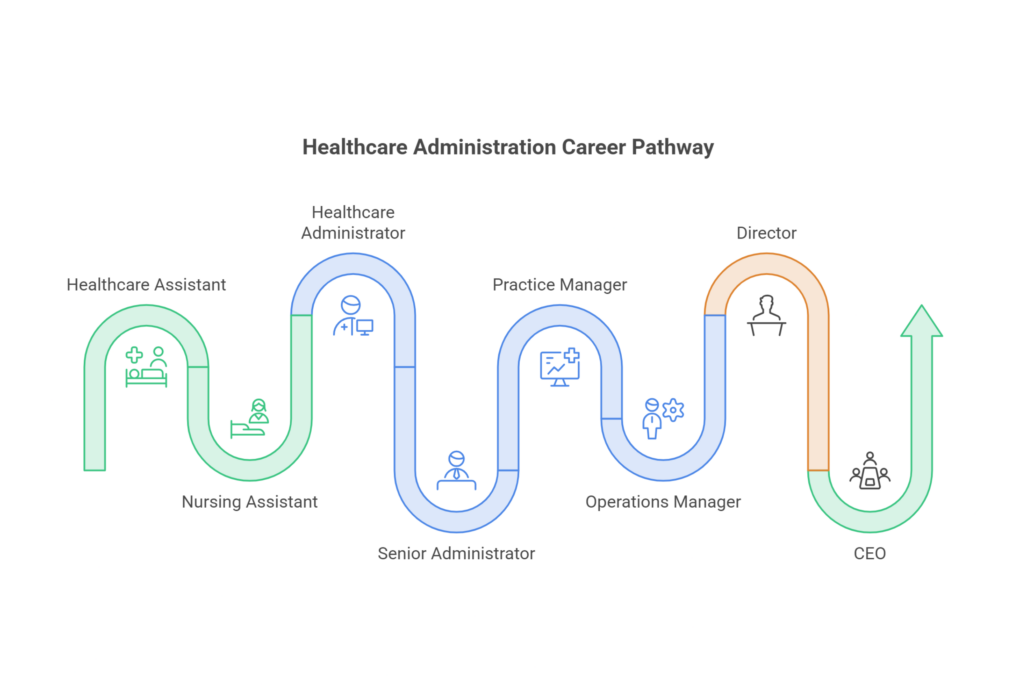
Career Progression Pathway
Healthcare administration offers a clear career route, from entry-level support roles to senior leadership positions.
This pathway shows how healthcare administration jobs can support long-term career growth, higher salaries, and stronger job security within the UK healthcare system.
Conclusion
Healthcare administration is one of the most promising career paths in the UK healthcare sector. From Medical Directors and Hospital CEOs to Practice Managers and Healthcare Project Managers, there are many rewarding opportunities for professionals interested in leadership, operations, and healthcare management.
Whether you are currently working in Health and Social Care, starting as a Healthcare Assistant or Nursing Assistant, or pursuing a Level 3 Diploma in Health and Social Care, there are numerous pathways into healthcare administration. With strong salaries, excellent job security, and clear career progression routes, healthcare administration jobs offer a rewarding future for ambitious professionals looking to make a positive impact on healthcare services across the UK.

- All Courses
 Personal Development (1283)
 Career Bundle (479)
 Management & Administration (460)
 Employability (439)
 Health & Social Care (411)
 Health and Safety (382)
 Business (320)
 Teaching & Education (268)
 IT & Software (263)
 Health and Fitness (238)
 QLS Endorsed Courses (219)
 Mental Health & Counselling (168)
 Science & Technology (153)
 Accounting & Finance (144)
 Sales & Marketing (128)
 Construction & Engineering (126)
 Art & Design (125)
 Compliance & Law (112)
 Language (86)
 Photography & Lifestyle (58)
 Animal Care (57)
 Food Safety & Hygine (53)
 Diet & Nutrition (49)
 Sports & Fitness (47)
 Makeup & Beauty (43)
 First Aid (39)
 Agriculture (2)
0 responses on "Top 17 Highest Paying Healthcare Administration Jobs in the UK (2026 Salaries & Career Guide)"