



Congratulations on your pregnancy! Finding out you are expecting is one of life’s most exhilarating moments, but it is entirely normal if a wave of questions follows that initial excitement. Navigating pregnancy care in the UK today looks a bit different than it did a few years ago. We are more connected than ever—balancing digital maternity notes on our NHS apps with an overwhelming sea of online wellness advice.
When you are caring for pregnancy, you aren’t just growing a tiny human; you are completely rewriting your own daily routine. From decoding which vitamins actually matter to figuring out how the UK healthcare system supports you, this comprehensive guide is designed to cut through the noise. We will break down exactly what you need to know, trimester by trimester, to ensure you feel confident, healthy, and fully supported on this incredible journey.
Planning and Early Stages: Proactive Care About Pregnancy

The first trimester often passes in a bit of a blur, marked by a mix of intense excitement, overwhelming fatigue, and perhaps a touch of morning sickness. Taking proactive care about pregnancy from the very beginning sets a strong, healthy foundation for the months ahead.
Pregnancy Care Conception to 12 Weeks
The moment you see that positive result on a home test, your official UK maternity journey begins. A common misconception is that you need to book an appointment with your GP to get the ball rolling. While you can certainly do that, the fastest way to access pregnancy care in 2026 is to self-refer directly to your local NHS midwifery services. This is usually done via your local hospital trust’s website or through the NHS App.
Once registered, you will be assigned a community midwife who will coordinate your care. Your first major milestone will be the “booking appointment” (usually around weeks 8 to 10), where your midwife will take a full medical history, discuss your birth options, and hand over your digital maternity notes. This is quickly followed by your first dating scan, which takes place between weeks 11 and 14 to give you your official due date.
Essential Prenatal Vitamins and Pregnancy Care Tablets
Your body is working overtime in these early weeks to build the placenta and vital organs. While a balanced diet is always the goal, certain nutrients are incredibly difficult to get from food alone. This is where daily pregnancy care tablets become essential.
The NHS recommends two non-negotiables for the early stages:
- Folic Acid: You need $400\,\mu\text{g}$ (micrograms) daily until at least the 12th week of pregnancy. This is crucial for preventing neural tube defects like spina bifida.
- Vitamin D: You need $10\,\mu\text{g}$ daily throughout your entire pregnancy and while breastfeeding to support your baby’s bone, tooth, and muscle development.
When shopping for supplements, look for dedicated prenatal multivitamins and avoid standard multivitamins containing Vitamin A (retinol), as high levels can be harmful to your baby. If you are on a lower income or receive certain benefits, be sure to ask your midwife about the NHS Healthy Start scheme, which provides free pregnancy vitamins and food vouchers.
NHS vs. Private Pregnancy Care
Once you have your initial appointments booked, it’s time to map out what your ongoing pregnancy care will look like over the next nine months. In the UK, we are incredibly fortunate to have robust maternity services, but you do have choices when it comes to how and where you are looked after.
The Standard NHS Maternity Pathway
For the vast majority of expectant mothers in the UK, the NHS pathway offers exceptional, comprehensive support. If your pregnancy is straightforward, your journey will be “midwife-led.” This means a team of community midwives will handle your routine check-ups, monitor your blood pressure and urine, check your baby’s growth, and guide you through your choices for labour.
Your care is structured around key milestones. Following your 12-week dating scan, your next major landmark is the 20-week anomaly scan, an exciting detailed ultrasound where the sonographer checks your baby’s physical development (and can often tell you the sex, if you want to know!). If any complexities arise at any stage, you will seamlessly transition to “consultant-led care,” bringing obstetricians and specialists into your team to ensure you and your baby stay completely safe.
When to Consider Private Pregnancy Care
While NHS care is world-class, some parents look into private pregnancy care for added continuity and flexibility. Choosing the private route doesn’t mean turning your back on the NHS entirely; many families mix and match services.
What does private care offer?
- Continuity of Care: You will typically see the exact same obstetrician or independent midwife at every single appointment and have them present during your delivery.
- Extra Reassurance Scans: Many parents choose to pay out-of-pocket at private clinics for early reassurance scans (around 7–9 weeks) or advanced 4D scans later in pregnancy to see detailed images of their baby.
- Environment: Private maternity wings or hospitals offer private en-suite rooms and hotel-style amenities for postpartum recovery.
Ultimately, whether you choose the NHS, private options, or a blend of both, the goal is finding the path that makes you feel the most secure, supported, and relaxed.

Start A Rewarding Career As A Nursing Assistant?
Radiant and Safe: Your Pregnancy Skin Care Routine
The “pregnancy glow” is a beautiful thing, but the hormonal shifts that cause it can also bring a few unexpected surprises. From sudden breakouts to dry patches and hyperpigmentation, your skin changes rapidly when you are caring for pregnancy. Because what you put on your body can absorb into your bloodstream, updating your bathroom cabinet with safe alternatives is a top priority.
Why You Need to Switch to Pregnancy Safe Skin Care
During pregnancy, your body experiences an influx of estrogen and progesterone, which can kick your oil glands into overdrive or trigger a condition known as melasma—often called the “mask of pregnancy.”
While your instinct might be to reach for your usual hard-hitting skincare products, many powerful active ingredients are not recommended for expectant mums.
The Best Skin Care During Pregnancy for Face and Body
Switching to a pregnancy skin care routine doesn’t mean sacrificing results. There are plenty of brilliant, nourishing ingredients that will keep you glowing safely:
- For Hydration and Brightening: Look for Hyaluronic Acid to plump dry skin and Vitamin C to safely combat dark spots and uneven skin tone.
- For Breakouts: Swap out retinoids for Glycolic Acid or Azelaic Acid. These gentle AHAs keep pores clear and are completely pregnancy safe skin care staples.
- For Sun Protection: Hormonal skin is highly susceptible to sun damage. Protect your skin daily with a mineral-based SPF (look for Zinc Oxide or Titanium Dioxide), which sits on top of the skin rather than absorbing into it.
Don’t forget the rest of your body, either. As your bump grows, the skin stretches and can become incredibly itchy. Incorporating nourishing body oils rich in Vitamin E, rosehip, or sweet almond oil into your daily routine will keep your skin supple, locked in with moisture, and comforted throughout the second and third trimesters.

Pampering the Mind and Body: Wellness and Kits
While monitoring your physical health and changing up your skincare routine are vital parts of the journey, true pregnancy care is just as much about mental wellbeing and emotional comfort. Your body is doing the monumental work of growing a new life, which means taking time out to pamper yourself isn’t a luxury—it’s a necessity.
Creating the Ultimate Pregnancy Care Package
As you transition into your second and third trimesters, your physical needs will change. Preparing a personal pregnancy care package—or dropping subtle hints to friends and family looking for gift ideas—is a wonderful way to ensure you have comfort close at hand.
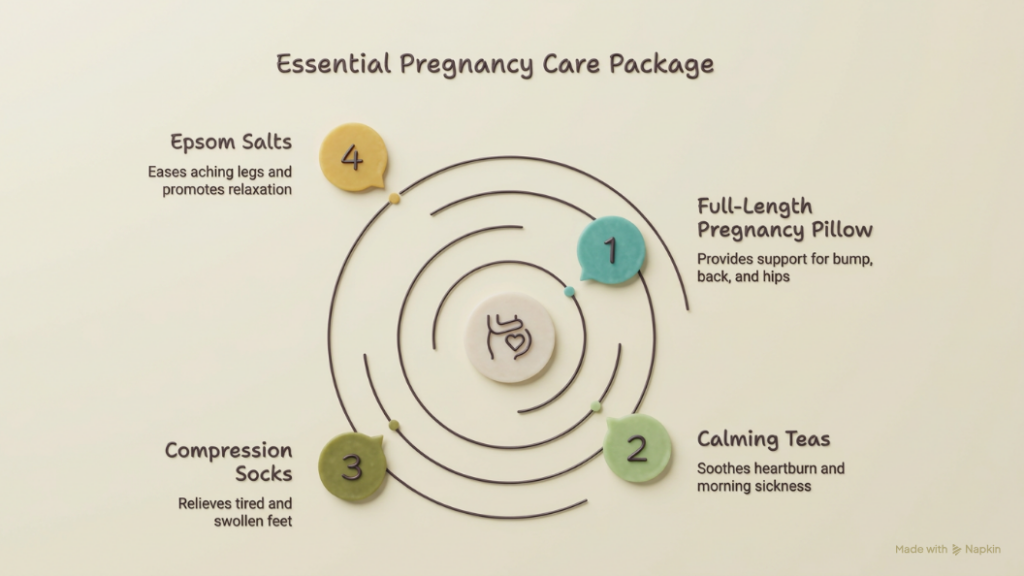
If you are putting together a care package for pregnancy, consider including these everyday essentials:
- A Full-Length Pregnancy Pillow: An absolute lifesaver for supporting your bump, back, and hips, helping you get comfortable for a good night’s sleep as your body expands.
- Calming, Caffeine-Free Teas: Peppermint tea is fantastic for soothing third-trimester heartburn, while ginger tea can help keep lingering morning sickness at bay.
- Compression Socks and Epsom Salts: Perfect for relieving the tired, swollen feet and aching legs that often come with a long day of carrying extra baby weight.
The Rise of All-in-One Pregnancy Care Kits
If you don’t want the hassle of sourcing individual products, pre-curated pregnancy care kits have become incredibly popular across the UK. Many subscription services now offer trimester-specific boxes delivered right to your door.
These clever kits are tailored to your exact stage of pregnancy. In the first trimester, your kit might focus on morning sickness remedies and gentle morning sickness bands. By the third trimester, it flips to hospital bag essentials, perineal massage oils, and labor relaxation tools. It takes the guesswork out of self-care, letting you focus entirely on relaxing and bonding with your bump.
Preparing for the Big Day and Beyond
As you enter the third trimester, the countdown is officially on. Your attention will naturally shift from managing day-to-day symptoms to preparing for labor and life with your newborn. This final phase of pregnancy care is all about getting organized so you can enter the birthing room feeling calm, empowered, and ready.
The Third Trimester Checklist and Hospital Bag Prep
By around week 34, it is a smart idea to have your hospital bag packed and resting by the front door. Even if you are planning a home birth, having everything in one place keeps stress levels low.
Make sure your birth preferences are filled out on your digital NHS maternity portal so your midwife team knows exactly what you want regarding pain relief, lighting, and immediate skin-to-skin contact.
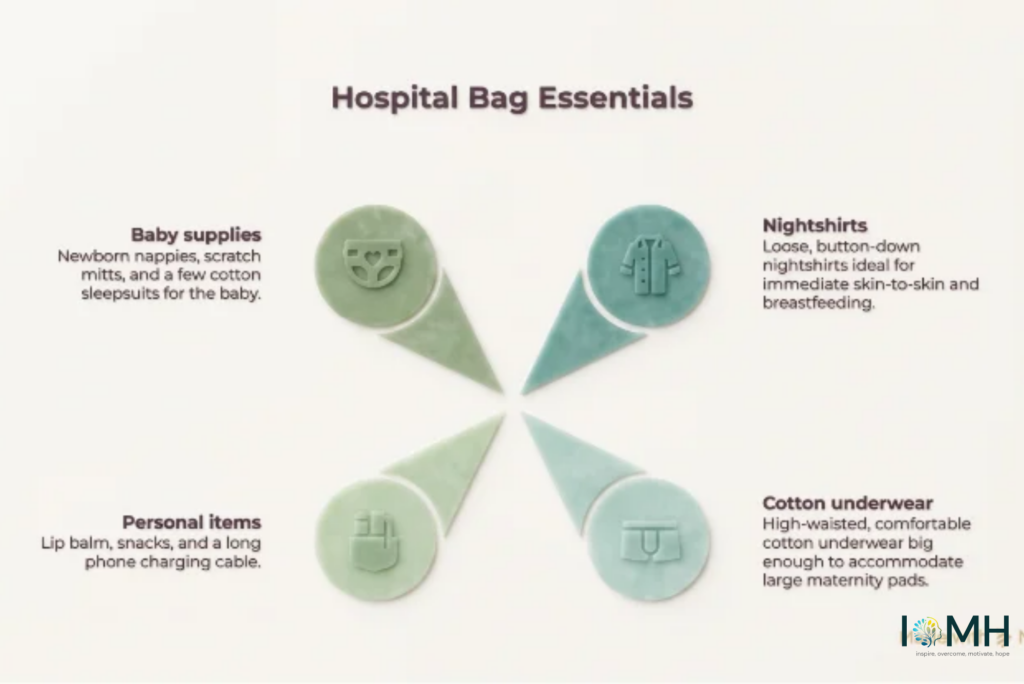
When packing your bags, think of comfort for both you and your baby. Include:
- Loose, button-down nightshirts (ideal for immediate skin-to-skin and breastfeeding).
- High-waisted, comfortable cotton underwear (big enough to accommodate large maternity pads).
- Lip balm, snacks, and a long phone charging cable.
- Newborn nappies, scratch mitts, and a few cotton sleepsuits for the baby.
Don’t Forget Post Pregnancy Care
It is incredibly easy to focus entirely on the birth and forget about what happens after the baby arrives. However, post pregnancy care—often called the “fourth trimester”—is just as critical as the prenatal phase. Your body needs time, rest, and patience to heal from birth.
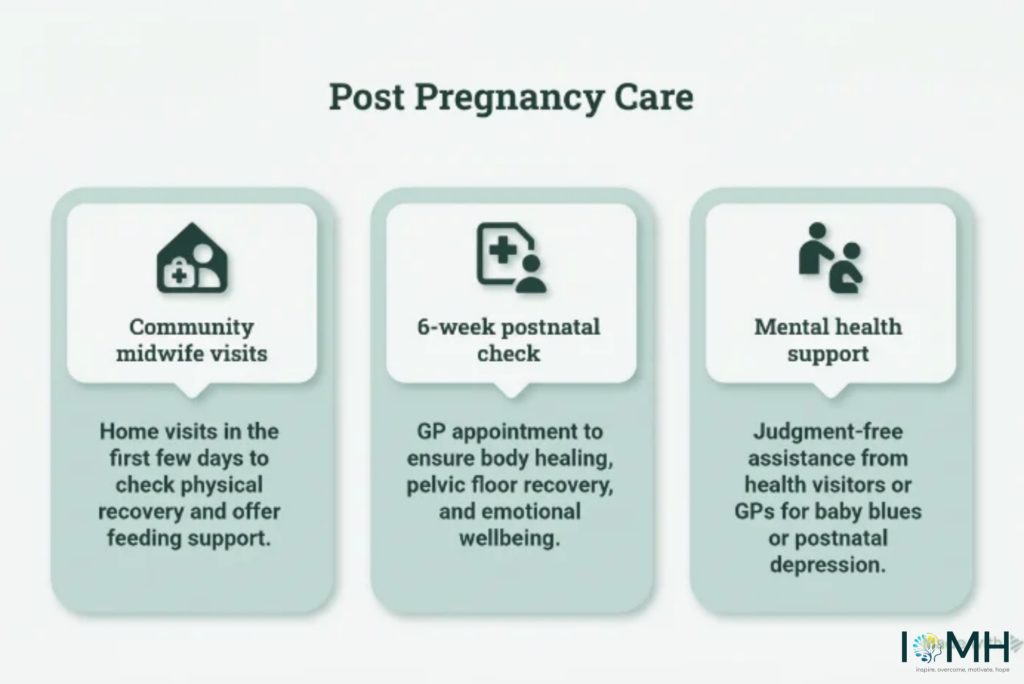
In the UK, your healthcare team stays by your side during this transition. You will receive home visits from a community midwife in the first few days to check on your physical recovery and offer breastfeeding or infant feeding support.
Between 6 and 8 weeks postpartum, you will have a crucial appointment with your GP. This NHS 6-week postnatal check is designed to ensure your body is healing well, your pelvic floor is recovering, and—most importantly—to check on your emotional and mental wellbeing. Never hesitate to speak openly with your health visitor or GP if you are struggling with the “baby blues” or symptoms of postnatal depression; the UK network is highly trained to give you the gentle, judgment-free support you deserve.
Conclusion
Embarking on the journey of motherhood is an incredible transformation, and taking proper care about pregnancy means listening to your body every single step of the way. From navigating your initial NHS app self-referrals to tailoring a safe, glowing skincare routine and planning your postpartum recovery, you are now equipped with the essential tools to manage your pregnancy with confidence.
Remember, you do not have to do this alone. The UK has a phenomenal, world-class network of midwives, health visitors, and support groups ready to lift you up. Trust your instincts, lean on your care team, and take the time to truly enjoy the magic of growing your family.
If you’re passionate about helping others and ready to take the first step, why not look into a Nursing Assistant Diploma or similar course? It could be the start of a journey that changes not only your life but the lives of many others too.
Whether you’re drawn to adult nursing, mental health nursing, or simply want to provide compassionate care to those in need, the role of a nursing assistant offers a fulfilling and impactful career path. So, what are you waiting for? Your journey starts today!


- All Courses
 Personal Development (1283)
 Career Bundle (479)
 Management & Administration (460)
 Employability (439)
 Health & Social Care (411)
 Health and Safety (382)
 Business (320)
 Teaching & Education (268)
 IT & Software (263)
 Health and Fitness (238)
 QLS Endorsed Courses (219)
 Mental Health & Counselling (168)
 Science & Technology (153)
 Accounting & Finance (144)
 Sales & Marketing (128)
 Construction & Engineering (126)
 Art & Design (125)
 Compliance & Law (112)
 Language (86)
 Photography & Lifestyle (58)
 Animal Care (57)
 Food Safety & Hygine (53)
 Diet & Nutrition (49)
 Sports & Fitness (47)
 Makeup & Beauty (43)
 First Aid (39)
 Agriculture (2)
0 responses on "The Ultimate Pregnancy Care Guide Every Expectant Mum in the UK Needs"