



What Is Safeguarding in Health and Social Care?
Safeguarding in health and social care refers to the proactive measures taken to protect individuals—especially children, vulnerable adults, and those receiving care—from abuse, neglect, exploitation, and harm. It ensures that people’s health, wellbeing, and human rights are upheld in all care settings.
When we ask, “What is safeguarding in care?” or “What is safeguarding adults?”, we’re exploring a framework that goes beyond physical safety. It includes emotional protection, empowerment, and the right to live free from fear and harm.
In UK care environments, safeguarding is not just a best practice—it’s a legal and ethical obligation. Whether you’re working in a hospital, care home, or community setting, understanding the safeguarding definition is essential for maintaining trust, dignity, and compliance.
Core Concepts of Safeguarding



What Is Safeguarding?
At its heart, safeguarding means protecting a person’s right to live safely, free from abuse, neglect, and exploitation. It applies to both children and adults, and is a shared responsibility across all care settings.
If you’re wondering “What is safeguarding?”, it’s more than just responding to harm—it’s about creating environments where risks are minimised and people feel empowered to speak up.
Key Principles of Safeguarding
1. Empowerment
Empowerment means supporting individuals to make informed decisions about their own care and wellbeing. It involves respecting their choices, encouraging independence, and ensuring they understand their rights. In practice, this could mean helping someone understand their care options, supporting them to speak up about concerns, or involving them in safeguarding plans. This principle is especially vital when working with adults who may have fluctuating mental capacity or complex needs.
2. Prevention
Prevention focuses on stopping abuse or neglect before it happens. It’s about identifying risks early, raising awareness, and promoting protective behaviours. For example, training staff to recognise warning signs, implementing robust safeguarding policies, and creating open cultures where concerns can be voiced all contribute to prevention. This principle aligns with the proactive nature of safeguarding jobs, where vigilance and early intervention are key.
3. Proportionality
Proportionality ensures that responses to safeguarding concerns are appropriate to the level of risk. It means balancing protection with respect for autonomy and avoiding unnecessary intrusion. For instance, not every concern requires a formal investigation—some may be resolved through support or mediation. This principle helps professionals act responsibly, avoiding overreaction while still ensuring safety.
4. Protection
Protection is about safeguarding those in greatest need—individuals who are at risk of harm and unable to protect themselves. This includes children, older adults, and people with disabilities or mental health conditions. Professionals must know how to respond swiftly and effectively when abuse or neglect is suspected, using legal frameworks and multi-agency support.
5. Partnership
Partnership means working collaboratively with other organisations, professionals, and communities to safeguard individuals. Effective safeguarding relies on shared responsibility—between healthcare providers, local authorities, police, schools, and voluntary organisations. Information sharing, joint training, and coordinated responses are all part of this principle.
6. Accountability
Why Safeguarding Matters
Safeguarding Children in Health and Social Care
Children are among the most vulnerable individuals in any care setting, which is why safeguarding children is a legal and moral priority across the UK’s health and social care sectors.

Importance of Safeguarding Children
Safeguarding children means protecting them from abuse, neglect, exploitation, and harm. It also involves promoting their welfare, development, and rights. Whether in hospitals, schools, foster care, or community services, professionals must be trained to safeguard children effectively.
When people search “What is safeguarding?” or “What is safeguarding in care?”, they’re often looking for guidance on how to identify risks and respond appropriately—especially when children are involved.
Children’s Safeguarding Policy
Every organisation working with children must have a clear Children’s Safeguarding Policy. This includes:
- Procedures for reporting concerns.
- Staff training requirements.
- Roles and responsibilities for safeguarding leads.
- Compliance with legislation such as the Children Act 1989 and Working Together to Safeguard Children (2018).
These policies help ensure that safeguarding is not reactive, but embedded into everyday practice.
Recognising Abuse in Children
Healthcare and social care professionals must be able to recognise signs of:
- Physical abuse
- Emotional abuse
- Sexual abuse
- Neglect
Early intervention is key. If you’re exploring safeguarding jobs, understanding child protection protocols is essential for professional readiness and legal compliance.
Safeguarding Adults: Protecting Vulnerable Individuals in Care
Safeguarding adults is a critical responsibility in health and social care. It involves protecting individuals aged 18 and over who may be at risk due to age, disability, illness, or social circumstances. When people search “What is safeguarding adults?”, they’re often seeking guidance on how to identify, prevent, and respond to abuse or neglect in adult care settings.
What Is Adult Safeguarding?
- Preventing abuse and neglect
- Promoting independence and choice
- Ensuring access to support and protection services
The Care Act 2014 defines safeguarding duties for local authorities and care providers, making it a statutory requirement across the UK.
Who Is Considered a Vulnerable Adult?
- Has a physical or mental disability.
- Is elderly or frail.
- Has a learning disability.
- Is dependent on others for care or support.
- Is unable to protect themselves from harm or exploitation.
Common Types of Abuse in Adult Care
- Physical abuse.
- Emotional or psychological abuse.
- Financial abuse.
- Sexual abuse.
- Neglect and self-neglect.
- Discriminatory abuse.
- Organisational abuse.
UK Safeguarding Legislation and Regulatory Framework
Understanding the legal foundations of safeguarding is essential for professionals working in health and social care. UK legislation outlines clear responsibilities for care providers, local authorities, and healthcare workers to safeguard both children and adults.
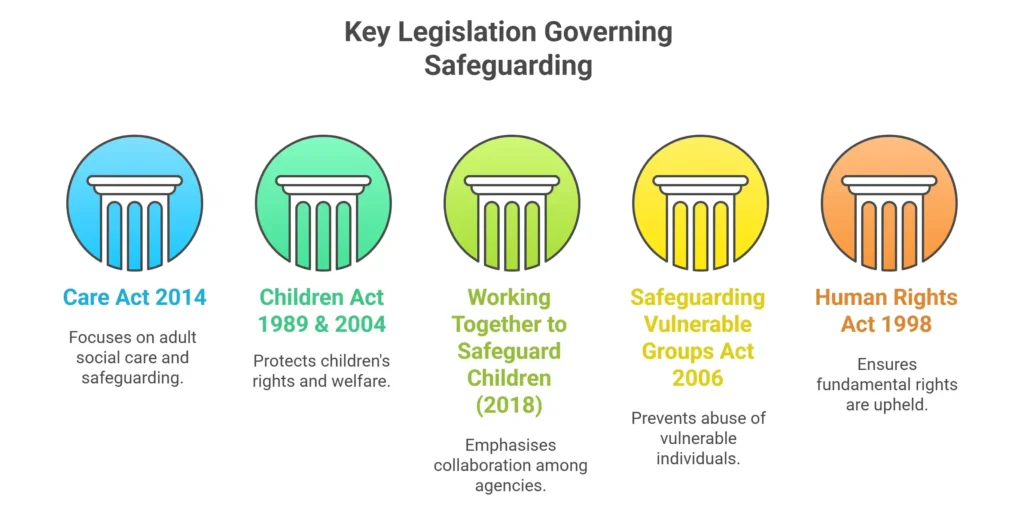
Key Legislation Governing Safeguarding
- 1. Care Act 2014 Establishes the statutory duty to protect safeguarding adults at risk of abuse or neglect. It defines what constitutes adult safeguarding and outlines the responsibilities of local authorities.
- 2. Children Act 1989 & 2004 Provides the legal framework for safeguarding children, including parental responsibilities, child protection procedures, and the role of local safeguarding partnerships.
- 3. Working Together to Safeguarding Children (2018) Offers statutory guidance for inter-agency collaboration in child protection, ensuring consistent safeguarding practices across health, education, and social care.
- 4. Safeguarding Vulnerable Groups Act 2006 Introduced the Disclosure and Barring Service (DBS) to prevent unsuitable individuals from working in safeguarding jobs involving vulnerable people.
- 5. Human Rights Act 1998 Reinforces the right to live free from inhuman or degrading treatment—an underpinning principle of all safeguarding efforts.
Regulatory Bodies and Guidance
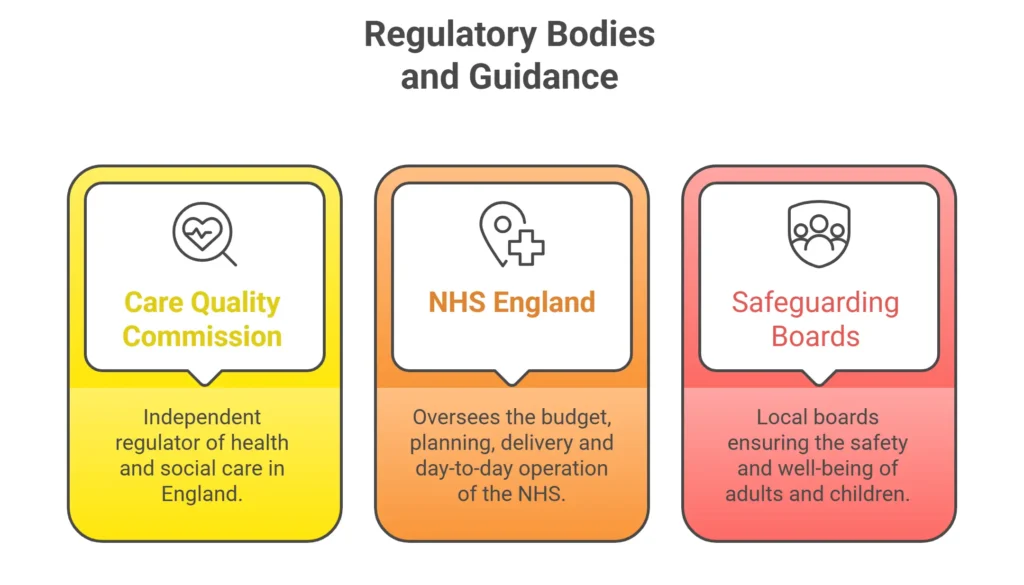
- Care Quality Commission (CQC) – Inspects and regulates care services to ensure safeguarding standards are met
- NHS England - Provides safeguarding frameworks and training for healthcare professionals
- Local Safeguarding Adults Boards (LSABs) and Local Safeguarding Children Partnerships (LSCPs) – Coordinate multi-agency safeguarding efforts
These laws and bodies ensure that safeguarding is not optional—it’s embedded in every aspect of care delivery.

Safeguarding in Practice: Roles, Responsibilities, and Reporting
Putting safeguarding into practice means embedding protective measures into daily routines, policies, and professional conduct. Whether you’re a nurse, care assistant, social worker, or manager, safeguarding is everyone’s responsibility.
What Does Safeguarding Mean for Healthcare Workers?
- Observing changes in behaviour or physical condition.
- Listening to disclosures from patients or service users.
- Following organisational safeguarding protocol.
- Documenting and reporting concerns accurately.
If you’re exploring safeguarding jobs, understanding these responsibilities is essential for both compliance and compassionate care.
Recognising the Signs of Abuse and Neglect
Professionals must be trained to spot early indicators of abuse or neglect. These may include:
- Unexplained injuries or bruises
- Withdrawal or fearfulness
- Poor hygiene or malnutrition
- Financial irregularities
- Inconsistent stories or reluctance to speak
Recognising these signs is key to answering the question “What is safeguarding?” in real-world settings.
Common Types of Abuse in Health and Social Care
Safeguarding policies must address a wide range of abuse types, including:
- Physical abuse
- Emotional or psychological abuse
- Sexual abuse
- Financial abuse
- Neglect and self-neglect
- Institutional abuse
Each type requires a tailored response, guided by safeguarding principles and legal frameworks.
Reporting Obligations for Healthcare Professionals
If a safeguarding concern arises, professionals must:
- Report it to the designated safeguarding lead (DSL)
- Record the concern factually and confidentially
- Follow local authority or organisational procedures
- Cooperate with multi-agency investigations if required
Conclusion
Safeguarding is not a one-off task—it’s a continuous commitment to protecting the dignity, safety, and rights of vulnerable individuals in health and social care. Whether you’re just starting out or exploring safeguarding jobs, understanding the principles, legislation, and practical responsibilities is essential.

- All Courses
 Personal Development (1283)
 Career Bundle (479)
 Management & Administration (460)
 Employability (439)
 Health & Social Care (411)
 Health and Safety (382)
 Business (320)
 Teaching & Education (268)
 IT & Software (263)
 Health and Fitness (238)
 QLS Endorsed Courses (219)
 Mental Health & Counselling (168)
 Science & Technology (153)
 Accounting & Finance (144)
 Sales & Marketing (128)
 Construction & Engineering (126)
 Art & Design (125)
 Compliance & Law (112)
 Language (86)
 Photography & Lifestyle (58)
 Animal Care (57)
 Food Safety & Hygine (53)
 Diet & Nutrition (49)
 Sports & Fitness (47)
 Makeup & Beauty (43)
 First Aid (39)
 Agriculture (2)
0 responses on "Safeguarding in Health and Social Care: Key Principles, Legal Duties, and Best Practices in the UK"