



What is Occupational Therapy?
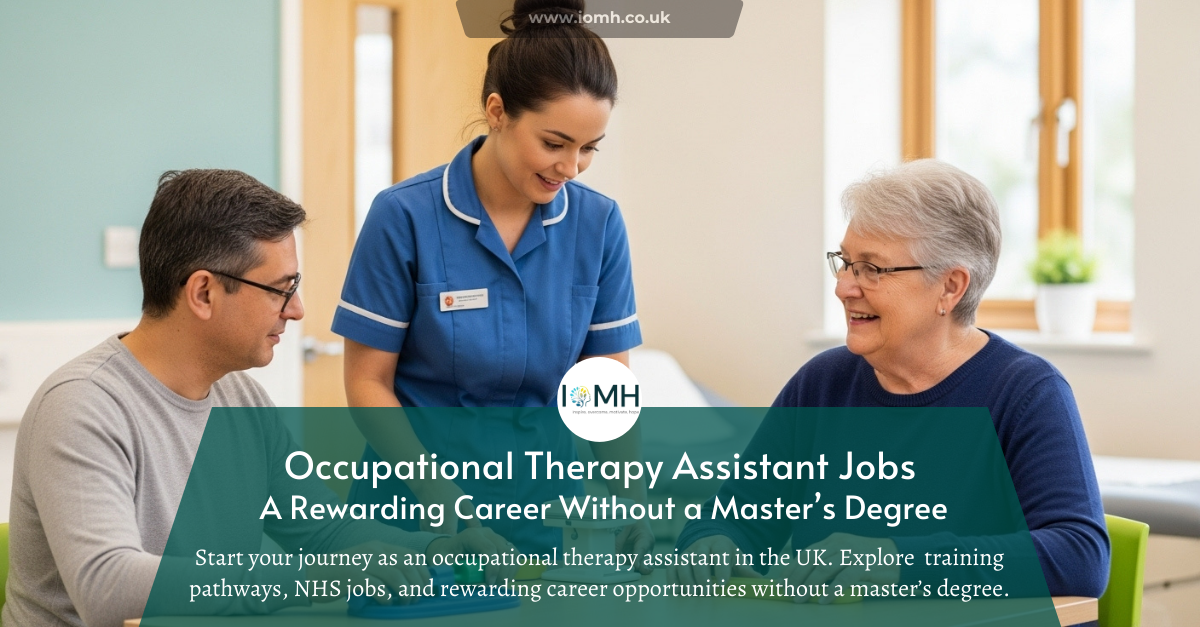
Before diving into occupational therapy assistant jobs, it’s important to answer a key question: what is occupational therapy? Occupational therapy (often shortened to OT) is a healthcare profession that helps people live fuller, more independent lives. It focuses on enabling individuals to carry out the everyday activities—or “occupations”—that matter most to them, whether that’s getting dressed, going to work, preparing meals, or enjoying hobbies.
Occupational therapists (OTs) work with people of all ages who may be recovering from injury, living with illness, managing disability, or experiencing mental health challenges. The goal isn’t just treatment, but empowerment—finding practical solutions so individuals can thrive in their daily routines. This might mean teaching a new way of completing a task, recommending adaptive equipment, or creating a structured plan that makes life easier and more manageable.
In the UK, occupational therapy is recognised as a vital part of the NHS and wider social care system. From hospital wards to schools, care homes, and community services, occupational therapy plays a crucial role in rehabilitation, recovery, and long-term well-being.
Moreover, this course is designed to guide learners step by step. In addition, the lessons are organised in a logical flow, ensuring that each concept builds smoothly on the previous one. Consequently, learners gain confidence as they progress. Furthermore, the content connects theory with practical examples, making the learning experience more engaging. Similarly, complex topics are simplified so that beginners can understand them easily. As a result, learners can apply the knowledge in real situations. On the other hand, those with prior experience can refine their existing skills. Therefore, the course supports continuous improvement for all learners. Ultimately, it provides a structured pathway that helps students achieve their learning goals effectively.online communication skills



What is an Occupational Therapy Assistant / Support Worker?
When people search for occupational therapy jobs in the UK, they often imagine the role of a fully qualified occupational therapist. However, there’s another rewarding pathway: becoming an occupational therapy assistant (sometimes called a support worker, OT technician, or rehabilitation assistant). These positions allow you to enter the field without needing a master’s degree, while still playing a vital role in patient care.
An occupational therapy assistant works alongside qualified therapists, helping patients put their treatment plans into action. Typical duties might include assisting people with exercises, guiding them through daily living activities such as cooking or dressing, demonstrating how to use adaptive equipment, and recording patient progress. Assistants also encourage clients, ensuring they stay motivated and confident as they regain independence.
You’ll find OT assistants across a wide range of settings: NHS hospitals, GP practices, rehabilitation centres, care homes, schools, and even visiting patients in their own homes. The work is hands-on and practical, giving you the chance to see first-hand how occupational therapy transforms lives.
How to Become an Occupational Therapy Assistant Without a Master’s Degree
Unlike a qualified occupational therapist—who needs to complete an approved degree programme and register with the HCPC—you can secure an occupational therapy job as an assistant without going down the master’s degree route. In fact, there are several accessible pathways into this career, many of which allow you to start working while you train.
Entry Requirements
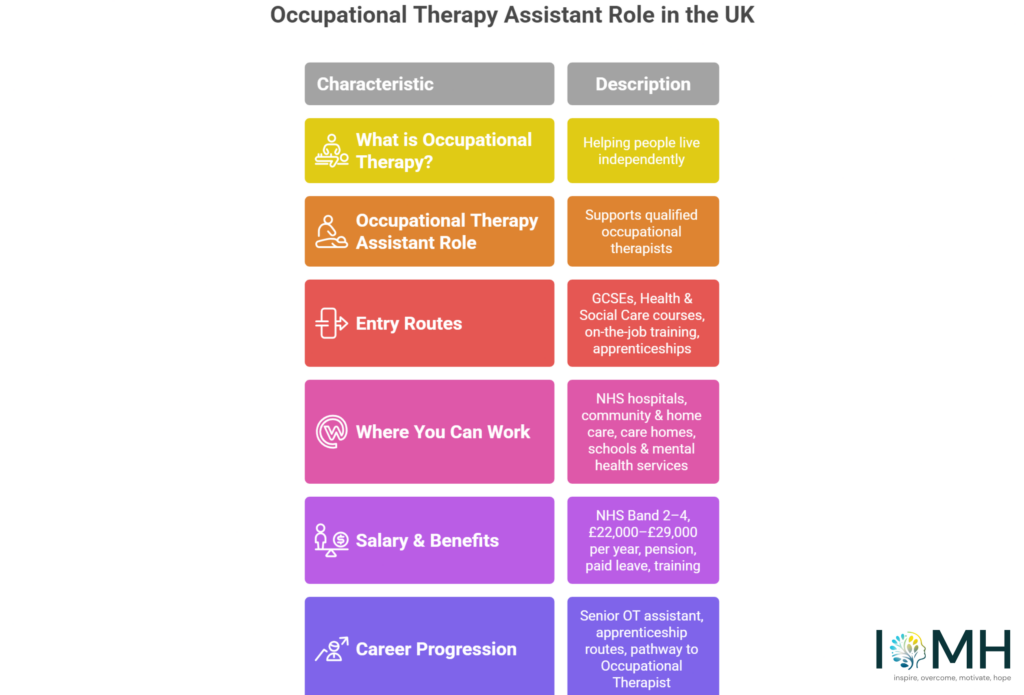
Most employers look for GCSEs in English and Maths, sometimes alongside a science subject. Previous experience in health or social care is highly valued, whether that’s paid employment, volunteering, or caring for a family member. Strong communication skills, patience, and a genuine desire to help people are often just as important as formal qualifications.
Education and Training Routes
- College courses: Level 2 or Level 3 Diplomas in Health and Social Care or Skills for Health are good starting points.
- On-the-job training: Many NHS Trusts recruit support workers and provide structured induction and training once you start.
- Occupational therapy apprenticeships: Increasingly popular, these allow you to earn while you learn. Apprenticeships can progress from healthcare support worker roles up to higher levels, and in some cases, even provide a route towards becoming a registered occupational therapist.
Professional Development
While you don’t need to be a full occupational therapy graduate to become an assistant, there are opportunities to grow. Joining professional bodies such as the Royal College of Occupational Therapists or student occupational therapy associations can help you access resources, training, and networking opportunities that support career progression.
Employment & Job Prospects in the UK
The demand for occupational therapy jobs in the UK continues to grow, making this an excellent time to consider becoming an OT assistant. With an ageing population, increasing rates of long-term health conditions, and a focus on rehabilitation and community care within the NHS, the need for skilled support workers is higher than ever.

Where the Jobs Are
Occupational therapy assistants are employed across hospitals, rehabilitation units, care homes, mental health services, schools, and community health teams. The NHS is the largest employer, but private practices, charities, and local councils also recruit assistants. Job listings for occupational therapy employment frequently appear on NHS Jobs, Indeed, and specialist healthcare recruitment sites.
Career Progression
Starting as an assistant doesn’t mean staying in one role forever. Many use the position as a stepping stone—progressing into senior support roles, moving into related health professions, or eventually retraining as a qualified occupational therapist. For some, though, the assistant role itself offers long-term satisfaction with the right balance of patient interaction and manageable responsibility.
Job Security
Healthcare remains one of the most stable career sectors in the UK. With the NHS facing ongoing staffing shortages, the need for occupational therapy support workers is unlikely to slow down. This makes it a secure pathway for those looking to enter healthcare without a lengthy university commitment.
Salary & Benefits
One of the most common questions when considering any healthcare career is: what is the occupational therapy salary like? For assistants in the UK, pay is structured largely around NHS pay bands, though private employers may set their own rates.
Salary Range
Most occupational therapy assistant jobs within the NHS start at Band 2 or Band 3 of the Agenda for Change pay scale. This usually means a starting salary of around £22,000–£24,000 per year. With experience and progression to Band 4, salaries can rise to approximately £27,000–£29,000 annually. While this is lower than the salary of a fully qualified occupational therapist (who may earn between £28,000–£45,000 depending on experience), assistants benefit from earlier entry into the workforce without years of study and student debt.
Benefits of NHS Employment
- Generous pension scheme
- Paid annual leave starting at 27 days, plus bank holidays
- Training and development opportunities to support career growth
- Job security in one of the UK’s most stable sectors
Private and Community Settings
In private clinics, care homes, and charities, pay may vary. Some roles offer additional perks such as flexible working hours, professional development budgets, or the chance to specialise in areas like paediatrics or mental health.
Pros & Cons of Working as an OT Assistant
Confidentiality is a key principle of professional practice in health and social care. Care workers regularly handle sensitive personal and medical information, and legislation is in place to ensure this information is protected, stored securely, and used responsibly.
Responsibilities Include:
- Storing paper and electronic records securely
- Sharing information only on a strict need-to-know basis
- Gaining consent before sharing information where required
- Ensuring records are accurate, relevant, and kept up to date
In certain situations, the law allows professionals to breach confidentiality. This occurs when there is a serious risk of harm, safeguarding concerns arise, or a court order requires information sharing. In these cases, professionals must share information only with appropriate authorities and record it accurately.

Roles and Responsibilities Under Health and Social Care Legislation
Like any career, an occupational therapy job as an assistant comes with its advantages and challenges. Understanding both sides will help you decide if this path aligns with your goals and lifestyle.
Pros
- Meaningful work: You’ll see first-hand how your support improves a patient’s quality of life, whether that’s helping them cook again, return to work, or regain independence after an illness.
- Quicker entry into healthcare: Unlike a qualified occupational therapist, you don’t need a degree or master’s to get started. Many assistants begin with on-the-job training or apprenticeships.
- Stepping stone opportunities: This role is a solid foundation for progressing into senior assistant roles or retraining later as a registered occupational therapist.
- Variety of settings: From hospitals and schools to community health teams, no two days are the same, making the job engaging and dynamic.
Cons
- Limited scope of practice: As an assistant, you’ll work under supervision and won’t design care plans or carry out assessments independently.
- Lower pay ceiling: While the role provides stability, the salary range is narrower compared to fully qualified occupational therapists.
- Physical and emotional demands: Supporting people with significant challenges can be both physically tiring and emotionally intense.
- Need for flexibility: Shift work, weekends, or travel to community patients may be required, depending on the setting.

Occupational Therapy Jobs vs Occupational Therapy Assistant Jobs
When exploring careers in this field, it’s important to understand the difference between an occupational therapist and an occupational therapy assistant. Both roles are essential, but they vary significantly in terms of training, responsibility, and salary.
Occupational Therapist (OT)
To practise as an occupational therapist in the UK, you must complete an approved degree in occupational therapy and register with the Health and Care Professions Council (HCPC). OTs assess patients, design treatment programmes, and make clinical decisions. Their work is highly autonomous, requiring advanced knowledge and problem-solving skills. Salaries for OTs typically start at Band 5 (around £28,000) and can rise to £45,000+ with experience or management roles.
Occupational Therapy Assistant (OTA)
By contrast, occupational therapy assistant jobs do not require a degree. Assistants work under the guidance of OTs, implementing therapy programmes, supporting patients with exercises, and providing hands-on help. Their role is practical and people-focused, but without the same level of responsibility for assessments or treatment planning. Salaries usually range from £22,000–£29,000, depending on banding and experience.
Key Differences at a Glance
- Education: Degree + HCPC registration (OT) vs on-the-job training or college courses (OTA).
- Responsibilities: Clinical assessment and planning (OT) vs support and delivery of therapy (OTA).
- Salary: Higher ceiling for OTs, earlier workforce entry for OTAs.
- Progression: OTAs can retrain later as OTs, making the assistant role a potential pathway into a full professional career.
Student Occupational Therapy Association & Community Resources
Starting out in an occupational therapy job as an assistant can feel daunting, but there are plenty of resources and communities designed to support you. One of the most valuable ways to build confidence and knowledge is by connecting with professional bodies and student networks.
Professional Organisations
In the UK, the Royal College of Occupational Therapists (RCOT) is the main professional body. While full membership is for registered occupational therapists, assistants can often access associate membership. This gives you access to professional resources, networking events, and training opportunities to expand your skills.
Student and Assistant Networks
The Student Occupational Therapy Association and similar groups offer excellent platforms for connection, even if you are not yet a qualified therapist. They provide mentoring, peer support, and workshops that help you understand the career landscape. By joining early, you can start building relationships with professionals and students who may become colleagues in the future.
Additional Resources
- NHS Learning Portals: Free online modules to support continuous professional development.
- Volunteering and shadowing: Local charities, schools, and care homes often welcome volunteers, giving you hands-on experience.
- Online communities: Forums and social media groups provide practical advice and a sense of belonging, especially for those just entering the profession.
How to Apply & Tips to Stand Out
Securing an occupational therapy job as an assistant is competitive, but with the right preparation, you can make your application shine. Whether you’re applying to the NHS, private clinics, or care organisations, employers look for candidates who not only meet basic requirements but also demonstrate genuine passion for patient care.
Where to Find Jobs
- NHS Jobs website: The main hub for occupational therapy employment in hospitals and community health services.
- Private job boards: Sites like Indeed and Reed often list OT assistant roles in care homes, charities, and private rehabilitation centres.
- Apprenticeship platforms: Apprenticeship.gov.uk lists healthcare support roles, including those linked to occupational therapy.

Application Tips
- Tailor your CV: Highlight relevant skills such as communication, empathy, teamwork, and problem-solving. Include any volunteering, care experience, or health-related training.
- Strong personal statement: Explain why you’re drawn to occupational therapy and how your background equips you for the role. Employers value motivation and compassion as highly as qualifications.
- Show practical readiness: Certificates in first aid, manual handling, or safeguarding can help you stand out.
- Prepare for interviews: Expect scenario-based questions, such as how you would encourage a patient to complete a challenging activity or how you would handle emotional situations.
Growth Mindset
Even if you start at entry level, show your willingness to learn and progress. Employers appreciate candidates who see the assistant role as both a career in itself and a stepping stone within the wider world of healthcare.
Conclusion
Occupational therapy is a profession built on compassion, practical support, and the drive to help people live fuller lives. While becoming a qualified occupational therapist requires a degree, there is a highly rewarding alternative: working as an occupational therapy assistant. These roles allow you to make a tangible difference in patients’ lives without needing a master’s degree, and they open doors to ongoing learning, apprenticeships, and even the chance to retrain later as a registered professional.
With growing demand for occupational therapy jobs across the UK, assistants play an essential part in hospitals, schools, community services, and care homes. The work may be challenging at times, but the benefits—job security, NHS pay and benefits, and most importantly, the satisfaction of seeing people regain independence—make it a uniquely fulfilling career path.
If you’re searching for a role that combines stability with meaning, consider exploring occupational therapy employment. Whether through college courses, apprenticeships, or on-the-job training, there are multiple routes into this field. The first step could be as simple as applying for a support worker post, shadowing an OT, or reaching out to professional networks such as the Student Occupational Therapy Association.

- All Courses
 Personal Development (1283)
 Career Bundle (479)
 Management & Administration (460)
 Employability (439)
 Health & Social Care (411)
 Health and Safety (382)
 Business (320)
 Teaching & Education (268)
 IT & Software (263)
 Health and Fitness (238)
 QLS Endorsed Courses (219)
 Mental Health & Counselling (168)
 Science & Technology (153)
 Accounting & Finance (144)
 Sales & Marketing (128)
 Construction & Engineering (126)
 Art & Design (125)
 Compliance & Law (112)
 Language (86)
 Photography & Lifestyle (58)
 Animal Care (57)
 Food Safety & Hygine (53)
 Diet & Nutrition (49)
 Sports & Fitness (47)
 Makeup & Beauty (43)
 First Aid (39)
 Agriculture (2)
0 responses on "Occupational Therapy Assistant Jobs: A Rewarding Career Without a Master’s Degree"