




Assistant vs Healthcare Assistant online. Many people get confused because both roles involve caring for patients and supporting healthcare teams. However, there are important differences between the two jobs.
Both a Nursing Assistant and a Healthcare Assistant help patients with daily care and comfort. They also support nurses, doctors, and other healthcare professionals in hospitals, care homes, clinics, and community healthcare services. These roles are very important in the UK healthcare system, including the NHS and CQC-regulated care services.
Although the roles are similar, the training, responsibilities, and career pathways are different. Understanding these differences can help you choose the right healthcare career for your future.
In this guide, you will learn:
- What a Nursing Assistant does
- What a Healthcare Assistant does
- The difference between a healthcare assistant vs nursing assistant
- Important nursing assistant duties and healthcare assistant duties
- Training options such as a Nursing Assistant Course, Nursing Assistant Diploma, and Level 3 Diploma in Nursing Assistant
- Career opportunities and Nursing Assistant jobs in the UK
By the end of this article, you will clearly understand which role may suit you best.



What Does a Nursing Assistant Do?
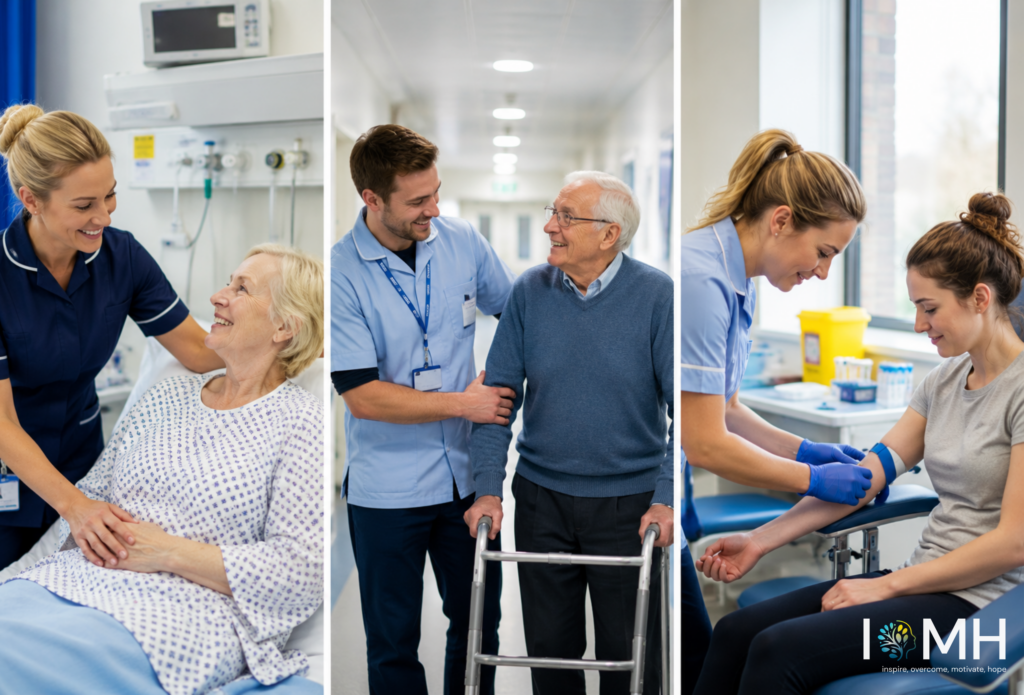
A Nursing Assistant is a healthcare support worker who helps nurses care for patients in hospitals, care homes, rehabilitation centres, and other healthcare settings. They play an important role in helping patients feel safe, comfortable, and supported during treatment and recovery.
Nursing Assistants work closely with nurses and other healthcare professionals every day. They assist with personal care, basic clinical tasks, and patient monitoring. Because they spend a lot of time with patients, they are often one of the first people to notice changes in a patient’s condition.
In the UK, Nursing Assistants are part of a wider healthcare support workforce known as Nursing Assistive Personnel. Their work is important in both the NHS and private healthcare services.
Nursing Assistant Duties
The most common nursing assistant duties include
- Helping patients wash, dress, and maintain personal hygiene
- Supporting patients with mobility and safe movement
- Taking vital signs such as blood pressure, pulse, and temperature
- Helping patients eat and drink safely
- Monitoring patient wellbeing and reporting concerns to nurses
- Keeping patient rooms clean and organised
- Supporting nurses during patient care
- Providing emotional support to patients and families
A Nursing Assistant needs strong communication skills, patience, compassion, and attention to detail. The role can sometimes be physically demanding, but it is also very rewarding because you help people during difficult times.
Where Do Nursing Assistants Work?
There are many Nursing Assistant Positions available across the UK healthcare sector.
Nursing Assistants commonly work in:
- NHS hospitals
- Private hospitals
- Nursing homes
- Residential care homes
- Rehabilitation centres
- Mental health services
- Community healthcare settings
Many people choose this role because it can lead to future healthcare careers, including nursing and specialist healthcare training.
What Does a Healthcare Assistant Do?
A Healthcare Assistant (HCA) helps patients with everyday care and comfort. They support healthcare teams by assisting patients with personal care, daily activities, and emotional wellbeing.
Healthcare Assistants are an important part of healthcare services in the UK. They work in hospitals, GP surgeries, clinics, care homes, and community healthcare settings.
Compared to a Nursing Assistant, a Healthcare Assistant usually focuses more on personal care and patient support rather than clinical tasks.
Healthcare Assistant Duties
The most common healthcare assistant duties include:
- Helping patients wash and dress
- Assisting patients with eating and drinking
- Supporting patient mobility and movement
- Changing bed sheets and preparing patient areas
- Offering emotional support and companionship
- Helping patients feel comfortable and safe
- Assisting nurses with basic support tasks
Healthcare Assistants often spend a large amount of time with patients throughout the day. Because of this, they build strong relationships with patients and help them feel calm and cared for.
Where Do Healthcare Assistants Work?
Healthcare Assistants work in many healthcare environments across the UK, including:
- NHS hospitals
- GP surgeries
- Community healthcare centres
- Residential care homes
- Hospices
- Mental health services
- Private healthcare services
This role is often flexible and varied, making it a popular choice for people starting a healthcare career.
Nursing Assistant vs Healthcare Assistant: Quick Comparison
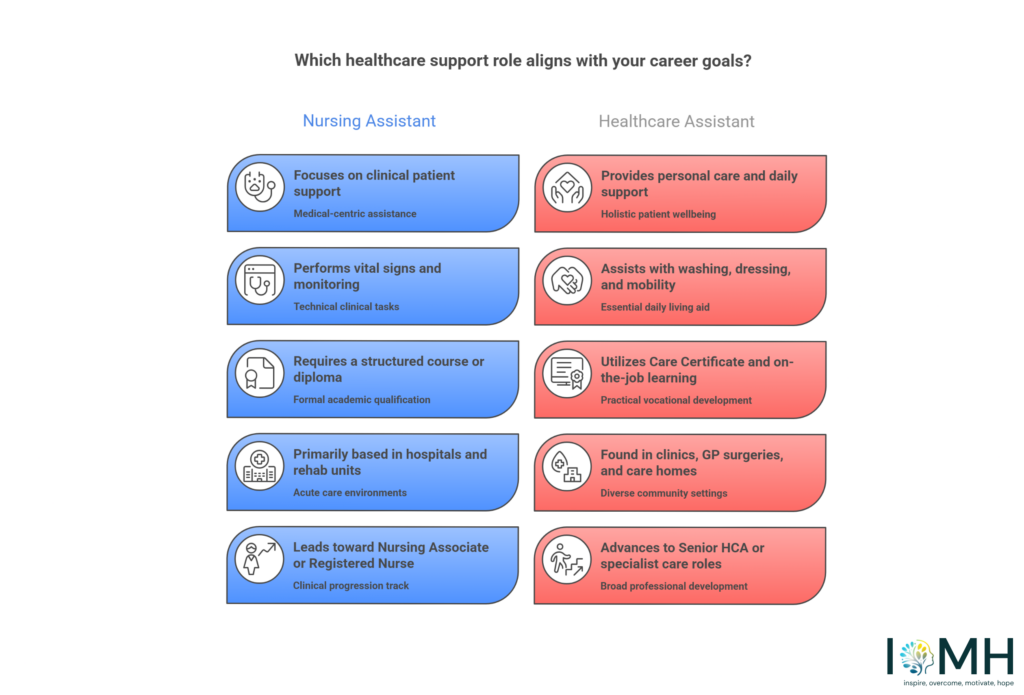
| Feature | Nursing Assistant | Healthcare Assistant |
|---|---|---|
| Main Role | Clinical patient support | Personal care and support |
| Training | Formal healthcare training | Often on-the-job training |
| Clinical Duties | Basic clinical tasks | Mainly personal care |
| Workplaces | Hospitals and nursing homes | Hospitals, clinics, GP surgeries |
| Supervision | Closely supervised by nurses | Wider support role |
| Career Path | Nursing progression | Support and care progression |
Key Differences Between Nursing Assistants and Healthcare Assistants
Many people search for “healthcare assistant vs nursing assistant” because the two roles look very similar at first glance. Both involve caring for patients, supporting nurses, and working in healthcare settings such as the NHS, private hospitals, care homes, and other CQC regulated services. However, there are important differences in training, responsibilities, supervision, workplace environments, and career progression.
Understanding these differences can help you choose the right healthcare career path.
1. Training and Qualifications
One of the main differences between the two roles is training. A Nursing Assistant usually completes more structured and formal education, while a Healthcare Assistant often begins with basic training and learns many skills on the job.
Nursing Assistant training is more detailed and may include a Nursing Assistant Course, a Nursing Assistant Diploma, or a Level 3 Diploma in Nursing Assistant. These qualifications help learners build strong knowledge in patient care and basic clinical understanding.
Nursing Assistant training includes:
- Completing a structured Nursing Assistant Course or Diploma
- Studying topics like infection control and patient safety
- Learning anatomy, physiology, and healthcare basics
- Developing clinical awareness and communication skills
Healthcare Assistant training is usually more practical and workplace-based. Most skills are learned while working directly with patients under supervision.

Healthcare Assistant training includes:
- On-the-job training from employers
- Completing the Care Certificate
- Short healthcare or safety courses
- Learning through daily patient care experience
2. Clinical Responsibilities
Another key difference is the type of work each role performs. A Nursing Assistant is more involved in clinical care, while a Healthcare Assistant focuses more on personal care and daily support.
Nursing Assistants often assist nurses with basic medical tasks and patient monitoring. Healthcare Assistants mainly support patients with comfort, hygiene, and emotional wellbeing.
- Building relationships with residents: Offering companionship and emotional support, often becoming a central part of their daily life.
- Helping with daily routines: Assisting with washing, dressing, meals, and mobility to maintain independence and dignity.
- Providing comfort and reassurance: Listening to concerns, offering encouragement, and helping residents feel safe and valued.
Nursing Assistant responsibilities include:
- Taking and recording vital signs such as blood pressure and temperature
- Monitoring patient conditions and reporting changes to nurses
- Assisting with basic clinical tasks under supervision
- Supporting nurses during treatments and assessments
Healthcare Assistants focus more on everyday patient needs and comfort.
Healthcare Assistant responsibilities include:
- Helping patients wash, dress, and maintain personal hygiene
- Supporting eating, drinking, and mobility
- Providing emotional support and companionship
- Helping patients feel safe, calm, and comfortable
3. Level of Supervision
Both roles work under healthcare professionals, but the level of supervision can differ slightly.
Nursing Assistants work very closely with registered nurses as part of a structured clinical team. Healthcare Assistants also work under supervision but often have more independence in routine care tasks.
Nursing Assistant supervision includes:
- Working directly under registered nurses
- Following instructions for clinical tasks
- Reporting patient changes immediately
- Supporting structured hospital care plans
Healthcare Assistants focus more on routine support tasks.
Healthcare Assistant supervision includes:
- Working under nurses or senior care staff
- Following care plans provided by professionals
- Carrying out daily care tasks independently
- Reporting concerns when needed
4. Workplace Environment
Both roles exist across the UK healthcare system, including the NHS, private healthcare providers, and CQC-regulated services. However, the work environments can differ.
Nursing Assistants are more common in clinical settings, while Healthcare Assistants work in a wider range of care environments.
Nursing Assistant workplaces include:
- NHS hospitals and specialist wards
- Nursing homes with higher medical needs
- Rehabilitation and recovery units
- Clinical care settings
Healthcare Assistants often work in more community-based roles.
Healthcare Assistant workplaces include:
- GP surgeries and clinics
- Community healthcare services
- Residential care homes
- Home care and support services
5. Career Progression
Both roles offer strong career opportunities, but the pathways can be different.
Nursing Assistants often follow a more clinical route, especially after completing a Nursing Assistant Diploma or Level 3 Diploma in Nursing Assistant. Healthcare Assistants may start in general care roles and later move into specialised or nursing careers.
Nursing Assistant career paths include:
- Progressing to Nursing Associate roles
- Training to become a Registered Nurse
- Moving into specialist clinical positions
- Gaining advanced healthcare qualifications
Healthcare Assistant career paths include:
- Becoming a Senior Healthcare Assistant
- Specialising in mental health or elderly care
- Progressing into nursing training
- Working in community healthcare roles
Similarities Between Nursing Assistants and Healthcare Assistants
Although there are some clear differences between the two roles, Nursing Assistants and Healthcare Assistants also share many important similarities. In fact, both jobs are built around the same main goal — providing high-quality care and support to patients who need help in hospitals, care homes, clinics, and community settings.
Both roles focus on patient care and wellbeing
At the heart of both roles is patient care. Whether you are a Nursing Assistant or a Healthcare Assistant, your main responsibility is to make sure patients feel safe, comfortable, and well looked after. You will often be helping people who are unwell, elderly, or recovering from illness or surgery. This means showing kindness, patience, and understanding every day. Both roles involve spending a lot of time with patients, offering emotional reassurance as well as physical support.
Both work in NHS and CQC regulated environments
Another key similarity is the workplace. Both roles are essential in the UK healthcare system and are commonly found in a wide range of settings, including NHS hospitals, care homes, GP surgeries, and community healthcare services. Many positions are also within CQC regulated organisations, where high standards of care and safety must be followed at all times. This means both roles contribute directly to maintaining safe and effective healthcare across the country.

Both require strong personal and professional skills
To succeed in either role, certain skills are essential. Both Nursing Assistants and Healthcare Assistants need strong communication skills to interact with patients, families, and healthcare teams. Compassion and empathy are also very important, as patients may be anxious or in discomfort. Teamwork is another key skill, as both roles work closely with nurses, doctors, and other healthcare staff. Emotional strength and professionalism are also needed, especially when dealing with challenging or sensitive situations.
Both play a vital role in supporting healthcare teams
Finally, both roles are crucial in supporting nurses and doctors in delivering safe and effective care. Without Nursing Assistants and Healthcare Assistants, healthcare services would struggle to manage daily patient needs, maintain routines, and ensure smooth hospital or care home operations. They are an essential part of the healthcare workforce and help keep services running efficiently every day.
Training, Qualifications and Career Pathways
If you want to build a career in healthcare, proper training is very important. Both Nursing Assistants and Healthcare Assistants need the right skills and knowledge to care for patients safely and confidently. Although the training routes can be slightly different, both lead to rewarding careers in the healthcare sector.
Nursing Assistant Course Options
To become a Nursing Assistant, many learners choose structured qualifications that build strong healthcare knowledge and practical skills. These courses are designed to prepare you for real working environments such as the NHS, care homes, and private healthcare services.
Common study options include:
- Nursing Assistant Course
- Nursing Assistant Diploma
- Level 3 Diploma in Nursing Assistant
These qualifications help learners understand patient care, safety procedures, and professional healthcare standards. They are a great starting point for anyone who wants to work closely with nurses and patients.

What You Learn During Training
A good Nursing Assistant Course teaches both theory and practical skills needed in real healthcare settings. It prepares you to support patients safely and effectively.
Typical topics include:
- Infection prevention and control
- Communication skills in healthcare settings
- Patient safety and risk awareness
- Moving and handling patients safely
- Basic anatomy and physiology
- Healthcare ethics and professional behaviour
- Record keeping and reporting patient information
- Safeguarding and confidentiality rules
Many training programmes are now available online, which makes learning more flexible. This is especially helpful for students, parents, or people who are already working but want to start a healthcare career.
Career Progression Opportunities
One of the biggest advantages of working in healthcare is the career growth. Both Nursing Assistants and Healthcare Assistants can build long-term careers with experience and further study.
Many Nursing Assistants go on to become:
- Nursing Associates
- Registered Nurses
- Specialist healthcare workers
- Senior clinical support staff
With the right training and experience, they can move into more advanced clinical roles within the healthcare system.
Healthcare Assistants can also progress into higher positions such as:
- Senior Healthcare Assistant roles
- Team leader or supervisor positions
- Mental health support roles
- Nursing training programmes
Both pathways offer excellent long-term development opportunities in the healthcare sector.

Nursing Assistant Jobs in the UK
There is a strong and growing demand for Nursing Assistant jobs across the UK healthcare system. As the population continues to age and healthcare needs increase, the need for skilled healthcare support workers is also rising. Both the NHS and private healthcare providers regularly hire staff to support nurses and help deliver safe and high-quality patient care.
A Nursing Assistant plays an important role in hospitals, care homes, clinics, and community health services. They work closely with nurses and other healthcare professionals to ensure patients receive daily care, comfort, and support. Because of this, Nursing Assistants are an essential part of the healthcare workforce in the UK.
Common Nursing Assistant Positions
There are several job titles used for similar roles within healthcare support work. Some of the most common Nursing Assistant Positions include:
- Nursing Assistant
- Clinical Support Worker
- Nursing Support Worker
- Healthcare Support Worker
- Nursing Assistive Personnel
Although the job titles may be different, the core responsibilities are often similar. These roles usually involve helping patients with personal care, supporting mobility, monitoring basic health needs, and assisting nursing staff.
These positions can be found in a wide range of settings, including NHS hospitals, residential care homes, private clinics, and community healthcare services.
Salary Expectations in the UK
Salaries for both Nursing Assistants and Healthcare Assistants in the UK can vary depending on several important factors. These include:
- Level of experience
- Type of employer (NHS or private healthcare)
- NHS pay bands
- Location within the UK
- Working hours and shift patterns
In general, both roles offer stable and competitive pay within the healthcare sector.
On average, salary ranges are:
- Healthcare Assistant: around £22,000 to £28,000 per year
- Nursing Assistant: around £23,000 to £30,000 per year
In many cases, those working for the NHS may also receive additional benefits. These can include pension schemes, paid annual leave, sick pay, and extra pay for overtime, night shifts, and weekend work. Private healthcare employers may also offer similar benefits depending on the organisation.
Overall, both roles provide a secure income and opportunities for salary growth with experience and further training.
Which Role Should You Choose?
Choosing between a Nursing Assistant vs Healthcare Assistant role depends on your personal interests, strengths, and long-term career goals in healthcare.
Choose Nursing Assistant if:
- You want more clinical experience in patient care
- You plan to progress into a nursing career in the future
- You prefer structured healthcare training and development
- You want to gain qualifications such as a Level 3 Diploma in Nursing Assistant
- You enjoy working closely in clinical environments and supporting nurses

Choose Healthcare Assistant if:
- You want a flexible and varied healthcare role
- You enjoy helping patients with everyday personal care
- You prefer working in different healthcare settings
- You want to start working in healthcare quickly
- You enjoy providing emotional support and building patient relationships
Both career paths are meaningful and rewarding. Whether you choose to become a Nursing Assistant or a Healthcare Assistant, you will play an important role in improving patient wellbeing and supporting healthcare services every day.
Conclusion
Understanding Nursing Assistant vs Healthcare Assistant is important if you are planning a healthcare career in the UK.
Both roles are essential in helping patients and supporting healthcare teams. However, there are clear differences in training, clinical duties, and career progression.
A Nursing Assistant usually has more clinical responsibilities and often completes qualifications such as a Nursing Assistant Course, Nursing Assistant Diploma, or Level 3 Diploma in Nursing Assistant.
A Healthcare Assistant focuses more on personal care, emotional support, and helping patients with daily activities.
Both careers offer stable employment opportunities in the NHS, private healthcare organisations, and CQC regulated services.
Whether you choose Nursing Assistant jobs or Healthcare Assistant jobs, you will have the opportunity to build a meaningful and rewarding healthcare career while making a positive difference in people’s lives every day.

- All Courses
 Personal Development (1283)
 Career Bundle (479)
 Management & Administration (460)
 Employability (439)
 Health & Social Care (411)
 Health and Safety (382)
 Business (320)
 Teaching & Education (268)
 IT & Software (263)
 Health and Fitness (238)
 QLS Endorsed Courses (219)
 Mental Health & Counselling (168)
 Science & Technology (153)
 Accounting & Finance (144)
 Sales & Marketing (128)
 Construction & Engineering (126)
 Art & Design (125)
 Compliance & Law (112)
 Language (86)
 Photography & Lifestyle (58)
 Animal Care (57)
 Food Safety & Hygine (53)
 Diet & Nutrition (49)
 Sports & Fitness (47)
 Makeup & Beauty (43)
 First Aid (39)
 Agriculture (2)
0 responses on "Nursing Assistant vs Healthcare Assistant: Key Differences, Duties & Career Paths"