



Introduction
The healthcare sector in the UK has been growing quickly in recent years, and one role that is always in demand is the nursing assistant. Nursing assistants are the people who provide day-to-day care and support to patients while working alongside nurses and doctors. You’ll find them in hospitals, care homes, and community services, making them a key part of the healthcare team. At any given time, there are thousands of nursing assistant jobs NHS available, showing just how important this role has become.
The demand for nursing assistants is increasing because of an ageing population and greater healthcare needs. According to government figures, there are around 241,000 nursing auxiliaries and assistants working in the UK, making it one of the largest groups in health and social care.
If you’re thinking about starting a career in healthcare, a Nursing Assistant Diploma Online or a Health and Social Care qualification is a great first step. With salaries between £24,400 and £26,600 a year, clear opportunities to progress, and routes into adult or mental health nursing, this career offers both stability and a real sense of purpose.
In this blog, we’ll cover everything you need to know about becoming a nursing assistant—from training and essential skills to salaries and career development.
What Does a Nursing Assistant Do?
The nursing assistant job description covers a wide range of tasks that are vital for patient care. Nursing assistants, sometimes called healthcare assistants (HCAs), usually work under the supervision of registered nurses or doctors. They are the people who make sure patients feel safe, supported, and comfortable during their stay in hospitals, care homes, or while receiving care in the community.
Typical duties of a nursing assistant include:
- Helping patients with everyday activities such as washing, dressing, and eating.
- Assisting patients to move safely, whether in bed, on the ward, or around the care home.
- Taking and recording vital signs like temperature, pulse, and blood pressure.
- Keeping patient records up to date and passing information to nurses.
- Supporting nurses during medical checks or treatments.
- Providing emotional support and companionship to patients who may feel anxious or lonely.
In the NHS and private care settings, nursing assistants act as the link between patients and the wider healthcare team. They are often the first to notice changes in a patient’s condition and play a key role in ensuring that care is delivered with dignity and respect.
Education Requirements – Do You Need a Nursing Assistant Diploma?
To start a career in healthcare as a nursing assistant, you do not need a university degree, but you will need the right training. Most employers, especially the NHS and private hospitals, prefer candidates who have completed a Nursing Assistant Diploma or a recognised Health and Social Care qualification. Qualifying shows that you understand the basics of patient care, hygiene, safety, and communication.
Here are the main training options:
Nursing Assistant Diploma
- Nursing Assistant Diploma Online - A flexible choice that allows you to study from home at your own pace while gaining essential skills.
- Level 2 Adult Social Care Certificate - A beginner-friendly qualification for those new to healthcare.
- Level 3 Diploma in Health and Social Care - A more advanced course that can lead to senior roles or further training in nursing.
- Specialist Nursing Assistant Training Courses - Short courses covering important topics like infection control, safeguarding, or moving and handling patients.
- CNA Training (Certified Nursing Assistant) – This is a popular qualification in the US but is also recognised by some UK employers, especially in private care settings.
Completing one of these courses makes you more confident and job-ready. It also helps you stand out when applying for nursing assistant jobs NHS, care home roles, or community care positions.
Nursing Assistant Jobs in Hospitals, Care Homes & Community Care
One of the best things about working as a nursing assistant is the wide choice of places you can work. Across the UK, there is a strong demand for nursing assistant jobs in the NHS, private hospitals, care homes, and community care. This means you can choose a role that matches your skills, lifestyle, and career goals.
Here are the main areas where nursing assistants are needed:
- NHS Hospitals – These are some of the most popular roles. Nursing assistants in hospitals support patients on wards, help with daily routines like washing and eating, and assist nurses with medical tasks. NHS jobs also provide structured pay bands, pensions, holiday leave, and regular training opportunities.
- Care Homes and Nursing Homes – Many nursing assistants work with elderly residents or people with long-term conditions. The nursing home care assistant job description usually includes personal care, such as helping with dressing, meals, or bathing, as well as offering companionship. Care homes are regulated by the CQC – Care Quality Commission, which ensures safe and high-quality care for residents.
- Community Care and Adult Social Care – If you prefer to work outside hospitals, community care is a good option. In this role, nursing assistants visit patients in their homes to help them stay independent. Duties may include medication reminders, mobility support, or checking on overall wellbeing. These services are also inspected by the CQC – Care Quality Commission, ensuring patients receive safe and consistent care.
With so many opportunities available, it’s easy to search for roles online by typing “nursing assistant jobs near me”. Whether you choose to work in hospitals, care homes, or community services, demand for skilled assistants is high across the UK.
Salary Insights: Nursing Assistant Salary vs. Adult Nurse Salary UK
When thinking about a career in healthcare, salary is always an important factor. The good news is that nursing assistant jobs in the UK offer stable pay and clear opportunities to progress.
The average nursing assistant salary in the UK is between £24,400 and £26,600 per year, depending on location, experience, and employer. Most NHS roles are paid through the Band system:
- Band 2 – This is where most new nursing assistants start. At this level, you focus on essential patient care tasks such as washing, feeding, and basic support.
- Band 3 or Band 4 – With more experience or additional Nursing Assistant Training, you can move into higher bands. At this stage, you may earn more, supervise junior staff, or support patients with more complex needs.
By comparison, the adult nurse salary UK is higher, usually ranging from £28,000 to over £45,000 per year. Nurses working in specialist areas or in London may also receive extra pay allowances.
This difference explains why many people begin their careers with nursing assistant jobs NHS or in care homes. They gain valuable experience, complete further qualifications such as the Level 3 Diploma in Health and Social Care, and later progress to roles like adult nursing or mental health nursing.

Career Advancement: From Nursing Assistant to Registered Nurse
For many people, becoming a nursing assistant is just the first step in a long and successful career in healthcare. The role gives you hands-on experience, confidence, and a solid understanding of patient care. These skills are very useful if you want to train later as a registered nurse.
The NHS strongly supports staff development, and many employers encourage nursing assistants to keep learning. In some cases, you may even receive funding or study leave to continue your training.
A common pathway from nursing assistant jobs NHS to becoming a registered nurse looks like this:
1. Gain work experience as a nursing assistant to build practical skills and learn how hospitals or care homes operate.
2. Complete further qualifications such as the Level 3 Diploma in Health and Social Care, which is widely recognised across the UK.
3. Apply for a nursing degree apprenticeship, or a university nursing course. Apprenticeships are especially popular because they allow you to study while earning a salary, reducing the need for large student loans.
This route is attractive because it offers stability and flexibility. You can enter the healthcare sector quickly, earn money, and gradually move into higher-level roles.
Mental Health Nurse Jobs and Their Growing Demand
Mental health care is one of the fastest-growing areas in the UK healthcare system. More people now seek help for conditions such as anxiety, depression, dementia, and other mental health challenges. This has created a sharp rise in mental health nurse jobs across the NHS, private hospitals, and community care services.
Starting as a nursing assistant can give you valuable experience in this field. Many assistants work directly with patients who have mental health needs, providing day-to-day support, companionship, and basic care. With the right training and qualifications, you can progress into a mental health nurse career, which offers:
- Higher salaries compared to entry-level nursing assistant jobs.
- Opportunities to specialise, such as working in child mental health, dementia care, or community mental health teams.
- Job security, since demand for mental health nurses continues to grow across the UK.
If you are wondering how to become a mental health nurse, the journey often begins with completing a Nursing Assistant Diploma or a Health and Social Care course online, gaining hands-on experience as a nursing assistant, and then moving into a nursing degree or apprenticeship in mental health.
Training Options: Nursing Assistant Classes & Online Courses
To succeed in today’s healthcare sector, the right training is essential. Employers value applicants who not only have compassion but also the skills and knowledge to deliver safe and effective care. Completing a Nursing Assistant Diploma or similar qualification makes you more confident, improves your chances of employment, and prepares you for real-world responsibilities.
Here are some of the most popular training options in the UK:

- Nursing Assistant Classes – In-person courses at colleges or training centres. These include practical learning, which is ideal if you prefer face-to-face teaching.
- Nursing Assistant Diploma Online – A flexible option that allows you to study from home at your own pace. Perfect for people balancing work, family, or other commitments.
- Level 2 Adult Social Care Certificate – An entry-level qualification for beginners who are new to healthcare.
- Level 3 Diploma in Health and Social Care – A more advanced course that can lead to senior assistant roles or support progression into nursing.
- Short Specialist Courses – Covering areas such as infection control, safeguarding, moving and handling patients, or first aid. These courses help strengthen your CV and show commitment to professional development.
By completing recognised nursing assistant training, you prove to employers that you are prepared for work in the NHS, private care homes, or community care. Training also builds the confidence you need to handle both the physical and emotional demands of the role.
Common Challenges in Nursing Assistant Work
Working as a nursing assistant is one of the most rewarding jobs in healthcare, but it also comes with challenges. Knowing these in advance can help you prepare, build resilience, and succeed in the role.
Some of the most common challenges include:
- Long shifts and physical work – Nursing assistant jobs often involve being on your feet for many hours, helping patients move, supporting with washing, or assisting during meal times. It can be tiring, but it is also one of the reasons why the role is so important.
- Busy and high-pressure environments – Whether you work in nursing assistant jobs NHS, private hospitals, or care homes, you may face fast-paced situations where patients need urgent support. Teamwork and good time management are key skills.
- Emotional demands – Nursing assistants often provide care for people at vulnerable stages of life, including end of life support. This can be emotionally difficult, but it also makes the role deeply meaningful.
Despite these challenges, many people say that the rewards outweigh the difficulties. Nursing assistants get to see the direct impact of their work on patients’ lives every day. With proper nursing assistant training, supportive colleagues, and experience, you will develop the resilience and skills to manage these challenges effectively.
Essential Skills for Nursing Assistants
To succeed in nursing assistant jobs, you need more than just training. Employers look for people who have the right personal qualities and soft skills to provide safe and compassionate care. These skills are just as important as formal qualifications and can make a big difference to your career.
The most effective qualities for becoming a good nursing assistant include:
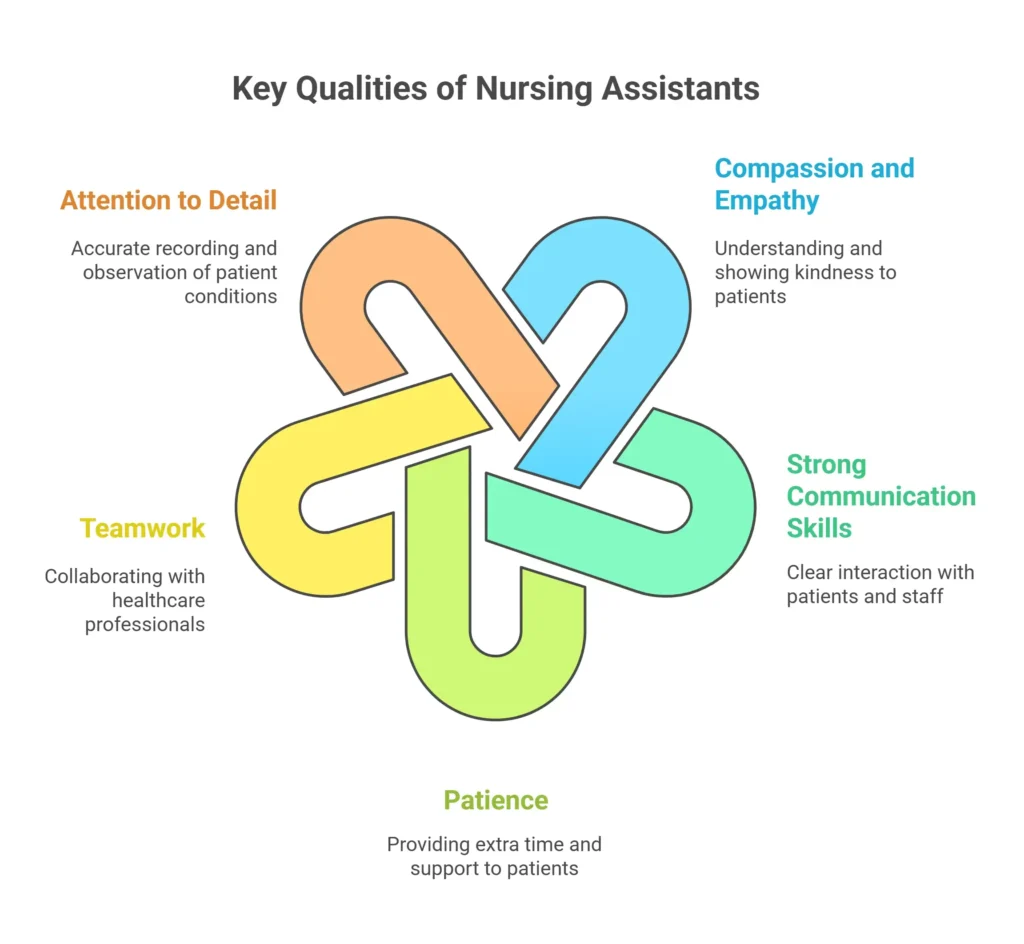
These skills not only help you provide excellent care but also make you stand out when applying for nursing assistant jobs NHS, in care homes, or in community services.
The good news is that many of these skills can be developed with practice and experience. By combining them with a Nursing Assistant Diploma or a Health and Social Care course, you will be well-prepared for a successful and rewarding career.
Career Tips for Success in the Healthcare Sector
Building a long-term career in healthcare starts with the right choices and consistent effort. For those starting out in nursing assistant jobs, there are many ways to grow and create strong career opportunities.
Here are some useful tips for success:
- Start with a Nursing Assistant Diploma – This gives you a recognised qualification and the basic skills needed to enter the healthcare sector with confidence.
- Apply for NHS roles – The NHS provides structured pay, pensions, and training opportunities. Working in the NHS also opens the door to apprenticeships and career progression.
- Gain varied experience – Try working in different areas such as hospitals, care homes, or mental health facilities. Each setting helps you build new skills and discover which path you enjoy most.
- Keep learning – Enrol in further nursing assistant training, short courses, or advanced qualifications like the Level 3 Diploma in Health and Social Care. This will make you more competitive when applying for senior positions.
- Build professional connections – Networking with nurses, doctors, and other healthcare staff can help you learn about new opportunities and career pathways.
With dedication and the right training, you can progress from entry-level assistant roles to more advanced positions, including adult nursing or mental health nursing.
Conclusion – Building a Stable Career in Nursing
Choosing a career as a nursing assistant is one of the smartest ways to enter the UK healthcare sector. With demand for nursing assistant jobs growing across hospitals, care homes, and community services, this role offers job security, valuable experience, and the chance to truly make a difference in people’s lives.
By starting with a recognised qualification such as a Nursing Assistant Diploma Online or a Health and Social Care course, you can quickly step into the workforce and begin building your career. From there, you have plenty of opportunities to progress – whether that’s moving into adult nursing, specialising in mental health nursing, or training to become a fully registered nurse.
Although the role comes with challenges such as long hours and emotional demands, it is also one of the most rewarding jobs in healthcare. Nursing assistants provide essential support, compassion, and care to patients every single day.

- All Courses
 Personal Development (1283)
 Career Bundle (479)
 Management & Administration (460)
 Employability (439)
 Health & Social Care (411)
 Health and Safety (382)
 Business (320)
 Teaching & Education (268)
 IT & Software (263)
 Health and Fitness (238)
 QLS Endorsed Courses (219)
 Mental Health & Counselling (168)
 Science & Technology (153)
 Accounting & Finance (144)
 Sales & Marketing (128)
 Construction & Engineering (126)
 Art & Design (125)
 Compliance & Law (112)
 Language (86)
 Photography & Lifestyle (58)
 Animal Care (57)
 Food Safety & Hygine (53)
 Diet & Nutrition (49)
 Sports & Fitness (47)
 Makeup & Beauty (43)
 First Aid (39)
 Agriculture (2)
0 responses on "Nursing Assistant Jobs Career Guide: From Training to Job Opportunities"