



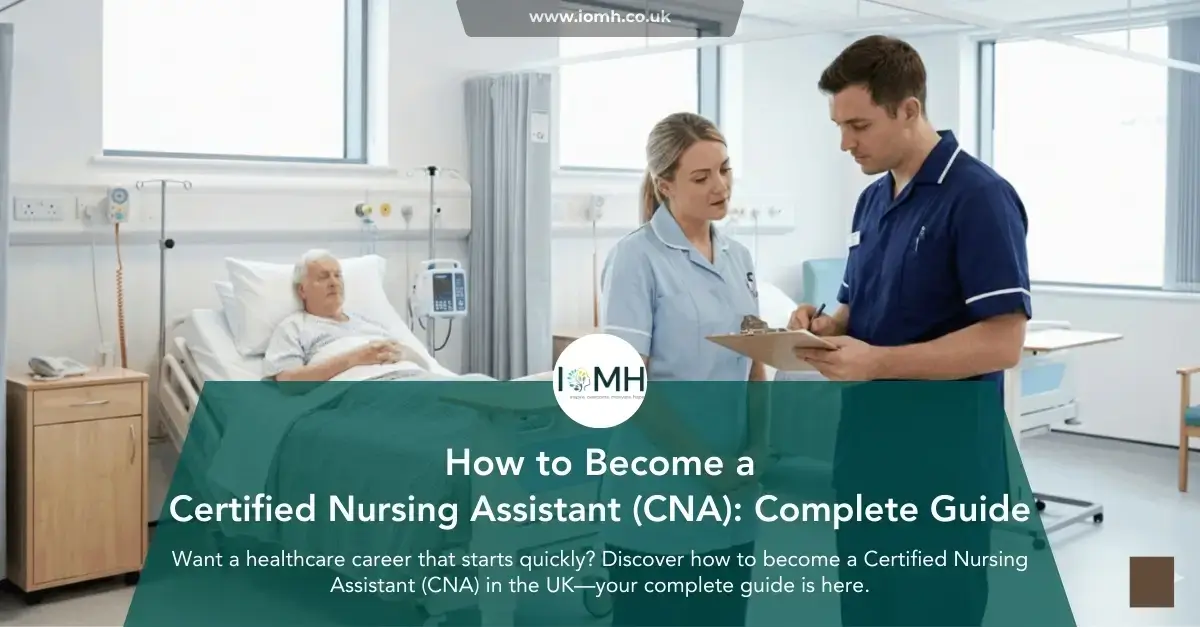
A career as a Certified Nursing Assistant (CNA) offers a meaningful opportunity to work at the heart of the UK healthcare system. Nursing assistants are often the first point of contact for patients, providing essential day-to-day care, comfort, and support in hospitals, care homes, mental health units, and community settings. Their work helps nurses and healthcare teams deliver safe, compassionate, and effective care.
This detailed guide explains everything you need to know about becoming a Certified Nursing Assistant, including the role and responsibilities, required training and qualifications, expected salary, and long-term career progression in areas such as Adult Nursing, Adult Social Care, and Mental Health Nursing.
Whether you are new to healthcare, returning to work, or planning a career change, this guide therefore helps you understand the pathway to becoming a Nursing Assistant in the UK and building a stable, rewarding career in health and social care.
What Is a Certified Nursing Assistant (CNA)?
A Certified Nursing Assistant (CNA)—also known as a Nursing Assistant, Certified Nurses Assistant, or nurse assistant—is a trained healthcare professional who provides hands-on care to patients under the supervision of registered nurses and other healthcare professionals. CNAs play a vital role in supporting patients’ daily needs and ensuring safe, compassionate care.
In the UK, nursing assistants may be known by several job titles, including:
- Nursing Assistants
- Healthcare Assistants (HCA)
- Nursing Assistive Personnel
- Support Workers
Although the term CNA is more commonly used internationally, in practice many UK employers recognise CNA-style training—especially when it is combined with recognised qualifications such as a Nursing Assistant Diploma, the Care Certificate, or a Level 3 Diploma in Nursing Assistant.
Nursing assistants work closely with patients every day, supporting them with personal care, comfort, mobility, and basic clinical tasks. They are often the healthcare professionals who spend the most time with patients, making their role essential to patient wellbeing and recovery. Their work helps maintain high standards of care in line with regulations set by organisations such as the CQC – Care Quality Commission.



What Does a Certified Nursing Assistant Do? (CNA Responsibilities)
The daily work of a Certified Nursing Assistant focuses on patient care and support. Nursing assistants are often the healthcare workers who spend the most time with patients.
Common Nursing Assistant Responsibilities
A nursing assistant’s work may include:
- Helping patients wash, dress, and use the toilet
- Supporting patients with eating and drinking
- Taking basic health observations such as temperature, pulse, and blood pressure
- Assisting patients with mobility and moving safely
- Making beds and keeping patient areas clean
- Supporting nurses with clinical tasks
- Observing patient behaviour and reporting changes
- Providing emotional support and reassurance
In Adult Social Care, nursing assistants help individuals live with dignity and independence. In Mental Health Nursing, they support patients with emotional well-being, routines, and safe environments.
Why Become a Certified Nursing Assistant? (Career Benefits)
Choosing to become a Certified Nursing Assistant (CNA) is a smart decision for anyone who wants a stable, meaningful, and flexible career in healthcare. Nursing assistants are a vital part of the UK health and social care system, and their role continues to grow in importance across hospitals, care homes, and community settings.
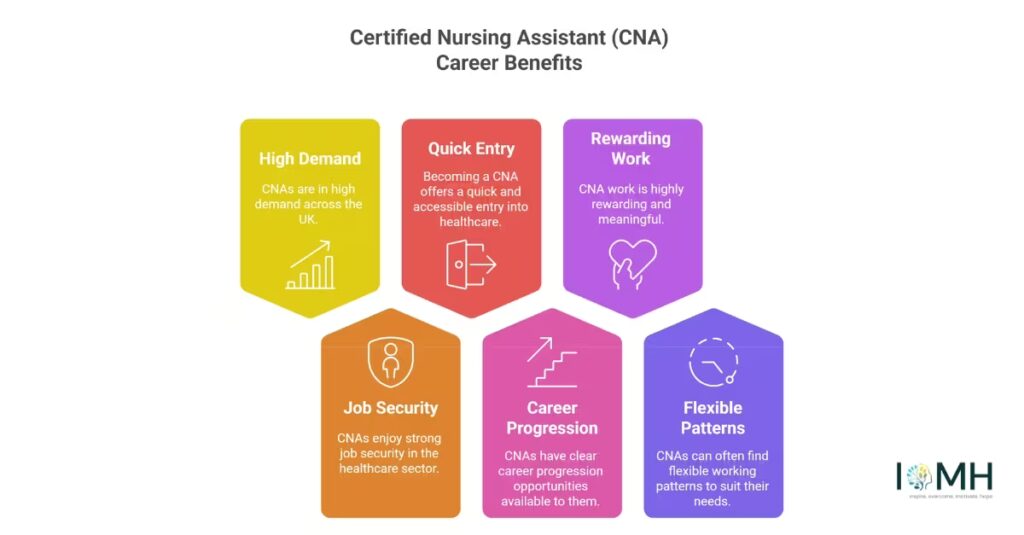
Below are the key benefits of becoming a Nursing Assistant, explained in more detail:
1. High demand across the UK
Nursing assistants are always in demand within the NHS and private healthcare organisations. With an ageing population and increasing care needs, employers are constantly looking for trained and reliable nursing assistants, making it easier to find work.
2. Strong job security
Healthcare is one of the most secure career sectors in the UK. Nursing assistant jobs offer long-term stability, with consistent recruitment by the NHS, care homes, mental health services, and community care providers.
3. Quick and accessible entry into healthcare
Compared to nursing degrees, training to become a nursing assistant takes much less time. This makes it an ideal option for those who want to start working in healthcare quickly without committing to long academic programmes.
4. Clear career progression opportunities
A nursing assistant role can lead to further qualifications and career advancement. Many professionals progress into Adult Nursing, Mental Health Nursing, senior healthcare roles, or specialised support positions through additional training and experience.
5. Highly rewarding and meaningful work
As a nursing assistant, you support patients during vulnerable moments in their lives. Helping people feel safe, comfortable, and respected brings a strong sense of personal satisfaction and purpose.
6. Flexible working patterns
Nursing assistant roles often offer flexible hours, including full-time, part-time, night shifts, and weekend work. This flexibility is ideal for those balancing family commitments, studies, or other responsibilities.
As a result, many people choose to become nursing assistants as a stepping stone into long-term healthcare careers, gaining hands-on experience while building valuable skills that are respected throughout the health and social care sector.
CNA Training Requirements: What Qualifications Do You Need?
One of the biggest advantages of becoming a Certified Nursing Assistant (CNA) is that the entry requirements are simple and accessible. This makes it an excellent career choice for beginners, career changers, and those looking to enter the healthcare sector quickly.
Basic Entry Requirements
Most nursing assistant jobs in the UK have straightforward entry criteria. Typically, you will need:
Minimum age of 16–18 years
The exact age requirement may vary depending on the employer and training provider.
Basic English and maths skills
These are essential for understanding care instructions, communicating with patients and colleagues, and completing basic documentation.
A caring, responsible, and professional attitude
Employers look for individuals who are compassionate, patient, and committed to delivering safe and respectful care.
Willingness to undergo a DBS check
A Disclosure and Barring Service (DBS) check is required to ensure the safety of vulnerable adults and patients.
Formal healthcare experience is not always required for entry-level roles, making this an ideal starting point for those new to health and social care.
Recommended Qualifications
While recognised qualifications are not always required, they greatly improve your chances of securing nursing assistant roles. For this reason, employers strongly value candidates who hold:
Care Certificate
This qualification therefore covers essential standards such as safeguarding, infection control, and duty of care.
Nursing Assistant Diploma
Provides structured training in patient care, safety, and professional practice.
Level 3 Diploma in Nursing Assistant
A highly regarded qualification that demonstrates advanced knowledge and workplace readiness.
Health and Social Care qualifications
Useful for understanding care principles across adult social care and healthcare settings.
CNA Training Online certificates
Flexible learning options that allow you to gain recognised skills at your own pace.
These qualifications demonstrate competence, safety awareness, and commitment to professional standards, making you a stronger and more confident candidate for nursing assistant positions across the UK.
How to Become a Certified Nursing Assistant (Step-by-Step Guide)
Becoming a Certified Nursing Assistant (CNA) in the UK is a structured and achievable journey. Each step builds your knowledge, confidence, and employability, helping you move smoothly from interest to a secure role in healthcare. Below is a more detailed explanation of each stage so you know exactly what to expect.

Step 1: Meet Entry Requirements
The first step is to confirm that you meet the basic entry requirements set by employers and training providers. These requirements ensure you are ready to begin training and work safely in a care environment.
Most employers will expect:
- You meet the minimum age requirement, usually between 16 and 18 years
- You have basic English and maths skills, which are essential for communication, understanding care instructions, and completing records
- You are eligible to work in the UK
- You demonstrate a caring, responsible, and professional attitude
At this stage, previous healthcare experience is not always required. What matters most is a genuine interest in helping others, as nursing assistant work involves daily contact with patients who may be elderly, unwell, or vulnerable.
Step 2: Choose a CNA Training Online or UK Nursing Assistant Course
Once you meet the entry requirements, the next step is choosing the right training programme. This is a crucial decision, as good training prepares you for real-world work and improves your job prospects.
You can choose from:
- Certified nursing assistant classes online, which allow you to study at your own pace
- In-person nurse assistant courses, often delivered by colleges or specialist training centres
- Blended learning programmes, combining online study with practical sessions
For the strongest career outcomes, it is recommended to choose a recognised Nursing Assistant Diploma or Level 3 Diploma in Nursing Assistant. Online learning is especially popular with working adults or those with family commitments because it offers flexibility without sacrificing quality.
Step 3: Complete Practical and Theoretical Training
After enrolling, you will complete both theoretical learning and practical training. This combination ensures you understand not only what to do, but why it is done in a particular way.
Training usually includes:
- Patient care techniques, including personal care and mobility support
- Infection control and hygiene procedures to keep patients and staff safe
- Safeguarding, focusing on protecting vulnerable adults and patients
- Communication skills for working effectively with patients, families, and healthcare teams
- Health and Social Care standards and professional responsibilities
Many courses include realistic case studies and workplace scenarios aligned with guidance from the Care Quality Commission. This helps you understand best practice and prepares you for real healthcare settings.
Step 4: Pass Assessments and Earn Your Certificate
To successfully complete your training, you will need to pass a series of assessments. These are designed to check that you can apply your knowledge safely and confidently.
Assessments may include:
- Online tests to assess your understanding of theory
- Written assignments based on real-life care scenarios
- Practical evaluations to demonstrate hands-on care skills
Once all assessments are completed successfully, you will receive your Certified Nursing Assistant certificate or diploma. This confirms that you are competent, trained, and ready to work professionally as a nursing assistant.
Step 5: Apply for Nursing Assistant Positions in NHS and Private Sectors
With your qualification in hand, you can begin applying for nursing assistant roles across the UK. Opportunities are available in both public and private healthcare settings, including:
- Nursing Assistant Jobs NHS
- Private hospitals and clinics
- Care homes and residential facilities
- Mental health services
- Community and home care organisations
When searching for roles, use job boards and employer websites and search for terms such as certified nursing assistant jobs, nursing assistant positions, and nursing assistant jobs NHS to find suitable vacancies.
Step 6: Build Experience and Progress Your Career
After securing a role, gaining hands-on experience is one of the most important parts of your career development. Daily work with patients helps you build confidence, refine your skills, and understand different areas of care.
With experience and further training, you can progress into:
- Senior nursing assistant roles with more responsibility
- Adult Nursing training programmes
- Mental Health Nursing pathways
- Specialist healthcare support roles, such as dementia or rehabilitation care
Many healthcare professionals begin their journey as nursing assistants and go on to build long, successful careers within the UK health and social care sector.
Best Training Options: CNA Courses & Nursing Assistant Diploma
Choosing the right training programme is a crucial step in becoming a successful Certified Nursing Assistant (CNA). High-quality training not only improves your confidence and skills but also increases your chances of securing nursing assistant roles in the NHS and private healthcare settings.
Below are some of the most popular and effective training options available in the UK:

Popular Training Options
- CNA Training Online
Online CNA courses are ideal for learners who need flexibility. They allow you to study at your own pace while gaining essential knowledge in patient care, safety, and professional standards. These courses are especially suitable for working adults or those with family commitments. - Nursing Assistant Diploma
A Nursing Assistant Diploma provides structured and comprehensive training, covering both theoretical knowledge and practical skills. It is widely recognised by employers and prepares you for real-world nursing assistant work. - Level 3 Diploma in Nursing Assistant
This is one of the most respected qualifications in the UK. It demonstrates a higher level of competence and is highly valued by NHS employers, care homes, and private healthcare providers. - Care Certificate Programmes
The Care Certificate focuses on essential standards such as safeguarding, infection control, duty of care, and communication. It is often required for new healthcare workers and is a strong foundation for nursing assistant roles. - Health and Social Care Courses
These courses provide a broad understanding of care principles across adult social care and healthcare environments, making them useful for those planning long-term careers in the sector.
What to Look for in a Training Course
When choosing a course, always ensure it meets professional and employer expectations. The best courses are:
- UK recognised, ensuring acceptance by employers
- CPD accredited, supporting ongoing professional development
- Aligned with NHS and CQC standards, ensuring safe and high-quality care practices
Selecting the right training will help you build strong skills, meet employer requirements, and confidently start your career as a Certified Nursing Assistant.
CNA Skills You Must Have to Succeed (Top Nursing Assistant Skills)
To succeed as a Certified Nursing Assistant (CNA), having the right skills is just as important as having the right qualifications. Nursing assistants work closely with patients every day, so both personal and practical skills are essential for delivering safe, respectful, and high-quality care.
Below are the core nursing assistant skills that employers across the UK look for:
Core Nursing Assistant Skills
- Compassion and empathy
Nursing assistants care for people who may be unwell, anxious, or vulnerable. Showing kindness, understanding, and empathy helps patients feel safe, supported, and respected. - Good communication skills
Clear communication is vital when speaking with patients, families, nurses, and other healthcare professionals. Nursing assistants must be able to listen carefully, give clear information, and report any concerns accurately. - Patience and emotional strength
Working in healthcare can be challenging. Patients may require extra time, reassurance, or emotional support, so patience and resilience are essential qualities. - Teamwork and cooperation
Nursing assistants work as part of a healthcare team. Being able to work well with nurses, doctors, and support staff ensures smooth daily care and better patient outcomes. - Attention to detail
Noticing small changes in a patient’s condition, behaviour, or mood can be very important. Good attention to detail helps maintain safety and supports early intervention when needed. - Time management skills
Nursing assistants often care for multiple patients during a shift. Managing time effectively helps ensure all tasks are completed properly while maintaining high standards of care. - Physical stamina and fitness
The role can be physically demanding, involving standing for long periods, assisting with mobility, and supporting patients with daily activities.
These skills are essential whether you work in Adult Social Care, NHS hospitals, community healthcare settings, or Mental Health Nursing. Developing these qualities will help you build confidence, perform your role effectively, and progress in your nursing assistant career.
How Much Does a Nursing Assistant Earn in the UK? (CNA Salary Guide)
Understanding salary expectations is an important part of planning your career as a Certified Nursing Assistant (CNA). In the UK, nursing assistant pay varies depending on experience, location, employer, and level of responsibility.

Nursing Assistant UK Salary Overview
The nursing assistant UK salary is generally competitive and increases as you gain experience and qualifications:
- Entry-level nursing assistants
Those starting out in the role can expect to earn between £18,000 and £21,000 per year. This is common for newly qualified nursing assistants or those working in junior positions. - Experienced nursing assistant roles
With experience, additional training, and increased responsibility, salaries typically rise to around £22,000 to £26,000 per year.
NHS nursing assistant roles (Band 2–3)
Nursing assistants working for the NHS are usually paid under Agenda for Change pay bands. Band 2 and Band 3 roles offer competitive salaries, along with benefits such as paid holidays, pension schemes, and job security.
The Nursing Assistant UK Salary may also increase with:
- Additional qualifications such as a Level 3 Diploma in Nursing Assistant
- Specialist experience in areas like Mental Health Nursing or Adult Social Care
- Promotion to senior or specialist support roles
Overall, nursing assistant roles offer steady income, long-term stability, and clear opportunities for salary growth within the UK healthcare system.
Where Do CNAs Work? (Job Opportunities in the UK)
Certified Nursing Assistants (CNAs) are employed across a wide range of healthcare and care settings in the UK. Their skills are needed wherever patients or service users require daily support, personal care, and clinical assistance. This variety of workplaces gives nursing assistants strong job security and flexibility in choosing a work environment that suits them.
Below are some of the most common places where nursing assistants work:
- NHS hospitals
CNAs support nurses and medical staff in wards, outpatient departments, and specialist units. NHS hospitals offer structured roles, training opportunities, and long-term career stability. - Private hospitals and clinics
Many nursing assistants work in private healthcare settings, supporting patient care in surgical units, recovery wards, and specialist treatment centres. - Care homes and nursing homes
In care homes, nursing assistants provide daily personal care, emotional support, and assistance with mobility for elderly residents or those with long-term conditions. - Community care services
Community-based roles involve supporting individuals in their own homes, helping them maintain independence while receiving the care they need. - Mental health units
Nursing assistants working in mental health settings support patients with daily routines, emotional wellbeing, and safe care environments as part of a mental health team.
Residential and supported living facilities
These settings support individuals with disabilities, learning difficulties, or complex care needs, offering rewarding and meaningful nursing assistant work
There is strong and ongoing demand for nursing assistants across Adult Social Care and the wider healthcare sector, making this a reliable and long-term career option in the UK.
How to Get a CNA Job in the UK
Getting a job as a Certified Nursing Assistant (CNA) in the UK is achievable with the right preparation and approach. Employers look for candidates who are trained, reliable, and committed to providing high-quality care. Following the steps below will improve your chances of securing nursing assistant roles.
Steps to Secure Nursing Assistant Jobs
- Complete recognised training
Employers prefer candidates who have completed recognised qualifications such as a Nursing Assistant Diploma, Level 3 Diploma in Nursing Assistant, Care Certificate, or CNA Training Online. These show that you understand professional care standards and safe working practices. - Prepare a strong and clear CV
Your CV should highlight your training, relevant skills, and any experience in healthcare or care-related roles. Keep it simple, well-structured, and focused on patient care and teamwork. - Highlight your nursing assistant skills
Clearly mention key skills such as communication, compassion, teamwork, safeguarding awareness, and attention to detail. Employers value both practical abilities and personal qualities. - Apply through trusted job sources
Search and apply for roles through NHS Jobs, private care providers, hospitals, and reputable healthcare recruitment agencies. Use keywords such as nursing assistant jobs, certified nursing assistant jobs, and nursing assistant jobs NHS. - Be prepared for interviews and practical assessments
Interviews may include scenario-based questions to assess how you handle patient care situations. Some employers may also ask you to demonstrate basic practical skills or discuss safeguarding and infection control practices.
With the right qualifications, preparation, and confidence, you can successfully secure a nursing assistant position and begin a rewarding career in the UK healthcare system.

CNA Career Progression: What Can You Do After Becoming a Nursing Assistant?
Becoming a Certified Nursing Assistant (CNA) is often the first step in a long and successful healthcare career. With experience, additional training, and the right qualifications, nursing assistants in the UK have many opportunities to progress and specialise.
Below are some common career pathways available after gaining experience as a nursing assistant:
- Senior Nursing Assistant roles
With experience, you may progress into senior or lead nursing assistant positions. These roles often involve mentoring new staff, taking on more responsibility, and supporting nurses with advanced care tasks. - Assistant Practitioner
This role sits between a nursing assistant and a registered nurse. Assistant Practitioners carry out more complex clinical tasks and usually complete further training while working. - Adult Nursing degrees
Many nursing assistants go on to study for a degree in Adult Nursing. The hands-on experience gained as a CNA provides a strong foundation for nurse training and clinical practice. - Mental Health Nurse training
Nursing assistants working in mental health settings often progress into Mental Health Nursing, supporting patients with psychological and emotional care needs. - Specialist care roles
With additional qualifications, you can move into specialist areas such as dementia care, learning disabilities, rehabilitation, palliative care, or community health support.
Many registered nurses and healthcare professionals begin their careers as nursing assistants, using the role to build confidence, develop essential skills, and gain valuable experience within the UK health and social care system.
Final Thoughts: Start Your Journey to Becoming a Nursing Assistant
Becoming a Certified Nursing Assistant (CNA) is a rewarding and practical way to begin or grow a career in healthcare. With accessible entry requirements, flexible training options, and strong demand across the UK, nursing assistant roles offer stability, purpose, and long-term career potential.
Whether you choose to work in the NHS, private healthcare, Adult Social Care, or Mental Health Nursing, this role allows you to make a real difference in people’s lives every day. It also provides valuable hands-on experience and clear progression routes into senior roles and nursing careers.
By completing recognised training, developing essential nursing assistant skills, and gaining practical experience, you can build a confident and meaningful future in healthcare. If you are looking for a career that combines job security, personal fulfilment, and opportunities to grow, now is the perfect time to become a Certified Nursing Assistant and start your journey in the UK health and social care sector.

- All Courses
 Personal Development (1283)
 Career Bundle (479)
 Management & Administration (460)
 Employability (439)
 Health & Social Care (411)
 Health and Safety (382)
 Business (320)
 Teaching & Education (268)
 IT & Software (263)
 Health and Fitness (238)
 QLS Endorsed Courses (219)
 Mental Health & Counselling (168)
 Science & Technology (153)
 Accounting & Finance (144)
 Sales & Marketing (128)
 Construction & Engineering (126)
 Art & Design (125)
 Compliance & Law (112)
 Language (86)
 Photography & Lifestyle (58)
 Animal Care (57)
 Food Safety & Hygine (53)
 Diet & Nutrition (49)
 Sports & Fitness (47)
 Makeup & Beauty (43)
 First Aid (39)
 Agriculture (2)
0 responses on "How to Become a Certified Nursing Assistant (CNA): Complete Guide"