



The Health and Social Care sector plays a vital role in supporting people of all ages. From helping older adults live independently to assisting patients in hospitals, care professionals make a real difference every day.
If you are thinking about starting a career in Health and Social Care, one of the first decisions you may face is choosing the right qualification. Many learners wonder whether they should start with a Health and Social Care Certificate or enrol on a Diploma in Health and Social Care.
Both qualifications can help you develop valuable skills and improve your job prospects. However, they are designed for different purposes and can lead to different career opportunities.
In this guide, we explain the key differences between a Health and Social Care Certificate and a Diploma. We will also explore career opportunities, progression routes, and how each qualification can support your long-term career goals.



Understanding Health and Social Care Qualifications
Health and Social Care qualifications help learners develop the knowledge and skills needed to work in care settings. These qualifications cover important topics such as communication, safeguarding, health and safety, person-centred care, and professional responsibilities.
The UK care sector continues to experience high demand for qualified workers. According to recent workforce reports, Adult Social Care remains one of the largest employment sectors in the UK, creating opportunities for individuals who hold recognised qualifications.
Many employers, including NHS organisations, residential care homes, supported living services, and community care providers, value candidates who have completed relevant training.
Choosing the right qualification can help you enter the sector more confidently and create opportunities for future career progression.
Unlike doctors and nurses who provide direct medical treatment, administrator healthcare professionals focus on supporting healthcare delivery through effective management and leadership.
What Is a Health and Social Care Certificate?
A Health and Social Care Certificate is usually an entry-level qualification designed for beginners.
These courses provide an introduction to the principles of care and support. They are ideal for individuals who have little or no previous experience in the sector and want to understand the basics before moving on to more advanced study.
Certificate courses are generally shorter than diploma programmes and can often be completed within a few weeks or months, depending on the provider.
Key Skills You Learn
A Health and Social Care Certificate typically covers:
- Effective communication skills
- Safeguarding vulnerable adults and children
- Health and safety procedures
- Equality and diversity
- Person-centred care
- Duty of care
- Basic infection prevention and control
These skills form the foundation for working safely and effectively in care environments.
Career Opportunities After a Certificate
Completing a Health and Social Care Certificate can help you apply for entry-level positions such as:
- Care Assistant
- Healthcare Assistant
- Nursing Assistant
- Support Worker
- Home Care Worker
Many employers also value applicants who have completed the Care Certificate UK, which is a recognised set of standards for people working in health and social care settings.
For individuals who are new to the sector, a certificate can be an excellent first step towards a rewarding career.
What Is a Diploma in Health and Social Care?
A Diploma in Health and Social Care is a more comprehensive qualification that provides deeper knowledge and practical understanding of care practices.
Unlike a certificate, a diploma covers a wider range of topics and helps learners develop skills needed for greater responsibility in care settings.
Many learners choose a Level 3 Diploma in Health and Social Care because it is widely recognised by employers and can support progression into more advanced roles.
What Does a Level 3 Diploma Cover?
A Health and Social Care Level 3 Diploma often includes topics such as:
- Safeguarding and protection
- Care planning
- Supporting individuals with specific needs
- Professional practice
- Duty of care
- Communication in care settings
- Promoting wellbeing
- Equality, diversity, and inclusion
- Risk assessment
- Understanding legislation in health and social care
The course provides a more detailed understanding of how care services operate and how professionals support individuals effectively.

Benefits of a Health and Social Care Level 3 Diploma
Completing a Level 3 Diploma in Health and Social Care can provide several advantages:
- Improved job opportunities
- Greater confidence in professional practice
- Better career progression prospects
- Preparation for senior care roles
- Access to further qualifications
Because of its depth and practical focus, many employers view a diploma as evidence of strong commitment to the profession.
Health and Social Care Certificate vs Diploma: Key Differences
Although both qualifications support a career in Health and Social Care, there are several important differences.
| Feature | Health and Social Care Certificate | Diploma in Health and Social Care |
|---|---|---|
| Level of Study | Introductory | More advanced |
| Course Length | Usually shorter | Usually longer |
| Learning Depth | Basic knowledge | Detailed knowledge and practical skills |
| Ideal For | Beginners | Learners seeking career progression |
| Career Opportunities | Entry-level roles | Senior and specialised roles |
| Further Progression | Can lead to a diploma | Can lead to higher-level qualifications |
Course Duration
A Health and Social Care Certificate is usually completed more quickly than a diploma. This makes it a good choice for learners who want to gain basic knowledge before committing to longer study.
A Diploma in Health and Social Care requires more time because it covers a wider range of topics and develops more advanced skills.
Depth of Learning
Certificates focus on the fundamentals of care. They introduce learners to key concepts and workplace responsibilities.
Diplomas go into greater detail and help learners understand how to provide high-quality care in different situations. They also cover professional responsibilities and care planning in more depth.
Career Opportunities
A certificate can help learners access entry-level roles.
A diploma can improve career prospects and prepare learners for positions with greater responsibility.
Progression Pathways
Many people start with a certificate and later progress to a Health and Social Care Level 3 Diploma.
After completing a diploma, learners may continue to Level 4 or Level 5 qualifications, which can lead to management and leadership roles.

Which Qualification Is Best for Your Career Goals?
Choosing between a Health and Social Care Certificate and a Diploma in Health and Social Care depends on your career goals, experience, and learning needs. Both qualifications can help you start or progress in the Health and Social Care sector, but they are designed for different stages of your career journey.
A Health and Social Care Certificate is often the best option for beginners. It provides a strong introduction to care principles and helps learners build essential knowledge before moving on to more advanced qualifications.
Choose a Health and Social Care Certificate if you:
- Are new to the Health and Social Care sector
- Want to learn the basics of Adult Social Care
- Prefer a shorter course with flexible learning
- Want to apply for entry-level roles such as Care Assistant, Healthcare Assistant, or Nursing Assistant
A Diploma in Health and Social Care offers more in-depth learning and is ideal for individuals who want to develop professional skills and improve their career prospects.
Choose a Level 3 Diploma in Health and Social Care if you:
- Want to build a long-term career in care
- Need more advanced knowledge and practical skills
- Aim to progress into senior care positions
- Plan to study higher-level qualifications in the future
- Want a qualification valued by employers, including NHS and Adult Social Care providers
Both pathways offer valuable opportunities. The right choice is the one that supports your current situation and future career ambitions.
Career Opportunities in Health and Social Care
The Health and Social Care sector offers many rewarding career opportunities across the UK. As demand for care services continues to grow, qualified professionals are needed in hospitals, care homes, community services, and Adult Social Care settings.
Roles Suitable for Certificate Holders
A Health and Social Care Certificate can help you start your career in entry-level positions such as:

- Care Assistant
- Healthcare Assistant
- Nursing Assistant
- Support Worker
- Home Care Assistant
These roles provide valuable practical experience and help you develop essential care skills while working directly with individuals who need support.
Roles Suitable for Diploma Holders
A Diploma in Health and Social Care can help you progress into more advanced roles with greater responsibility, including:
- Senior Care Worker
- Care Coordinator
- Team Leader
- Residential Care Supervisor
- Senior Support Worker
Many employers value diploma-level qualifications because they demonstrate a deeper understanding of care practices and professional responsibilities. A Health and Social Care Level 3 Diploma can also support progression into leadership roles and further qualifications within Adult Social Care and the NHS.
Can These Qualifications Help You Work in the NHS?
Yes, both a Health and Social Care Certificate and a Diploma in Health and Social Care can support your application for a range of NHS and care sector roles. While qualifications do not guarantee employment, they can help demonstrate that you have the knowledge and skills needed to work in a care environment.
Many NHS organisations recruit individuals for support-based positions, including:
- Healthcare Assistant
- Nursing Assistant
- Support Worker
- Community Care Worker
- Mental Health Support Worker
- Rehabilitation Support Worker
A Health and Social Care Certificate can provide a solid foundation in key areas such as communication, safeguarding, health and safety, and person-centred care. This can be particularly useful for those applying for entry-level positions.
A Level 3 Diploma in Health and Social Care may strengthen your application further by demonstrating a deeper understanding of care practices, professional responsibilities, and supporting individuals with diverse needs.
It is important to remember that NHS job requirements vary depending on the role. Some positions may require additional training, work experience, or specific qualifications. Always review the job description carefully before applying to ensure you meet the employer’s requirements.

How to Progress After Completing Your Qualification
Health and Social Care qualifications can provide a strong foundation for long-term career growth. Whether you start with a certificate or a diploma, there are several opportunities to continue developing your skills and advance within the sector.
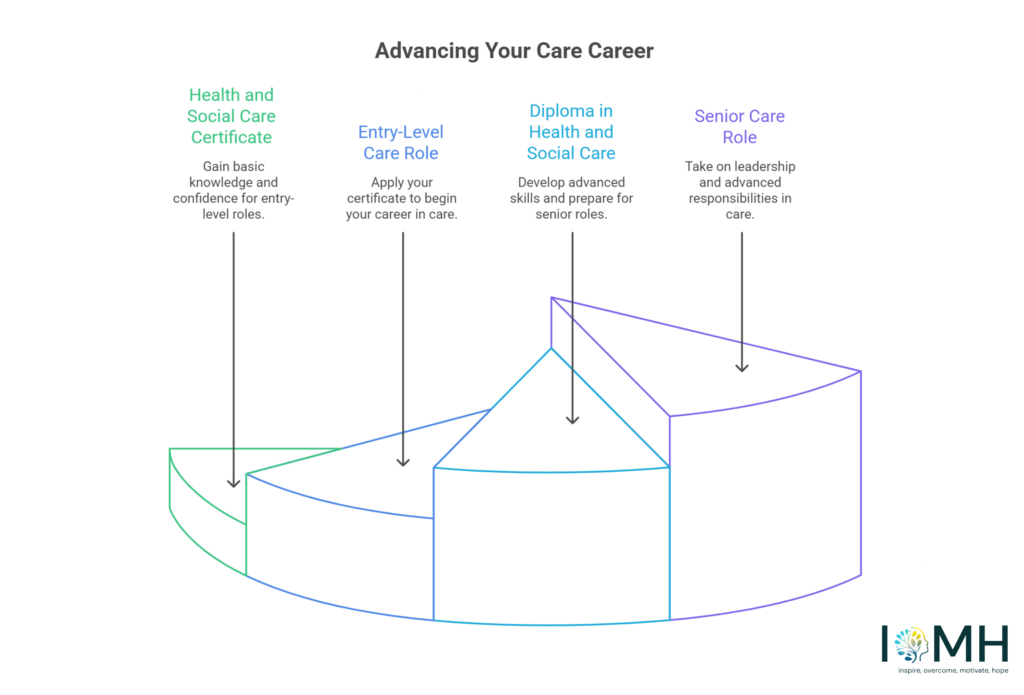
A common career progression pathway includes:
- Complete a Health and Social Care Certificate
- Progress to a Level 3 Diploma in Health and Social Care
- Gain practical work experience in care settings
- Study Level 4 or Level 5 qualifications
- Move into supervisory, leadership, or management roles
Many learners begin with a certificate to build their knowledge and confidence before progressing to more advanced qualifications. A Health and Social Care Level 3 Diploma can improve career prospects and prepare you for greater responsibility in Adult Social Care and healthcare environments.
Continuous professional development is also important in the care sector. Many professionals regularly update their skills through additional training and qualifications to meet industry standards, improve the quality of care they provide, and access new career opportunities within the NHS, care homes, and community care services.
Common Misconceptions About Health and Social Care Qualifications
There are several misconceptions about Health and Social Care qualifications that can sometimes discourage learners from starting their career journey. Understanding the facts can help you make a more informed decision.
A Certificate Is Not Valuable
Many people believe that a Health and Social Care Certificate has little value. In reality, it provides essential knowledge and skills that can help learners enter the sector and prepare for entry-level roles.
Diplomas Are Only for Experienced Workers
This is another common myth. Many Diploma in Health and Social Care programmes are suitable for beginners who want more in-depth training and a stronger foundation for career progression.
Online Qualifications Are Not Recognised
Many accredited online Health and Social Care courses are recognised by employers across the UK. The key is choosing a reputable training provider that offers quality learning and recognised qualifications.
A Diploma Guarantees a Job
While a Health and Social Care Level 3 Diploma can improve employability, qualifications alone do not guarantee employment. Employers also look for practical experience, communication skills, reliability, and a genuine commitment to providing high-quality care.
Final Thoughts
Choosing between a Health and Social Care Certificate and a Diploma is an important decision, but there is no single option that suits everyone.
A Health and Social Care Certificate is often the best starting point for beginners who want to build foundational knowledge and explore career opportunities.
A Diploma in Health and Social Care provides more advanced learning and can support career progression into senior and supervisory roles.
Whether you choose a certificate or a Health and Social Care Level 3 Diploma, both qualifications can help you develop valuable skills, improve your employability, and build a rewarding career in Adult Social Care, healthcare services, and the NHS.
The key is to choose the qualification that matches your current experience, career goals, and future ambitions.
Frequently Asked Questions
In most cases, yes. A diploma usually provides more detailed learning and covers a wider range of topics than a certificate.
Yes. Many employers consider certificate holders for entry-level roles such as Care Assistant, Healthcare Assistant, and Support Worker.
The Care Certificate UK is a set of workplace standards designed for care workers. A Diploma in Health and Social Care is a formal qualification that provides broader and more advanced learning.
A Level 3 qualification is generally considered comparable to A Level study in terms of academic level, although the subjects and learning outcomes are different.
Many NHS support roles accept applicants with relevant Health and Social Care qualifications, particularly for Healthcare Assistant and support worker positions.
The duration varies depending on the provider and study method. Many learners complete the qualification within several months to one year.
A Diploma in Health and Social Care generally offers stronger progression opportunities because it provides more in-depth knowledge and prepares learners for higher levels of responsibility.

- All Courses
 Personal Development (1283)
 Career Bundle (479)
 Management & Administration (460)
 Employability (439)
 Health & Social Care (411)
 Health and Safety (382)
 Business (320)
 Teaching & Education (268)
 IT & Software (263)
 Health and Fitness (238)
 QLS Endorsed Courses (219)
 Mental Health & Counselling (168)
 Science & Technology (153)
 Accounting & Finance (144)
 Sales & Marketing (128)
 Construction & Engineering (126)
 Art & Design (125)
 Compliance & Law (112)
 Language (86)
 Photography & Lifestyle (58)
 Animal Care (57)
 Food Safety & Hygine (53)
 Diet & Nutrition (49)
 Sports & Fitness (47)
 Makeup & Beauty (43)
 First Aid (39)
 Agriculture (2)
0 responses on "Health and Social Care Certificate vs Diploma: Which Qualification Is Right for Your Career?"