



What Is a Family Support Worker?
A family support worker is a trained professional who helps families navigate challenges that may affect their well-being, stability, or ability to care for children. Working across sectors such as education, social care, and health, family support workers provide practical assistance, emotional guidance, and advocacy to ensure families receive the help they need.
If you’re wondering what a family support worker is, think of them as a bridge between vulnerable families and essential services. They often work with parents experiencing financial hardship, domestic issues, mental health concerns, or housing instability—offering tailored support plans and liaising with schools, local authorities, and healthcare providers.
Unlike social workers, who may have statutory responsibilities, family support workers focus on early intervention and preventative care. Their goal is to empower families before problems escalate, helping them build resilience and access resources independently.
Whether you’re exploring family support worker jobs or considering a career change, understanding the role is the first step toward making a meaningful impact in your community.
What Does a Family Support Worker Do?
A family support worker plays a vital role in helping families overcome difficulties that may affect their wellbeing, safety, or ability to thrive. Their work is often hands-on, community-based, and deeply personal—tailored to the unique needs of each family.
- Assessing family needs through home visits, interviews, and referrals
- Creating support plans that address issues such as housing, parenting, education, or financial hardship
- Liaising with professionals including social workers, teachers, healthcare providers, and local authorities
- Providing emotional support to parents and carers during times of crisis
- Monitoring progress and adjusting interventions as needed
Family support workers often work in schools, children’s centres, charities, or local council services. Their goal is to empower families to build resilience and access resources independently—preventing problems from escalating into more serious safeguarding concerns.
If you’re exploring family support worker jobs, expect a role that’s both challenging and rewarding. You’ll need to be adaptable, empathetic, and confident when working with diverse communities. Whether you’re supporting a single parent facing eviction or helping a teenager re-engage with education, your impact can be life-changing.



Key Skills and Qualities of a Family Support Worker
To thrive as a family support worker, you’ll need more than just qualifications—you’ll need a unique blend of interpersonal skills, emotional intelligence, and practical know-how. These qualities enable you to build trust with families, navigate complex situations, and deliver meaningful support.
Essential Skills:
- Empathy and active listening – Understanding the emotional and practical needs of families without judgement.
- Strong communication – Explaining services, writing reports, and liaising with professionals clearly and sensitively.
- Problem-solving – Responding to crises and adapting support plans to changing circumstances.
- Cultural awareness – Respecting diverse backgrounds and tailoring support accordingly.
- Safeguarding knowledge – Recognising signs of abuse or neglect and following correct procedures.
These skills are often developed through experience, but many family support worker courses include training in safeguarding, communication, and trauma-informed practice. If you’re exploring family support worker jobs, employers will look for candidates who demonstrate resilience, compassion, and a commitment to empowering others.
Whether you’re supporting a young carer, helping a parent access housing, or working with schools to improve attendance, your ability to connect and advocate will be at the heart of your success.
How to Become a Family Support Worker in the UK
If you’re drawn to a career that makes a real difference in people’s lives, becoming a family support worker could be the perfect fit. Whether you’re just starting or looking to transition from another care-related role, there are several routes into this rewarding profession.
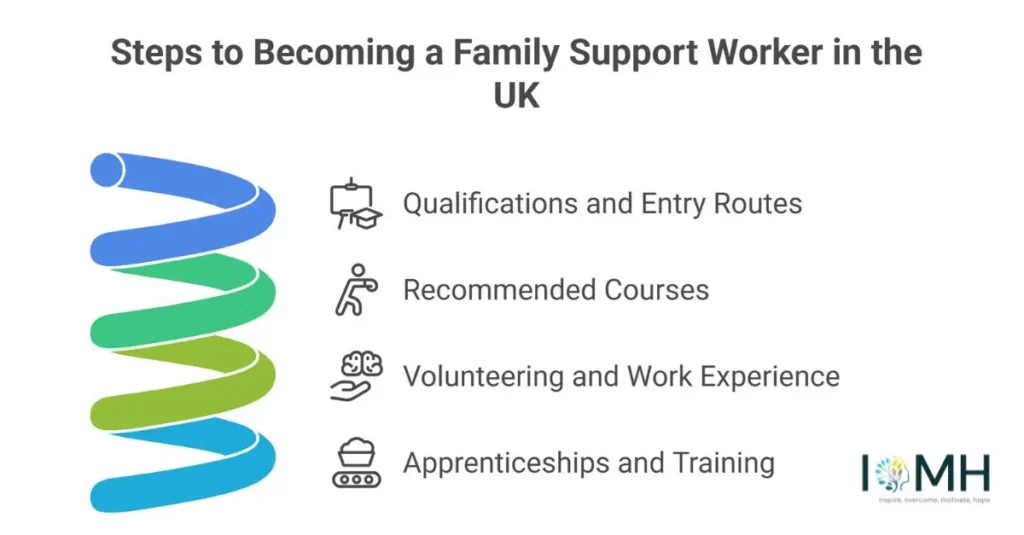
1. Qualifications and Entry Routes
You don’t always need a university degree to apply for family support worker jobs, but employers typically look for:
- Level 3 qualifications in Health and Social Care, Childcare, or Counselling
- Experience working with children, families, or vulnerable adults
- A valid DBS (Disclosure and Barring Service) check
Some roles may require higher-level qualifications or specialist training, especially in safeguarding or trauma-informed care.
2. Recommended Family Support Worker Courses
To boost your employability and confidence, consider enrolling in accredited family support worker courses. These may include:
- Level 3 Certificate in Supporting Families
- Child Protection and Safeguarding training
- Mental Health First Aid or Domestic Abuse Awareness workshops
Many courses are available online or through local colleges, making them accessible for working professionals or career changers.
3. Volunteering and Work Experience
Hands-on experience is highly valued. Volunteering with charities, schools, or local councils can help you build practical skills and demonstrate your commitment to the role.
4. Apprenticeships and On-the-Job Training
Some organisations offer apprenticeships or trainee roles, allowing you to earn while you learn. These are ideal for those seeking structured development and mentorship.
Whether you’re exploring family support worker vacancies or planning your next step, investing in the right training and experience will set you apart in a competitive field.
Family Support Worker Salary and Career Progression
One of the most common questions for those exploring family support worker jobs is: How much do family support workers earn in the UK? While salaries can vary depending on location, employer, and experience, the role offers both financial stability and long-term career development.
Average Salary in the UK
The typical family support worker salary ranges from £20,000 to £28,000 per year for entry-level roles. With experience and additional qualifications, senior positions may offer £30,000 or more, especially within local authorities or specialist services.
Factors influencing salary include:
- Region (e.g. London weighting or rural allowances)
- Employer type (NHS, local council, charity, school)
- Level of responsibility and caseload
- Additional training or certifications
Career Progression Opportunities
Many family support workers use the role as a stepping stone into broader careers in social care, education, or mental health. With further training, you could progress into:
- Senior Family Support Worker or Team Leader.
- Social Worker (with a degree and registration).
- Safeguarding Officer or Pastoral Lead.
- Counsellor or Mental Health Practitioner.
Enrolling in family support worker courses can help you specialise in areas such as domestic abuse, child protection, or trauma-informed care—enhancing your CV and opening doors to advanced roles.
Whether you’re just starting out or planning your next move, the career path offers meaningful progression, ongoing learning, and the chance to make a lasting impact.
Why Choose a Career as a Family Support Worker?
Choosing to become a family support worker isn’t just a job decision—it’s a commitment to making a real difference in people’s lives. If you’re someone who values empathy, community, and practical impact, this role offers a deeply rewarding path.
Personal Fulfilment
Supporting families through difficult times can be emotionally demanding, but it’s also incredibly fulfilling. Whether you’re helping a parent regain confidence or guiding a young person back into education, the positive outcomes are tangible and lasting.
Community Impact
Family support workers play a crucial role in strengthening communities. By offering early intervention and tailored support, they help prevent crises, reduce social isolation, and promote healthier family dynamics.
Alignment with Values
Many professionals are drawn to this field because it aligns with their personal values—compassion, fairness, and empowerment. If you’re asking yourself, “Why do I want to be a family support worker?”, consider whether you’re motivated by the chance to uplift others and advocate for those who may not have a voice.
Alignment Career Flexibility
With a wide range of settings—from schools and charities to local councils and healthcare services—family support worker jobs offer flexibility and variety. You can specialise in areas like domestic abuse, mental health, or child protection, depending on your interests and training.
Whether you’re exploring family support worker courses or actively applying for family support worker vacancies, this career offers purpose, progression, and the chance to be part of something bigger than yourself.
Challenges Faced by Family Support Workers
While being a family support worker is deeply rewarding, it’s important to recognise the challenges that come with the role. Understanding these pressures helps prospective workers prepare emotionally and professionally—and ensures they seek the right support when needed.
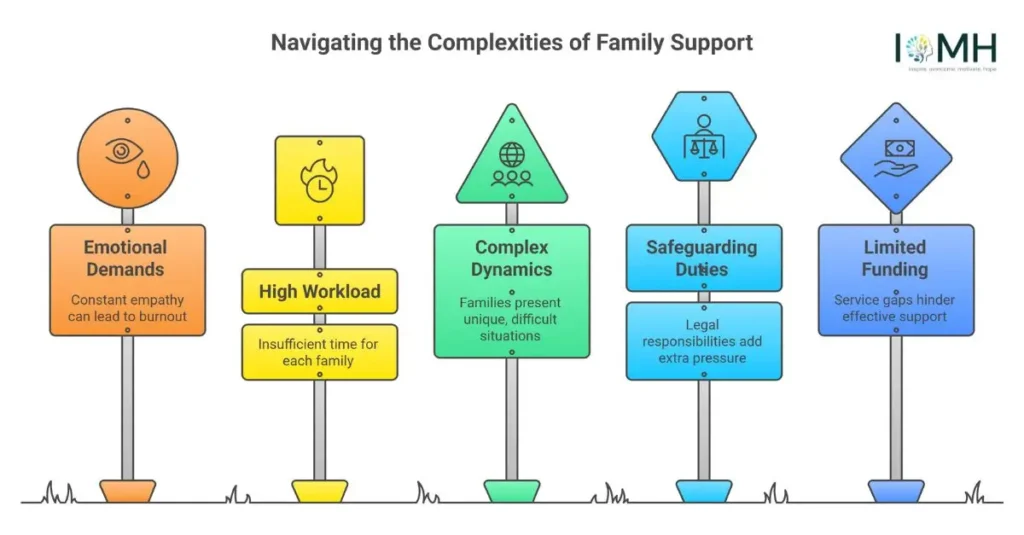
1. Emotional Demands
Supporting families in crisis can be emotionally taxing. You may encounter cases involving domestic abuse, neglect, or mental health struggles. Maintaining professional boundaries while showing empathy is a delicate balance.
2. High Workload and Time Pressures
Many family support worker jobs involve managing multiple cases at once, often with tight deadlines and limited resources. Prioritising tasks and staying organised is essential to avoid burnout.
3. Complex Family Dynamics
Each family is unique, and navigating sensitive relationships—especially where trust has been broken—requires patience, diplomacy, and cultural awareness.
4. Safeguarding and Legal Responsibilities
Although family support workers don’t carry statutory powers like social workers, they must still follow strict safeguarding protocols. Reporting concerns accurately and promptly is vital, and mistakes can have serious consequences.
5. Limited Funding and Service Gaps
In some areas, access to housing, mental health services, or financial aid may be limited. This can make it difficult to deliver the support families need, adding frustration to an already demanding role.
Despite these challenges, many professionals find the role incredibly fulfilling. With the right training—such as accredited family support worker courses—and a supportive team, you’ll be better equipped to manage the pressures and continue making a positive impact.

Where to Find Family Support Worker Vacancies
If you’re ready to take the next step in your career, there are plenty of places to explore family support worker vacancies across the UK. Whether you’re newly qualified or bringing years of experience, knowing where to look—and how to apply—can make all the difference.
Top Job Boards and Platforms:
- NHS Jobs – Ideal for roles within healthcare settings
- Local Council Websites – Many councils advertise family support worker jobs directly
- Charity Job – Great for positions in third-sector organisations like Barnardo’s or Action for Children
- Indeed, Reed, and Totaljobs – Broad listings with filters for location, salary, and contract type
Tips for Applying:
- Tailor your CV to highlight relevant experience, safeguarding knowledge, and interpersonal skills
- Include keywords from the job description to pass automated screening tools
- Prepare for interviews by reviewing common scenarios and safeguarding protocols
- Showcase your training—mention any completed family support worker courses or certifications
Volunteering and Internships:
If you’re just starting out, volunteering with local charities or children’s centres can help you build experience and confidence. Many employers value practical exposure as much as formal qualifications.
Whether you’re searching for full-time roles or part-time opportunities, staying proactive and informed will help you land a position that aligns with your values and career goals.
Conclusion: Is a Career as a Family Support Worker Right for You?
Becoming a family support worker is more than a career choice—it’s a commitment to supporting families through life’s most challenging moments. From offering practical help to fostering emotional resilience, the role demands empathy, adaptability, and a genuine desire to make a difference.
Whether you’re just starting out or looking to transition into the field, there are clear pathways through accredited family support worker courses, volunteering, and on-the-job training. With growing demand across the UK, now is an excellent time to explore family support worker jobs and take the first step toward a meaningful career.
If you’re still wondering “What is a family support worker?” or exploring family support worker vacancies, use this guide as your launchpad. With the right skills, mindset, and support, you can build a career that empowers families—and transforms lives.
Frequently Asked Questions
Is a family support worker a social worker?
What is the role of family support?
What is another name for a family support worker?
- Family liaison officer
- Parenting support advisor
- Early help practitioner
- Pastoral support worker (in schools)
What is the basic responsibility of the support staff?
What is the hardest part of being a support worker?
What tasks are included in the support worker role?
- Conducting home visits and assessments
- Creating and reviewing support plans
- Liaising with schools, healthcare providers, and social services
- Supporting families through housing, financial, or parenting challenges
- Monitoring progress and maintaining accurate records

- All Courses
 Personal Development (1283)
 Career Bundle (479)
 Management & Administration (460)
 Employability (439)
 Health & Social Care (411)
 Health and Safety (382)
 Business (320)
 Teaching & Education (268)
 IT & Software (263)
 Health and Fitness (238)
 QLS Endorsed Courses (219)
 Mental Health & Counselling (168)
 Science & Technology (153)
 Accounting & Finance (144)
 Sales & Marketing (128)
 Construction & Engineering (126)
 Art & Design (125)
 Compliance & Law (112)
 Language (86)
 Photography & Lifestyle (58)
 Animal Care (57)
 Food Safety & Hygine (53)
 Diet & Nutrition (49)
 Sports & Fitness (47)
 Makeup & Beauty (43)
 First Aid (39)
 Agriculture (2)
0 responses on "Family Support Worker Essentials: Skills, Salary & Career Path"