




Understanding End of Life Care at Home
End of life care refers to the support provided to individuals in the final phase of life, typically when curative treatment is no longer effective or appropriate. It focuses on comfort, dignity, and quality of life—whether the person is receiving care in hospital, a hospice, or increasingly, at home.
In the UK, end of life care at home is becoming a preferred option for many families. It allows individuals to spend their final days in familiar surroundings, supported by loved ones and professional carers. This approach can offer greater emotional comfort and personalised care compared to institutional settings.
While end of life care in hospital remains essential for complex medical needs, home-based care offers flexibility and a more holistic experience. Families often ask, “What does end of life care at home involve?” or “Who pays for end of life care at home in the UK?”—questions we’ll explore throughout this guide.
Whether you’re a carer, healthcare professional, or family member, understanding the definition of end of life care, its principles, and practical implications is key to planning with compassion and confidence.


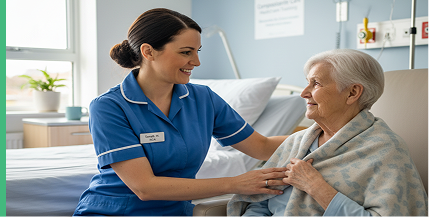
What Does End of Life Care Include?
End of life care at home encompasses a wide range of support tailored to the physical, emotional, and spiritual needs of individuals nearing the end of life. The goal is to ensure comfort, dignity, and personal choice—whether care is delivered by family members, district nurses, or specialist palliative teams.
Key components include:
- Pain and symptom management: This may involve medication, equipment, and regular assessments to ease discomfort and maintain quality of life.
- Emotional and psychological support: Patients and families often benefit from counselling, bereavement services, and compassionate communication.
- Spiritual and cultural care: Respecting beliefs and rituals is central to holistic care, especially in diverse communities.
- Practical assistance: Help with daily tasks such as washing, dressing, and eating is often provided by carers or end of care nursing professionals.
- Coordination with healthcare services: GPs, community nurses, and hospice teams work together to deliver seamless care, whether at home or in hospital.

Compared to end of life care in hospital, home-based care offers a more personalised environment, allowing individuals to remain close to loved ones and familiar surroundings. However, both settings aim to uphold the same principles of dignity, compassion, and clinical excellence.
Families often ask “What can we expect from end of life care at home?” or “How long is end of life care?”—questions that depend on individual needs, medical conditions, and care plans.
Principles of End of Life Care
The foundation of end of life care at home lies in a person-centred approach that respects the individual’s values, wishes, and dignity. Whether care is delivered by NHS teams, hospice professionals, or family carers, the guiding principles remain consistent across settings.
Key principles include:
- Respect for autonomy: Individuals should be involved in decisions about their care, including where they wish to spend their final days.
- Holistic support: Care should address physical symptoms, emotional wellbeing, spiritual needs, and social circumstances.
- Clear communication: Open, honest, and sensitive dialogue between professionals, patients, and families is essential
- Continuity of care: Coordinated support across services—especially between GPs, district nurses, and palliative care teams—ensures seamless delivery.
- Cultural sensitivity: Understanding and respecting cultural and religious practices is vital, particularly in diverse communities across the UK.
These principles are embedded in every end of life care plan, helping families understand what to expect from end of life care at home and how to prepare. Whether care is provided at home or in hospital, the emphasis remains on comfort, compassion, and dignity.
The 5 Priorities of Care at End of Life
In the UK, the 5 priorities of care at end of life are nationally recognised principles that guide healthcare professionals in delivering compassionate, person-centred support. These priorities are especially vital when planning end of life care at home, where family involvement and clear communication are key.
1. Recognise that death is approaching
Timely recognition allows for appropriate planning, symptom management, and emotional preparation. Whether care is provided at home or in hospital, recognising the signs of dying is the first step in delivering effective support.
2. Communicate sensitively
Open, honest, and tailored communication helps individuals and families understand what to expect. Professionals must explain the care plan clearly, using language that respects cultural and emotional needs.
3. Involve the dying person in decisions
Where possible, the person should be actively involved in decisions about their care, including preferences for location, treatment, and spiritual support. This is a core element of any end of life care plan.
4. Support the needs of families and others
End of life care extends beyond the patient. Families, carers, and loved ones need emotional, practical, and sometimes financial support—especially when navigating who pays for end of life care at home.
5. Create an individual care plan
A personalised plan ensures that care is tailored to the person’s needs, wishes, and circumstances. This includes medical interventions, comfort measures, and coordination with NHS or hospice services.
These priorities help ensure that end of life care at home in the UK is delivered with dignity, clarity, and compassion. They also provide a framework for carers and professionals to benchmark quality and consistency across settings.
The 7 Cs of End of Life Care
The 7 Cs of end of life care offer a compassionate framework for professionals and carers supporting individuals in their final days. Whether care is delivered at home, in hospital, or through hospice services, these principles help ensure dignity, empathy, and consistency.
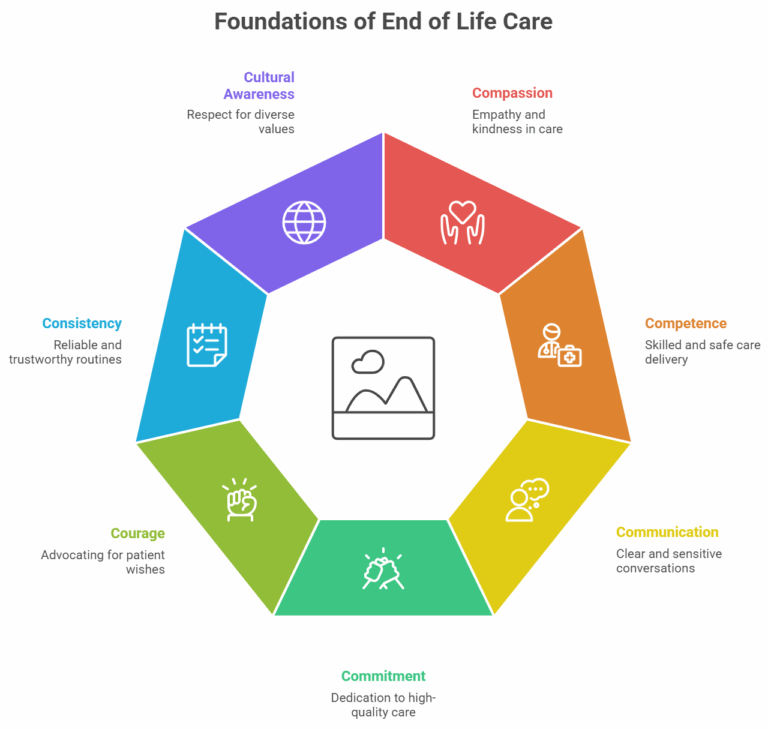
1. Compassion
At the heart of all end of life care, compassion means recognising the emotional and physical challenges faced by both the individual and their loved ones. It’s about being present, kind, and responsive.
2. Competence
Carers and healthcare professionals must be equipped with the clinical skills and emotional intelligence required to manage complex symptoms and sensitive conversations—especially in end of care nursing roles.
3. Communication
Clear, honest, and culturally sensitive communication is essential. Families receiving end of life care at home often need guidance on what to expect, how to plan, and how to access support.
4. Commitment
Delivering consistent, high-quality care requires dedication from all involved—whether it’s NHS staff, private carers, or family members. Commitment ensures continuity and trust.
5. Courage
Supporting someone through the dying process can be emotionally demanding. Courage allows carers to face difficult decisions and advocate for the person’s wishes.
6. Consistency
Reliable care routines and predictable support help reduce anxiety and build confidence—especially important in home settings where families may feel uncertain.
7. Cultural Awareness
Understanding and respecting cultural, religious, and linguistic needs is vital. In the UK, end of life care at home must reflect the diversity of its communities, including tailored support for Bengali-speaking families and others.
Together, the 7 Cs reinforce the values that underpin effective end of life care plans and guide professionals in delivering care that is not only clinically sound but emotionally and ethically grounded.
Caring for Dying Patients: Best Practices
Providing high-quality end of life care at home requires a blend of clinical expertise, emotional intelligence, and coordinated support. Whether you’re a professional in end of care nursing or a family carer, understanding best practices ensures dignity and comfort in the final stages of life.
Pain and Symptom Management
Effective symptom control is central to end of life care. This includes managing pain, breathlessness, nausea, and agitation through medication, positioning, and non-pharmacological methods. NHS community teams often provide equipment and guidance to support care at home.
Emotional and Psychological Support
Dying can be a deeply emotional experience—for both the individual and their loved ones. Compassionate listening, reassurance, and access to counselling or spiritual care are vital. Families should be supported to express grief, ask questions, and prepare for what lies ahead.
Spiritual and Cultural Sensitivity
Respecting religious beliefs, rituals, and cultural practices is essential. In diverse UK communities, end of life care at home must be tailored to reflect individual values—whether that means facilitating prayer, dietary preferences, or language-specific support.
Coordinated Care Across Services
Best practice involves seamless collaboration between GPs, district nurses, palliative care specialists, and social workers. This ensures that care is consistent, responsive, and aligned with the person’s end of life care plan.
Support for Families and Carers
Caring for someone at the end of life can be physically and emotionally demanding. Families should be offered respite care, practical advice, and information about financial support—including guidance on who pays for end of life care at home.
Whether delivered in hospital or at home, the principles of best practice remain the same: compassion, clarity, and continuity. For those seeking end of life care at home UK jobs, training in these areas is essential to meet national standards and provide meaningful support.
How Long Is End of Life Care?
The duration of end of life care varies widely depending on the individual’s condition, care setting, and support needs. In the UK, care may begin weeks or even months before death, especially when a terminal diagnosis has been confirmed and curative treatment is no longer appropriate.
Factors That Influence Duration:
- Medical condition and prognosis: Some illnesses, such as advanced cancer or organ failure, may have clearer trajectories, while others, like dementia, can involve prolonged decline.
- Care setting: Individuals receiving end of life care at home may experience more flexible, ongoing support compared to hospital-based care, which often focuses on acute needs.
- Care plan and goals: A well-structured end-of-life care plan helps anticipate needs and adjust support as the situation evolves.
Typical Timeframes:
- End of life care may last from a few days to several months.
- NHS guidance often defines the “last year of life” as the period when end of life planning should begin.
- In home settings, care may intensify in the final days or weeks, with increased involvement from district nurses, palliative care teams, and family carers.
Understanding how long end of life at home care might last helps families prepare emotionally, practically, and financially. It also supports better coordination between services and ensures that the person’s wishes are respected throughout.
Who Pays for End of Life Care at Home in the UK?
One of the most common questions families ask is: “Who pays for end of life care at home?” The answer depends on individual circumstances, care needs, and funding eligibility. In the UK, there are several pathways to access financial support for end of life care at home, whether through the NHS, local authorities, or private arrangements.
NHS-Funded Care
If a person’s needs are primarily health-related, they may qualify for NHS Continuing Healthcare (CHC). This funding covers the full cost of care—whether at home, in a hospice, or in a care home. Eligibility is assessed by a multidisciplinary team and is based on the complexity and intensity of care required.
Local Authority Support
For those who don’t meet CHC criteria, local councils may provide means-tested support through adult social care services. This can include help with personal care, equipment, and respite services. Families may be asked to contribute, depending on income and savings.
Personal Budgets and Direct Payments
Some individuals opt for personal budgets, which allow them to choose and manage their own care providers. This can be particularly useful for tailoring end of life care at home to cultural or linguistic preferences.
Charities and Hospices
Many UK hospices offer free or subsidised care, funded through donations and charitable grants. These services often include home visits, counselling, and bereavement support.
Private Care Options
Families who prefer or require additional support may choose to fund private carers or nursing services. While this offers flexibility, it’s important to ensure that providers meet regulatory standards and align with the person’s end of life care plan.
Understanding funding options helps families plan with confidence and avoid unexpected costs. Whether care is delivered by the NHS or privately, the focus remains on dignity, comfort, and personalised support.
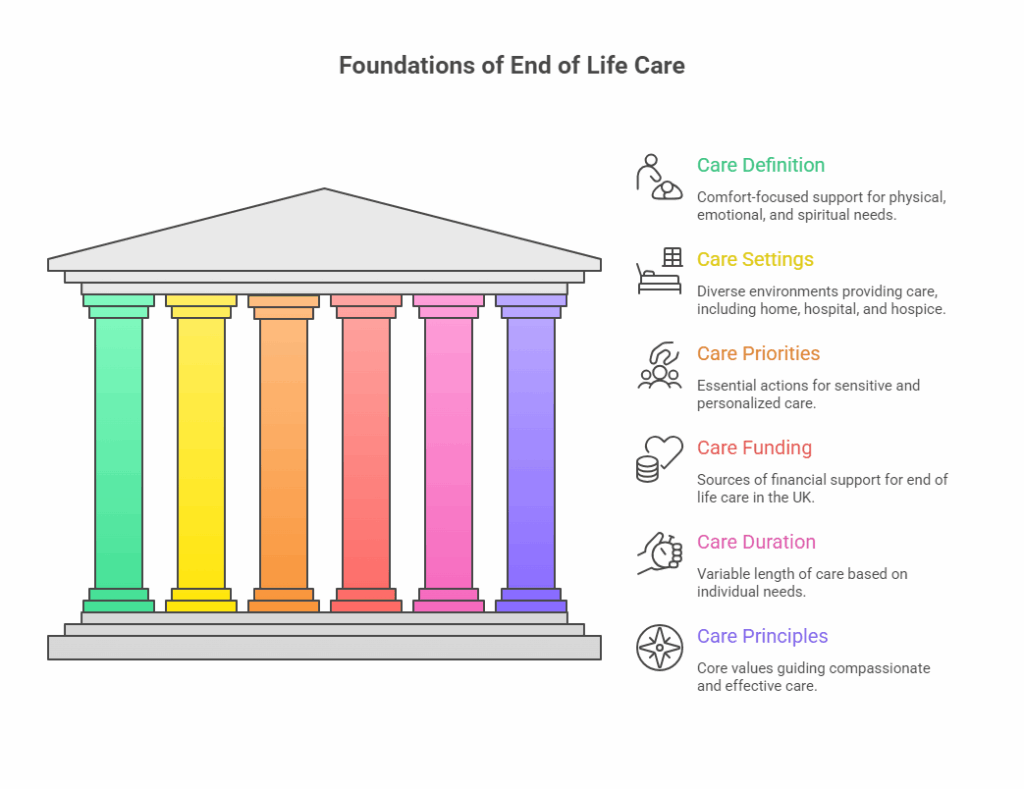
Conclusion: Planning Ahead with Compassion
Navigating end of life care at home can feel overwhelming—but with the right support, planning, and communication, it becomes a deeply meaningful experience for everyone involved. Whether you’re a family member, carer, or healthcare professional, understanding the principles, priorities, and practicalities of care helps ensure dignity and comfort in the final stages of life.
Creating a personalised end of life care plan is one of the most important steps. It allows individuals to express their wishes, clarify medical and emotional needs, and coordinate support across services. From symptom management to spiritual care, every detail matters.
Families should also be aware of what to expect—emotionally, physically, and financially. Asking questions like “How long is end of life care?” or “Who pays for end of life care at home in the UK?” is not only practical but empowering. It helps ensure that care is delivered with compassion, clarity, and confidence.
As more people choose to receive end of life care at home in the UK, the need for culturally sensitive, well-structured, and accessible resources continues to grow. Whether you’re seeking guidance, training, or support, this blog aims to provide a foundation for informed and heartfelt care.

Frequently Asked Questions
End of life care refers to the support provided to individuals in the final phase of life, focusing on comfort, dignity, and quality of life. It includes medical, emotional, and spiritual care tailored to the person’s needs.
End of life care at home includes symptom management, personal care, emotional support, and coordination with healthcare professionals. It allows individuals to remain in familiar surroundings, supported by loved ones and carers.
The duration varies depending on the person’s condition and care plan. It can range from a few days to several months. Planning ahead helps ensure appropriate support throughout.
Funding may come from NHS Continuing Healthcare, local authority support, personal budgets, or charitable services. Eligibility depends on health needs and financial circumstances.
These include recognising dying, communicating sensitively, involving the person, supporting families, and creating an individual care plan. They guide compassionate and person-centred care.
Hospital care may focus on acute medical needs, while home care offers a more personalised, familiar environment. Both aim to uphold dignity and comfort, but home care allows greater family involvement.
An end of life care plan outlines the person’s wishes, medical needs, preferred care setting, and support arrangements. It helps coordinate services and ensure respectful, tailored care.
The 7 Cs—Compassion, Competence, Communication, Commitment, Courage, Consistency, and Cultural Awareness—represent the values that underpin high-quality care for dying individuals.

- All Courses
 Personal Development (1283)
 Career Bundle (479)
 Management & Administration (460)
 Employability (439)
 Health & Social Care (411)
 Health and Safety (382)
 Business (320)
 Teaching & Education (268)
 IT & Software (263)
 Health and Fitness (238)
 QLS Endorsed Courses (219)
 Mental Health & Counselling (168)
 Science & Technology (153)
 Accounting & Finance (144)
 Sales & Marketing (128)
 Construction & Engineering (126)
 Art & Design (125)
 Compliance & Law (112)
 Language (86)
 Photography & Lifestyle (58)
 Animal Care (57)
 Food Safety & Hygine (53)
 Diet & Nutrition (49)
 Sports & Fitness (47)
 Makeup & Beauty (43)
 First Aid (39)
 Agriculture (2)
0 responses on "End of Life Care at Home in the UK: What to Expect, Plan & Prioritise"