




Introduction: Understanding Domiciliary Care in the UK
In the UK, the demand for personalised care at home is rising rapidly—and for good reason. Families are increasingly seeking alternatives to residential care homes that allow their loved ones to remain in familiar surroundings while receiving professional support. This is where domiciliary care comes in.
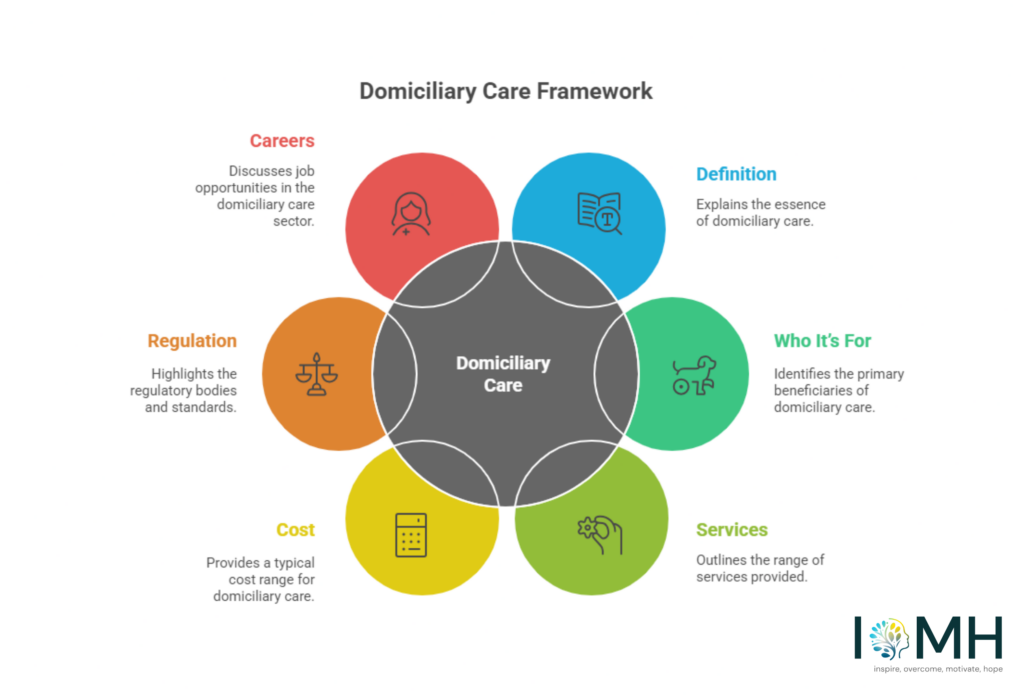
Domiciliary care, also known as home care, refers to a range of services provided to individuals in their own homes. These services are designed to help people maintain independence, dignity, and quality of life while managing daily tasks or medical needs. Whether it’s assistance with personal hygiene, medication, mobility, or companionship, domiciliary care offers flexible solutions tailored to each person’s unique circumstances.
This guide is written for UK families who are exploring care options for elderly relatives, individuals with disabilities, or anyone recovering from illness. We’ll walk you through everything—from the meaning of domiciliary care, to domiciliary care jobs, costs, agencies, and frequently asked questions.



Domiciliary Care vs Other Care Models
When families begin exploring care options, it’s common to come across a variety of terms that sound similar but have important distinctions. Understanding how domiciliary care compares to other types of care helps families choose the best arrangement for their loved ones.
Domiciliary Care vs Home Care
Many people ask: What is the difference between home care and domiciliary care? In reality, there is very little difference. In the UK, the two terms are often used interchangeably. Both describe professional carers visiting a person at home to provide support with personal care, medication, or daily living tasks. “Home care” is the more widely used everyday term, while “domiciliary care” is the formal, professional term.
Domiciliary Care vs Live-In Care
Another common question is: What is the difference between domiciliary care and live-in care?
- Domiciliary care usually involves carers visiting for scheduled appointments, which could be as short as 30 minutes a day or multiple visits throughout the day.
- Live-in care means a carer actually moves into the client’s home, offering round-the-clock support. This option is suitable for people with more complex needs or those who prefer constant companionship and supervision.
Domiciliary Care vs Residential Care
Residential care, also called care homes, involves the individual moving into a dedicated facility where care is provided 24/7. While care homes can be appropriate for people with high or complex needs, many families prefer domiciliary care first because it allows loved ones to remain in familiar surroundings.
Other Names for Domiciliary Care
Sometimes, domiciliary care is also referred to as:
- Care at home
- Visiting care
- In-home care services
Quick Takeaway
Domiciliary care is best for those who want to stay at home with flexible support, live-in care is a step up for full-time assistance, and residential care involves moving to a care facility.
Who Uses Domiciliary Care?
Domiciliary care is designed for people who want to maintain independence while still receiving the support they need in their own home. It is not limited to older adults — though they make up the largest group — but also extends to individuals with disabilities, chronic illnesses, or those recovering from surgery or hospital stays.
Typical Profiles of Domiciliary Care Users
- Older adults: Many older people prefer to stay in their own homes rather than move into a care facility. Domiciliary care allows them to continue familiar routines while staying safe.
- People with disabilities: Those with physical or learning disabilities often benefit from tailored support that enables them to live independently.
- Patients recovering from illness or surgery: Short-term domiciliary health care can help people regain independence after hospital discharge.
- Individuals needing palliative care: End-of-life care at home can provide comfort and dignity in familiar surroundings.
What Is a Domiciliary Patient?
A domiciliary patient is anyone receiving care services at home rather than in a hospital or care home. This could include personal care, medical monitoring, or assistance with daily activities.
Is Domiciliary Care Difficult?
Families often wonder if arranging domiciliary care is difficult. The process itself is straightforward, but the emotional side can be challenging. Accepting support at home may take time for the person receiving care, and families may feel uncertain about entrusting loved ones to a domiciliary care worker. However, with professional carers from a regulated domiciliary care agency, the experience usually proves positive and reassuring.
Benefits of Domiciliary Health Care
- Allows people to remain in a familiar environment
- Promotes independence and dignity
- Provides flexible levels of support
- Reduces the need for hospital admissions
- Offers peace of mind for families
Potential Challenges
- Reliance on consistent scheduling and punctuality of carers
- Possible need for adaptations in the home (handrails, ramps)
- Costs can increase as care needs grow
What Services Does a Domiciliary Care Service Provide?
One of the main advantages of domiciliary care services is their flexibility. Families can arrange the level of support that matches their loved one’s needs, whether that’s a short daily visit or several hours of care each day. Services can be tailored to cover everything from basic household help to specialised medical support.
Core Services Provided
- Personal care: Assistance with washing, dressing, grooming, toileting, and continence care.
- Medication support: Reminders to take prescribed medicines, help with administration, or more advanced medical tasks if trained staff are available.
- Household support: Cooking, light cleaning, laundry, and shopping help, ensuring daily life runs smoothly.
- Companionship: Many domiciliary care workers also provide emotional support, conversation, and social interaction, helping reduce loneliness.
Healthcare & Specialist Support
Some agencies offer domiciliary health care, which may include:
- Monitoring vital signs such as blood pressure or blood sugar
- Wound care, catheter care, or stoma management
- Assistance with mobility equipment and physiotherapy exercises
- Feeding support, such as PEG feeding where needed
These services may require carers with additional training or qualified nurses, depending on the level of medical involvement.
Flexible Care Options
- Hourly or visiting care: Carers visit at set times during the day
- Overnight care: For those who need help during the night.
- Respite care: Temporary care to give family members a break.
- Live-in care: A carer lives in the home to provide continuous support.
Why Flexibility Matters
Because domiciliary care is so adaptable, it can grow with the client’s needs. A person may begin with short daily visits for companionship or household tasks, but over time add personal care or medical support if their condition changes.
Regulation, Standards & Insurance
Choosing a domiciliary care service in the UK isn’t just about finding a good match for your family — it’s also about ensuring the agency meets strict professional standards. Families often ask about regulations, insurance, and how to know whether a care provider is trustworthy.
Regulation of Domiciliary Care Agencies
In the UK, domiciliary care agencies are regulated by:
- Care Quality Commission (CQC) in England
- Care Inspectorate Wales (CIW)
- Care Inspectorate in Scotland
- Regulation and Quality Improvement Authority (RQIA) in Northern Ireland
These bodies set standards, carry out inspections, and publish reports online. Families can check these reports to see how well an agency performs in areas such as safety, leadership, and quality of care.
Quality Standards
Regulated domiciliary care agencies must:
- Ensure staff are properly trained, DBS-checked, and qualified
- Follow safeguarding procedures to protect vulnerable people
- Maintain transparent care plans tailored to each client
- Provide continuity of care, ensuring familiar carers visit regularly
- Offer a system for feedback and complaints
Domiciliary Care Insurance
Another important aspect is domiciliary care insurance, which protects both the agency and the family. This typically covers:
- Public liability insurance: Protects against accidents or injuries while carers are in the home.
- Professional indemnity insurance: Covers errors or negligence in the delivery of care.
- Employer’s liability insurance: Required if the agency employs staff.
Families should always ask whether a domiciliary care agency has the appropriate insurance in place, as this provides reassurance that both clients and carers are protected.
Why This Matters for Families
Regulation and insurance ensure peace of mind: they show that the agency operates responsibly, and that clients are safeguarded against risks. Choosing a regulated provider also means you have access to inspection reports and official oversight, making it easier to trust the care being delivered.
Cost & Funding
One of the biggest concerns UK families have when considering domiciliary care services is cost. Prices can vary significantly depending on location, the level of support required, and whether the care is arranged privately or through the local authority.
Typical Cost of Domiciliary Care in the UK
- On average, domiciliary care costs £20–£30 per hour in most parts of the UK.
- Costs may be higher in London and the South East due to demand and higher living costs.
- If multiple visits are required each day, monthly costs can add up quickly, though still often less than residential care.
Local Authority Support & Assessments
Before arranging care, families can request a care needs assessment from their local council. This assessment determines the level of support needed. If the person qualifies, the council will also conduct a financial assessment to see whether they are eligible for funding.
- Means-tested funding: If the person has savings or assets above a certain threshold (currently £23,250 in England), they may need to pay for their own care.
- If below the threshold, the council may contribute or cover the cost.
Funding Options
Families can pay for domiciliary care in several ways:
- Local authority arranged care: The council pays the provider directly if the person is eligible.
- Direct payments / personal budgets: Families receive money from the council to arrange care themselves.
- Private funding: Families cover costs independently, often supplementing with benefits.

Benefits That Can Help Cover Costs
- Attendance Allowance (for those over State Pension age with care needs)
- Personal Independence Payment (PIP) (for those under State Pension age)
- Carer’s Allowance (for family members providing unpaid care)
Comparing Costs
While domiciliary care can be expensive over time, it is often more cost-effective than moving into a residential care home, especially if only a few hours of support are needed each day. Families also value the independence and quality of life that staying at home provides.
Choosing a Domiciliary Care Agency or Service
Selecting the right domiciliary care agency is one of the most important decisions families will make. The right provider can ensure safety, dignity, and peace of mind, while the wrong choice may cause stress or inconsistent care. Here are the key factors to consider when choosing a service.
What to Look for in a Domiciliary Care Service
- Regulation and inspection ratings: Always check if the agency is registered with the Care Quality Commission (CQC) or the relevant body in your nation (Scotland, Wales, or Northern Ireland). Their inspection reports are public and highlight strengths or concerns.
- Staff training and qualifications: Confirm that carers have undergone proper training, background checks (DBS), and ongoing professional development.
- Continuity of care: Ask whether the same domiciliary care worker will visit regularly. Familiarity builds trust and comfort for clients.
- Flexibility of care plans: Needs can change over time, so choose an agency that adapts care packages easily.
- Emergency support: Find out how the agency handles sudden changes, such as illness or urgent cover.
Questions to Ask a Domiciliary Care Agency
- How are carers matched to clients?
- What happens if the usual carer is unavailable?
- How often are care plans reviewed and updated?
- Can the agency provide references from other families?
- What is included in the hourly cost, and are there any hidden fees?
Domiciliary Location & Coverage
Most domiciliary care agencies operate within specific areas. Always check whether your loved one’s home falls within their coverage zone. The term domiciliary location simply means the geographic area in which the agency provides home-based services.
Family Involvement
A good agency will involve families in creating and reviewing the care plan. Regular communication is essential to ensure the care provided continues to meet expectations.
Careers & Jobs in Domiciliary Care
The demand for domiciliary care jobs is growing rapidly across the UK. With an ageing population and increasing preference for care at home, there is a constant need for compassionate, skilled carers. For those considering a career in this field, domiciliary care offers rewarding opportunities to make a meaningful difference in people’s lives.

Roles in Domiciliary Care
- Domiciliary care worker/care assistant: Provide personal care, help with daily activities, and offer companionship.
- Senior care worker: Supervise other carers, carry out more complex care tasks, and liaise with healthcare professionals.
- Specialist carers or nurses: Deliver medical support such as wound care, catheter management, or palliative care when required.
Skills and Qualifications
Most domiciliary care roles don’t require formal qualifications at the start, but certain skills and qualities are essential:
- Patience, empathy, and excellent communication
- Reliability and flexibility to meet client needs
- Ability to work independently and manage time well
Training is usually provided by the domiciliary care agency, covering areas such as safeguarding, medication handling, first aid, and moving and handling techniques. Many carers also work towards recognised qualifications such as NVQs in Health and Social Care.
Benefits and Challenges of the Job
Pros:
- A highly rewarding career supporting vulnerable people
- Flexible working hours and opportunities for part-time or full-time work
- Strong demand, providing job security and career progression
Challenges:
- Travel between clients can be demanding
- Some tasks may be physically and emotionally challenging
- Requires resilience and commitment to high standards of care
Career Progression
With experience, domiciliary care workers can move into senior care roles, management positions within agencies, or even nursing with further study. For many, domiciliary care is a stepping stone into a long-term healthcare career.

Careers & Jobs in Domiciliary Care
Domiciliary care is one of the most flexible and person-centred ways to support loved ones in the UK. It allows people to remain in the comfort of their own homes while receiving professional care tailored to their needs. From simple daily assistance to specialised healthcare support, domiciliary care offers families peace of mind and individuals the dignity of independence.
For families, the first step is to understand the meaning and scope of domiciliary care — how it compares to live-in and residential options, what services are available, and the potential costs involved. The next step is exploring providers. Choosing a regulated and insured domiciliary care agency ensures safety and quality, while asking the right questions helps guarantee continuity and trust.
For those considering a career in care, domiciliary care jobs provide rewarding, secure opportunities to make a real difference in people’s lives. With strong demand and flexible work patterns, it’s a sector that continues to grow and evolve.

- All Courses
 Personal Development (1283)
 Career Bundle (479)
 Management & Administration (460)
 Employability (439)
 Health & Social Care (411)
 Health and Safety (382)
 Business (320)
 Teaching & Education (268)
 IT & Software (263)
 Health and Fitness (238)
 QLS Endorsed Courses (219)
 Mental Health & Counselling (168)
 Science & Technology (153)
 Accounting & Finance (144)
 Sales & Marketing (128)
 Construction & Engineering (126)
 Art & Design (125)
 Compliance & Law (112)
 Language (86)
 Photography & Lifestyle (58)
 Animal Care (57)
 Food Safety & Hygine (53)
 Diet & Nutrition (49)
 Sports & Fitness (47)
 Makeup & Beauty (43)
 First Aid (39)
 Agriculture (2)
0 responses on "Domiciliary Care Explained: A Guide for UK Families"