




Introduction
Healthcare in the UK relies on more than doctors, nurses, and hospital staff — behind the scenes, clinical coders play a crucial role in keeping the system running smoothly. If you’ve ever wondered what is clinical coding or why there’s such growing interest in clinical coding jobs UK, you’re not alone. Clinical coding is the process of turning detailed medical notes into standardised codes used across the NHS and private healthcare providers. These codes influence everything from hospital funding to national health statistics, and even medical research.
For people interested in healthcare but not necessarily looking for a front-line clinical role, clinical coding offers a unique career path. With opportunities ranging from clinical coding traineeships to senior auditor positions, there are clear routes for growth and specialisation. In the NHS, coders are essential for ensuring patient records are accurate and up to date, while in private healthcare, the same skills are used for billing, compliance, and reporting.
In this blog, we’ll explore what clinical coders actually do, how to get started through a clinical coding course, what kind of salaries to expect, and where to find clinical coding jobs NHS and beyond. Whether you’re just beginning to explore career options or considering a switch, this guide will give you everything you need to know about building a future in clinical coding.
What Does a Clinical Coder Do?
At its core, clinical coding is about translating the story of a patient’s care into a universal medical language. Every time a patient visits a hospital or clinic, doctors and nurses create detailed notes about their diagnosis, treatment, and outcomes. A clinical coder reviews these records and assigns specific alphanumeric codes — using recognised systems such as ICD-10 for diagnoses and OPCS-4 for procedures in the NHS. These codes are then used for healthcare planning, billing, and vital data analysis.
Clinical coding jobs are far more than simple data entry. Coders must have a keen eye for detail, strong analytical skills, and a solid understanding of medical terminology. They work closely with clinicians to ensure patient records are complete and accurate, which can sometimes involve clarifying vague notes or handling missing information. Their work directly impacts NHS funding, since the number and type of codes recorded influence how hospitals are reimbursed for services.
In the UK, coders are increasingly working with advanced systems, including electronic patient records and SNOMED CT, which provide even more detailed ways to capture patient care. Accuracy is critical: errors can affect not only funding but also national statistics and research outcomes.
If you’re curious about clinical coding positions, you’ll find that they involve more responsibility and impact than most people realise. From ensuring fair funding for hospitals to contributing to research into disease patterns, coders play an essential role in the bigger picture of healthcare.
Types of Clinical Coding Jobs & Positions in the UK
When people think of clinical coding jobs UK, they often imagine a single type of role. In reality, there are many different clinical coding positions across the NHS and private healthcare, each offering different levels of responsibility and career progression.
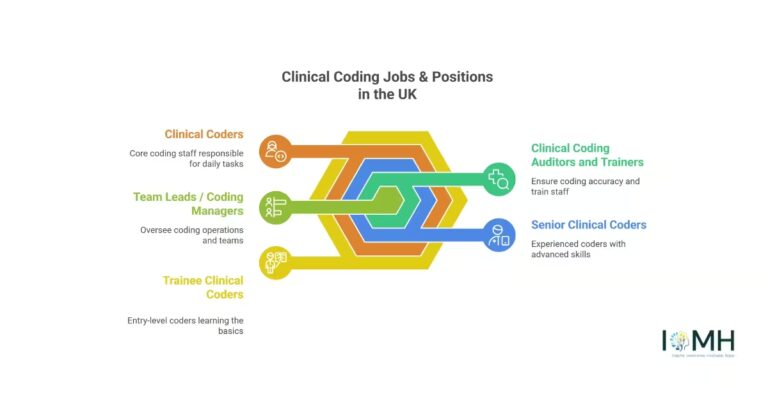
- Trainee Clinical Coders – These are entry-level roles, often offered through a clinical coding traineeship. Trainees work under supervision, learning how to apply coding standards and complete NHS training modules. It’s the most common entry point into the profession.
- Clinical Coders – After initial training, coders work independently on patient records. They handle day-to-day coding tasks across different medical specialties, ensuring accurate data entry and compliance with NHS guidelines.
- Senior Clinical Coders – These professionals have significant experience and often specialise in complex areas such as oncology, cardiology, or orthopaedics. They may support trainees and lead small teams.
- Clinical Coding Auditors and Trainers – Auditors check coding quality, while trainers deliver structured learning to new staff or those preparing for the National Clinical Coding Qualification (NCCQ).
- Team Leads / Coding Managers – These roles oversee entire coding departments, ensuring high standards, liaising with clinicians, and managing resources.
There are also opportunities for coders to work as contractors or in locum roles, especially in larger NHS Trusts or private hospitals. Increasingly, hybrid and remote positions are appearing, making it easier for coders to balance flexibility with career growth.
No matter the path, clinical coding offers a structured career ladder — from trainee through to senior management roles — with room to specialise along the way.



Qualifications, Training & Clinical Coding Courses
One of the most common questions asked is: What qualifications do you need for clinical coding jobs UK? The good news is that there are several entry points, and you don’t always need a university degree to get started. What matters most is attention to detail, analytical thinking, and a willingness to learn medical terminology and healthcare systems.
Overcoming Communication Barriers in Health and Social Care
Good communication does not always come easily. There are many communication barriers in Health and Social Care that can make it harder for people to share or understand information. These include:

Entry Requirements
For most clinical coding traineeship roles, employers look for GCSEs (or equivalent) in English and Maths, plus evidence of good literacy and numeracy. Some posts may prefer candidates with experience in healthcare administration, but this isn’t always essential.
Clinical Coding Courses
Taking a clinical coding course is one of the best ways to strengthen your CV and demonstrate commitment. In the UK, the NHS offers in-house training, while private training providers also run short courses on medical terminology, anatomy, physiology, and coding practice. Courses often cover:
- ICD-10 (diagnosis coding)
- OPCS-4 (procedure coding)
- SNOMED CT basics
- Medical record interpretation
Professional Qualification
For career progression, the National Clinical Coding Qualification (UK) – NCCQ is the gold standard. It’s widely recognised across the NHS and private healthcare providers and is required for many senior roles. Passing the NCCQ demonstrates advanced coding skills and opens the door to higher-paid clinical coding positions.
Traineeships and Development
Many NHS Trusts offer structured clinical coding traineeships, where new coders learn on the job while receiving classroom-based instruction. This route allows you to earn while you train, making it an attractive option for career changers.
In addition, coders are expected to engage in ongoing professional development. Coding standards evolve regularly, so refresher courses, workshops, and updates are part of the job.
UK Data: Salary, Jobs Numbers & Trends
Clinical coding is not only a vital role within healthcare — it’s also a career with strong demand and competitive pay. If you’re exploring clinical coding jobs UK, it helps to know what to expect in terms of vacancies, salary bands, and future opportunities.
Job Demand
As of 2025, there are thousands of vacancies for clinical coding positions across the UK. LinkedIn lists 3,000+ live clinical coder jobs, while NHS Jobs regularly advertises roles ranging from trainees to senior managers. This demand is fuelled by the NHS’s increasing reliance on accurate data for funding, planning, and patient care. Private healthcare providers also contribute to job growth, especially in cities like London, Manchester, and Birmingham.
Salary Expectations
- Trainee Clinical Coders (NHS Band 3): Typically start at £22,816 – £24,336 per year.
- Clinical Coders (NHS Band 4): Salaries range between £30,279 – £33,115.
- Senior Clinical Coders (NHS Band 5): Earn £29,970 – £36,483, sometimes with additional recruitment/retention bonuses of up to 15%.
- Coding Leads, Auditors, or Specialist Roles: Often advertised at £38,682–£46,580, with some private-sector roles offering more depending on responsibility and region.
London-based jobs often pay higher than regional positions, with averages around £32,000+, reflecting the cost of living. Increasingly, remote and hybrid opportunities are becoming available, which can widen options for coders outside major cities.
Trends in Clinical Coding
- Remote Work Growth: Post-pandemic, many employers now offer hybrid or home-based coding roles.
- Automation and AI: Tools that suggest code are entering the workplace, but demand for skilled human coders remains high due to the need for interpretation and quality assurance.
- Rising Complexity: As the NHS adopts SNOMED CT alongside ICD-10 and OPCS-4, coders must stay updated through training.
The combination of steady demand, competitive salaries, and clear progression routes makes clinical coding one of the more attractive non-clinical careers in healthcare.
How to Find Clinical Coding Jobs in the NHS & UK
If you’re ready to begin your journey into clinical coding jobs UK, the next step is knowing where to look and how to stand out as a candidate. Fortunately, there are many routes into the profession, whether you’re aiming for a clinical coding traineeship or a senior role.

Where to Look
- NHS Jobs Website: The official NHS Jobs portal is the best place to find permanent and trainee positions. Search for terms like clinical coding jobs NHS, trainee clinical coder, or senior clinical coder.
- Private Healthcare Providers: Hospitals and clinics outside the NHS also advertise clinical coding positions, often via their own careers pages.
- Recruitment Agencies: Specialist agencies regularly list locum, contract, and remote coding roles across the UK.
- Job Boards: Websites like Indeed, Glassdoor, and LinkedIn list hundreds of vacancies and often highlight salary ranges and employer reviews.
Application Tips
Employers typically look for:
- Evidence of accuracy and attention to detail.
- Knowledge of medical terminology or willingness to learn.
- Experience with data entry, healthcare admin, or information management.
- Commitment to training, such as completing a clinical coding course or pursuing the NCCQ.
Career Entry Points
For newcomers, applying to a clinical coding traineeship is often the best way in. These allow you to gain NHS experience while working toward formal qualifications. If you already have transferable skills — for example, from healthcare administration or IT — you may be able to start directly as a junior coder.
No matter your entry point, persistence is key. Clinical coding is a competitive field, but with high demand and clear progression routes, opportunities are widely available across the UK.
Career Progression & What to Expect
One of the reasons many people are drawn to clinical coding jobs UK is the combination of stability, competitive pay, and clear career development opportunities. Whether you start through a clinical coding traineeship or with prior experience, there is a well-defined pathway for growth.
Career Progression
- Step 1: Trainee or junior roles, often with structured learning and supervision.
- Step 2: Qualified coder, responsible for managing a caseload independently.
- Step 3: Senior coder or auditor, where you may specialise in certain medical fields or oversee quality control.
- Step 4: Leadership roles such as Coding Manager, Auditor, or Trainer, with responsibility for teams and departmental strategy.
What to Expect Day-to-Day
Clinical coding can be both rewarding and demanding. You’ll spend much of your time reviewing patient records, interpreting complex medical terminology, and applying codes with precision. Expect periods of intensive focus, deadlines for submitting coding batches, and continuous learning as coding standards evolve.
Despite the challenges, coders enjoy strong job security, flexible working options, and the satisfaction of knowing their work directly impacts healthcare planning and patient outcomes.
Challenges & Rewards of a Clinical Coding Career
Like any profession, clinical coding jobs UK come with both challenges and rewards. Understanding these can help you decide if this career path is the right fit for you.

The Challenges
- Complex Medical Records: Patient notes can be unclear, incomplete, or written in highly technical language. Coders often need to chase clarification from clinicians. Complex Medical Records: Patient notes can be unclear, incomplete, or written in highly technical language. Coders often need to chase clarification from clinicians.
- High Accuracy Requirements: Errors in coding don’t just affect hospital statistics — they can impact NHS funding, clinical audits, and even national research. The precision pressure is constant.
- Keeping Up with Changes: Coding standards such as ICD-10, OPCS-4, and SNOMED CT are regularly updated. Continuous training is essential to remain compliant.
- Workload Pressure: With rising demand for data and NHS targets, coders sometimes face large volumes of records to process under tight deadlines.
The Rewards
- Impact on Healthcare: Accurate coding ensures hospitals receive the correct funding and that patient care data informs national health policy.
- Job Security: With thousands of clinical coding positions advertised, the demand for skilled coders shows no sign of slowing.
- Career Growth: From clinical coding traineeship roles to senior auditor or trainer positions, progression routes are clear and rewarding.
- Flexibility: Increasingly, NHS Trusts and private employers are offering remote or hybrid working options.
- Professional Pride: Clinical coders play a vital role in making sure healthcare systems run effectively — even if the job itself is less visible to the public.
For many professionals, the sense of purpose outweighs the challenges. Clinical coding allows you to contribute directly to the functioning of the NHS and UK healthcare while building a stable, long-term career.
The Future of Clinical Coding in the UK
The world of healthcare is evolving rapidly, and so too are clinical coding jobs UK. As the NHS and private sector embrace digital transformation, the role of the clinical coder is becoming more important — and more dynamic — than ever.
Digital Transformation
The NHS has been rolling out electronic patient records (EPR) across trusts, creating more streamlined access to patient data. For clinical coders, this means less reliance on paper records and more interaction with digital systems. It also opens opportunities for hybrid and remote clinical coding positions, since records can be accessed securely online.
Automation and AI
There’s a growing interest in using artificial intelligence (AI) tools to assist coders. These systems can scan patient notes and suggest likely codes, but human oversight remains essential. Coders are still needed to handle ambiguous cases, ensure accuracy, and apply professional judgement. Rather than replacing coders, AI is expected to support them, increasing productivity.
Expansion of Coding Standards
The adoption of SNOMED CT, alongside ICD-10 and OPCS-4, is adding new layers of complexity. While this increases the accuracy and richness of health data, it also requires coders to stay on top of updates and invest in ongoing training through clinical coding courses.
Future Opportunities
The demand for skilled coders is expected to grow as healthcare data becomes even more central to decision-making, funding, and research. Senior roles — such as auditors, trainers, and coding managers — will continue to expand, offering attractive progression routes for those who commit to professional development.
The future of clinical coding is not about automation replacing jobs, but about coders becoming even more vital as interpreters, quality controllers, and guardians of health data.

Useful Resources & Tools
Whether you’re starting out with a clinical coding traineeship or already working in the field, having access to the right resources makes all the difference. From official NHS guidance to professional networks, here are some essential tools for anyone interested in clinical coding jobs UK.
Official Coding Standards
- ICD-10 and OPCS-4 Manuals: These are the main reference guides for diagnosis and procedure coding in the NHS. A complete list of NHS clinical codes can be accessed through official NHS Digital resources.
- SNOMED CT: Increasingly used for detailed data capture, this system is vital for anyone considering long-term clinical coding positions.
Training and Courses
- NHS Training Programmes: Many NHS Trusts offer in-house training for new staff and refresher courses for experienced coders.
- Private Training Providers: Several organisations run accredited clinical coding courses covering medical terminology, anatomy, and coding standards
- National Clinical Coding Qualification (NCCQ): Managed by IHRIM, this qualification is essential for progression into senior and specialist roles.
Professional Bodies and Networks
- IHRIM (Institute of Health Records and Information Management): Offers training, professional development, and networking opportunities.
- Coding Forums & Peer Groups: Online communities and LinkedIn groups provide spaces to share knowledge, ask questions, and keep up with updates in the field.
Career Tools
- NHS Jobs Portal: The official site for clinical coding jobs NHS listings.
- Recruitment Agencies: Specialised healthcare staffing agencies often advertise contract and locum roles.
- Job Boards (Indeed, LinkedIn, Glassdoor): Great for comparing salaries, job descriptions, and employer reviews.
Equipping yourself with these resources ensures you’re not only ready to apply for jobs but also well-prepared to progress through the profession.
Frequently Asked Questions
Clinical coding is the process of turning written medical information into standardised codes (ICD-10, OPCS-4, SNOMED CT) used across the NHS and private healthcare. These codes influence funding, research, and patient care data.
Not always. Many coders start through a clinical coding traineeship and gain skills on the job. However, to progress into senior clinical coding positions, most employers require the National Clinical Coding Qualification (NCCQ).
Introductory clinical coding courses can take a few weeks, while more advanced training leading to the NCCQ can take several months of study alongside work.
Yes. While experience in healthcare administration helps, it’s not mandatory. Employers value attention to detail, analytical skills, and commitment to learning medical terminology.
While most jobs are in the NHS, private hospitals and healthcare providers also employ coders. Increasingly, agencies advertise locum and remote clinical coding positions across the UK.
No — AI tools can assist by suggesting codes, but human coders are still essential for interpreting complex cases and ensuring accuracy.
Not directly. It’s a pharmacy-related keyword, but if you’re searching online for clinical coding courses or healthcare resources, you may occasionally see unrelated discount codes. Focus instead on official coding and training resources.

- All Courses
 Personal Development (1283)
 Career Bundle (479)
 Management & Administration (460)
 Employability (439)
 Health & Social Care (411)
 Health and Safety (382)
 Business (320)
 Teaching & Education (268)
 IT & Software (263)
 Health and Fitness (238)
 QLS Endorsed Courses (219)
 Mental Health & Counselling (168)
 Science & Technology (153)
 Accounting & Finance (144)
 Sales & Marketing (128)
 Construction & Engineering (126)
 Art & Design (125)
 Compliance & Law (112)
 Language (86)
 Photography & Lifestyle (58)
 Animal Care (57)
 Food Safety & Hygine (53)
 Diet & Nutrition (49)
 Sports & Fitness (47)
 Makeup & Beauty (43)
 First Aid (39)
 Agriculture (2)
0 responses on "Clinical Coding Jobs UK: How to Start, Train, and Build Your Career"