


Safeguarding training for staff helps employees recognise signs of abuse or neglect, respond to concerns and follow the correct reporting procedures. In the UK, the training employees need depends on their job responsibilities, workplace and applicable safeguarding guidance. There is no single course or training level that suits every role.
For employers, choosing suitable training means looking beyond the course title. Content, delivery, certificates and costs all matter, particularly when arranging training for several employees.
Understanding why safeguarding is important is a useful starting point. The next step is deciding what training your staff actually need.
Looking for Online Safeguarding Training?
If you’re looking to strengthen your safeguarding knowledge, IOMH’s Online Safeguarding Course offers flexible online learning covering safeguarding responsibilities, recognising concerns and reporting procedures. The course is QLS-endorsed at Level 2 and is a non-regulated training programme. Check the syllabus and certificate options to see whether it meets your workplace training needs.
Is Safeguarding Training Mandatory for Staff in the UK?
Safeguarding training is required in many workplaces, particularly where employees work with children or adults at risk. However, there is no universal UK law requiring every employee to complete the same safeguarding course or level.
Requirements depend on the sector, the employee’s responsibilities and the rules or guidance governing their workplace.
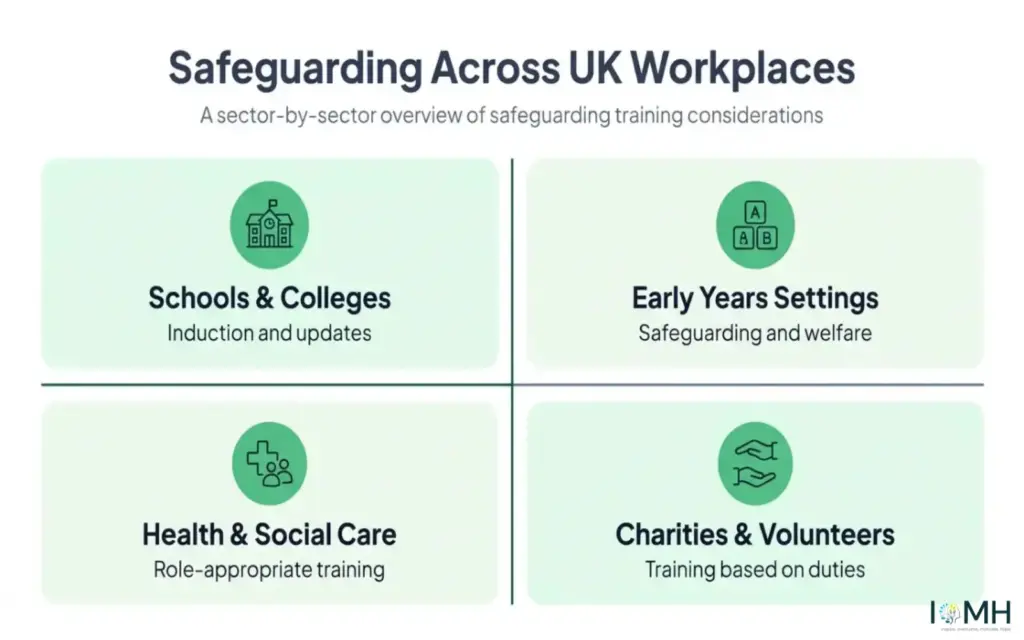
Safeguarding Training Requirements by Workplace
| Workplace | What Employers Should Consider |
|---|---|
| Schools and colleges | Staff safeguarding training, induction and updates under relevant education guidance |
| Nurseries and early years settings | Safeguarding responsibilities and training under the EYFS framework |
| Health and social care | Role-appropriate training, competence and safeguarding procedures |
| Charities and voluntary organisations | Training based on activities, safeguarding risks and staff or volunteer responsibilities |
In England, Keeping Children Safe in Education 2026 sets out safeguarding expectations for schools and colleges. Staff must receive appropriate safeguarding and child protection training, including online safety, at induction, with regular updates.
Early years providers must follow the applicable EYFS statutory framework, which includes safeguarding and welfare requirements.
For regulated health and social care services in England, CQC Regulation 18 requires providers to ensure staff receive appropriate training, support and professional development.
Scotland, Wales and Northern Ireland have separate safeguarding frameworks, so employers should check the requirements relevant to their location.
For employees with greater safeguarding responsibilities, our guide to who needs Level 2 safeguarding training explains the factors to consider.



What Level of Safeguarding Training Do Staff Need?
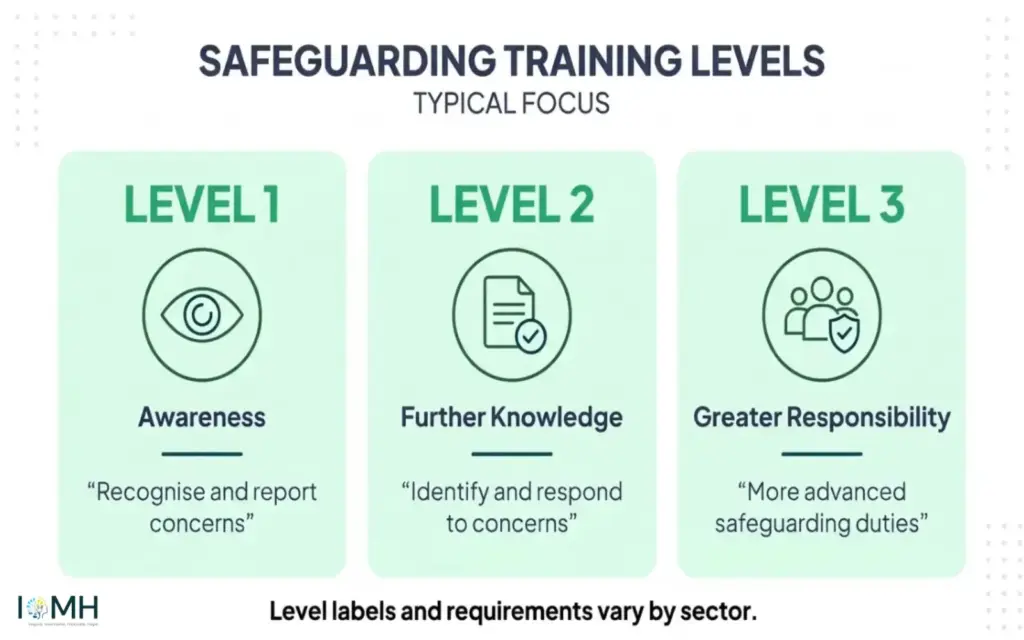
Safeguarding courses are often described using levels, but these labels do not represent one universal statutory training system across every UK workplace.
Providers commonly use them to distinguish different learning needs:
- Level 1: Often introduces safeguarding awareness, recognising concerns and basic reporting procedures.
- Level 2: Commonly provides more detailed knowledge for staff who may identify and respond to safeguarding concerns.
- Level 3: Often targets professionals with greater safeguarding responsibilities, although the meaning varies between sectors.
Some providers also offer higher-level or specialist courses.
For example, a receptionist who occasionally interacts with vulnerable people may need different training from a frontline support worker. A designated safeguarding lead may require additional specialist learning.
The appropriate choice depends on responsibilities and relevant sector guidance, not simply the level printed on a certificate.
For staff considering Level 2, understanding what Level 2 safeguarding covers can help them assess whether the training matches their responsibilities.
For further information, see safeguarding training levels 1 to 5.
If you are deciding between introductory and more detailed training, our Level 1 vs Level 2 safeguarding guide explores the differences.
How to Choose Safeguarding Training for Employees
Choosing safeguarding training for employees involves more than selecting the cheapest available course. Employers should establish what staff need to know and whether the training supports their responsibilities.
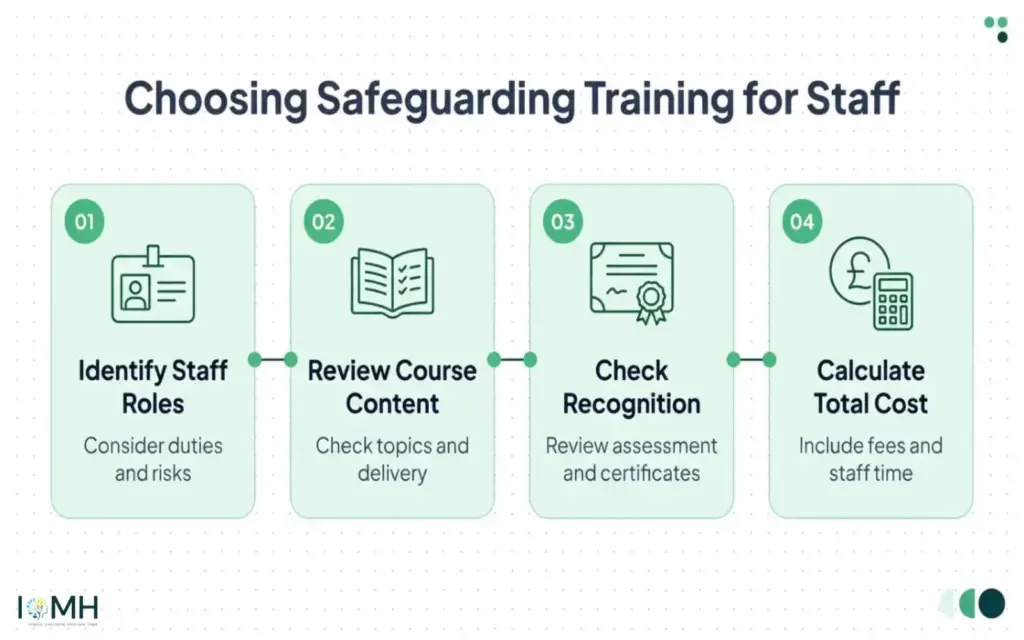
Match Training to Staff Roles
Start by identifying who employees work with and what safeguarding decisions they may need to make.
Consider whether staff:
- Work with children, adults at risk or both.
- Have direct care or supervisory responsibilities.
- Need to recognise, record or report safeguarding concerns.
- Hold designated safeguarding responsibilities.
For example, a care assistant and a safeguarding manager may work within the same organisation but require different levels of knowledge and responsibility.
Check Course Content, Delivery and Assessment
A suitable safeguarding course should cover the topics relevant to the employee’s role. These may include recognising abuse and neglect, responding to disclosures, reporting concerns and recording information accurately.
Online safeguarding training for staff can offer flexible access, particularly when employees work different shifts or locations.
However, employers should check the learning outcomes, assessment methods and whether additional workplace instruction or practical training is needed.
Check Certificates and Recognition
Before purchasing, establish what evidence learners receive after completing the course.
A certificate of completion confirms that specified training requirements have been met. It does not automatically represent a regulated qualification or professional licence.
Similarly, CPD recognition and Quality Licence Scheme (QLS) endorsement should not be confused with Ofqual-regulated qualification status.
Our guide to online safeguarding training with a certificate explains these considerations in greater detail.
For employees seeking flexible introductory and further safeguarding knowledge, the IOMH Online Safeguarding Course is one option to review. Employers should check its syllabus and certificate arrangements against their training requirements before enrolling staff.
How Much Does Safeguarding Training for Staff Cost?
Safeguarding training costs vary depending on the provider, course content, delivery method and number of employees being trained.
Online courses may offer a convenient option for organisations managing different shifts or locations. However, employers should calculate the total cost rather than relying on the advertised course price.
For example, training 10 employees at £25 each would cost £250 before any applicable VAT or additional fees.
When budgeting, check:
- Course fees per employee.
- VAT and certificate charges.
- Available group discounts.
- Staff time needed to complete training.
- Costs of future refresher or specialist training.
IOMH currently advertises its Online Safeguarding Course at £25 excluding VAT, although prices and promotions may change. Certificate options carry separate charges.
For a fuller breakdown, read how much safeguarding training costs.
How Often Should Staff Complete Safeguarding Training?
There is no single refresher interval that applies to every safeguarding course and workplace in the UK.
Employees should receive appropriate training during induction and further learning or updates as required by their roles and applicable guidance.
In English schools and colleges, safeguarding information for all school and college staff forms part of the current Department for Education guidance.
Employers should also review training needs when staff responsibilities change, safeguarding procedures are updated or new risks emerge.
Keeping accurate training records helps managers identify who has completed training, when updates may be needed and whether further development is appropriate.
Online Safeguarding Training for Staff at IOMH
The IOMH Online Safeguarding Course provides flexible learning for people seeking to develop or refresh their safeguarding knowledge.

The course covers safeguarding principles, recognising concerns, relevant legislation, documentation and embedding safeguarding procedures in workplace practice. It includes an assessment and offers 12 months of course access.
The programme is QLS-endorsed at Level 2 and is non-regulated. It does not award an Ofqual-regulated qualification.
After meeting the assessment requirements, learners can purchase a CPD-accredited PDF certificate for £8.99 or a printed certificate for £15.99. A separate QLS-endorsed certificate is available for £79, with additional international postage charges where applicable.
Employers should review the syllabus, certificate options and workplace training requirements before purchasing.
Choosing the Right Safeguarding Training for Your Staff
Effective safeguarding training starts with understanding what employees need to know and how those responsibilities fit their workplace.
Before choosing a course, check the relevant requirements, learning outcomes, assessment methods, certificates and total costs. Remember that completing an online course supports staff development but does not replace safeguarding policies, supervision or organisational responsibilities.
For employers and individuals considering flexible online learning, IOMH’s safeguarding training offers an option worth reviewing alongside the requirements of the relevant role.
The right choice is training that helps staff recognise concerns, understand their responsibilities and respond appropriately when safeguarding matters arise.
FAQs
Basic safeguarding training introduces employees to recognising abuse, neglect and other concerns, understanding their responsibilities and following reporting procedures. It is generally intended to develop awareness rather than qualify someone for a specialist safeguarding role.
Yes. Online safeguarding training can be suitable when the content, assessment and delivery meet the employee’s responsibilities and workplace requirements. Some positions may also require practical instruction, supervision or specialist training.
No. There is no universal requirement for every UK employee to complete a course labelled Level 2. Training needs depend on the role, workplace and applicable guidance. Employers should check staff responsibilities before selecting a course.
Not every safeguarding certificate has a fixed expiry date. Providers may specify validity periods, while employers or sector guidance may set refresher expectations. Check both before deciding when additional training is needed.
Staff should follow their organisation’s safeguarding procedures, report concerns promptly to the appropriate safeguarding lead or authority, and record relevant information accurately. If someone is in immediate danger, contact emergency services.
Under Keeping Children Safe in Education 2026, all staff in relevant schools and colleges in England must read Part One of the guidance in full. The previous shorter Annex A version has been removed, and the overview is now supplementary rather than a replacement for Part One.

- All Courses
 Personal Development (1283)
 Career Bundle (479)
 Management & Administration (460)
 Employability (439)
 Health & Social Care (416)
 Health and Safety (383)
 Business (320)
 Teaching & Education (268)
 IT & Software (263)
 Health and Fitness (238)
 QLS Endorsed Courses (219)
 Mental Health & Counselling (169)
 Science & Technology (153)
 Accounting & Finance (144)
 Sales & Marketing (128)
 Construction & Engineering (126)
 Art & Design (125)
 Compliance & Law (112)
 Language (86)
 Photography & Lifestyle (58)
 Animal Care (57)
 Food Safety & Hygine (53)
 Diet & Nutrition (49)
 Sports & Fitness (47)
 Makeup & Beauty (43)
 First Aid (39)
 Agriculture (2)
0 responses on "Safeguarding Training for Staff: Requirements, Levels and Costs"