




Why Disability Awareness Matters in the UK Today
Disability awareness is about understanding, respecting, and actively supporting people who live with physical, sensory, learning, or mental health conditions. In the UK, this is no longer just a “nice to have” topic—it is a legal, social, and cultural expectation shaped by the Equality Act 2010 and growing awareness of inclusion across schools, workplaces, and public services.
At its core, disability awareness is about recognising barriers—both visible and invisible—that prevent equal participation. These barriers might be physical (like inaccessible buildings), communication-based (like lack of alternative formats), or attitudinal (such as unconscious bias or stereotypes). True inclusion begins when these barriers are acknowledged and addressed.
Across the UK, demand for disability awareness training has grown rapidly, especially in workplaces and education settings. Employers are increasingly expected to create environments that support disability inclusion in the workplace, while schools are embedding disability awareness for schools into PSHE and SEND frameworks to build empathy from an early age.
In this blog, you’ll explore 30 practical disability awareness activities designed to move beyond theory and into real-world inclusion. These ideas are relevant for UK workplaces, schools, and community groups looking to build a more inclusive society where everyone can participate equally.
30 Disability Awareness Activities That Build Real Inclusion
This section moves from theory into practice. These disability awareness activities are designed to help schools, workplaces, and communities across the UK go beyond surface-level understanding and build real, lasting disability inclusion. They are grouped into three areas: workplace, education, and community settings.



Workplace-Based Activities
- Inclusive Communication Workshop
Train teams to communicate clearly using plain English, avoiding jargon, and adapting messages for different needs. Include guidance on alternative formats like captions, large print, or audio to ensure information is accessible to everyone. - Accessibility Walkthrough Audit
Employees assess the physical and digital workplace environment by walking through it from a user perspective. They identify barriers such as stairs, poor signage, lighting issues, or inaccessible systems, then suggest practical improvements for better accessibility.
03.Disability Scenario Role-Play
Staff participate in realistic workplace scenarios to better understand challenges faced by disabled colleagues. This activity builds empathy, improves problem-solving skills, and encourages employees to think more inclusively when responding to everyday situations.
- “Barrier Hunt” Exercise
Teams review internal processes such as hiring, meetings, or onboarding to identify hidden accessibility barriers. This exercise helps uncover issues that are often overlooked and encourages proactive thinking to make systems more inclusive for everyone. - Guest Speaker Sessions
Invite disabled professionals to share their personal experiences, challenges, and successes in the workplace. Hearing real stories increases awareness, challenges stereotypes, and helps employees understand disability from a lived-experience perspective.
06.Assistive Technology Demonstration
Introduce employees to tools like screen readers, speech-to-text software, or hearing loops. Demonstrations show how these technologies support accessibility, helping staff understand practical ways to remove barriers and support colleagues effectively.
07.Inclusive Recruitment Simulation
Review and redesign job descriptions, application processes, and interviews to remove bias and improve accessibility. This activity highlights common recruitment barriers and helps organisations create fairer hiring practices for disabled candidates.
08.Mental Health Awareness Integration Session
Combine disability awareness with mental health education to address invisible disabilities. This session promotes understanding, reduces stigma, and encourages supportive behaviours that help create a more open and inclusive workplace culture.
09.Workplace Inclusion Pledge
Teams collaborate to create a shared commitment outlining actions they will take to improve inclusion. This builds accountability, encourages ownership, and reinforces the importance of ongoing efforts to support disabled colleagues.
10.Accessibility Feedback System
Establish anonymous channels where employees can report accessibility issues or suggest improvements. This ensures continuous feedback, helps organisations respond quickly to concerns, and empowers staff to contribute to a more inclusive environment.
School & Youth Activities
11.Empathy Simulation Exercises
Students take part in guided activities that simulate communication or mobility challenges in a safe, respectful way. This helps them better understand daily barriers, build empathy, and reflect on how inclusive environments can support everyone more effectively.
12.SEND Awareness Lessons
Teach students about special educational needs and disabilities using age-appropriate materials and discussions. These lessons promote understanding, reduce stigma, and help young people recognise differences as a normal part of learning and development.
13.Inclusive Sports Day
Organise sports activities that are adapted so all students, regardless of ability, can participate. This encourages teamwork, boosts confidence, and demonstrates that physical activity can be inclusive, enjoyable, and accessible to everyone.
14.Disability Storytelling Sessions
Share stories, books, or videos featuring disabled individuals and their experiences. Storytelling helps students connect emotionally, challenges stereotypes, and builds a deeper understanding of disability as part of everyday life.
15.Peer Buddy System
Pair students together to encourage friendship, support, and inclusion in daily school activities. This system promotes cooperation, reduces isolation, and helps create a more welcoming and supportive environment for all learners.
16.Accessibility Mapping Project
Students explore their school environment to identify physical or communication barriers. They create maps and suggest improvements, encouraging problem-solving skills while helping them understand the importance of accessible spaces.
17.Role-Play Communication Barriers
Students practice interacting using non-verbal communication methods such as gestures, symbols, or assistive tools. This activity builds awareness of communication differences and encourages patience, creativity, and inclusive interaction skills.
18.Art for Inclusion Projects
Encourage students to express ideas about disability, inclusion, and equality through art, posters, or creative projects. This allows personal reflection while promoting awareness and celebrating diversity in a meaningful and engaging way.
19.School Assembly on Disability Awareness Day
Hold a whole-school assembly focused on disability awareness, inclusion, and diversity. Activities may include presentations, performances, or guest speakers, helping reinforce shared values and promote a culture of respect across the school.
20.Reflection Circles
Facilitate group discussions where students share thoughts and experiences about inclusion in school life. These conversations encourage empathy, active listening, and help students understand how their actions can positively impact others.
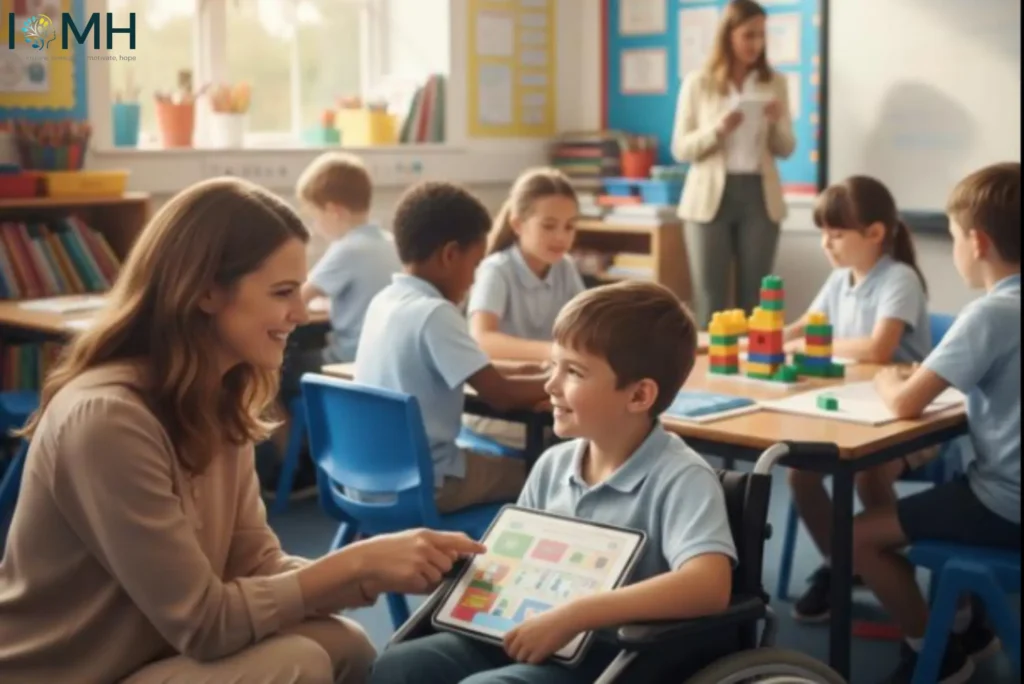

Community & Public Engagement Activities
21.Local Disability Awareness Campaign
Create posters, short videos, or social media content that promotes disability inclusion within the community. This activity raises awareness, challenges stereotypes, and encourages people to think more positively about accessibility and equal participation.
22.Public Space Accessibility Audit
Assess local spaces like parks, libraries, and transport systems to identify accessibility barriers. Participants observe real environments, suggest improvements, and understand how inclusive design can make public spaces usable for everyone.
23.Community Inclusion Panel Discussions
Organise discussions where disabled and non-disabled individuals share experiences and perspectives. These conversations encourage open dialogue, challenge assumptions, and help communities better understand the importance of inclusion in everyday life.
24.Volunteer Inclusion Programmes
Encourage people to volunteer with organisations that support disabled individuals. This provides hands-on experience, builds empathy, and helps participants understand real challenges while contributing positively to inclusive community initiatives.
25.Transport Accessibility Challenge
Participants explore local transport systems to identify barriers faced by disabled people. This real-world activity highlights issues such as limited access, poor signage, or lack of support, encouraging practical thinking around inclusive travel solutions.
26.Theatre or Role-Play Awareness Events
Use drama or role-play performances to highlight disability-related challenges and possible solutions. These engaging activities make learning interactive, helping audiences connect emotionally while better understanding inclusion in everyday situations.
27.Social Media Awareness Campaign
Run online campaigns using platforms to share stories, facts, and inclusive messages about disability. This helps reach wider audiences, spreads awareness quickly, and encourages positive conversations around accessibility and equality.
28.Collaboration with Disability Organisations
Partner with local charities or disability organisations to deliver workshops or events. This ensures learning is based on real experiences and provides meaningful opportunities to engage directly with inclusive practices.
29.Invisible Disability Education Workshop
Focus on disabilities that are not immediately visible, such as learning difficulties or mental health conditions. This helps reduce misunderstandings, promotes empathy, and encourages more supportive behaviour in community settings.
30.Community Inclusion Action Day
Host a dedicated day where community members and organisations take practical steps to improve accessibility. Activities may include audits, workshops, or pledges, creating real and lasting impact toward a more inclusive environment.
These 30 activities are most effective when they are not treated as one-off events. Real inclusion comes from repetition, reflection, and long-term cultural change—not just awareness sessions.

From Awareness to Action: Building Long-Term Disability Inclusion
Moving from disability awareness to real inclusion requires more than occasional workshops or annual campaigns. While events like Disability Awareness Week, Disability Awareness Month, and Disability Awareness Day help raise visibility, lasting change only happens when inclusion becomes part of everyday systems, behaviours, and decision-making.
One of the most important shifts is recognising that awareness is only the starting point. Many organisations in the UK now understand that disability awareness training should lead directly to practical action—such as improving accessibility, adjusting policies, and redesigning environments to remove barriers.
In workplaces, this means embedding disability inclusion in the workplace into core operations. It includes accessible recruitment, flexible working arrangements, and ongoing support for employees with both visible and invisible disabilities. It also involves leadership accountability, ensuring inclusion is not optional but expected.
In education, long-term inclusion is achieved by fully integrating SEND (Special Educational Needs and Disabilities) strategies into teaching practice, school culture, and student engagement. Disability awareness for schools should not be a one-off lesson but a continuous thread running through curriculum, behaviour policies, and student life.
Communities also play a vital role. Building inclusive societies involves improving public spaces, transport accessibility, and community participation. Initiatives like community inclusion for persons with disabilities ensure that disabled people are not just accommodated but actively included in social, cultural, and civic life.
Sustained progress also depends on education and professional development. Ongoing disability awareness training UK programmes help reinforce learning and adapt to new challenges, including growing recognition of mental health and disability and neurodiversity in society.
Importantly, inclusion must be measured, not assumed. Organisations should regularly review accessibility, gather feedback from disabled individuals, and update practices based on lived experience. This ensures that inclusion efforts remain relevant and effective.
Careers in this field—such as learning disability nurse jobs, learning disability nurse roles, and disability assessor positions—also highlight the importance of professional expertise in supporting inclusive systems across healthcare and social services.
Ultimately, true inclusion is not a destination but an ongoing commitment. It requires consistent effort, honest reflection, and a willingness to change. When disability awareness is turned into action, it creates environments where everyone—regardless of ability—can participate fully, equally, and with dignity.

Conclusion: Making Disability Inclusion a Daily Practice
Building real disability awareness is not about completing a single course or running a one-off event—it is about creating habits, systems, and cultures where inclusion is consistent and intentional.
Across workplaces, schools, and communities in the UK, the shift from awareness to action is what truly matters. Disability awareness training, disability awareness campaigns, and events like Disability Awareness Week or Disability Awareness Month are useful starting points, but they only create impact when followed by everyday change.
The 30 activities outlined in this guide show that inclusion can be practical and achievable. Whether it is improving communication in the workplace, embedding SEND strategies in schools, or running community accessibility audits, each action contributes to stronger disability inclusion.

- All Courses
 Personal Development (1283)
 Career Bundle (479)
 Management & Administration (460)
 Employability (439)
 Health & Social Care (411)
 Health and Safety (382)
 Business (320)
 Teaching & Education (268)
 IT & Software (263)
 Health and Fitness (238)
 QLS Endorsed Courses (219)
 Mental Health & Counselling (168)
 Science & Technology (153)
 Accounting & Finance (144)
 Sales & Marketing (128)
 Construction & Engineering (126)
 Art & Design (125)
 Compliance & Law (112)
 Language (86)
 Photography & Lifestyle (58)
 Animal Care (57)
 Food Safety & Hygine (53)
 Diet & Nutrition (49)
 Sports & Fitness (47)
 Makeup & Beauty (43)
 First Aid (39)
 Agriculture (2)
0 responses on "30 Powerful Disability Awareness Activities to Build Real Inclusion in the UK"