




Every day, healthcare organisations collect large amounts of patient information. Hospitals, clinics, and medical staff need a proper system to organise and manage these records accurately. This is where clinical coding plays an important role.
Clinical coding helps turn medical information into standardised codes that can be used across healthcare systems. It supports patient care, hospital management, healthcare planning, and NHS funding.
In this guide, you will learn what clinical coding is, how clinical coding jobs work in the NHS, why it is important in Health and Social Care, and how you can begin a career in the UK.



What Is Clinical Coding?
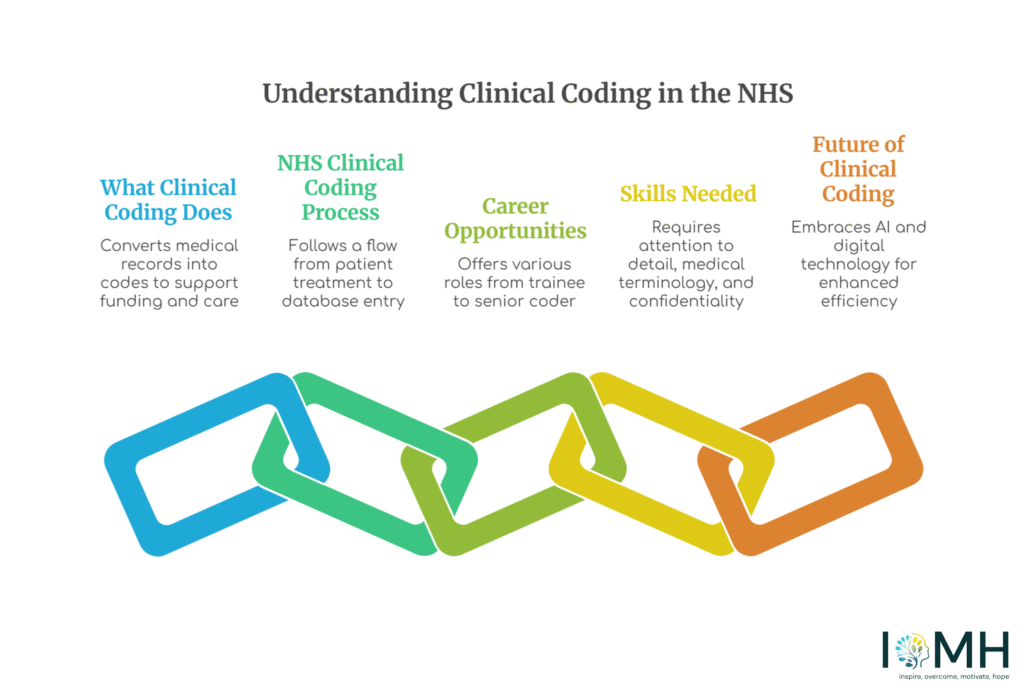
Clinical coding is the process of converting medical information into standardised codes used within healthcare systems. These codes are created from patient records, doctor notes, test results, diagnoses, and treatment details. Clinical coders carefully review medical documents and assign accurate codes for diseases, injuries, operations, treatments, and other medical procedures.
The main purpose of clinical coding is to help healthcare organisations store and manage patient information correctly. It also supports healthcare planning, medical research, hospital funding, and patient care.
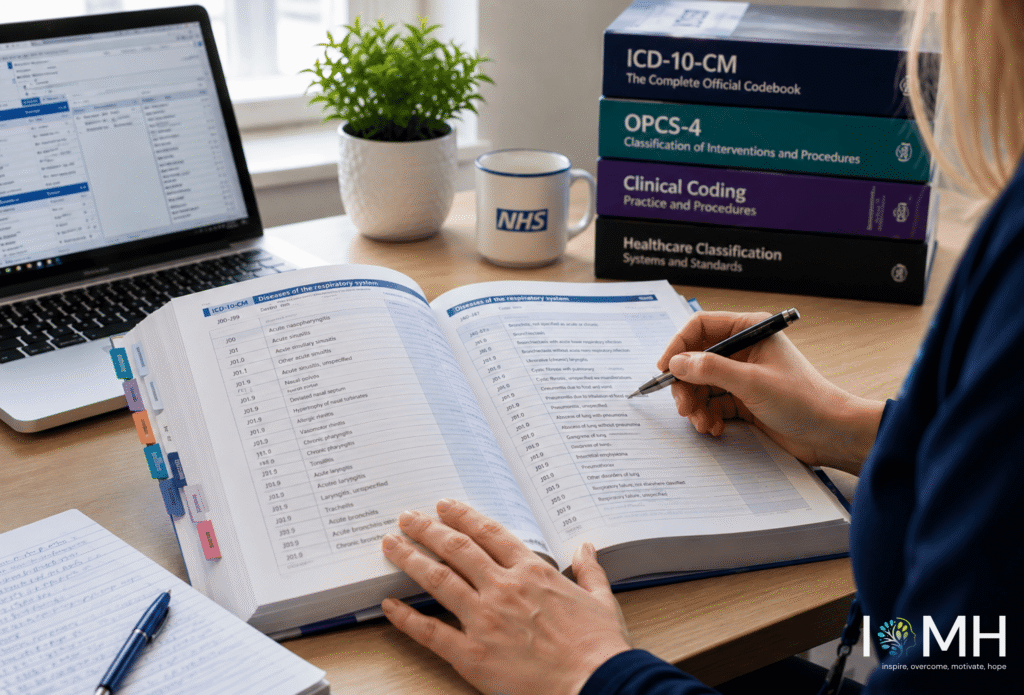
In the UK, the NHS mainly uses two coding systems: ICD-10 for illnesses and diseases, and OPCS-4 for operations and procedures. Accurate This is very important because it helps hospitals and healthcare professionals maintain reliable records and improve the quality of healthcare services provided to patients across the country.
What Does Clinical Coding Mean in Healthcare?
In healthcare, clinical coding is used to translate complex medical information into simple, standardised codes that computers and healthcare systems can easily understand and process. This helps make patient records clearer, more organised, and easier to use across hospitals and clinics.
For example, a patient diagnosed with a condition like asthma will be given a specific clinical code that represents that illness. In the same way, if a patient undergoes an operation or surgical procedure, a separate code is assigned to record the treatment accurately.
Clinical coding helps healthcare providers manage information more effectively by supporting several key areas
- Storing patient information: Keeps medical records organised and easy to access
- Tracking treatments: Records what care or procedures a patient has received
- Analysing healthcare trends: Helps identify patterns in diseases and treatments
- Sharing information safely: Ensures consistent and secure communication between systems
It is important to note that clinical coding is not the same as medical billing. In some countries, coding is mainly used for insurance and payment claims. However, within the NHS, It is primarily used for maintaining healthcare records, supporting planning, and helping with funding decisions.
How Clinical Coding Works in the NHS
The NHS depends greatly on accurate clinical coding to keep patient information organised and reliable. Once a patient is discharged from hospital, trained clinical coders review all the medical documentation related to their stay. This helps ensure that every diagnosis and treatment is recorded correctly.
They carefully go through important sources such as:
- Discharge summaries: A full overview of the patient’s hospital stay
- Operation notes: Details of any surgical procedures carried out
- Test results: Laboratory and diagnostic findings
- Doctors’ reports: Clinical notes and medical observations
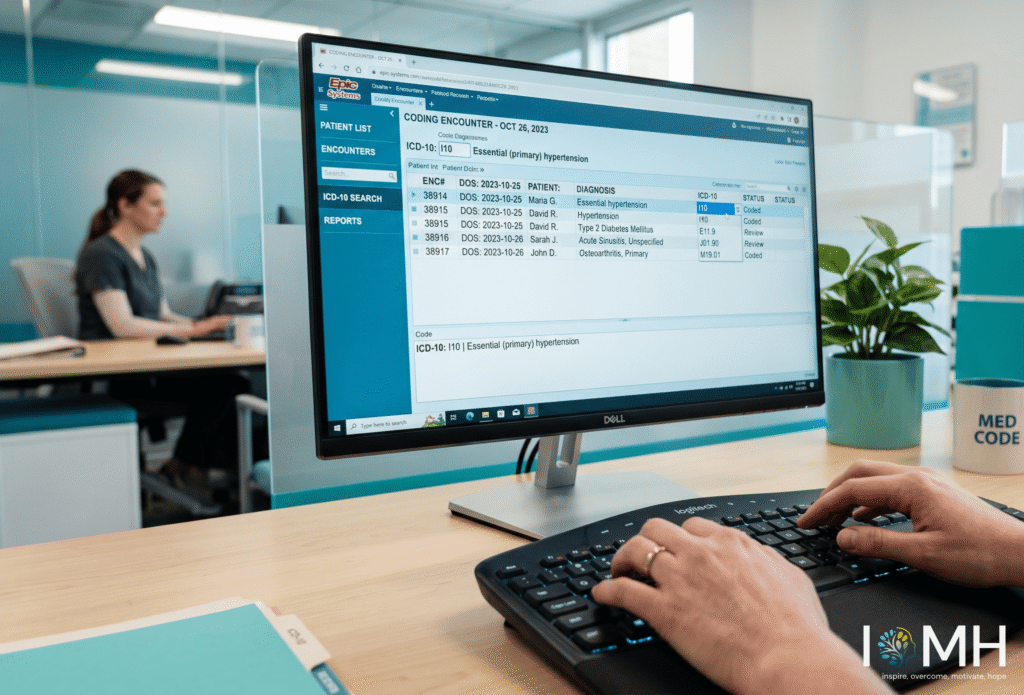
After reviewing these records, the coder assigns the correct clinical codes using official NHS coding standards such as ICD-10 and OPCS-4.
These coded records are very important because they help the NHS to:
- Understand patient conditions and healthcare needs
- Monitor hospital activity and treatment patterns
- Plan future healthcare services more effectively
- Allocate hospital funding accurately
If errors occur in coding, it can lead to incorrect data or funding issues for hospitals. That is why clinical coding in the NHS requires strong attention to detail, accuracy, and consistency.
Why Clinical Coding Is Important in Health and Social Care
Clinical coding plays a very important role in Health and Social Care. Without it, healthcare systems would find it difficult to organise patient information in a clear and structured way. It ensures that medical records are accurate, consistent, and easy to use across different healthcare services.
Here are the main benefits of clinical coding:
Better Patient Care
Accurate clinical coding helps healthcare professionals quickly understand a patient’s medical history. This supports better diagnosis, treatment decisions, and overall patient care.
Improved NHS Funding
Hospitals in the NHS receive funding based on coded patient data. When coding is done correctly, it ensures hospitals get fair and appropriate financial support for the services they provide.
Healthcare Research
Clinical codes are widely used in medical research. Researchers analyse coded data to study diseases, track treatments, and understand public health trends.
Planning Healthcare Services
The NHS uses clinical coding data to identify which services are most needed in different areas. This helps in planning resources and improving healthcare delivery.
Legal and Safety Purposes
Accurate clinical records are also important for legal compliance and patient safety. They ensure that healthcare organisations meet required standards and maintain reliable documentation.

Skills Needed for Clinical Coding Jobs
Clinical coding jobs need a combination of healthcare understanding, accuracy, and strong organisational abilities. Clinical coders must work carefully because their role directly affects patient records, NHS data, and hospital reporting.
Below are the key skills required:
Attention to Detail
Clinical coders must be extremely careful when reviewing medical records. Even a small error can lead to incorrect patient information, which may affect treatment records or hospital funding.
Knowledge of Medical Terms
A good understanding of medical language is essential. Clinical coders need to know terms related to diseases, injuries, treatments, anatomy, and medical procedures to assign the correct codes.
Analytical Thinking
Coders must be able to read complex medical documents and analyse the information correctly. This helps them choose the most accurate clinical code for each case.
Computer Skills
Most clinical coding work is carried out using digital systems. Basic computer skills and familiarity with healthcare software are important for daily tasks.
Communication Skills
Clinical coders may need to communicate with doctors, nurses, or other healthcare staff to clarify unclear or missing information in patient notes.
Confidentiality
Patient data is highly sensitive. Clinical coders must always follow strict confidentiality rules and ensure that all medical records are kept secure and used only for official purposes.
Clinical Coding Jobs and Career Opportunities in the UK
The NHS often advertises clinical coding positions because there is a continuous demand for skilled and accurate coders. As healthcare becomes more data-driven, the need for trained professionals in this field is growing.

Common Clinical Coding Job Roles
There are several career levels in clinical coding, depending on experience and qualifications:
- Trainee Clinical Coder – Entry-level role with training provided
- Clinical Coding Officer – Responsible for coding patient records independently
- Clinical Coding Auditor – Reviews coding accuracy and ensures standards are met
- Senior Clinical Coder – Handles more complex cases and supports junior staff
- Clinical Coding Manager – Leads coding teams and oversees departmental performance
Where Clinical Coding Jobs Are Available
Clinical coding roles can be found in a variety of healthcare settings, including:
- NHS hospitals and trusts
- Private healthcare organisations
- Specialist healthcare and medical data companies
Working Arrangements
Many clinical coding jobs in the UK now offer flexible working options. Depending on the employer, roles may include:
- On-site hospital-based work
- Remote working from home
- Hybrid roles combining both office and home work
This flexibility makes clinical coding an attractive career option for many people looking to enter the healthcare sector.

Average Salaries in the UK
Clinical coding salaries in the UK vary depending on experience, skills, qualifications, and location. As coders gain more experience and move into senior roles, their earning potential increases significantly.
| Job Role | Average Salary |
|---|---|
| Trainee Clinical Coder | £22,000 – £28,000 |
| Clinical Coding Officer | £28,000 – £38,000 |
| Senior Clinical Coder | £40,000+ |
Salaries may differ across NHS trusts and private healthcare organisations. Larger cities or specialist hospitals may offer higher pay, especially for experienced clinical coders or those with professional qualifications such as NCCQ.
How to Become a Clinical Coder in the UK
Many people start a career in clinical coding without any previous healthcare experience. However, having a basic understanding of medical terminology can be very helpful when getting started.
Here are the main steps to become a clinical coder in the UK:
Step 1: Gain Basic Qualifications
Most employers expect at least GCSEs or equivalent qualifications, especially in subjects like English and Maths. Good reading and writing skills are important for understanding medical records.
Step 2: Apply for Entry-Level Roles
Many NHS organisations offer trainee clinical coding positions. These roles are designed for beginners and provide full training on the job.
Step 3: Complete Clinical Coding Training
Once you start working, you will receive structured training. You may also choose to study a clinical coding course in the UK to build your knowledge and confidence.
Step 4: Develop Your Knowledge
During training, you will learn key areas such as:
- ICD-10 coding (for diseases and conditions)
- OPCS-4 coding (for procedures and operations)
- Medical terminology
- NHS coding standards and guidelines
Step 5: Gain Professional Certification
Many clinical coders work towards recognised qualifications such as the NCCQ (National Clinical Coding Qualification). This certification helps improve career prospects and may lead to senior roles within the NHS or private healthcare sector.
What Is NCCQ Clinical Coding?
NCCQ stands for the National Clinical Coding Qualification. It is a well-recognised qualification in the UK healthcare system and is designed to test the skills and knowledge of clinical coders.
This qualification is highly respected within the NHS and shows that a clinical coder has a strong understanding of medical terminology, coding systems, and NHS coding standards.
To achieve NCCQ, candidates must pass a formal exam that assesses their ability to accurately code real medical cases.
Benefits of Passing NCCQ
Gaining the NCCQ qualification can help improve your career in several ways:
- Better job opportunities: It makes you a more competitive candidate for clinical coding roles
- Higher salary potential: Qualified coders may earn more than entry-level staff
- Career progression: It can support promotion into senior or specialist coding positions
Many NHS trusts and healthcare organisations value the NCCQ highly, as it demonstrates a strong level of professional competence in clinical coding.
Best Clinical Coding Courses in the UK
There are many clinical coding courses available in the UK, offered by NHS trusts, colleges, and online training providers. These courses help learners gain the knowledge needed to start or progress in their career.
A good clinical coding course usually includes key areas such as:
- Medical terminology to understand healthcare language
- ICD-10 coding for diseases and conditions
- Clear preparation for NCCQ clinical coding exams
- NHS coding rules and standards
- Practical coding exercises using real case examples
What to Look for in a Course
When choosing a clinical coding course in the UK, it is important to select one that supports your career goals. Look for:
- UK-recognised and trusted training providers
- Experienced tutors with NHS or coding background
- Flexible learning options (online or part-time study)
- Clear preparation for NCCQ clinical coding exams
Online clinical coding courses are especially useful for learners who want to study from home while working or managing other commitments. They provide flexibility while still building strong foundational skills needed for NHS and healthcare coding roles.
Common Challenges in Clinical Coding
Although clinical coding is a rewarding career, it also comes with several challenges that coders need to manage in their daily work.
One of the main difficulties is complex medical language. Doctors and healthcare professionals often use detailed and technical terms, which can take time and experience to fully understand and code correctly.
Another challenge is changing coding rules. NHS guidelines and coding systems such as ICD-10 and OPCS-4 are regularly updated, so coders must stay up to date with the latest changes.
Clinical coders also work under time pressure, as hospitals often need patient records coded quickly after discharge to support reporting and planning.
In addition, there are very high accuracy requirements, meaning even small mistakes must be avoided to ensure reliable healthcare data.
Key challenges include:
Choose Healthcare Assistant if:
- Complex medical terminology
- Frequent updates to coding systems
- Tight deadlines and workload pressure
- High need for accuracy and consistency
Despite these challenges, many people still choose clinical coding because it offers stable career opportunities, good progression, and meaningful work within the healthcare sector.
The Future of Clinical Coding in Healthcare
Clinical coding is expected to continue growing as healthcare systems become more digital and advanced. With the rise of technology in hospitals and clinics, the way patient information is recorded and processed is also changing.
In the future, we may see:
- More electronic health records (EHRs): Patient information will be stored digitally, making it easier to access and update
- Greater use of artificial intelligence: AI may help speed up parts of the coding process, improving efficiency
- Faster healthcare data analysis: Large amounts of health data will be processed more quickly for research and planning
- Increased demand for skilled clinical coders: Despite automation, trained professionals will still be needed
Even with these technological improvements, human clinical coders will remain essential. Medical records can be complex, and human judgment is needed to ensure accuracy and correct interpretation.
The NHS and wider healthcare sector are expected to continue relying on qualified professionals for many years, making it a stable and future-focused career path in Health and Social Care.
Final Thoughts
Clinical coding plays a very important role in the healthcare system. It helps hospitals and healthcare services organise patient records, improve the quality of care, and support accurate NHS funding decisions.
As healthcare continues to develop and become more digital, the need for skilled clinical coders in the UK is also increasing. This makes it a strong and stable career choice for the future.
Whether you are interested in healthcare administration, data handling, or working within the NHS, clinical coding offers a rewarding career path. It provides long-term job security, opportunities for progression, and the chance to contribute to an important part of Health and Social Care.

- All Courses
 Personal Development (1283)
 Career Bundle (479)
 Management & Administration (460)
 Employability (439)
 Health & Social Care (411)
 Health and Safety (382)
 Business (320)
 Teaching & Education (268)
 IT & Software (263)
 Health and Fitness (238)
 QLS Endorsed Courses (219)
 Mental Health & Counselling (168)
 Science & Technology (153)
 Accounting & Finance (144)
 Sales & Marketing (128)
 Construction & Engineering (126)
 Art & Design (125)
 Compliance & Law (112)
 Language (86)
 Photography & Lifestyle (58)
 Animal Care (57)
 Food Safety & Hygine (53)
 Diet & Nutrition (49)
 Sports & Fitness (47)
 Makeup & Beauty (43)
 First Aid (39)
 Agriculture (2)
0 responses on "What Is Clinical Coding? Understanding the Basics and Importance in Healthcare"