




Introduction
A care coordinator plays a key role in the UK healthcare system. They help organise and manage patient care so that everything runs smoothly between different services. This includes doctors, nurses, social workers, hospitals, GP surgeries, and community care teams.
In simple terms, a care coordinator makes sure that patients get the right care at the right time. They act as a link between all the professionals involved in a patient’s treatment and support journey.
Care coordination is very important because many patients today have complex health needs. They may need support from more than one service at the same time. Without proper coordination, care can become confusing or delayed.
This blog explains the care coordinator job role, responsibilities, salary, interview questions, and the essential attributes needed to succeed in this career.
Moreover, this course is designed to guide learners step by step. In addition, the lessons are organised in a logical flow, ensuring that each concept builds smoothly on the previous one. Consequently, learners gain confidence as they progress. Furthermore, the content connects theory with practical examples, making the learning experience more engaging. Similarly, complex topics are simplified so that beginners can understand them easily. As a result, learners can apply the knowledge in real situations. On the other hand, those with prior experience can refine their existing skills. Therefore, the course supports continuous improvement for all learners. Ultimately, it provides a structured pathway that helps students achieve their learning goals effectively.online communication skills



Care Coordinator Job Description and Main Duties
A care coordinator is responsible for making sure that a patient’s care is well organised and joined up. They act as a link between patients, families, and healthcare professionals.
Their main job is to support smooth care delivery and reduce gaps in treatment. This helps improve patient safety and overall wellbeing.
Key duties of a care coordinator include:
- Creating and updating care plans for patients
- Communicating with doctors, nurses, and other healthcare staff
- Organising appointments and follow-up visits
- Helping patients understand their treatment plans
- Supporting families and carers with information and guidance
- Keeping accurate patient records
- Monitoring patient progress and reporting changes
These tasks are a key part of patient care coordination. A care coordinator makes sure that everyone involved in a patient’s care is informed and working together.
In many care coordinator job roles, strong communication is very important. They must speak clearly with patients and professionals to avoid mistakes or confusion.
The care coordinator job description can vary depending on where they work, but the main goal is always the same: to improve the quality and safety of care.
Types of Care Coordination Roles in the UK
There are different types of care coordination roles depending on the healthcare setting. Each role focuses on supporting patients in different ways.
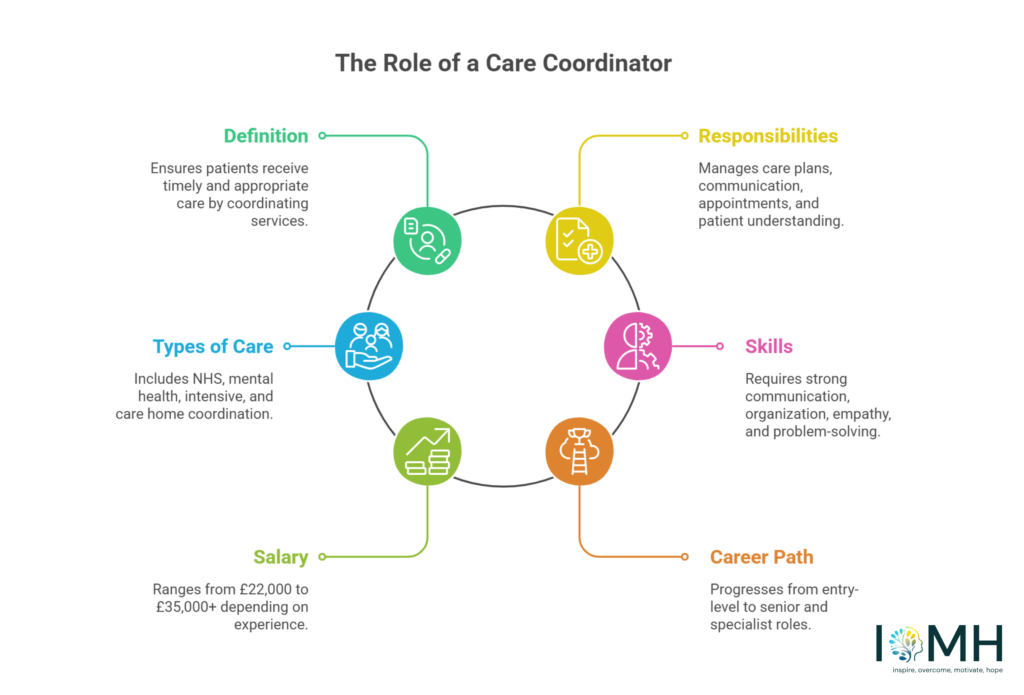
1. NHS Care Coordinator Roles
The NHS care coordinator is one of the most common positions. These workers support patients within GP surgeries, hospitals, and community health services.
They help manage long-term conditions, ensure patients attend appointments, and support communication between different NHS departments.
2. Mental Health Care Coordination
Care coordination in mental health is very important. Patients often need support from different services such as psychiatrists, therapists, and social workers.
A care coordinator helps to make sure mental health patients receive consistent care and do not fall through gaps in the system.
3. Intensive Care Coordination
Intensive care coordination is used for patients with complex health needs. These patients may require frequent hospital visits, home care, and specialist support.
What is intensive care coordination? It is a more detailed level of care management where coordinators closely monitor patient progress and ensure all services are working together effectively.
4. Care Home Activity Coordinator Roles
Care homes also employ activity coordinators who focus on residents’ wellbeing and daily engagement.
A care home activity coordinator plans activities such as games, exercise sessions, arts and crafts, and social events. These activities improve mental health, reduce loneliness, and encourage social interaction.
Care home activity coordinator ideas often include:
- Group games and quizzes
- Music and singing sessions
- Gentle exercise classes
- Gardening activities
- Outings and day trips
These roles are very important in improving the quality of life for elderly residents.
Care Coordinator Salary in the UK
The care coordinator salary in the UK can vary depending on experience, location, and employer. On average, care coordinators earn a fair salary within the healthcare sector.
Typical salary range:
- Entry-level care coordinator: £22,000 – £26,000 per year
- Experienced care coordinator: £26,000 – £35,000 per year
- Senior care coordinator roles: £35,000+ per year
In the NHS, salaries are often based on the Agenda for Change pay system. This means pay increases with experience and responsibility.
Private healthcare and care home roles may offer slightly different pay depending on the organisation.
The salary of a care coordinator can also increase if they move into specialist roles such as mental health coordination or senior management positions.
Overall, the care coordinator salary is competitive and offers good long-term career growth in the UK healthcare system.

Skills and Career Path for Care Coordinators
To become a successful care coordinator, certain skills and qualities are very important. These skills help ensure patients receive safe and effective care.
Key skills include:
- Strong communication skills
- Good organisation and time management
- Ability to work under pressure
- Empathy and patience
- Attention to detail
- Problem-solving skills
These skills help care coordinators manage complex situations and support both patients and healthcare teams.
Career path and how to become a care coordinator:
- Healthcare assistant
- Support worker
- Administrative healthcare roles
With experience, they can move into care coordinator positions.
Some roles may require training or qualifications in health and social care. The NHS also offers career development opportunities for those interested in care coordination.
There are many care coordinator jobs near me listed on job websites and NHS careers portals. These include care coordinator positions in hospitals, GP surgeries, and community health services.
Care plan coordinator jobs are also available for those who focus more on managing individual patient care plans.
With experience, care coordinators can progress into senior roles or specialise in areas such as mental health, community care, or service management.
Care Coordinator Interview Questions (What to Expect)
If you are applying for care coordinator jobs or NHS care coordinator roles, it is important to prepare for a variety of common interview questions. These are usually designed to check your understanding of the role, your communication skills, and how you respond to real-life care situations.
Some questions you may be asked include:
- What does a care coordinator do?
- How do you manage multiple patients or cases at the same time?
- How do you communicate with different healthcare professionals and teams?
- How would you support a patient who is distressed or difficult to handle?
- How would you explain care coordination in your own words?
Employers are typically looking for candidates who are organised, calm under pressure, and able to communicate clearly and effectively with others.
It is also a good idea to prepare examples from your previous experience, whether in healthcare, social care, or customer service. Real-life examples that show problem-solving, teamwork, and patient support can strongly improve your performance in an interview.

Essential Attributes for Care Coordination Work
To be successful as a care coordinator, you need more than just technical knowledge. You also need strong personal qualities that help you support patients and work effectively with healthcare teams.
1. Communication Skills
Clear communication is essential in this role. Care coordinators must be able to speak and listen effectively with patients, families, doctors, nurses, and other professionals to ensure everyone understands the care plan.
2. Organisation Skills
Care coordinators often manage several patients at the same time. Strong organisation skills help ensure that appointments, records, and care plans are properly managed and nothing important is missed.
3. Empathy and Compassion
Patients may be going through difficult health or emotional situations. Showing empathy and kindness helps build trust and makes patients feel supported and valued.
4. Ability to Work Under Pressure
Healthcare environments can be fast-paced and stressful. A good care coordinator must stay calm, focused, and professional even in busy or challenging situations.
5. Problem-Solving Ability
Issues can arise in patient care, such as delays, miscommunication, or changes in condition. Care coordinators need to think quickly and find practical solutions.
6. Attention to Detail
Accuracy is very important in healthcare. Care coordinators must carefully manage patient records, care plans, and updates to ensure safe and effective.
7. Teamwork
Care coordination involves working closely with many different professionals. Strong teamwork skills help ensure that all parts of a patient’s care are properly connected.
8. Adaptability
No two days are the same in this role. Care coordinators must be flexible and able to adapt quickly to changing patient needs and situations.
Importance of Care Coordination in Modern Healthcare
Care coordination is a key part of modern healthcare in the UK. It helps improve communication between different healthcare professionals and ensures patients receive the right care at the right time.
Without care coordination, patients may experience delays, missed appointments, or confusion about their treatment plans.
Good care coordination leads to:
- Better patient outcomes
- Improved communication between teams
- Reduced hospital admissions
- More efficient healthcare services
Care coordination teams work together across hospitals, GP surgeries, and community services to ensure everything runs smoothly.
In mental health care coordination, this teamwork is especially important because patients often need long-term and multi-agency support.
Conclusion
The role of a care coordinator is an important and rewarding career in the UK healthcare system. They help connect different services, support patients, and ensure that care is delivered in a safe and organised way.
From NHS care coordinator roles to care home activity coordinator positions, there are many opportunities in this growing field. The job requires strong communication, organisation, and empathy, along with the ability to work under pressure.
With good career progression, stable salary growth, and the chance to make a real difference in people’s lives, care coordination is a valuable and meaningful profession for anyone interested in healthcare.

- All Courses
 Personal Development (1283)
 Career Bundle (479)
 Management & Administration (460)
 Employability (439)
 Health & Social Care (411)
 Health and Safety (382)
 Business (320)
 Teaching & Education (268)
 IT & Software (263)
 Health and Fitness (238)
 QLS Endorsed Courses (219)
 Mental Health & Counselling (168)
 Science & Technology (153)
 Accounting & Finance (144)
 Sales & Marketing (128)
 Construction & Engineering (126)
 Art & Design (125)
 Compliance & Law (112)
 Language (86)
 Photography & Lifestyle (58)
 Animal Care (57)
 Food Safety & Hygine (53)
 Diet & Nutrition (49)
 Sports & Fitness (47)
 Makeup & Beauty (43)
 First Aid (39)
 Agriculture (2)
0 responses on "What is the Role of a Care Coordinator? Key Responsibilities and Essential Attributes Explained"