




Introduction
Health and social care services can be complex. Many people receive support from different professionals at the same time, such as doctors, nurses, social workers, therapists, and care staff. Without proper organisation, this can lead to confusion, delays, and poor outcomes for patients. This is where the Care Coordinator plays a vital role.
A Care Coordinator helps make sure that is well planned, organised, and delivered smoothly. They act as a link between patients, families, and healthcare services, ensuring that everyone involved understands the care plan and works together effectively.
In this blog, we will explain what a care coordinator is, what they do, their responsibilities, skills needed, salary, career path, and job opportunities in the UK, including the NHS. This guide is written in simple language so it is easy to understand, even if you are new to health and social care.
Moreover, this course is designed to guide learners step by step. In addition, the lessons are organised in a logical flow, ensuring that each concept builds smoothly on the previous one. Consequently, learners gain confidence as they progress. Furthermore, the content connects theory with practical examples, making the learning experience more engaging. Similarly, complex topics are simplified so that beginners can understand them easily. As a result, learners can apply the knowledge in real situations. On the other hand, those with prior experience can refine their existing skills. Therefore, the course supports continuous improvement for all learners. Ultimately, it provides a structured pathway that helps students achieve their learning goals effectively.online communication skills



What Is a Care Coordinator?
A Care Coordinator is a professional who organises and manages care for people who need support from more than one service. Their main aim is to make sure care is well coordinated, person-centred, and continuous, so individuals receive the right support without confusion or delay.
Care Coordinators work closely with patients, their families, healthcare professionals, and support services. They help individuals understand their care plans, arrange and attend appointments, and ensure that all services involved work together effectively.
Care coordination is especially important for people who may need ongoing or complex support, including:
- Older adults who require support from multiple health or social care services
- People with long-term health conditions who need regular monitoring and coordinated treatment
- Individuals with mental health needs who may rely on several professionals for support
- People with complex or multiple care needs requiring joined-up services
- Patients moving between services, such as from hospital to home or community care
In simple terms, a Care Coordinator helps keep care organised, clear, and connected, making sure no one feels confused, forgotten, or unsupported throughout their care journey.
What Does a Care Coordinator Do?
Many people ask, “What does a Care Coordinator do?”
The answer is that a Care Coordinator plays a key role in making sure care is organised, clear, and effective. Health and social care often involve many services and professionals, and without proper coordination, care can become confusing or fragmented. The Care Coordinator helps prevent this by keeping everything connected.
Instead of patients having to repeat their story to different professionals, the Care Coordinator acts as a central point of contact. They make sure information is shared correctly, care plans are followed, and support is delivered in a timely and organised way. This improves communication, reduces stress for patients and families, and leads to better care outcomes.
A Care Coordinator’s role focuses on improving both the quality of care and the experience of the individual by supporting joined-up working across services.

Key Responsibilities of a Care Coordinator
A Care Coordinator’s day-to-day work may include:
- Supporting patients and families: Listening to concerns, answering questions, and helping individuals understand their care plans
- Working with healthcare professionals: Communicating with doctors, nurses, social workers, therapists, and support staff to ensure care is well coordinated
- Organising appointments and follow-ups: Making sure appointments are arranged, attended, and followed up where needed
- Supporting care planning: Helping develop, review, and update care plans based on individual needs and progress
- Monitoring progress and outcomes: Checking whether care is working effectively and identifying any changes needed
- Resolving problems in care delivery: Addressing delays, gaps, or misunderstandings to prevent disruptions in care
By bringing services together and improving communication, Care Coordinators help ensure care is continuous, person-centred, and well organised, so individuals feel supported rather than overwhelmed.
Care Coordinator Job Description and Responsibilities
A care coordinator is responsible for organising and overseeing care for individuals who need support from multiple health and social care services. The role requires strong organisation, communication, and a person-centred approach that supports promoting equality and diversity in health and social care.
Typical responsibilities include:
- Gathering and sharing information with professionals
- Making referrals to appropriate services
- Scheduling assessments and reviews
- Supporting patients and families to understand available services
- Maintaining accurate and confidential records
- Identifying risks and safeguarding concerns
- Supporting discharge planning and preventing unnecessary hospital admissions
This role plays a vital part in delivering safe, effective, and coordinated care while improving overall wellbeing.
Types of Care Coordinators
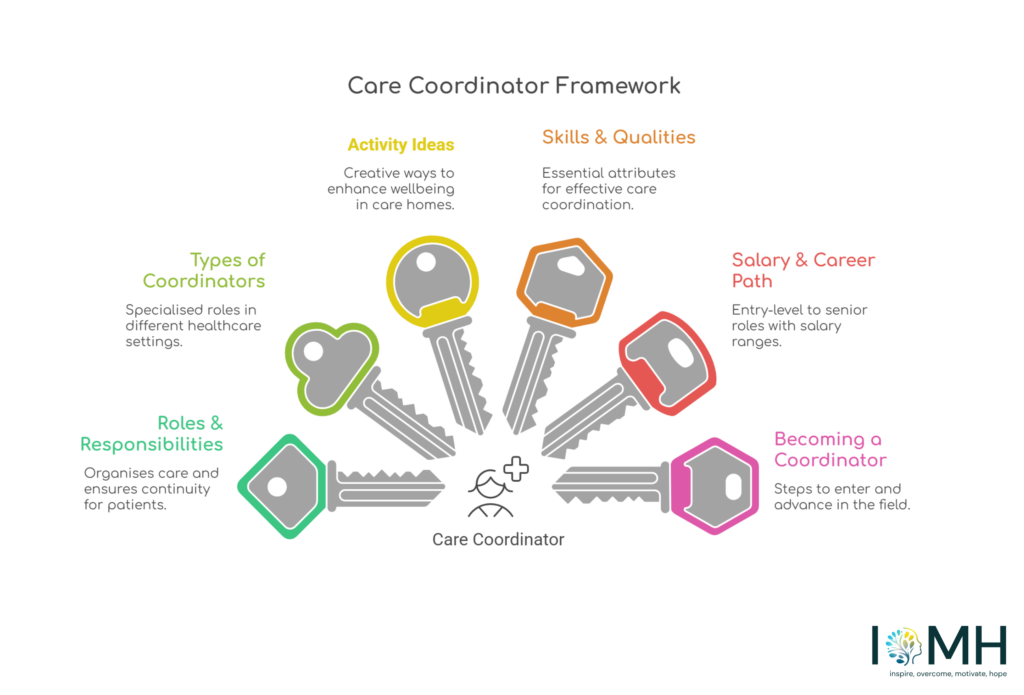
Care coordinators work across a range of health and social care settings. While their main responsibility is always to organise and manage care, the exact role can vary depending on the people they support and the service they work in. Below are the most common types of care coordinators explained in clear and simple terms.
Patient Care Coordinator
A patient care coordinator usually works in hospitals, GP surgeries, clinics, or community health services. Their main role is to support patients through their care journey. This includes arranging appointments, coordinating tests and treatments, and making sure information is shared between healthcare professionals. Patient care coordinators help reduce delays and ensure patients understand their care and next steps.
A patient care coordinator usually works in hospitals, GP surgeries, clinics, or community health services. Their main role is to support patients through their care journey. This includes arranging appointments, coordinating tests and treatments, and making sure information is shared between healthcare professionals. Patient care coordinators help reduce delays and ensure patients understand their care and next steps.
Mental Health Care Coordinator
Mental health care coordinators support individuals with ongoing or complex mental health needs. They work closely with mental health teams, including psychiatrists, psychologists, social workers, and community services. Their role involves coordinating treatment plans, monitoring progress, and helping individuals access wider support such as housing, benefits, or employment services. Care coordination in mental health focuses strongly on recovery and long-term wellbeing.
Intensive Care Coordinator
An intensive care coordinator supports people with very complex needs who require a higher level of care coordination. This may include individuals with multiple long-term conditions, serious mental health issues, or high levels of social care needs. The role involves regular contact, close monitoring, and strong collaboration with multidisciplinary care coordination teams. Intensive care coordination helps prevent crises and unnecessary hospital admissions.
Care Home Activities Coordinator
A care home activities coordinator focuses on the social, emotional, and mental wellbeing of residents in care homes. This role involves planning and delivering meaningful activities that suit different abilities and interests. Activities may include creative sessions, gentle exercise, music, or one-to-one engagement. Although not a clinical role, it is an important part of providing person-centred and coordinated care in care home settings.
Each type of care coordinator plays a key role in ensuring care is well-organised, supportive, and tailored to individual needs.
Care Home Activity Coordinator Ideas
A care home activity coordinator supports residents’ wellbeing by planning enjoyable and meaningful activities. Activities should be flexible, inclusive, and suited to different abilities and interests.
Here are some simple and effective care home activity coordinator ideas:
- Social activities – tea mornings, group quizzes, bingo, and small group chats to encourage social interaction.
- Creative activities – painting, colouring, crafts, music sessions, and singing to support self-expression.
- Dementia-friendly activities – reminiscence sessions, sensory activities, familiar tasks, and simple puzzles.
- One-to-one activities – reading, listening to music, conversation, or quiet hobbies for residents who prefer personal time.
- Seasonal and themed activities – celebrations, gardening, and themed days to keep routines interesting and engaging.
Well-planned activities help reduce loneliness, improve mood, and support a better quality of life for care home residents.
Skills and Qualities Needed to Be a Care Coordinator
To be effective in this role, a care coordinator needs a mix of practical skills, personal qualities, and a genuine desire to support others. The job involves working with patients, families, and professionals, often at the same time, so strong communication and organisation are essential.
Below are the key skills and qualities needed to succeed as a care coordinator:
Strong Communication Skills
Care coordinators must communicate clearly and calmly with patients, families, healthcare professionals, and support services. This includes listening carefully, explaining care plans in simple terms, and sharing information accurately between teams.
Excellent Organisation and Time Management
The role involves managing appointments, care plans, and multiple cases at once. Being well organised helps care coordinators prioritise tasks, meet deadlines, and ensure no part of a person’s care is missed.
Empathy and Compassion
A caring and understanding attitude is essential. Care coordinators often support people who are unwell, anxious, or vulnerable. Showing empathy helps build trust and ensures care remains person-centred.
Problem-Solving Skills
Care plans do not always run smoothly. Care coordinators must be able to identify issues, find practical solutions, and adapt care arrangements when circumstances change.
Teamwork and Collaboration
Care coordinators work as part of multidisciplinary teams. Being able to collaborate with doctors, nurses, social workers, and other professionals is key to delivering effective and coordinated care.
Attention to Detail
Accurate record keeping is vital. Care coordinators must ensure information is correct, up to date, and confidential to support safe and effective care delivery.
Ability to Work Under Pressure
The role can be busy and demanding. Care coordinators need to stay calm, focused, and professional when managing high workloads or complex cases.
Knowledge of Health and Social Care Systems
Understanding how health and social care services work helps care coordinators make appropriate referrals and navigate support systems effectively.
These skills and qualities allow care coordinators to deliver safe, organised, and compassionate care while supporting positive outcomes for individuals and services alike.
Care Coordinator Salary: How Much Do Care Coordinators Earn?
One of the most common questions people ask when considering this role is how much a care coordinator earns. The salary in the UK can vary depending on experience, qualifications, location, and the type of organisation they work for, such as the NHS, care homes, or private healthcare providers.
Care Coordinator Salary in the UK
On average, a care coordinator salary in the UK falls within the following ranges:
- Entry-level care coordinators usually earn between £22,000 and £26,000 per year. These roles are often suitable for people with relevant experience in health or social care who are new to coordination roles.
- Experienced care coordinators can earn between £27,000 and £35,000 per year, depending on responsibilities and the complexity of cases they manage.
- Senior or specialist care coordinators may earn £36,000 or more per year, especially in leadership or complex care coordination roles.
NHS Care Coordinator Salary
working for the NHS are typically paid under the Agenda for Change pay structure. Common pay bands include:
- Band 4: approximately £25,000 – £28,000 per year
- Band 5: approximately £28,000 – £34,000 per year
- Band 6: approximately £35,000 – £42,000 per year
NHS care coordinator roles also come with additional benefits such as paid annual leave, pension contributions, and access to ongoing training and career development.
Customer Care Coordinator Salary
A customer care coordinator salary may be slightly lower than clinical care coordination roles, as these positions often focus more on service support and administration. Salaries typically range from £21,000 to £28,000 per year, depending on experience and employer.
Factors That Affect Care Coordinator Salary
Several factors can influence how much a care coordinator earns, including:
- Level of experience and qualifications
- Type of employer (NHS, private, or voluntary sector)
- Location within the UK
- Level of responsibility and case complexity
- Level of responsibility and case complexity
Overall, care coordination offers a stable income with clear opportunities for salary progression, particularly within the NHS and specialist care settings.

How to Become a Care Coordinator
Becoming a care coordinator usually involves a combination of relevant experience, skills, and training in health or social care. There is no single route into the role, which makes it accessible to people from different professional backgrounds.
Below are the most common steps to becoming a care coordinator:
-
Gain experience in health or social care
Many care coordinators start their careers as healthcare assistants, support workers, care workers, or administrative staff within health or social care settings. This experience helps build an understanding of patient needs and care systems. -
Develop strong communication and organisation skills
Care coordination relies heavily on clear communication, time management, and problem-solving. These skills can be developed through work experience, training, or transferable roles. -
Complete relevant qualifications or training
While not always essential, qualifications in health and social care, mental health, or care management can improve job prospects. Short courses in care coordination, safeguarding, or care planning are also valuable. -
Apply for entry-level or trainee care coordinator roles
Many employers offer training and support for new care coordinators, allowing individuals to develop skills on the job. -
Continue professional development
Ongoing training helps care coordinators progress into senior or specialist roles, such as mental health care coordination or care management.
With the right skills, experience, and commitment, care coordination can offer a rewarding and long-term career in health and social care.
Care Coordinator Interview Questions and Tips
Preparing for an interview is important, as employers want to see both your practical skills and your ability to support people with care needs. Interviews often focus on communication, organisation, teamwork, and your understanding of care coordination.
Common Care Coordinator Interview Questions
You may be asked questions such as:
- What does a care coordinator do, and why is the role important?
- How do you manage multiple care plans at the same time?
- How would you support a patient who is confused or anxious about their care?
- How do you communicate with different professionals effectively?
- Can you give an example of how you handled a challenging situation?
- How do you ensure care plans are followed and reviewed?
Tips for a Successful Care Coordinator Interview
To perform well in a interview, consider the following tips:
- Understand the role clearly and be ready to explain care coordination in simple terms
- Use real examples from your work or training to show your skills and experience
- Highlight communication and organisation skills, as these are key to the role
- Show empathy and a person-centred approach when answering questions
- Demonstrate teamwork, explaining how you work with other professionals
- Prepare questions about training, team structure, and career development
Being well-prepared and confident in your understanding of care coordination will help you make a positive impression and increase your chances of success.
Working as a care coordinator can be both rewarding and demanding. The role offers the opportunity to make a real difference in people’s lives, but it also comes with responsibilities that require resilience and strong organisational skills. Understanding both the benefits and challenges can help individuals decide if this career is right for them.
Benefits of the Coordinator Role
Some of the key benefits include:
- Making a positive impact by supporting individuals to receive safe, well-organised, and person-centred care
- High demand for the role, offering good job security across the NHS and social care sectors
- Opportunities for career progression into senior, specialist, or management roles
- Varied and meaningful work, with no two days being the same
- Strong teamwork, working closely with healthcare and social care professionals
Challenges of the Care Coordinator Role
Despite its rewards, the role can also present challenges, such as:
- Managing complex cases, often involving individuals with multiple needs
- High workloads and time pressures, especially in busy services
- Emotional demands, supporting people who may be unwell or distressed
- Balancing communication, ensuring all professionals and families stay informed
With the right training, support, and self-care strategies, many care coordinators find the role fulfilling and well worth the challenges.
Final Thoughts: Is a Care Coordinator a Good Career Choice?
A career as a care coordinator can be a strong and rewarding choice for people who enjoy helping others and working in organised, people-focused roles. It play an important part in making sure individuals receive the right care, at the right time, in a way that is clear and supportive.
This role is well suited to those who:
- Enjoy working with people and supporting their wellbeing
- Have strong communication and organisational skills
- Are comfortable working as part of a team
- Want a meaningful role within health and social care
Care coordination also offers good job security, growing demand across the UK, and clear opportunities for career progression, particularly within the NHS and community care services.
While the role can be busy and emotionally demanding at times, many care coordinators find it highly satisfying because of the positive impact they have on people’s lives. Overall, for those looking for a stable, purposeful, and people-centred career.

- All Courses
 Personal Development (1272)
- Management & Administration (449)
- Employability (435)
- Career Bundle (434)
- Health & Social Care (396)
- Health and Safety (375)
- Business (316)
- IT & Software (262)
- Teaching & Education (260)
- Health and Fitness (237)
- QLS Endorsed Courses (207)
- Mental Health & Counselling (165)
- Science & Technology (152)
- Accounting & Finance (144)
- Construction & Engineering (123)
- Art & Design (121)
- Sales & Marketing (121)
- Compliance & Law (112)
- Language (84)
- Photography & Lifestyle (57)
- Animal Care (53)
- Food Safety & Hygine (51)
- Diet & Nutrition (48)
- Sports & Fitness (45)
- Makeup & Beauty (42)
- First Aid (38)
- Agriculture (1)



























0 responses on "What Is a Care Coordinator? Roles, Responsibilities, Skills, and Career Path Explained"