



Introduction
Empowerment in health and social care is a core principle that places people at the centre of their own care and support. It means helping individuals to have control over decisions that affect their lives, health, and wellbeing. Rather than professionals making all decisions, empowerment encourages partnership, choice, and independence.
In the UK, empowerment is a key topic within Health and Social Care Level 3 courses, including the Level 3 Diploma in Health and Social Care. Learners studying these qualifications are expected to understand not only what empowerment means but also how to promote it in real care settings such as hospitals, care homes, and community services.
This blog explains what empowerment in health and social care is, why it matters, how it works in different care settings, and how care professionals such as Healthcare Assistants, Care Workers, and Social Workers can promote empowerment in everyday practice.



What is Empowerment in Health and Social Care?
Empowerment in health and social care is about helping people take control of their own lives and feel confident in making decisions about their care and support. It focuses on working with individuals, not doing things for them, so they remain active participants in their own wellbeing.
In simple terms, empowerment means:
- Giving people choice in their care and daily life
- Respecting their opinions, wishes, and preferences
- Supporting independence wherever possible
- Encouraging confidence and self-belief
Definition of Empowerment in Health and Social Care
- A process that enables individuals to have control over decisions and actions that affect their health, care, and wellbeing
Empowerment does not mean withdrawing support. Instead, it means working in partnership with individuals, providing clear information, guidance, and encouragement so they can make informed decisions that suit their needs and circumstances.
Examples of Empowerment in Practice
- Allowing individuals to choose what they wear or eat
- Involving them in care planning and reviews
- Letting them decide their daily routines
- Respecting cultural, religious, and personal beliefs
- Supporting positive risk-taking to maintain independence
For learners studying a Diploma in Health and Social Care, understanding empowerment is essential. It links closely to dignity, respect, and person-centred care, and helps ensure that individuals are treated as unique people with their own rights, choices, and voices.
Why is Empowerment Important?
Empowerment is important in health and social care because it helps people feel in control of their lives and confident in the support they receive. When individuals feel empowered, they take a more active role in their care, which leads to better experiences and improved outcomes. Empowerment also promotes dignity, respect, and person-centred care, which are essential values in all care settings.
When care professionals give people a voice and respect their choices, individuals feel more motivated and satisfied with their care. This approach creates a positive environment where individuals and care professionals work together as equal partners, rather than one side making all the decisions.
Key Reasons Empowerment Matters
- Promotes independence – Individuals are encouraged and supported to do things for themselves wherever possible.
- Builds confidence – People feel valued, listened to, and respected in their care.
- Improves mental wellbeing – Having choice and control can reduce stress, anxiety, and feelings of helplessness.
- Encourages responsibility – Individuals take an active role in managing their health and wellbeing.
- Improves relationships – Trust and cooperation grow between service users and care staff.
In adult social care, empowerment plays a key role in helping individuals maintain existing skills and abilities. By promoting independence and choice, care services can reduce unnecessary dependence and support people to live more fulfilling and meaningful lives.
Empowerment in Health and Social Care vs Healthcare
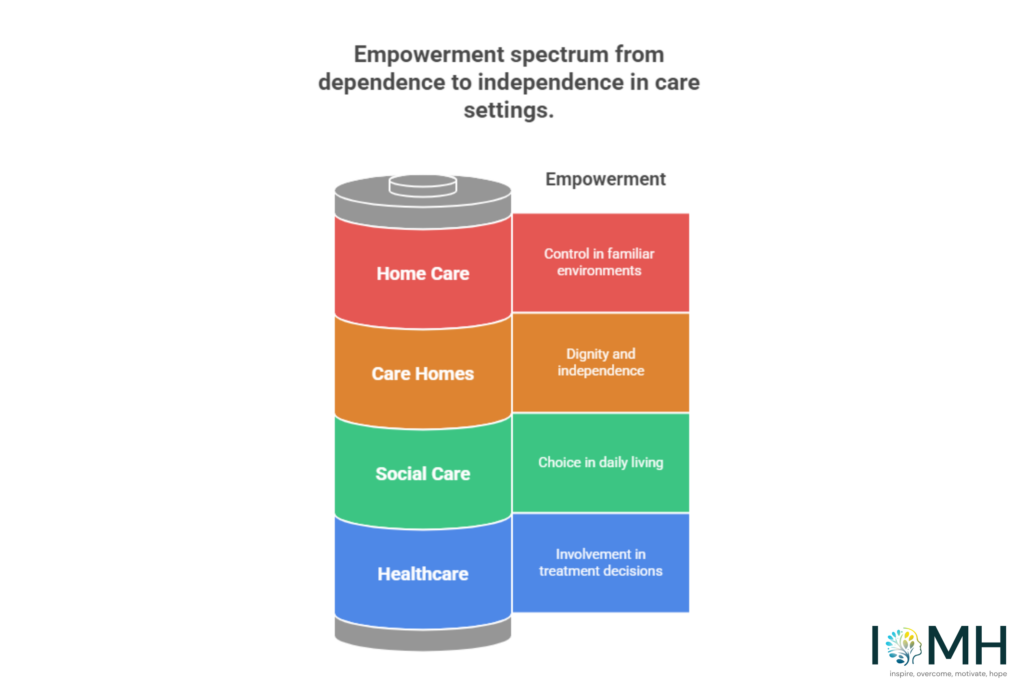
Although empowerment is a key principle in both healthcare and social care, it can be applied in slightly different ways depending on the setting. In both areas, the aim is the same: to support individuals to have a voice, make informed decisions, and feel respected in their care.
Empowerment in Healthcare
In healthcare settings such as hospitals, clinics, and GP surgeries, empowerment focuses mainly on medical decisions and treatment. It involves helping patients understand their health conditions and supporting them to be involved in choices about their care.
Empowerment in healthcare includes:
- Involving patients in decisions about treatments and care plans
- Clearly explaining diagnoses, procedures, and available options
- Supporting informed consent before any treatment
- Encouraging self-management of long-term or ongoing conditions
Organisations such as the NHS promote patient-centred care, where individuals are seen as active partners rather than passive recipients of treatment.
Empowerment in Social Care
In social care settings, empowerment is more focused on everyday life, independence, and wellbeing. The emphasis is on helping individuals live as independently and confidently as possible.
Empowerment in social care includes:
- Supporting choice in daily routines and personal care
- Encouraging involvement in the community and social activities
- Promoting life skills and independence
- Respecting personal identity, culture, and beliefs
Both healthcare and social care aim to reduce power imbalance and promote dignity and respect. This is why empowerment is a key principle within Policies and Procedures in Health and Social Care, guiding professionals to work in partnership with those they support.
Pros and Cons of Empowerment
Like all approaches in health and social care, empowerment has both strengths and challenges. While it brings many benefits for individuals and services, it also requires careful planning, support, and professional judgement to be used safely and effectively.
Pros of Empowerment
- Encourages independence – Individuals are supported to do as much as they can for themselves.
- Improves self-esteem – People feel valued, respected, and listened to.
- Promotes dignity and respect – Individuals are treated as equal partners in their care.
- Leads to better care outcomes – Involved individuals are more engaged and satisfied with their support.
- Builds trust – Strong, positive relationships develop between staff and those receiving care.
Cons and Challenges of Empowerment
- Some individuals may feel overwhelmed by having too many choices or decisions to make.
- The risk of poor decisions can increase if individuals are not given enough information or support.
- Requires time and effective communication, which can be difficult in busy care settings.
- Staff may fear risk-taking, especially if they are concerned about safety or accountability.
Because of these challenges, empowerment must always be balanced with duty of care and safeguarding responsibilities. Care professionals must support choice and independence while also ensuring individuals remain safe and protected from harm.
Factors Affecting Empowerment in Health and Social Care
Empowerment is influenced by many factors. A person’s sense of empowerment often depends on their personal circumstances, the support they receive, and how care services are organised and delivered.
Personal Factors
- Age and life experience – Older or younger individuals may feel more or less confident in making decisions.
- Physical or mental health conditions – Illness or disability can affect confidence and independence.
- Confidence and self-esteem – People with higher self-confidence may find it easier to express choices.
- Past experiences of care – Positive or negative experiences can influence trust and willingness to engage.
Social Factors
- Family and support networks – Strong support can encourage independence and confidence.
- Cultural beliefs and values – These may influence how comfortable someone feels speaking up.
- Language barriers – Communication difficulties can limit understanding and choice.
- Risk of discrimination – Unfair treatment can reduce confidence and willingness to participate.
Organisational Factors
- Staff training and attitudes – Well-trained, respectful staff are more likely to promote empowerment.
- Policies and procedures – Clear guidelines help ensure consistent, person-centred practice.
- Staffing levels – Adequate staffing allows time for communication and involvement.
- Leadership and management – Strong leadership promotes a culture of respect and inclusion.
Discrimination in health and social care can seriously reduce empowerment. This is why equality and diversity training is an essential part of Level 3 Diploma in Health and Social Care courses, helping future professionals provide fair, inclusive, and empowering care for everyone.
Empowerment Strategies in Health and Social Care
Care professionals play a key role in promoting empowerment through their daily practice. By using simple, practical strategies, staff can help individuals feel confident, respected, and involved in their own care and support.
Key Empowerment Strategies
- Person-centred care planning – Involving individuals in creating and reviewing their care plans.
- Clear communication – Using language that is easy to understand and checking understanding.
- Providing accessible information – Sharing information in formats that meet individual needs.
- Active listening – Taking time to listen to concerns, preferences, and ideas.
- Respecting choices and preferences – Supporting individual decisions wherever it is safe to do so.
Role of Care Staff
- Encourage individuals to express their opinions and wishes
- Offer choices whenever possible, even in small daily tasks
- Avoid making assumptions about what a person can or cannot do
- Support individuals in making informed decisions about their care
Empowerment is a shared responsibility across the care team. When all staff work together using an empowering approach, individuals are more likely to feel valued, confident, and in control of their own lives.
Empowerment Strategies in Aged Care
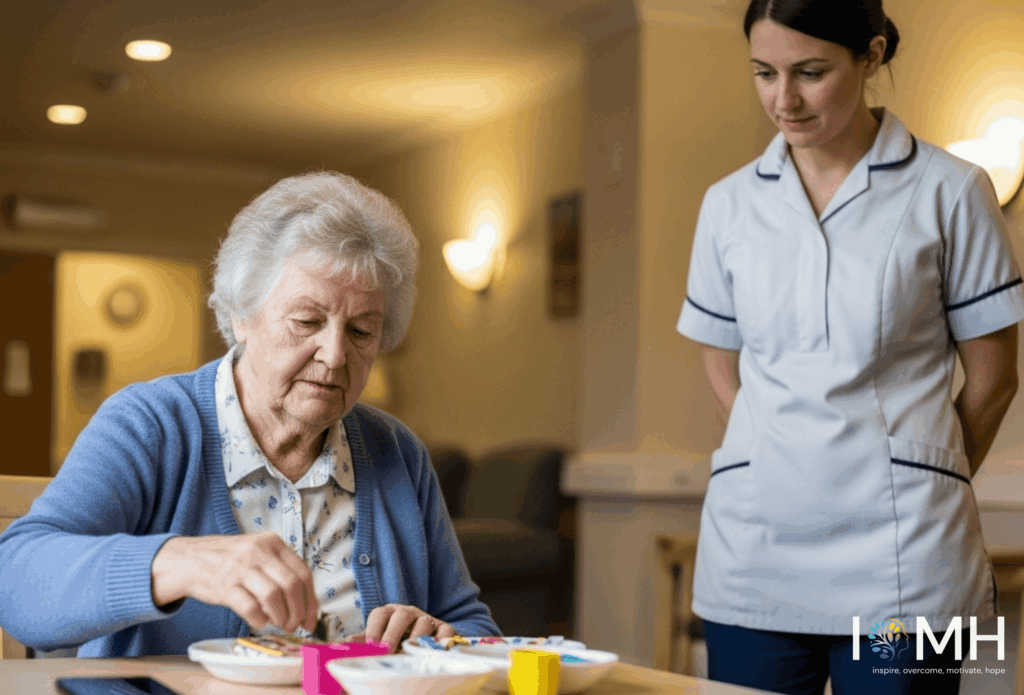
Empowerment is especially important in aged care, as older adults may experience challenges such as reduced mobility, long-term health conditions, or loss of confidence. Supporting empowerment helps older people remain involved in their own lives and feel respected, valued, and in control.
Ways to Promote Empowerment in Aged Care
- Encouraging independence with support – Allowing older adults to do tasks themselves while offering help when needed.
- Adapting environments for safety – Making small changes to reduce risk while maintaining independence.
- Respecting lifelong habits and routines – Supporting familiar routines that bring comfort and confidence.
- Involving older adults in care decisions – Including them in discussions about care plans and daily support.
By promoting empowerment, aged care services help older people maintain dignity, confidence, and a sense of purpose. Even when individuals need extra support, empowerment helps them feel respected and involved in decisions about their own care.

Empowerment in a Care Home
In care homes, staff should make empowerment a normal part of everyday care and support. Even when residents need assistance, staff should encourage them to make choices, express their views, and stay involved in decisions about their daily lives.
By empowering residents, care homes help people feel respected, valued, and in control, which improves confidence, wellbeing, and overall quality of life.
Examples of Empowerment in Care Homes
- Residents choosing meal options that suit their preferences and dietary needs
- Involvement in activity planning, allowing residents to suggest or choose activities they enjoy
- Respecting private space, such as knocking before entering rooms and honouring personal boundaries
- Being listened to during reviews, where residents can share their views about their care and support
Care homes are expected to follow these principles as part of good practice. The Care Quality Commission (CQC) checks during inspections whether care homes promote choice, dignity, and independence, ensuring empowerment is actively supported and not overlooked.
Empowerment in Home Care
Home care provides strong opportunities for empowerment because individuals receive support while remaining in their own homes. Being in a familiar environment can help people feel more confident, comfortable, and in control of their daily lives.
Empowerment in home care focuses on supporting independence while offering the right level of help based on individual needs.
How Home Care Supports Empowerment
- Familiar surroundings increase confidence – People feel safer and more relaxed in their own homes.
- Personal routines are maintained – Individuals can continue with routines that suit their lifestyle and preferences.
- Greater control over daily life – People have more choice over how and when tasks are carried out.
- Flexible support based on needs – Care can be adjusted as needs change, without removing independence.
Care Workers play a key role in empowering individuals at home. They ask before offering help, respect personal choices, and encourage individuals to carry out tasks they can manage independently, providing support only when it is genuinely needed.
Promoting Empowerment in Health and Social Care
Promoting empowerment in health and social care requires ongoing commitment from both organisations and individual staff members. Organisations and care professionals must embed empowerment into everyday practice, policies, and workplace culture so individuals can make choices and remain actively involved in their care.

Best Practices for Promoting Empowerment
- Providing training on person-centred care so staff understand how to support choice and independence.
- Encouraging reflective practice, allowing staff to review their actions and improve how they support individuals.
- Reviewing policies regularly to ensure they support empowerment, dignity, and inclusion.
- Involving individuals in service development, giving them a voice in how care services are planned and improved.
Empowerment and Safeguarding
- Assessing risks carefully and considering potential outcomes
- Involving individuals in decisions about risks and safety measures
- Documenting choices clearly to show informed decision-making
- Following safeguarding procedures to protect individuals from harm or abuse
By balancing empowerment with safeguarding responsibilities, health and social care professionals can support independence and choice while ensuring individuals remain safe and well protected.
Empowerment and Health and Social Care Qualifications
Empowerment is a key learning outcome across many health and social care qualifications in the UK. It helps learners develop the skills to support individuals in a respectful, inclusive, and person-centred way, delivering care that promotes dignity, choice, and independence.
Empowerment is a core topic within:
- Health and Social Care Level 3
- Level 3 Diploma in Health and Social Care
- Certificate and Diploma in Adult Social Care
As part of these qualifications, learners must clearly demonstrate how they apply empowerment in real care settings and how it influences everyday practice. This includes supporting individual choice, encouraging independence, and working in partnership with people who use care services.
How Empowerment Links to Key Care Principles
Learners must understand how empowerment connects with the core principles of health and social care, as these guide safe, fair, and effective practice in all care settings.
Empowerment links closely with:
- Equality and diversity – Ensuring everyone has fair access to choice, opportunities, and support, without discrimination.
- Safeguarding – Supporting independence while making sure individuals are protected from harm, abuse, or neglect.
- Duty of care – Balancing an individual’s right to choose with professional responsibility and sound judgement.
- Person-centred values – Placing the individual at the centre of all care decisions, respecting their wishes, needs, and preferences.
A strong understanding of empowerment helps prepare learners for real-world roles such as Healthcare Assistant, Care Worker, or Social Worker, where promoting choice, dignity, and independence is a daily and essential responsibility.
Conclusion
Empowerment in health and social care centres on respect, choice, and partnership. It actively involves individuals in decisions that affect their health, wellbeing, and daily lives, rather than treating them as passive recipients of support.
By promoting empowerment, care professionals help improve overall wellbeing, protect dignity, and encourage independence. Empowered individuals are more confident, engaged, and satisfied with their care, leading to better outcomes and stronger relationships between service users and care staff.
Whether working in healthcare, adult social care, care homes, or home care settings, empowerment remains a core value of high-quality, ethical, and person-centred practice. For those studying or working in health and social care, understanding and applying empowerment is not just an academic requirement—it is a vital skill that positively impacts lives every day.

- All Courses
 Personal Development (1283)
 Career Bundle (479)
 Management & Administration (460)
 Employability (439)
 Health & Social Care (411)
 Health and Safety (382)
 Business (320)
 Teaching & Education (268)
 IT & Software (263)
 Health and Fitness (238)
 QLS Endorsed Courses (219)
 Mental Health & Counselling (168)
 Science & Technology (153)
 Accounting & Finance (144)
 Sales & Marketing (128)
 Construction & Engineering (126)
 Art & Design (125)
 Compliance & Law (112)
 Language (86)
 Photography & Lifestyle (58)
 Animal Care (57)
 Food Safety & Hygine (53)
 Diet & Nutrition (49)
 Sports & Fitness (47)
 Makeup & Beauty (43)
 First Aid (39)
 Agriculture (2)
0 responses on "What Is Empowerment in Health and Social Care? Definition, Importance, Examples & Practice"