





By addressing legal and ethical considerations early, families can therefore create a care environment that is not only medically sound but also morally grounded and emotionally respectful.

Introduction: Why Palliative Care at Home Matters in the UK
In the UK, more families are choosing palliative care at home as a compassionate alternative to hospital-based care. This approach allows individuals with life-limiting illnesses to receive tailored support in the comfort of their own surroundings—surrounded by loved ones, familiar routines, and a sense of dignity that institutional settings often struggle to provide.
Palliative care isn’t just about managing physical symptoms; rather, it focuses on honouring the whole person. In addition, it provides emotional, psychological, and spiritual support, helping patients and families navigate the complexities of serious illness with confidence and dignity. Whether delivered through NHS services, private palliative care providers, or a combination of both, home-based care therefore offers a deeply personal experience that prioritises comfort, choice, and continuity.
In this guide, we will explore what palliative care at home involves, explain how to access it in the UK, and outline what families can expect. As a result, you can make informed decisions during one of life’s most delicate chapters.

What Is Palliative Care at Home?
Palliative care at home refers to specialised medical and emotional support provided to individuals with serious or life-limiting illnesses—right in the comfort of their own residence. The goal is not to cure the illness, but to enhance quality of life by managing symptoms, reducing pain, and offering holistic care that respects the patient’s values and wishes.
In the UK, home-based palliative care can be delivered through a combination of NHS community services, private palliative care providers, and charitable organisations. It often involves a multidisciplinary team that may include:
- District nurses and GPs
- Specialist palliative care nurses
- Carers and support workers
- Physiotherapists, counsellors, and chaplains
It’s important to distinguish between palliative care and end-of-life care. While both focus on comfort and dignity, palliative care can begin earlier in the illness trajectory—even alongside curative treatments—whereas end-of-life care typically refers to the final weeks or days of life.
Receiving care at home allows patients to remain in familiar surroundings, maintain a sense of autonomy, and stay close to loved ones. It’s a model that aligns with the growing preference in the UK for personalised, compassionate care outside of hospital settings.
Benefits of Receiving Palliative Care at Home
Choosing palliative care at home offers a range of benefits that go beyond clinical treatment—it’s about preserving dignity, fostering connection, and ensuring comfort during a vulnerable time. For many families in the UK, this option provides a more humane and personalised alternative to hospital or hospice settings.
Comfort in Familiar Surroundings
Being at home allows patients to remain in an environment they know and love. Familiar sights, sounds, and routines can reduce anxiety and promote emotional wellbeing. This sense of continuity is especially important for those with cognitive impairments or advanced illness.
Personalised and Flexible Care
Home-based care is tailored to the individual’s needs, preferences, and cultural values. Whether it’s adjusting medication schedules, choosing who provides care, or incorporating spiritual practices, families have more control over the care experience.
Stronger Family Involvement
Unlike institutional settings, home care encourages active participation from family members. Loved ones can be present, involved, and informed—creating space for meaningful conversations, shared decision-making, and emotional support.
Reduced Hospital Admissions
With proper planning and support, many symptoms can be managed at home, reducing the need for emergency hospital visits. This not only eases the burden on the NHS but also helps patients avoid the stress of clinical environments.
Continuity of Care
Patients often receive care from the same team of professionals, fostering trust and consistency. This continuity is especially valuable in managing complex symptoms and coordinating with GPs, specialists, and community services.
When to Consider Palliative Home Care
Deciding when to begin palliative care at home can be emotionally challenging; however, early planning often leads to better outcomes for both patients and families. In the UK, healthcare professionals often encourage timely conversations about home-based palliative support, particularly when a person’s condition becomes life-limiting or their quality of life begins to decline.

1. Recognising the Signs
You might consider home palliative care when:
- A loved one is living with a progressive illness such as cancer, heart failure, or advanced neurological conditions
- Symptoms like pain, breathlessness, fatigue, or emotional distress are becoming harder to manage
- Hospital visits are frequent and disruptive
- The person expresses a desire to stay at home rather than in a clinical setting
2. Early vs. Late Intervention
Contrary to common belief, palliative care isn’t only for the final days of life. It can—and often should—begin earlier in the illness journey. Early intervention allows for:
- Better symptom control
- Stronger relationships with care teams
- More time to plan for future needs, including end-of-life care at home
3. Starting the Conversation
Initiating palliative care discussions can feel daunting. Here are some tips:
- Speak with your GP or specialist about available options, including private palliative care UK services
- Ask about referrals to community nursing teams or hospice outreach programmes
- Involve the person receiving care in decision-making, respecting their values and preferences
By recognising the right moment to explore home hospice support, families can ensure that care is proactive, compassionate, and aligned with the individual’s wishes.
Navigating Private Palliative Care in the UK
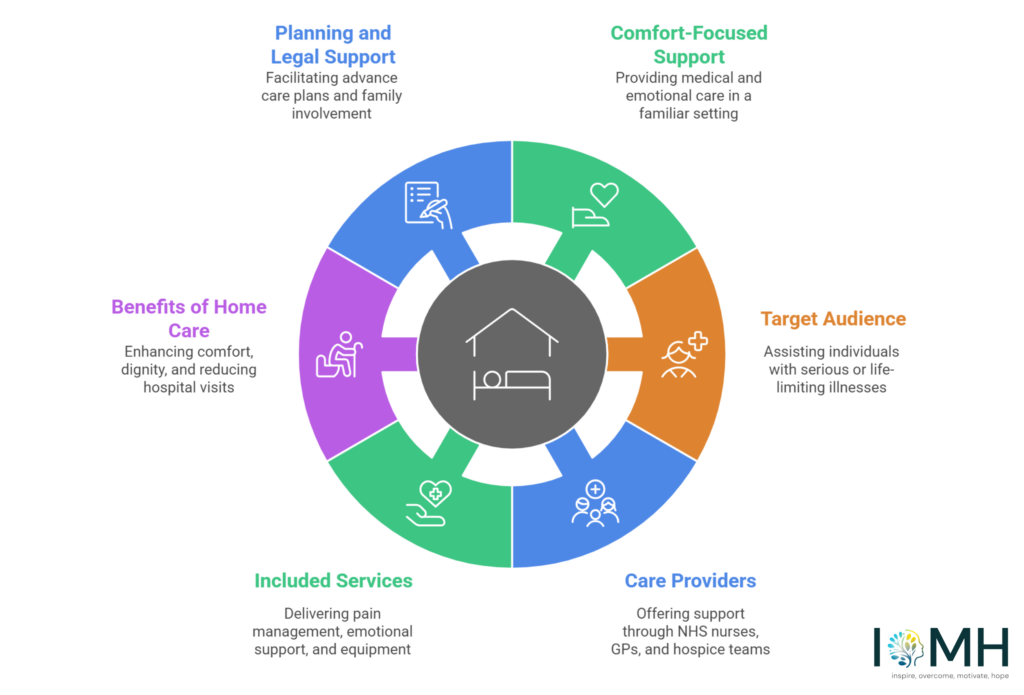
While the NHS offers vital palliative care services, many families in the UK turn to private palliative care providers for greater flexibility, faster access, and personalised support. Choosing private care doesn’t mean abandoning public services—it often complements them, creating a more robust and responsive care plan.
Why Consider Private Palliative Care UK Services?
Private providers can offer:
- Immediate access to specialist nurses and carers
- Bespoke care plans tailored to cultural, religious, or personal preferences
- Extended hours and overnight support
- Integration with home hospice support teams
This can be especially valuable when NHS resources are stretched or when families want more control over the care experience.
Understanding Costs and Funding Options
Private palliative care costs vary depending on:
- Level of medical complexity
- Frequency of visits
- Additional services like physiotherapy, counselling, or live-in care
Some families may be eligible for financial support through:
- NHS Continuing Healthcare (CHC)
- Local authority funding
- Charitable grants from organisations like Marie Curie or Macmillan
It’s important to request a detailed breakdown of costs and clarify what’s included—especially for end-of-life care at home, which may require intensive support.
Choosing a Reputable Provider
When selecting a private care agency:
- Look for CQC (Care Quality Commission) registration and ratings
- Ask for references or testimonials
- Ensure staff are trained in palliative and hospice care
- Confirm coordination with NHS teams and GPs
A good provider will prioritise compassion, communication, and continuity—ensuring that care at home is not only clinically sound but emotionally supportive.
Creating a Holistic Care Plan for Palliative Care at Home
A truly effective palliative care at home plan goes beyond medication—it embraces the full spectrum of a person’s needs. In the UK, families often work with both NHS and private palliative care teams to design a care strategy that reflects the patient’s values, lifestyle, and medical requirements.
Pain and Symptom Management
Managing physical discomfort is central to any care plan. This includes:
- Regular assessments by GPs or specialist nurses
- Access to medications for pain, nausea, breathlessness, and anxiety
- Use of equipment like hospital beds, oxygen, or mobility aids—often arranged through local NHS services or home hospice support providers
Emotional and Psychological Support
Living with a life-limiting illness can be emotionally taxing. Support may include:
- Counselling or therapy sessions (some offered free by charities like Macmillan)
- Spiritual care tailored to the patient’s beliefs
- Family meetings to foster open communication and shared decision-making
Coordination Across Services
A holistic plan requires seamless coordination between:
- District nurses, GPs, and palliative care specialists
- Social workers and care coordinators
- Private palliative care UK agencies, if additional support is needed
Digital tools like care apps or shared online records can help families stay informed and involved.
Planning for End-of-Life Care at Home
As the illness progresses, the care plan should evolve to include:
- Advance care planning and preferred place of death
- DNAR (Do Not Attempt Resuscitation) decisions
- 24/7 support options through hospice-at-home services or live-in carers
By building a care plan that’s medically sound and emotionally sensitive, families can ensure that their loved one receives dignified, compassionate care—right where they feel most at peace.
Supporting Family Members and Carers in Palliative Home Care
Providing palliative care at home is not only a medical journey—it’s an emotional one. Family members and carers often play a central role, offering daily support, managing logistics, and navigating complex decisions. In the UK, there’s growing recognition of the need to support caregivers as part of the holistic care model.

Understanding the Caregiver’s Role
Carers may be responsible for:
- Administering medication and monitoring symptoms
- Assisting with mobility, hygiene, and nutrition
- Coordinating with private palliative care UK providers or NHS teams
- Offering emotional reassurance and companionship
This role can be deeply rewarding—but also physically and emotionally exhausting.
Accessing Respite and Emotional Support
To prevent burnout, carers should explore:
- Respite care options through local councils or hospice charities
- Counselling services for grief, stress, and anticipatory loss
- Peer support groups, both online and in-person
Organisations like Carers UK and Marie Curie offer tailored resources, helplines, and advocacy for unpaid carers.
Navigating Difficult Conversations
End-of-life discussions can be emotionally charged. Tips for carers include:
- Using open-ended questions to understand the patient’s wishes
- Involving professionals like palliative nurses or social workers
- Respecting cultural and spiritual values in decision-making
Whether planning for end-of-life care at home or managing day-to-day needs, clear communication helps families stay aligned and emotionally connected.
Legal and Financial Guidance
Carers may also need support with:
- Applying for Carer’s Allowance or Attendance Allowance
- Understanding Power of Attorney and advance care directives
- Coordinating benefits and funding for home hospice support
By recognising and supporting the caregiver’s journey, we ensure that palliative care at home is sustainable, compassionate, and truly family-centred.
Legal and Ethical Considerations in Palliative Care at Home
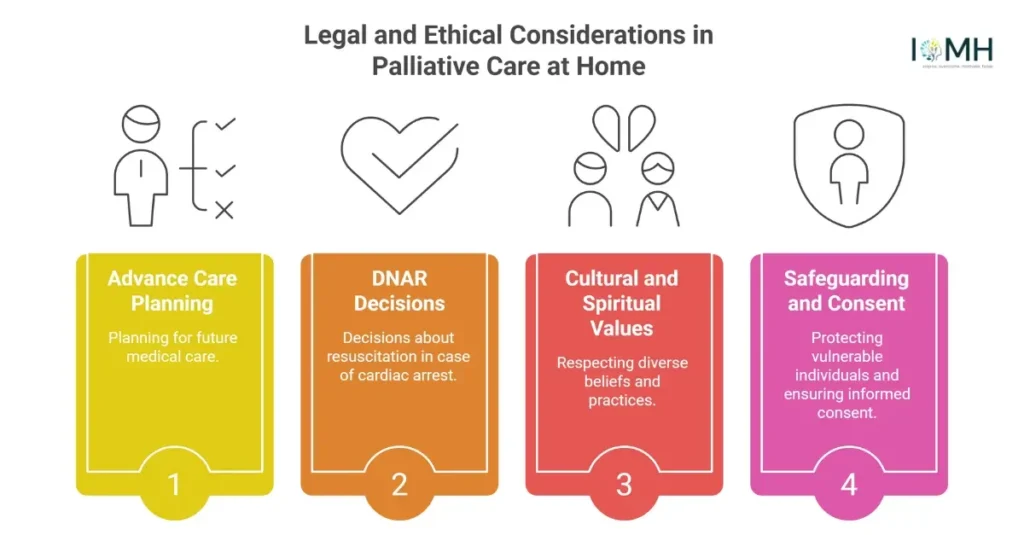
Providing end-of-life care at home involves more than medical support; it also requires thoughtful planning around legal rights, ethical choices, and family values. In the UK, clear frameworks therefore help families make informed decisions while honouring the dignity and autonomy of the person receiving care.
Advance Care Planning
Advance care planning allows individuals to express their preferences for future treatment and care. This may include:
- Choosing a preferred place of death (often at home)
- Specifying treatments they do or do not want
- Appointing a Lasting Power of Attorney (LPA) for health and welfare decisions
These plans ensure that care aligns with the person’s wishes, especially when they can no longer communicate them directly.
Do Not Attempt Resuscitation (DNAR) Decisions
- Unexplained injuries or bruises
- Withdrawal or fearfulness
- Poor hygiene or malnutrition
- Financial irregularities
- Inconsistent stories or reluctance to speak
A DNAR order indicates that cardiopulmonary resuscitation (CPR) should not be attempted in the event of cardiac arrest. It’s a deeply personal decision, often discussed with GPs or palliative care teams. In the context of home hospice support, having a DNAR in place can prevent unnecessary hospitalisation and ensure a peaceful environment.
Respecting Cultural and Spiritual Values
Ethical care means recognising and respecting diverse beliefs. For example, whether care involves religious rituals, dietary preferences, or end-of-life customs, carers especially those from private palliative care UK agencies should receive training in cultural sensitivity and inclusive practice.
Safeguarding and Consent
Even in a home setting, safeguarding remains essential. All care must be delivered with informed consent, and any concerns about neglect or abuse should be reported to local authorities. Families should feel empowered to ask questions and advocate for their loved one’s rights.
Real Stories: The Impact of Home-Based Palliative Care
Behind every care plan is a human story—of resilience, love, and dignity. Across the UK, families who’ve chosen palliative care at home often speak of the profound comfort it brings during life’s most delicate moments. These stories highlight how personalised care, delivered in familiar surroundings, can make all the difference.
Margaret, a retired teacher from Kent, was diagnosed with advanced lung cancer. Her wish was simple: to spend her final days in her garden-facing bedroom, surrounded by her children and grandchildren. With support from a private palliative care UK team and her local hospice nurse, Margaret received round-the-clock care, pain management, and emotional support. Her daughter recalls, “Mum was calm, comfortable, and never alone. That’s all she wanted.”
Empowering Families Through Home Hospice Support
In Manchester, the Ahmed family cared for their father, who had late-stage Parkinson’s. They worked closely with a home hospice support team to learn how to manage symptoms, administer medication, and create a peaceful environment. “We didn’t feel helpless,” said his son. “We felt like we were part of his care, not just watching from the sidelines.”
End-of-Life Care at Home That Honours Cultural Values
For many families, cultural and spiritual practices are central to the end-of-life experience. For example, in Birmingham, a Sikh family collaborated with a private palliative care provider who respected their dietary needs, prayer rituals, and family involvement. As a result, the care experience felt not only medically sound but also spiritually fulfilling.
Ultimately, these stories remind us that end-of-life care at home isn’t just a clinical decision—it is a deeply personal one. When done well, it allows people to live their final chapter with grace, surrounded by love and meaning.
Resources and Support Services in the UK
Accessing palliative care at home in the UK doesn’t have to be overwhelming. A wide network of organisations, charities, and healthcare providers offer guidance, funding, and hands-on support to help families deliver compassionate care in familiar surroundings.
NHS Palliative Care Services
The NHS provides free palliative care through:
- Community nursing teams
- Specialist palliative care units
- GP-led care coordination
Speak to your GP or district nurse to initiate referrals and explore eligibility for services like end-of-life care at home or NHS Continuing Healthcare funding.
Charities Offering Home Hospice Support
Several UK charities offer free or subsidised home hospice support, including:
- Marie Curie – Offers nursing care, emotional support, and bereavement counselling
- Macmillan Cancer Support – Provides specialist nurses, financial advice, and online resources
- Hospice UK – Connects families with local hospice services and advocates for quality care
These organisations often work alongside NHS and private palliative care UK providers to ensure seamless support.
Local Authority and Social Care Services
Your local council may offer:
- Equipment loans (e.g., hospital beds, hoists)
- Home adaptations
- Carer assessments and respite care
Check your council’s adult social care department for eligibility and application processes.
Online Tools and Helplines
For immediate guidance, try:
- NHS 111 for non-emergency medical advice
- Marie Curie Support Line: 0800 090 2309
- Macmillan Online Chat and forums for peer support
These platforms offer practical advice, emotional reassurance, and help navigating complex care decisions.
Conclusion: Choosing Compassion and Comfort
Palliative care at home is more than a medical choice—it is a deeply human one. For families across the UK, it offers a way to honour life’s final chapter with dignity, presence, and love. Whether families access support through NHS services, private palliative care providers, or home hospice charities, the goal remains the same: to ensure comfort, connection, and respect for the individual’s wishes.
By planning ahead, accessing the right resources, and embracing open and honest conversations, families can create a care experience that feels personal, peaceful, and empowering. From symptom management to emotional support, and from legal clarity to cultural sensitivity, end-of-life care at home can become a profoundly meaningful journey.
If you are considering this path for yourself or a loved one, it is important to remember that you are not alone. Support is available, and compassionate, respectful care is within reach.
Speak to your GP or district nurse to initiate referrals and explore eligibility for services like end-of-life care at home or NHS Continuing Healthcare funding.
Frequently Asked Questions
Palliative care at home involves medical, emotional, and practical support for individuals with serious or life-limiting illnesses, delivered in their own residence. It focuses on comfort, symptom management, and quality of life rather than curative treatment.
Care may be provided by NHS community nurses, GPs, hospice outreach teams, or private palliative care UK agencies. Many families use a combination of public and private services to meet their needs.
No. While end-of-life care at home is a key component, palliative care can begin earlier in the illness journey to manage symptoms and improve wellbeing.
Start by speaking with your GP or hospital consultant. They can refer you to local palliative care teams or assess eligibility for NHS Continuing Healthcare, which may cover costs for home-based support.
Home hospice support allows patients to remain in familiar surroundings, receive personalised care, and stay close to loved ones. It often reduces hospital visits and improves emotional wellbeing.
Yes. Many families choose to supplement NHS care with private palliative care UK providers for additional flexibility, faster access, or specialised services.
Costs vary based on the level of care, frequency of visits, and services required. Some families may qualify for financial support through local councils, charitable grants, or NHS funding schemes.
Key documents include:
- Advance Care Plan
- DNAR (Do Not Attempt Resuscitation) order
- Lasting Power of Attorney (LPA) for health and welfare
These help ensure care aligns with the patient’s wishes and legal rights.
Carers can access respite care, counselling, financial benefits (like Carer’s Allowance), and peer support through organisations such as Carers UK, Marie Curie, and Macmillan.
At-home palliative care is specialised support provided to individuals with serious or life-limiting illnesses in their own residence. It focuses on managing symptoms, reducing pain, and improving quality of life—while also offering emotional, psychological, and spiritual support. In the UK, this care can be delivered through NHS services, private providers, or charitable organisations.
Yes. Palliative care can absolutely be provided at home, and many families in the UK choose this option for its comfort and familiarity. Services may include visits from district nurses, GPs, hospice outreach teams, or private palliative care UK agencies. Home-based care allows for personalised support and often includes home hospice services for end-of-life care.
Eligibility for palliative care is based on medical need rather than diagnosis alone. Individuals with progressive, life-limiting conditions—such as cancer, heart failure, advanced neurological diseases, or organ failure—may qualify. In the UK, referrals are typically made by GPs, hospital consultants, or community nurses. NHS Continuing Healthcare may cover costs for those with complex needs
Palliative care generally unfolds in four stages:
- Early stage: Symptom management begins alongside curative treatments
- Middle stage: Increasing focus on comfort and quality of life
- Late stage: Preparation for end-of-life care, including advance planning
- End-of-life stage: Intensive support during the final days or weeks, often through home hospice support
Each stage is tailored to the individual’s condition, preferences, and care goals.
The duration of palliative care varies widely. Some individuals receive support for months or even years, especially when care begins early in the illness. Others may enter palliative care during the final weeks of life. The focus is on ongoing comfort and dignity, not a fixed timeline.
Depending on the patient’s condition, common equipment may include:
- Hospital bed or adjustable mattress
- Pressure-relieving cushions
- Hoists or mobility aids
- Oxygen therapy equipment
- Syringe drivers for pain relief
- Commode, grab rails, or shower chairs
In the UK, much of this equipment can be provided through NHS community services or local councils. Private palliative care providers may also supply or arrange specialised items.

- All Courses
 Personal Development (1283)
 Career Bundle (479)
 Management & Administration (460)
 Employability (439)
 Health & Social Care (411)
 Health and Safety (382)
 Business (320)
 Teaching & Education (268)
 IT & Software (263)
 Health and Fitness (238)
 QLS Endorsed Courses (219)
 Mental Health & Counselling (168)
 Science & Technology (153)
 Accounting & Finance (144)
 Sales & Marketing (128)
 Construction & Engineering (126)
 Art & Design (125)
 Compliance & Law (112)
 Language (86)
 Photography & Lifestyle (58)
 Animal Care (57)
 Food Safety & Hygine (53)
 Diet & Nutrition (49)
 Sports & Fitness (47)
 Makeup & Beauty (43)
 First Aid (39)
 Agriculture (2)
0 responses on "Palliative Care at Home in the UK: A Compassionate Guide"