




Introduction
Choosing a career path is one of the biggest decisions you’ll ever make, and for many in the UK, occupational therapy offers the perfect balance of purpose, stability, and growth. Occupational therapy is all about helping people live more independent, fulfilling lives — whether they’re recovering from illness, adjusting to disability, or managing mental health challenges. It’s a profession rooted in compassion, creativity, and problem-solving.
In today’s healthcare landscape, the demand for occupational therapy jobs is steadily growing. The NHS, local councils, schools, and private healthcare providers are actively seeking skilled practitioners who can support individuals across all stages of life. For anyone looking to combine people-focused work with a secure career path, this field is an excellent choice.
This guide will walk you step by step through everything you need to know about becoming an occupational therapist in the UK. From understanding what occupational therapy is to exploring degree routes, apprenticeships, registration, salary expectations, and employment prospects, you’ll gain a clear picture of what it takes to succeed. Whether you’re a school-leaver exploring options, a graduate considering a career change, or someone curious about opportunities in healthcare, this roadmap will help you start your journey towards a rewarding career in occupational therapy.



Why Choose Occupational Therapy?

If you’re drawn to a career that makes a tangible difference in people’s lives, then occupational therapy jobs may be the right fit for you. Unlike many roles that focus purely on treatment or diagnosis, occupational therapy takes a holistic approach. It’s about seeing the person behind the condition and helping them rebuild their independence, confidence, and quality of life.
One of the biggest reasons people choose this path is the chance to combine medical knowledge with creativity and problem-solving. No two patients are the same, and neither are the solutions. As an occupational therapist, you might recommend adaptive equipment for an older adult, develop sensory strategies for a child with autism, or support someone’s gradual return to work after an accident. Every day brings fresh challenges and opportunities to innovate.
There’s also strong demand for occupational therapy across the UK, which means good job security and a wide range of career settings. From hospitals and schools to community centres and private practices, OTs are needed in every corner of society. The role is well-respected and offers clear progression opportunities, whether you want to specialise in areas such as mental health or paediatrics, or move into leadership and teaching.
Most importantly, occupational therapy is a career of impact. Every intervention you design helps someone regain independence or participate more fully in life — achievements that ripple outward to benefit families, communities, and society as a whole.
Educational & Training Pathways in the UK
To secure most occupational therapy jobs in the UK, you’ll need to qualify as an occupational therapist through either a degree or an apprenticeship route. Training ensures you have both the clinical knowledge and the practical experience to work effectively in health and social care.
Undergraduate Degree Route
The most common pathway is completing a BSc (Hons) in Occupational Therapy. These programmes usually take three years full-time (or four in Scotland) and combine academic study with practice placements in hospitals, community settings, and schools. To apply, you’ll typically need:
- Five GCSEs (including English, Maths, and Science)
- Two or three A-levels (often including a science subject such as biology or psychology), or equivalent qualifications
During your studies, you’ll cover subjects such as anatomy, physiology, psychology, and therapeutic approaches. Just as importantly, you’ll gain hands-on experience through placements, where you’ll work directly with patients under supervision. This practical training helps you understand the real-world impact of occupational therapy.
Postgraduate / Conversion Courses
If you already hold a degree in another subject, you can take a postgraduate diploma or master’s in occupational therapy, which usually takes two years. These are ideal for graduates looking to change careers and move into healthcare.
Part-Time and Distance Learning Options
Some universities also offer flexible or part-time study routes, allowing you to balance training with work or family commitments. This is especially useful for mature students or those already working in health and social care.
By completing one of these educational routes, you’ll graduate as a qualified occupational therapy graduate eligible to register with the Health and Care Professions Council (HCPC) — a crucial step before applying for occupational therapy employment.

Apprenticeship Route: Degree-Level Apprenticeships
For those who prefer to learn on the job, the UK now offers a degree-level apprenticeship in occupational therapy. This pathway is designed for people who want to earn while they study, blending academic learning with real-world practice. Apprentices split their time between university study and practical experience in hospitals, community services, or social care settings, giving them a direct insight into the demands of occupational therapy jobs.
How the Apprenticeship Works
- Duration: Typically takes around four years, though this may vary depending on the employer and university.
- Structure: Apprentices spend most of their week in a paid occupational therapy role, with part of their time dedicated to study at a partner university.
- Placements: Just like traditional degree students, apprentices complete clinical placements, ensuring they gain experience across different specialisms such as paediatrics, mental health, or elderly care.
Entry Requirements
Benefits of the Apprenticeship Route
- Financial advantage: Tuition fees are covered by the employer and government, meaning you avoid student debt while earning a salary.
- Workplace experience: You build professional connections and hands-on skills from the start, which strengthens your employability.
- Flexibility: Apprenticeships are particularly appealing for mature students or those already employed in healthcare who want to upskill.
By the end of the programme, apprentices graduate as qualified occupational therapy graduates, eligible to register with the Health and Care Professions Council (HCPC). This opens the door to a wide range of occupational therapy employment opportunities across the UK.
Gaining Experience & Building Your Application
Whether you’re applying to a university course, an apprenticeship, or directly exploring occupational therapy jobs, gaining relevant experience will give you a strong advantage. Admissions tutors and employers want to see that you understand what is occupational therapy in practice and that you have the right values, empathy, and resilience for the role.
Work Experience and Volunteering
Before starting your training, it’s highly recommended to gain experience in a health or social care setting. This could include:
- Volunteering in care homes, hospitals, or mental health services
- Shadowing an occupational therapist in the NHS or private practice
- Supporting people with disabilities in community organisations or schools
These experiences help you develop communication, teamwork, and problem-solving skills, while also giving you stories and insights to discuss in your application or interview.
Strengthening Your Application
When applying for an occupational therapy degree or apprenticeship, your personal statement is key. Highlight:
- Your motivation for choosing occupational therapy
- Experiences that demonstrate empathy, patience, and adaptability
- Awareness of NHS values, such as compassion, respect, and commitment to quality care
Universities and employers may also require an interview, written test, or evidence of a Disclosure and Barring Service (DBS) check. Preparing thoroughly shows your commitment and professionalism.
Building Long-Term Networks
Joining organisations such as the Student Occupational Therapy Association or attending taster days run by universities can also strengthen your profile. These opportunities let you connect with peers, ask questions, and gain a clearer picture of what to expect during training and beyond.
Registration and Professional Bodies
Once you’ve completed your training, the next vital step toward practising in the UK is professional registration. Without this, you cannot legally apply for or work in most occupational therapy jobs.
Health and Care Professions Council (HCPC)
All qualified occupational therapists must register with the Health and Care Professions Council (HCPC). This body regulates standards of proficiency, conduct, and ethics to ensure public safety. Registration demonstrates that you meet the professional requirements and are legally recognised to practise. Renewal is required every two years, and practitioners must maintain continuous professional development (CPD).
Royal College of Occupational Therapists (RCOT)
Although voluntary, joining the Royal College of Occupational Therapists (RCOT) is highly recommended. As the UK’s professional body for the field, RCOT offers:
- Access to training, events, and journals
- Professional guidance on best practice
- Opportunities to network with fellow practitioners
- Career support for both newly qualified OTs and those looking to specialise
Other Associations and Networks
If you’re a student or recent occupational therapy graduate, organisations like the Student Occupational Therapy Association provide peer support, mentoring, and resources tailored to those just starting their careers.
Belonging to these professional bodies helps you stay informed, maintain high standards of practice, and enhance your employability when seeking occupational therapy employment in the UK.
Finding Occupational Therapy Jobs (Employment)
Once you’re fully qualified and registered, the next step is securing your first role. The good news is that demand for occupational therapy jobs in the UK remains strong across the NHS, local authorities, schools, charities, and private healthcare providers.
Where to Look for Roles
- NHS Jobs: The primary platform for finding occupational therapy vacancies within hospitals, community teams, and mental health services.
- Local authorities: Many councils employ OTs to support social care services, housing adaptations, and community-based rehabilitation.
- Charities and private providers: Organisations supporting people with disabilities, older adults, or mental health conditions often recruit OTs.
- RCOT Jobs Board: The Royal College of Occupational Therapists also advertises employment opportunities.
Job Titles to Consider
While searching, look out for titles such as:
- Occupational Therapist
- Newly Qualified Occupational Therapist
- Specialist OT (in areas like paediatrics or stroke rehabilitation)
- Occupational Therapy Assistant jobs, which provide an excellent entry route or stepping stone into full qualification
Applying Successfully
Employers look for candidates who demonstrate not only technical skills but also compassion, problem-solving, and the ability to work within multi-disciplinary teams. Highlight your placements, voluntary experience, and membership of professional bodies when applying.
The wide range of employment settings also allows you to find a role that matches your interests, whether that’s working with children in schools, supporting older adults in the community, or helping people recover independence after injury.
Salary, Career Progression & Specialisms
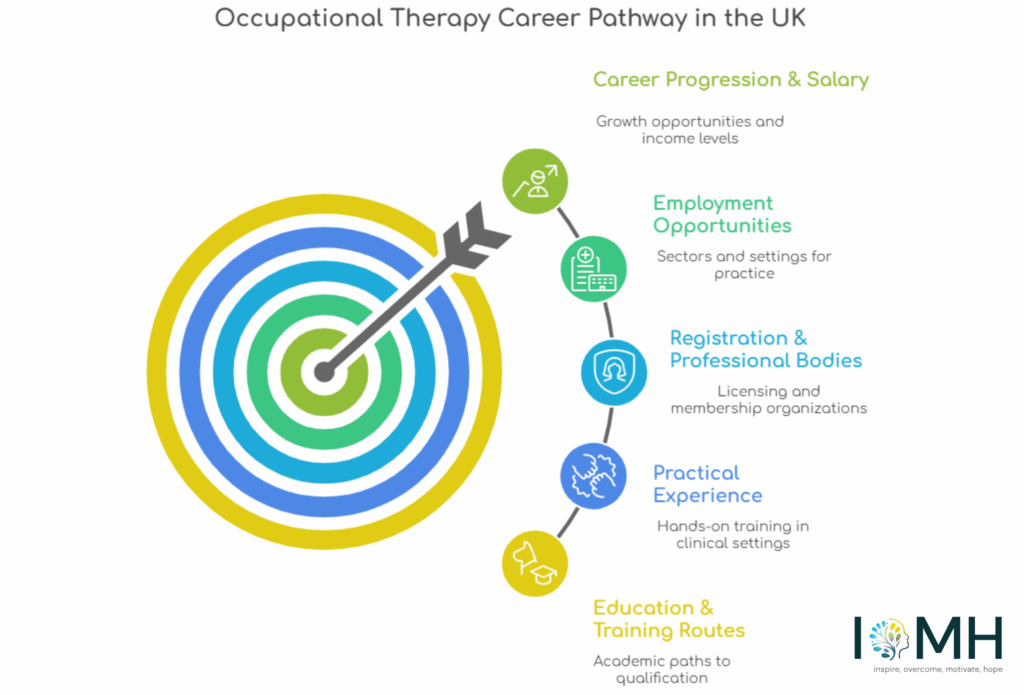
One of the most practical questions for anyone considering this career is what to expect from an occupational therapy salary in the UK. Pay is structured under the NHS Agenda for Change pay scale, though private and charity-sector roles may vary.
Salary Expectations
- Newly qualified occupational therapists usually start at Band 5, with salaries beginning around £28,000 per year.
- With experience, you can progress to Band 6 and Band 7 roles, where salaries can range from £35,000 to over £46,000 annually.
- Advanced practice, leadership, or consultant-level positions can reach Band 8 or higher, offering salaries well above £50,000.
These figures make occupational therapy a competitive career choice within allied health professions, especially when combined with job security and flexible working opportunities.
Career Progression
Once you have gained experience in entry-level occupational therapy jobs, you can specialise in areas such as:
- Paediatrics (supporting children with developmental needs)
- Mental health (helping people manage daily life with psychological conditions)
- Stroke and neurological rehabilitation
- Elderly care and dementia support
- Vocational rehabilitation (helping people return to work)
There are also opportunities to move into management, education, or research roles, shaping the future of occupational therapy practice in the UK.
Continuous Development
Membership with the Royal College of Occupational Therapists (RCOT) and ongoing CPD are essential for career growth. Regular training not only maintains your HCPC registration but also opens doors to specialist posts and higher bands of pay.
Pros & Cons: What to Consider Before Committing
Before starting down the path to becoming an occupational therapist, it’s important to weigh up both the rewards and the challenges. Like all healthcare roles, occupational therapy jobs bring immense satisfaction but also require resilience and commitment.
The Pros
- Making a difference: Few careers offer such a direct and positive impact on people’s lives. Supporting someone to regain independence or confidence is deeply rewarding.
- Variety of work: No two days are the same. From working with children in schools to supporting older adults in their homes, the diversity keeps the role engaging.
- Strong demand and job security: With the UK healthcare system seeking more OTs, there are plenty of opportunities for occupational therapy employment across sectors.
- Career flexibility: Opportunities exist in hospitals, community settings, mental health services, private practice, and even academia.
The Cons
- Emotional challenges: Working closely with patients facing illness, disability, or trauma can be emotionally demanding.
- Workload pressures: Like many NHS roles, occupational therapy can involve high caseloads, tight deadlines, and administrative responsibilities.
- Training commitment: Whether through a degree or apprenticeship, the path to becoming an OT requires years of study and dedication.
- Travel demands: Some roles, especially community-based ones, involve frequent travel between patient homes or sites.
Understanding both sides of the profession helps ensure you’re making an informed choice about whether occupational therapy is the right fit for you.
Tips & Resources
Before starting down the path to becoming an occupational therapist, it’s important to weigh up both the rewards and the challenges. Like all healthcare roles, occupational therapy jobs bring immense satisfaction but also require resilience and commitment.
Practical Tips for Aspiring Occupational Therapists
- Gain early exposure: Volunteer or shadow an OT to understand the realities of practice and strengthen your applications.
- Stay organised: Training involves a balance of academic study, placements, and personal development. Good time management is essential.
- Develop reflective practice: Being able to assess your own strengths and areas for improvement is a skill valued by both universities and employers.
- Embrace teamwork: OTs work closely with doctors, nurses, physiotherapists, and social workers. Building collaboration skills early will serve you well.
Key Resources
- Royal College of Occupational Therapists (RCOT): Offers guidance, professional development, and job listings tailored to UK practitioners.
- Health Careers (NHS): A reliable source for information on training, salaries, and career progression in occupational therapy.
- Student Occupational Therapy Association: Great for networking, mentoring, and student-focused events.
- University Taster Days and Open Days: Attending these helps you learn more about course content, apprenticeships, and career pathways.
- Occupational Therapy Employment Boards: Websites like NHS Jobs and RCOT’s job board regularly advertise new roles.
By engaging with these resources, you’ll not only improve your knowledge of the profession but also increase your confidence when applying for roles or further training.


- All Courses
 Personal Development (1283)
 Career Bundle (479)
 Management & Administration (460)
 Employability (439)
 Health & Social Care (411)
 Health and Safety (382)
 Business (320)
 Teaching & Education (268)
 IT & Software (263)
 Health and Fitness (238)
 QLS Endorsed Courses (219)
 Mental Health & Counselling (168)
 Science & Technology (153)
 Accounting & Finance (144)
 Sales & Marketing (128)
 Construction & Engineering (126)
 Art & Design (125)
 Compliance & Law (112)
 Language (86)
 Photography & Lifestyle (58)
 Animal Care (57)
 Food Safety & Hygine (53)
 Diet & Nutrition (49)
 Sports & Fitness (47)
 Makeup & Beauty (43)
 First Aid (39)
 Agriculture (2)
0 responses on "How to Become an Occupational Therapist: A Step-by-Step Career Guide"