



What Is Palliative Care?
Palliative care is a specialised approach to healthcare that focuses on improving the quality of life for individuals facing serious, life-limiting illnesses. Unlike curative treatments, which aim to eliminate disease, palliative care prioritises comfort, dignity, and holistic support—addressing physical symptoms, emotional wellbeing, and spiritual needs.
In the UK, palliative care is a core component of the NHS’s commitment to compassionate healthcare. It is available across various settings, including hospitals, hospices, care homes, and patients’ own homes. The service is not limited to end-of-life scenarios; it can begin at any stage of a serious illness and run alongside active treatment.
Understanding the 5 stages of palliative care helps families and professionals anticipate the evolving needs of patients and plan accordingly. These stages—recognised within NHS guidance—offer a structured framework for delivering timely, person-centred support.



The 5 Stages of Palliative Care Explained
Understanding the 5 stages of palliative care provides clarity for families, carers, and healthcare professionals navigating complex emotional and medical decisions. These stages are not rigid steps but rather a flexible framework that reflects the evolving needs of the patient. The NHS often uses this model to guide compassionate, person-centred care.
Let’s explore each stage in detail:
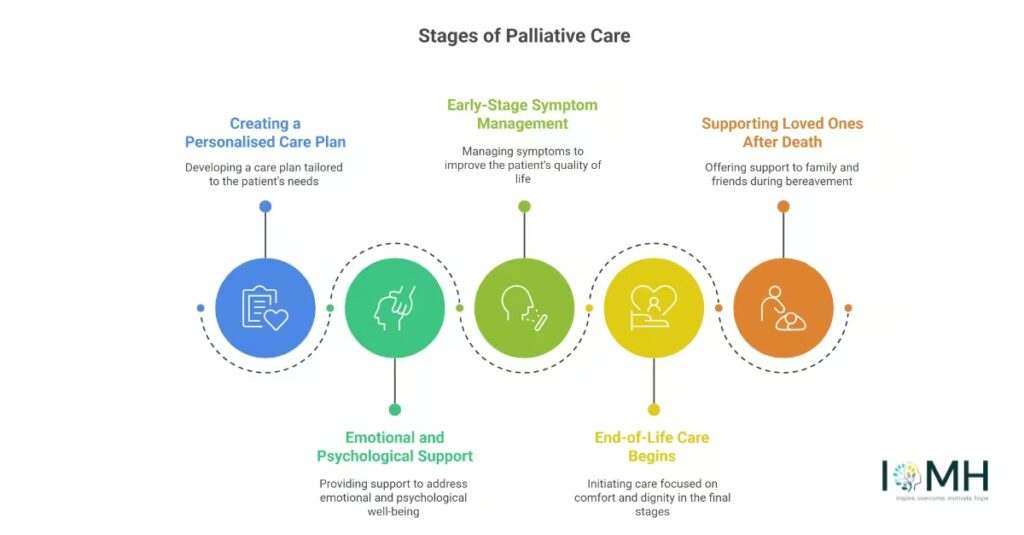
Stage 1: Creating a Personalised Care Plan
This initial stage focuses on building a tailored care strategy based on the patient’s diagnosis, preferences, and future needs. It includes:
- A full clinical assessment by NHS professionals.
- Advance care planning, including decisions about treatment goals and preferred place of care.
- Involvement of the patient, family, and multidisciplinary team to ensure shared understanding.
By establishing clear goals early, this stage sets the foundation for responsive and respectful care throughout the journey.
Stage 2: Emotional and Psychological Support
Once a care plan is in place, the second stage of palliative care focuses on the emotional wellbeing of both the patient and their loved ones. Serious illness often brings anxiety, fear, and grief—making psychological support a vital part of holistic care.
Key elements of this stage include:
- Access to counselling, psychotherapy, and mental health services.
- Support groups and peer networks facilitated by NHS or local charities.
- Spiritual care and cultural sensitivity, especially for diverse communities.
This stage of the 5 stages of palliative care ensures that emotional resilience is nurtured alongside physical treatment. The NHS recognises that compassionate communication and psychological support can significantly improve quality of life and reduce distress.
Stage 3: Early-Stage Symptom Management
At this stage of the 5 stages of palliative care, the focus shifts to managing symptoms that may arise from the underlying illness or its treatment. The goal is to maintain comfort and functionality while respecting the patient’s wishes.
Key aspects include:
- Pain relief through medication, physiotherapy, or complementary therapies
- Management of fatigue, breathlessness, nausea, and other distressing symptoms.
- Coordination with NHS palliative care teams to ensure timely interventions.
Stage 4: End of Life Care Begins
This stage marks a sensitive transition in the 5 stages of palliative care, where the focus shifts entirely to comfort, dignity, and emotional support during the final phase of life. It’s a time when medical interventions are scaled back, and the emphasis is placed on quality rather than quantity of life.
Key components include:
- Pain and symptom control tailored to the patient’s evolving needs.
- Emotional and spiritual support for both the patient and their loved ones.
- Coordination with NHS end-of-life care services, including hospice or home-based care options.
- Respecting cultural, religious, and personal preferences around death and dying.
The NHS provides comprehensive guidance and resources to ensure that patients receive compassionate care in their preferred setting. This stage is not just about managing physical symptoms—it’s about honouring the person’s life, values, and choices.
Stage 5: Supporting Loved Ones After Death
The final stage of the 5 stages of palliative care extends beyond the patient’s passing. It focuses on bereavement support for family members, carers, and close friends—recognising that grief is a deeply personal and often prolonged journey.
Key elements include:
- Access to NHS bereavement services, including counselling and support groups.
- Guidance on practical matters such as funeral arrangements, benefits, and legal documentation.
- Emotional support tailored to cultural and religious needs, especially for communities with specific mourning practices.
This stage reinforces the NHS’s commitment to holistic care—not just for the patient, but for those left behind. By offering structured support, it helps loved ones navigate loss with dignity, compassion, and community.
How the NHS Delivers Palliative Care
The 5 stages of palliative care NHS model is supported by a robust framework of services designed to meet the diverse needs of patients and families. The NHS delivers palliative care through a multidisciplinary approach that includes:

- GPs and community nurses who coordinate care at home.
- Hospice teams offering specialised support in residential settings.
- Hospital-based palliative care units for complex symptom management.
- Allied health professionals, including physiotherapists, dietitians, and chaplains.
Care is tailored to individual preferences, cultural backgrounds, and clinical needs. The NHS also provides digital resources, helplines, and carer support programmes to ensure accessibility and equity across regions.
By embedding the 5 stages of palliative care into its service delivery, the NHS ensures that patients receive timely, compassionate care that evolves with their condition.

Why Understanding the 5 Stages Matters
Recognising the 5 stages of palliative care empowers families and professionals to make informed decisions, reduce stress, and improve outcomes. Here’s why it matters:
If you already hold nursing or healthcare-related qualifications abroad, you may be able to use them to apply for more advanced carer jobs UK for overseas applicants. However, these may need to be translated and verified for UK equivalence.
- Clarity and preparedness: Families can anticipate changes and plan ahead.
- Improved communication: Healthcare teams and carers share a common framework.
- Enhanced dignity: Patients receive care that respects their values and wishes
- Better resource use: NHS services are accessed appropriately and efficiently.
Whether you’re a carer, clinician, or patient, understanding these stages helps you navigate the journey with confidence and compassion.
Conclusion
Understanding the 5 stages of palliative care empowers families, carers, and healthcare professionals to provide compassionate, structured support throughout a patient’s journey. From personalised care planning to bereavement support, each stage reflects the NHS’s commitment to dignity, empathy, and holistic wellbeing.
Whether you’re navigating care decisions for a loved one or working within the UK healthcare system, recognising these stages can reduce uncertainty and improve outcomes. The NHS offers a wealth of resources to guide you—so don’t hesitate to reach out to your GP, palliative care team, or local support services.

- All Courses
 Personal Development (1283)
 Career Bundle (479)
 Management & Administration (460)
 Employability (439)
 Health & Social Care (411)
 Health and Safety (382)
 Business (320)
 Teaching & Education (268)
 IT & Software (263)
 Health and Fitness (238)
 QLS Endorsed Courses (219)
 Mental Health & Counselling (168)
 Science & Technology (153)
 Accounting & Finance (144)
 Sales & Marketing (128)
 Construction & Engineering (126)
 Art & Design (125)
 Compliance & Law (112)
 Language (86)
 Photography & Lifestyle (58)
 Animal Care (57)
 Food Safety & Hygine (53)
 Diet & Nutrition (49)
 Sports & Fitness (47)
 Makeup & Beauty (43)
 First Aid (39)
 Agriculture (2)
0 responses on "Understanding the 5 Stages of Palliative Care With Examples"