




Understanding the Financial Realities of Dementia Care
When a loved one is diagnosed with dementia, families often face a whirlwind of emotional and practical decisions. Among the most pressing concerns is the cost of long-term care—particularly whether dementia sufferers have to pay care home fees in the UK.
The answer isn’t straightforward. While some individuals may qualify for full funding through the NHS, others may be required to contribute based on their financial situation. The distinction between healthcare needs and social care needs plays a pivotal role in determining who pays and how much.
In this blog, we’ll break down the funding options available, explain key eligibility criteria, and help you navigate the system with confidence. Whether you’re planning ahead or facing an urgent decision, understanding the rules around dementia care home fees can make all the difference.
These skills are not just techniques—they are everyday practices that ensure patients feel respected, supported, and truly cared for, while also helping staff deliver safe, reliable, and high-quality care.



Types of Care: Health Needs vs Social Care Needs
To understand whether dementia sufferers have to pay care home fees, it’s essential to distinguish between two types of care: healthcare and social care. This distinction forms the basis of how funding decisions are made in the UK.
Healthcare Needs
These are medical needs that require ongoing clinical support, such as:
- Managing complex symptoms of dementia
- Administering medication
- Monitoring unpredictable behaviours or risks
If a person’s dementia-related needs are primarily medical, they may be eligible for NHS Continuing Healthcare (CHC)—a fully funded package that covers care home fees in full.
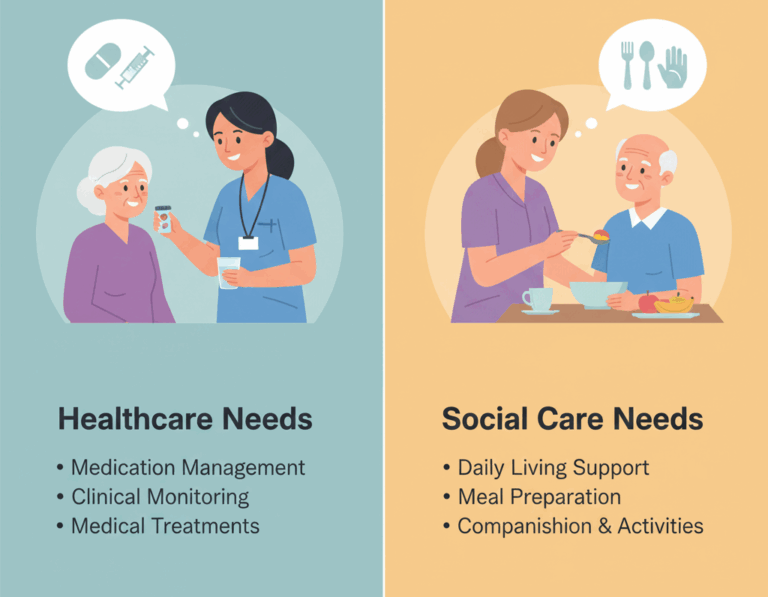
Social Care Needs
These involve support with daily living activities, such as:
- Washing, dressing, and eating
- Supervision for safety
- Emotional and social support
Social care is means-tested, meaning the person’s income, savings, and assets will determine whether they must pay care home fees. Most dementia sufferers fall into this category unless their needs are deemed clinically complex.
Understanding this distinction is the first step in answering the question: do dementia sufferers have to pay care home fees? The answer depends on which type of care they require—and how it’s assessed.
NHS Continuing Healthcare (CHC): When Is Dementia Fully Funded?
One of the most misunderstood aspects of dementia care funding in the UK is NHS Continuing Healthcare (CHC). Many families ask: do dementia sufferers have to pay care home fees if their condition is severe? The answer hinges on whether their needs qualify as healthcare needs under NHS guidelines.
What Is NHS Continuing Healthcare?
CHC is a fully funded care package provided by the NHS for individuals with significant, ongoing health needs. If approved, it covers:
- Care home accommodation
- Nursing and personal care
- Medical support related to dementia
This funding is not means-tested, meaning it’s based on clinical need—not income or savings.
Eligibility Criteria for CHC
To qualify, the person must undergo a comprehensive assessment that considers:
- Complexity of needs (e.g. unpredictable behaviours, risk of harm)
- Intensity and frequency of care required
- Unpredictability and deterioration of condition
Dementia sufferers with advanced symptoms, such as severe memory loss, aggression, or inability to perform basic tasks, may meet these criteria.
How to Apply for CHC
- Request an assessment through your GP, social worker, or care home manager
- A Checklist Tool is used first, followed by a Decision Support Tool (DST) if needed
- If approved, the NHS covers all care home fees
What If CHC Is Denied?
If the person doesn’t meet the criteria, they’ll be referred to the local authority for a financial assessment—which may result in partial or full payment of care home fees.
Understanding CHC is vital when asking do dementia sufferers have to pay care home fees. It’s the only route to non-means-tested, fully funded care, and knowing how to navigate the assessment process can make a life-changing difference.
Financial Assessment: Who Pays If CHC Is Denied?
If a dementia sufferer is found ineligible for NHS Continuing Healthcare (CHC), the responsibility for funding care shifts to the local authority—but only after a means-tested financial assessment. This is where many families discover that dementia sufferers may indeed have to pay care home fees, depending on their financial circumstances.
How the Financial Assessment Works
The local council will evaluate:
- Income (e.g. pensions, benefits)
- Savings and investments
- Property ownership
Based on this assessment, the person will fall into one of three funding brackets:
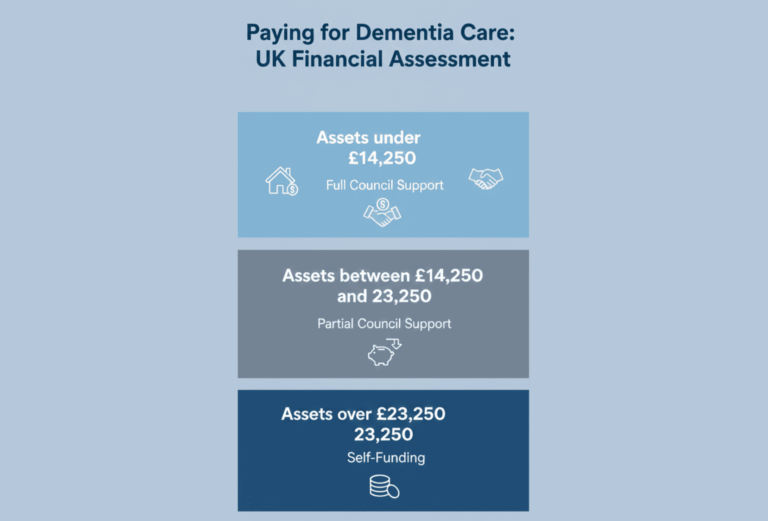
| Assets | Who Pays |
|---|---|
| Over £23,250 | Self-funded (must pay full care home fees) |
| £14,250–£23,250 | Partial contribution (council pays some, individual pays some) |
| Under £14,250 | Council-funded (individual contributes income only) |
What About the Family Home?
- If the dementia sufferer owns a property, it may be included in the assessment.
- However, if a spouse, partner, or dependent still lives in the home, it’s usually excluded from the calculation.
- The 12-week property disregard may also apply, giving families time to plan before fees are charged.
Benefits That Can Help Offset Dementia Care Home Fees
Even if a dementia sufferer is required to contribute towards care home fees, there are several state benefits that can help reduce the financial burden. These benefits are especially important for those who fall just above the funding threshold or are self-funding due to property ownership.
Attendance Allowance
- Available to individuals aged 65+ who need help with personal care due to a disability or illness—including dementia.
- Not means-tested, so savings and income don’t affect eligibility.
- Paid at two rates:Lower rate (£72.65/week) – for help during the day Higher rate (£108.55/week) – for help day and night
Personal Independence Payment (PIP)
- For those under 65 with long-term health conditions, including early-onset dementia.
- Covers daily living and mobility needs.
- Paid at varying rates depending on severity.
Carer’s Allowance
- If someone is providing at least 35 hours of care per week, they may be eligible.
- Currently £81.90/week, though it may affect other benefits.
- Paid at varying rates depending on severity.
Pension Credit
- Can top up income for those on a low pension.
- May also entitle claimants to Council Tax reductions and free NHS dental care.
Why These Benefits Matter
When asking do dementia sufferers have to pay care home fees, it’s vital to consider these benefits as supplementary support. While they won’t cover full fees, they can significantly ease the financial pressure—especially for families navigating partial funding or private care.
Common Misconceptions About Dementia and Care Fees
When families begin exploring care options, they often encounter conflicting advice and assumptions. To answer the question do dementia sufferers have to pay care home fees accurately, it’s important to separate fact from fiction.
Misconception 1: “A dementia diagnosis means free care”
While dementia is a serious medical condition, it doesn’t automatically entitle someone to free care home funding. Only those with complex, unpredictable health needs may qualify for NHS Continuing Healthcare (CHC).
Misconception 2: “If someone has dementia, they’ll automatically qualify for NHS Continuing Healthcare”
Not true. CHC funding is based on clinical complexity, not diagnosis alone. Many dementia sufferers—especially in early or moderate stages—do not meet the threshold for NHS-funded care and must undergo a detailed assessment.
Misconception 3: “The local authority will always pay if the person can’t afford it”
While councils do provide support, it’s means-tested. If the person has savings or owns property, they may still be required to contribute—even if their income is low. Families are often surprised to learn that owning a home can trigger full self-funding.
Misconception 4: “You can’t challenge a funding decision”
You absolutely can. If CHC is denied or the financial assessment seems unfair, families have the right to appeal, request a review, or seek advice from advocacy organisations like Age UK or Beacon CHC.
Misconception 5: “Benefits like Attendance Allowance cover care home fees”
These benefits help—but they don’t cover full costs. Attendance Allowance, PIP, and Carer’s Allowance are supplementary, not substitutes for care home funding. They’re vital, but not comprehensive.
Common Misconceptions About Dementia and Care Fees
When exploring whether dementia sufferers have to pay care home fees, it’s not just about finances—it’s also about legal preparedness. Dementia can affect decision-making capacity, so families must plan ahead to ensure care and funding decisions are handled appropriately.
Mental Capacity and Decision-Making
- Dementia often leads to loss of mental capacity, meaning the person may no longer be able to make decisions about their care or finances.
- The Mental Capacity Act 2005 provides a legal framework for acting in the person’s best interests.
Power of Attorney (POA)
- Setting up a Lasting Power of Attorney (LPA) allows a trusted individual to manage: 1) Health and welfare decisions (e.g. care home choice), 2) Property and financial affairs (e.g. paying fees, accessing benefits)
- It must be arranged while the person still has capacity and registered with the Office of the Public Guardian.
Deputyship
- If no LPA is in place and the person loses capacity, families must apply to the Court of Protection for deputy ship—a more complex and costly process.
Challenging Funding Decisions
- If CHC is denied or the financial assessment seems unfair, families can:
- Request a review or reassessment
- Lodge a formal complaint
- Seek advice from organisations like Age UK, Beacon CHC, or Citizens Advice
Real-Life Scenarios: What Families Should Expect

Understanding funding rules is one thing—navigating them in real life is another. To help answer do dementia sufferers have to pay care home fees, let’s explore two common scenarios that illustrate how funding decisions play out in practice.
Case Study 1: CHC Approval for Advanced Dementia
Situation: Mr. Ahmed, aged 82, has late-stage dementia with severe memory loss, aggression, and frequent falls. His care needs are unpredictable and require constant nursing supervision.
Outcome: After a CHC assessment initiated by his GP, Mr. Ahmed was deemed eligible for NHS Continuing Healthcare. His care home fees—including accommodation and nursing—were fully covered by the NHS.
Lesson: When dementia symptoms are complex and medically demanding, CHC can provide full funding. Families should push for an assessment early and ensure all care needs are documented.
Case Study 2: Self-Funding with Council Support
Situation: Mr. Ahmed, aged 82, has late-stage dementia with severe memory loss, aggression, and frequent falls. His care needs are unpredictable and require constant nursing supervision.
Outcome: After a CHC assessment initiated by his GP, Mr. Ahmed was deemed eligible for NHS Continuing Healthcare. His care home fees—including accommodation and nursing—were fully covered by the NHS.
Lesson: When dementia symptoms are complex and medically demanding, CHC can provide full funding. Families should push for an assessment early and ensure all care needs are documented.

Frequently Asked Questions
Yes—unless they qualify for NHS Continuing Healthcare (CHC), which is based on clinical need, not diagnosis. If CHC is denied, a means-tested financial assessment determines who pays.
If the person has over £23,250 in savings or assets (including property), they’ll likely need to self-fund their care. Below that, the local authority may contribute.
Often, yes. But if a spouse or dependent still lives in the home, it may be excluded from the financial assessment. The 12-week property disregard also gives families time to plan.
Only if their needs are deemed complex, intense, and unpredictable enough to qualify for CHC funding. Otherwise, care is means-tested and may involve full or partial payment.
Ask your GP, social worker, or care home manager to initiate a CHC assessment. It starts with a Checklist Tool, followed by a Decision Support Tool (DST) if needed.
Yes. Families can request a reassessment, lodge a formal complaint, or seek help from advocacy services like Beacon CHC or Age UK.

- All Courses
 Personal Development (1283)
 Career Bundle (479)
 Management & Administration (460)
 Employability (439)
 Health & Social Care (411)
 Health and Safety (382)
 Business (320)
 Teaching & Education (268)
 IT & Software (263)
 Health and Fitness (238)
 QLS Endorsed Courses (219)
 Mental Health & Counselling (168)
 Science & Technology (153)
 Accounting & Finance (144)
 Sales & Marketing (128)
 Construction & Engineering (126)
 Art & Design (125)
 Compliance & Law (112)
 Language (86)
 Photography & Lifestyle (58)
 Animal Care (57)
 Food Safety & Hygine (53)
 Diet & Nutrition (49)
 Sports & Fitness (47)
 Makeup & Beauty (43)
 First Aid (39)
 Agriculture (2)
0 responses on "Do Dementia Sufferers Have to Pay Care Home Fees in the UK?"