




Introduction to SEN Teaching Assistants
A SEN Teaching Assistant (Special Educational Needs Teaching Assistant) plays a crucial role in UK classrooms by supporting children with additional learning needs. These may include autism, ADHD, dyslexia, speech and language difficulties, or social, emotional, and behavioural challenges. While teachers manage the class as a whole, SEN TAs provide targeted support to ensure every child can engage, learn, and progress.
Demand for SEN Teaching Assistant jobs has grown across the UK. As a result, schools prioritise inclusive education. Both mainstream and specialist settings increasingly rely on SEN-trained teaching assistants to support diverse learners.
This career appeals to those who want to make a meaningful difference in education. A degree is not always required to get started. With recognised training such as a Level 2 or Level 3 Teaching Assistant Course, or a specialist SEN Teaching Assistant course, you can gain the knowledge needed to support pupils effectively and begin a rewarding career.



SEN Teaching Assistant Job Description: What Does the Role Involve?
The role of a SEN Teaching Assistant is both varied and rewarding, with responsibilities that go beyond those of a general teaching assistant. While all TAs support teachers and pupils in the classroom, SEN TAs focus specifically on children with additional needs, ensuring they can access the curriculum and feel included in school life.
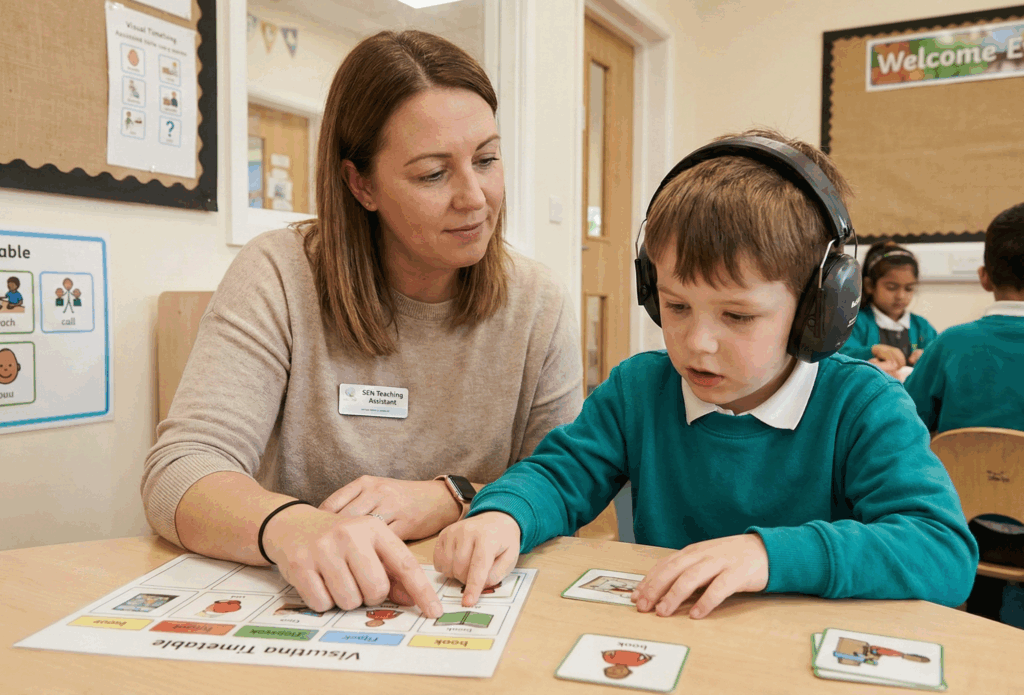
Key Responsibilities of a Teaching Assistant SEN Role
- One-to-one support: Working closely with pupils who need extra help, whether with reading, writing, or classroom activities.
- Small group support: Leading or assisting small groups of children who benefit from tailored learning strategies.
- Behavioural support: Helping pupils develop social skills, manage emotions, and stay engaged in lessons.
- Assisting with individual education plans (IEPs): Supporting teachers in delivering learning strategies designed for pupils with SEN.
- Practical classroom help: Preparing resources, adapting materials for accessibility, and ensuring children with SEN can participate in activities.
- Pastoral care: Providing reassurance, encouragement, and building strong, positive relationships with pupils.
How It Differs from a General Teaching Assistant
Unlike general classroom teaching assistants, SEN TAs require specialised knowledge and strategies to manage specific learning differences. For example, they may use visual aids to support children with autism or phonics-based tools for pupils with dyslexia. This makes the SEN role more specialised and highly valued in schools.
SEN Teaching Assistant Salary in the UK
One of the most common questions about this role is how much a SEN Teaching Assistant earns. In the UK, salaries vary based on location, experience, and qualifications, but the role offers stability and long-term prospects.
On average, a SEN Teaching Assistant’s salary ranges between £15,000 and £23,000 per year for full-time positions. Salaries are typically higher in London and larger cities due to greater demand and higher living costs. Those with specialist SEN training, such as autism support, speech and language needs, or behaviour management, often earn towards the upper end of this range.
Part-time SEN Teaching Assistants usually earn £9 to £12 per hour, depending on experience and qualifications. Many roles are term-time only, meaning pay is spread across the year but based on school working weeks.
Overall, SEN Teaching Assistants often earn slightly more than general teaching assistants, as the role requires additional skills and responsibilities. Completing qualifications like a Level 3 Teaching Assistant Course can further improve earning potential.
Qualifications and Training for SEN Teaching Assistants
One of the advantages of pursuing a career as a SEN Teaching Assistant is that there are clear pathways into the role, with training designed to prepare you for the unique challenges of working with children who have special educational needs. While some schools may accept applicants without formal qualifications, gaining recognised training significantly boosts your chances of employment and progression.

Entry-Level Qualifications
A Level 2 Teaching Assistant Course is the starting point for many. This qualification provides a foundation in classroom support, safeguarding, and child development. It is ideal for those with little or no prior experience and helps you understand the basics of working in education.
Advanced Training
For those aiming to take on greater responsibility, a Level 3 Teaching Assistant Course is highly recommended. This advanced qualification equips you with in-depth skills for working independently with groups or individuals, supporting pupils with additional needs, and even covering lessons in some cases.
SEN-Specific Courses
Completing a dedicated SEN Teaching Assistant course or enrolling in special educational needs teaching assistant training can set you apart from other candidates. These courses cover essential SEN strategies, from managing behaviour to using adaptive teaching methods tailored to conditions such as autism, ADHD, or dyslexia.
Flexible Learning Options
With more people seeking accessible training, many providers now offer online and blended learning opportunities. These courses allow you to study around work or family commitments, making them ideal for career changers or those seeking to upskill.
Skills Needed to Work as an SEN Teaching Assistant
While qualifications and training provide the foundation and it’s the personal skills and qualities that make a truly effective SEN Teaching Assistant. Supporting children with special educational needs requires patience, understanding, and the ability to adapt to a wide range of situations.
Core Skills Every SEN TA Should Have
- Patience and empathy: Children with SEN may need more time and support to grasp concepts or manage their emotions. A calm and compassionate approach is essential.
- Strong communication skills: SEN TAs must be able to communicate clearly with pupils, teachers, and parents, often using creative methods to ensure children understand.
- Adaptability: No two days are the same in a classroom, especially when supporting SEN pupils. Being flexible and responsive is key.
- Behaviour management: Many SEN pupils need help regulating emotions and behaviour. Skills in de-escalation and positive reinforcement are vital.
- Creativity: Tailoring resources and lessons to meet different learning needs often requires thinking outside the box.
- Teamwork: SEN TAs work closely with teachers, SEN coordinators (SENCOs), and sometimes external professionals like speech and language therapists.
Additional Attributes
Beyond these core skills, qualities such as resilience, problem-solving ability, and a genuine passion for helping children reach their potential are invaluable. Many schools also value TAs who are willing to pursue ongoing special educational needs teaching assistant training to refine and expand their skills.
Work Experience and Career Entry
For anyone considering a career as a SEN Teaching Assistant, gaining practical experience is just as important as completing formal qualifications. Schools value candidates who understand the realities of working with children with special educational needs and can demonstrate hands-on skills.
Why Experience Matters
Work experience allows you to:
- Develop confidence in supporting pupils with a range of learning needs.
- Understand classroom routines and how SEN strategies are applied in real settings.
- Build valuable relationships with teachers and pupils.
- Strengthen your CV and improve your chances of securing SEN Teaching Assistant jobs.
How to Gain SEN Experience
- Volunteering in schools: Many schools welcome volunteers to support SEN pupils, especially in primary or special schools.
- Placements during courses: A Level 2 Teaching Assistant Course or Level 3 Teaching Assistant Course often includes practical placements, giving you direct classroom experience.
- Agency work: Education recruitment agencies sometimes offer temporary placements, which can help you build experience and open the door to permanent positions.
- After-school or community programmes: Supporting children with additional needs in non-school settings can also provide valuable experience.
Making the Transition to Employment
Even short-term placements or voluntary roles can make a significant difference when applying for paid positions. Schools often hire teaching assistants they already know and trust, so work experience can be your best route into employment.
SEN Teaching Assistant Employment Opportunities in the UK
The demand for SEN Teaching Assistants continues to rise across the UK, as schools place increasing emphasis on inclusive education and personalised learning. As a result, this creates a wide range of opportunities for those looking to enter the profession.
Where to Find SEN Teaching Assistant Jobs

- Mainstream schools: Many primary and secondary schools employ SEN TAs to support children with additional needs within regular classrooms.
- Special schools: These schools cater specifically for pupils with more complex needs, offering specialist teaching and support roles.
- Nurseries and early years settings: Early intervention is critical for many children with SEN, creating opportunities for TAs in early years education.
- Alternative provision: Pupil referral units and behaviour support centres often require skilled SEN assistants.
How to Secure Opportunities
Finding the right role requires persistence and knowing where to look:
- Job boards: Platforms such as TES, Indeed, and Reed regularly list SEN Teaching Assistant jobs.
- Local authority websites: Councils often advertise school vacancies directly.
- Agencies: Specialist education recruitment agencies can connect you with temporary or permanent SEN TA positions.
- Networking: Volunteering or completing placements frequently leads to paid employment in the same school.
Flexibility in Employment
Roles are available on both full-time and part-time contracts. A Teaching Assistant SEN role can therefore be tailored to suit parents, students, or anyone balancing work with other commitments.
Professional Development and Career Prospects
Becoming a SEN Teaching Assistant is often just the beginning of a rewarding career in education. With experience, further training, and dedication, there are many ways to grow professionally and expand your opportunities.
Advancing Within the Role
Many SEN TAs choose to build on their skills by progressing from a Level 2 Teaching Assistant Course to a Level 3 Teaching Assistant Course. This not only increases confidence but can also lead to greater responsibilities, such as leading small groups or working more independently with SEN pupils.
Specialisation Options
Professional development often means focusing on a particular area of SEN. Popular pathways include:
- Autism support: Gaining expertise in supporting pupils on the autism spectrum
- Speech and language development: Working alongside therapists to improve communication skills.
- Behavioural support: Helping pupils with social, emotional, and behavioural challenges.
Completing a dedicated SEN Teaching Assistant course or other special educational needs teaching assistant training can make you stand out in these specialised roles.
Progression Beyond the TA Role
Some SEN Teaching Assistants go on to become Higher Level Teaching Assistants (HLTAs), taking on additional teaching responsibilities. Others use the role as a stepping stone into teacher training programmes such as PGCE or QTS.
Lifelong Learning
Professional growth doesn’t stop once you’re in the classroom. Many schools and training providers offer workshops and online courses to keep skills up to date, from safeguarding training to SEN-specific teaching strategies.
Conclusion: Is a Career as an SEN Teaching Assistant Right for You?
Working as a SEN Teaching Assistant is one of the most rewarding roles within UK education. It’s a career that allows you to make a direct impact on children’s lives, helping them overcome barriers to learning and supporting them to achieve their full potential.
The role does come with challenges from managing behavioural difficulties to adapting lessons for diverse learning needs — but the rewards are immense. Every breakthrough, no matter how small, can make a huge difference to a child’s confidence and future.
For those considering this path, the journey can start with accessible qualifications such as a Level 2 Teaching Assistant Course or a Level 3 Teaching Assistant Course. Specialised options, including a dedicated SEN Teaching Assistant course or other special educational needs teaching assistant training, can give you the skills and knowledge to excel in this role.
Whether you’re looking for flexible working hours, a stable role in education, or a long-term career that could lead to teaching, becoming a SEN TA opens the door to numerous opportunities.
Resources:
IOMH offers a range of online courses designed to support your journey to becoming a successful SEN teaching assistant.

Frequently Asked Questions
A SEN Teaching Assistant supports children with special educational needs, such as autism, ADHD, dyslexia, or behavioural challenges. They provide one-to-one or small group support, adapt learning materials, and help pupils feel included in the classroom.
Formal qualifications aren’t always required, but completing a Level 2 Teaching Assistant Course, Level 3 Teaching Assistant Course, or a dedicated SEN Teaching Assistant course greatly improves your chances of employment. Schools also value candidates who have completed special educational needs teaching assistant training.
The average SEN Teaching Assistant salary ranges from £15,000 to £23,000 per year for full-time roles. Pay varies depending on location, experience, and whether you have specialist SEN training.
Yes, but having experience makes you more employable. Volunteering in schools, taking part in placements through a teaching assistant course, or working with children in community settings are great ways to gain relevant experience.
Key skills include patience, empathy, adaptability, strong communication, and behaviour management. Creativity and teamwork are also vital when supporting pupils with diverse learning needs.
You can find SEN Teaching Assistant jobs on platforms like TES, Indeed, and Reed, as well as on local authority websites. Recruitment agencies also advertise both full-time and part-time opportunities in mainstream and special schools.
Absolutely. Many SEN TAs progress to Higher Level Teaching Assistant (HLTA) roles, specialise in areas like autism or behaviour support, or move into teacher training (PGCE or QTS).

- All Courses
 Personal Development (1283)
 Career Bundle (479)
 Management & Administration (460)
 Employability (439)
 Health & Social Care (411)
 Health and Safety (382)
 Business (320)
 Teaching & Education (268)
 IT & Software (263)
 Health and Fitness (238)
 QLS Endorsed Courses (219)
 Mental Health & Counselling (168)
 Science & Technology (153)
 Accounting & Finance (144)
 Sales & Marketing (128)
 Construction & Engineering (126)
 Art & Design (125)
 Compliance & Law (112)
 Language (86)
 Photography & Lifestyle (58)
 Animal Care (57)
 Food Safety & Hygine (53)
 Diet & Nutrition (49)
 Sports & Fitness (47)
 Makeup & Beauty (43)
 First Aid (39)
 Agriculture (2)
0 responses on "SEN Teaching Assistant Career Guide: Training, Salary & Jobs in the UK"