Fueling your journey to inspire, overcome, and motivate towards a brighter future. Join us today
Log In
Sign Up
Don’t have an account yet? Sign Up
Already have an account? Sign In
By signing up, I accept IOMH (Terms & Conditions)
Want to master power electronics? Learn rectifiers, choppers & inverters in this Power Electronics for Electrical Engineering course. Ready to start?
Enrolled Students: 4
Join our Power Electronics for Electrical Engineering course and discover your hidden skills, setting you on a path to success in this area. Get ready to improve your skills and achieve your biggest goals. The Power Electronics for Electrical Engineering course has everything you need to get a great start in this sector.
Improving and moving forward is key to getting ahead personally. The Power Electronics for Electrical Engineering course is designed to teach you the important stuff quickly and well, helping you to get off to a great start in the field. So, what are you looking for? Enrol now!
This course covers the topic you must know to stand against the tough competition. The future is truly yours to seize with this Power Electronics for Electrical Engineering. Enrol today and complete the course to achieve a certificate that can change your career forever.
After studying the course, an MCQ exam or assignment will test your skills and knowledge. You have to get a score of 60% to pass the test and get your certificate.
After completing the Power Electronics for Electrical Engineering course, you can order your CPD Accredited Digital/ PDF Certificate for £5.99.
You can get the CPD Accredited Hard Copy Certificate
for £12.99.
Inside the UK: £3.99
International: £10.99
This Power Electronics for Electrical Engineering is suitable for anyone aspiring to start a career in relevant field; even if you are new to this and have no prior knowledge, this course is going to be very easy for you to understand.
On the other hand, if you are already working in this sector, this course will be a great source of knowledge for you to improve your existing skills and take them to the next level.
This course has been developed with maximum flexibility and accessibility, making it ideal for people who don’t have the time to devote to traditional education.
You don’t need any educational qualifications or experience to enrol in the Power Electronics for Electrical Engineering course.
Do note: You must be at least 16 years old to enrol.
Any internet-connected device, such as a computer, tablet, or smartphone, can access this online course.
The certification and skills you get from this Power Electronics for Electrical Engineering Course can help you advance your career and gain expertise in several fields, allowing you to apply for high-paying jobs in related sectors.
1. You need to find the right course on our IOMH website at first. You can search for any course or find the course from the Courses section of our website.
2. Click on Take This Course button, and you will be directed to the Cart page.
3. You can update the course quantity and also remove any unwanted items in the CART and after that click on the Checkout option and enter your billing details.
4. Once the payment is made, you will receive an email with the login credentials, and you can start learning after logging into the portal.
After purchasing the course, you should receive an email with the login credentials within 24 hours. Please check your spam or junk folder if you didn’t receive it in your inbox. You can access your courses by logging into your account. If you still need any assistance, please get in touch with our Customer Support team by providing the details of your purchase.
You should receive your Digital Certificate within 24 hours after placing the order, and it will take 3-9 days to deliver the hard copies to your address if you are in the UK.
For International Delivery, it will take 20-25 days.
If you require any assistance, get in touch with our dedicated Customer Support team, and your queries/issues will be dealt with accordingly.
You can make the payment using PayPal or you can Bank Transfer the amount.
For Bank transfer you will require an invoice from us and you need to contact our Customer Support team and provide details of your purchase to get the invoice.
After that, you will receive an email with the invoice and bank details and you can make the payment accordingly.
We are an online course provider, and learners from anywhere in the world can enrol on our courses using an internet-connected device.
To resolve this issue, please log out of your account and then log back in.
| Unit 1- Introduction to Power Electronics Components | |||
| Module 1- Introduction to Power Electronics | 00:13:00 | ||
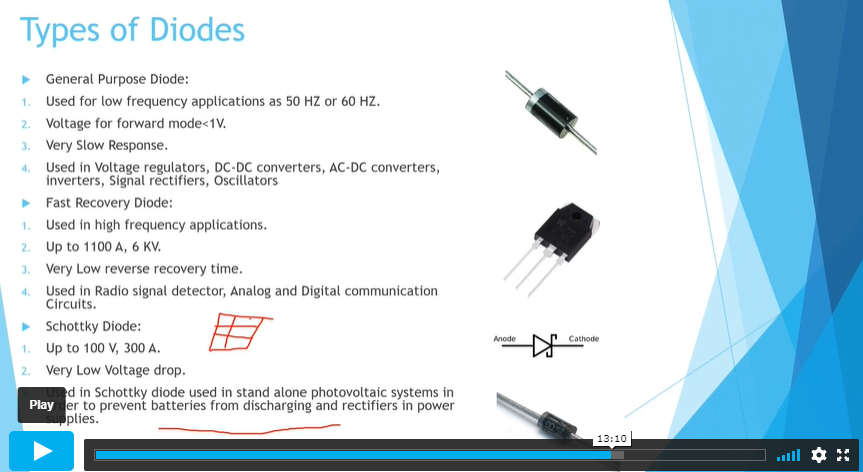
| Module 2- Uncontrolled Switches | 00:17:00 | ||
| Module 3- What is the Benefit of Diode | 00:06:00 | ||
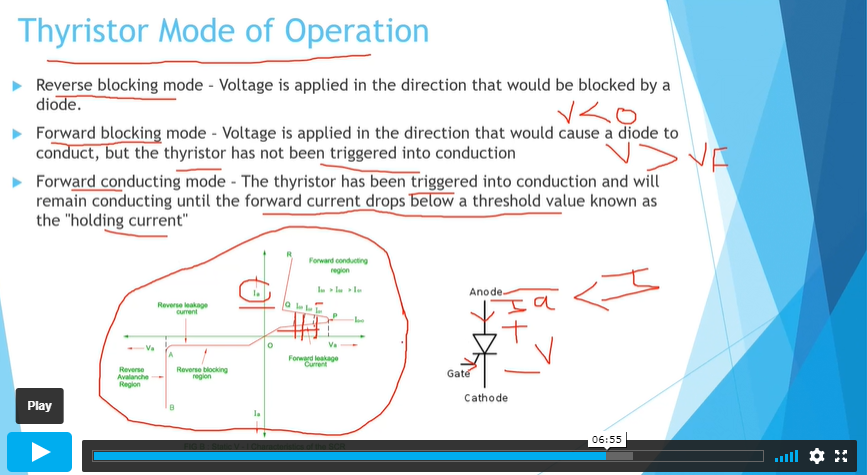
| Module 4- Semi-Controlled Switches Part 1 | 00:09:00 | ||
| Module 5- Semi-Controlled Switches Part 2 | 00:14:00 | ||
| Module 6- Semi-Controlled Switches Part 3 | 00:05:00 | ||
| Module 7- What is the Benefit of Thyristor | 00:05:00 | ||
| Module 8- Fully Controlled Switches Part 1 | 00:17:00 | ||
| Module 9- Fully Controlled Switches Part 2 | 00:10:00 | ||
| Module 10- Fully Controlled Switches Part 3 | 00:12:00 | ||
| Unit 2- Fundamentals of Rectifier Circuits | |||
| Module 1- Overview on Rectifiers | 00:02:00 | ||
| Module 2- Rectifier Definition | 00:01:00 | ||
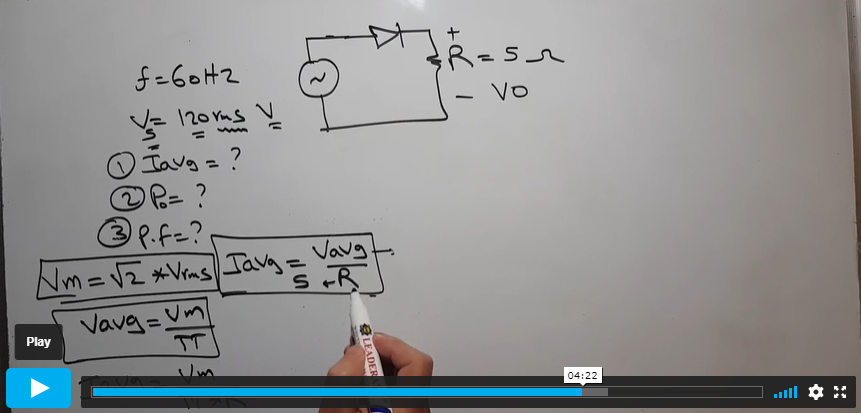
| Module 3- Half Wave Uncontrolled Rectifier with R Load | 00:21:00 | ||
| Module 4- Example on Half Wave Uncontrolled Rectifier with R Load Part 1 | 00:06:00 | ||
| Module 5- Example on Half Wave Uncontrolled Rectifier with R Load Part 2 | 00:07:00 | ||
| Module 6- Half Wave Uncontrolled Rectifier with RL Load | 00:10:00 | ||
| Module 7- Derivation of the Discontinuous Current in R-L Load | 00:08:00 | ||
| Module 8- Freewheeling Diode (Commutation Diode) | 00:03:00 | ||
| Module 9- Half Wave R-L Load with FWD | 00:09:00 | ||
| Module 10- Difference Between Continuous and Discontinuous Mode in RL Load | 00:07:00 | ||
| Module 11- Half Wave RL Load with FWD Continuous Mode | 00:06:00 | ||
| Module 12- Example on Half Wave Rectifier with FWD | 00:07:00 | ||
| Module 13- Bridge Full Wave Uncontrolled Rectifier Part 1 | 00:07:00 | ||
| Module 14- Bridge Full Wave Uncontrolled Rectifier Part 2 | 00:05:00 | ||
| Module 15- Quick Revision on Bridge Full Wave Uncontrolled Rectifier | 00:06:00 | ||
| Module 16- Firing Angle | 00:02:00 | ||
| Module 17- Half Wave Controlled Rectifier R Load | 00:05:00 | ||
| Module 18- Half Wave Controlled Rectifier R-L Load | 00:04:00 | ||
| Module 19- Half Controlled R-L Load with FWD | 00:06:00 | ||
| Module 20- Example 1 | 00:07:00 | ||
| Module 21- Example 2 | 00:08:00 | ||
| Module 22- Example 3 | 00:13:00 | ||
| Module 23- Example 4 | 00:09:00 | ||
| Module 24- Example 5 | 00:05:00 | ||
| Module 25- Fully Controlled Bridge Rectifier Part 1 | 00:06:00 | ||
| Module 26- Fully Controlled Bridge Rectifier Part 2 | 00:06:00 | ||
| Module 27- Quick Revision on Bridge Full Wave Controlled Rectifier | 00:02:00 | ||
| Module 28- Example 6 | 00:08:00 | ||
| Module 29- Half Controlled Bridge Rectifier | 00:08:00 | ||
| Module 30- Half Controlled Bridge Rectifier with FWD | 00:05:00 | ||
| Module 31- Example 7 | 00:06:00 | ||
| Module 32- Example 8 | 00:07:00 | ||
| Module 33- Performance Parameters | 00:04:00 | ||
| Module 34- Power Factor | 00:04:00 | ||
| Unit 3- Fundamentals of AC Choppers | |||
| Module 1- Introduction to AC Choppers | 00:02:00 | ||
| Module 2- Definition of AC Choppers | 00:05:00 | ||
| Module 3- Switching Techniques in AC Choppers | 00:06:00 | ||
| Module 4- Applications on AC Choppers | 00:03:00 | ||
| Module 5- Types of AC Choppers | 00:02:00 | ||
| Module 6- AC Chopper with R Load | 00:14:00 | ||
| Module 7- Example 1 on AC Chopper with R Load | 00:06:00 | ||
| Module 8- Example 2 on AC Chopper with R Load | 00:04:00 | ||
| Module 9- AC Chopper with L Load Part 1 | 00:13:00 | ||
| Module 10- AC Chopper with L Load Part 2 | 00:06:00 | ||
| Module 11- Example on AC Chopper with L Load | 00:08:00 | ||
| Module 12- AC Chopper with RL Series Load | 00:20:00 | ||
| Module 13- Example on AC Chopper with RL Series Load | 00:07:00 | ||
| Module 14- AC Chopper with RL Parallel Load | 00:25:00 | ||
| Module 15- Example on AC Chopper with RL Parallel Load | 00:06:00 | ||
| Module 16- AC Chopper with Pure Capacitive Load | 00:14:00 | ||
| Module 17- Example on AC Chopper with Pure Capacitive Load | 00:04:00 | ||
| Module 18- AC Chopper Loaded by Heavy Rectifier | 00:06:00 | ||
| Module 19- AC Chopper Loaded by an AC Motor with Sinusoidal Back Emf | 00:12:00 | ||
| Module 20- Example on AC Chopper Loaded by an AC Motor with Sinusoidal Back Emf | 00:08:00 | ||
| Module 21- Integral Cycle Control | 00:11:00 | ||
| Module 22- Example on Integral Cycle Control | 00:04:00 | ||
| Unit 4- Fundamentals of DC Choppers | |||
| Module 1- Introduction to DC Choppers | 00:02:00 | ||
| Module 2- Definition and Application of DC Choppers | 00:05:00 | ||
| Module 3- Step down DC Chopper with R Load | 00:12:00 | ||
| Module 4- Example on Step Dwon DC Chopper with R Load | 00:08:00 | ||
| Module 5- Generation of Duty Cycle | 00:09:00 | ||
| Module 6- Switching Techniques | 00:03:00 | ||
| Module 7- Step Down DC Chopper with RLE Load Part 1 | 00:19:00 | ||
| Module 8- Step Down DC Chopper with RLE Load Part 2 | 00:15:00 | ||
| Module 9- Example 1 on Step Down DC Chopper with RLE Load | 00:13:00 | ||
| Module 10- Example 2 on Step Down DC Chopper with RLE Load | 00:02:00 | ||
| Module 11- Step Up DC Chopper with R or RL Load | 00:09:00 | ||
| Module 12- Step Up DC Chopper with RE Load | 00:15:00 | ||
| Module 13- Example on Step Up DC Chopper with RE Load | 00:20:00 | ||
| Module 14- Buck Regulator Part 1 | 00:16:00 | ||
| Module 15- Buck Regulator Part 2 | 00:17:00 | ||
| Module 16- Example on Buck Regulator | 00:03:00 | ||
| Module 17- Boost Regulator | 00:23:00 | ||
| Module 18- Example on Boost Regulator | 00:06:00 | ||
| Module 19- Buck Boost Converter | 00:17:00 | ||
| Module 20- Example on Buck-Boost Converter | 00:05:00 | ||
| Unit 5- Fundamentals of Inverters | |||
| Module 1- Introduction to Inverters | 00:02:00 | ||
| Module 2- Definition of Inverters | 00:04:00 | ||
| Module 3- Importance and Applications of Inverters | 00:08:00 | ||
| Module 4- Single Phase Half Bridge R-Load | 00:15:00 | ||
| Module 5- Single Phase Half Bridge RL- Load | 00:08:00 | ||
| Module 6- Performance Parameters of an Inverter | 00:05:00 | ||
| Module 7- Example on Single Phase Half Bridge | 00:10:00 | ||
| Module 8- Single Phase Bridge Inverter R- Load | 00:06:00 | ||
| Module 9- Single Phase Bridge Inverter RL- Load | 00:07:00 | ||
| Module 10- Example on Single Phase Bridge Inverter | 00:06:00 | ||
| Module 11- Three Phase Inverters and Obtaining the Line Voltages | 00:15:00 | ||
| Module 12- Threee Phase Inverters and Obtaining The Phase Voltages | 00:17:00 | ||
| Module 13- Example on Three Phase Inverters | 00:16:00 | ||
| Module 14- Single Pulse Width Modulation | 00:13:00 | ||
| Module 15- Multiple Pulse Width Modulation | 00:13:00 | ||
| Module 16- Example on Multiple Pulse Width Modulation | 00:04:00 | ||
| Module 17- Sinusoidal Pulse Width Modulation | 00:16:00 | ||
| Module 18- Industrial Inverter | 00:03:00 | ||
Save Up To 95% -
This course includes:
4.7 (8 reviews)
365 days
27 Students
4.7 (8 reviews)
365 days
28 Students
COPYRIGHT © 2021 Institute of Mental Health